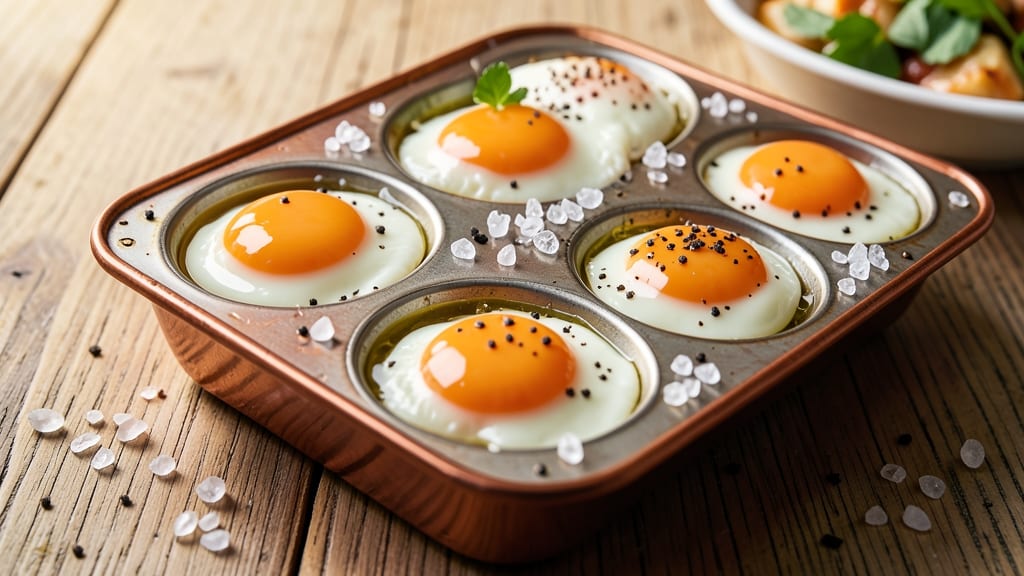
Mastering the art of poached eggs in a muffin tin transforms breakfast from ordinary to extraordinary—silky whites and perfectly runny yolks every time. I discovered this technique during a particularly chaotic morning when I needed flawless eggs without the usual mess, and it became my go-to method for foolproof results.
The muffin tin creates individual wells that hold the eggs in place while the water gently poaches them, eliminating the guesswork of traditional poaching.
This method is all about precision and timing. You’ll preheat water in the muffin tin until it’s just below a simmer, then carefully crack eggs into each well.
In just 3 to 4 minutes, you’ll achieve that ideal balance of silky whites and a perfectly set but still runny yolk—no more overcooked or broken eggs. The key is maintaining a gentle heat and avoiding any disturbances while the eggs cook, ensuring restaurant-quality results at home.
What makes this recipe truly special is how it elevates simple breakfasts into something elegant. Serve these perfect poached eggs over toasted sourdough, a bed of fresh greens, or avocado slices for a meal that feels both comforting and refined.
The technique is simple, but the outcome is undeniably impressive—ideal for brunch, a quick weekday meal, or even a weekend treat.
Once you try this method, you’ll never go back to traditional poaching. The muffin tin hack is a game-changer that saves time, reduces mess, and guarantees perfect eggs every time. Let’s get started!
Ingredients for poached eggs in muffin tin
Four eggs, one muffin tin, and a few simple ingredients transform breakfast into restaurant-quality perfection.
| Ingredient | Amount | Notes |
|---|---|---|
| Large Eggs 🥚 | 4 whole | Freshly cracked for best results |
| Muffin Tin 🍞 | 1 whole | Standard 12-cup size preferred |
| Water 💧 | 2 cups | Room temperature preferred |
| White Vinegar 🍶 | 1 tbsp | Helps whites set properly |
| Diamond Crystal Kosher Salt 🧂 | 1 tsp | Fine grain preferred |
| Black Pepper 🌶️ | ¼ tsp | Freshly ground for best flavor |
| Unsalted Butter 🧈 | 2 tbsp | For topping after cooking |
| Fresh Chives 🌿 | 2 tbsp | Chopped for garnish |
| Sourdough Bread 🍞 | 4 slices | Toasted for serving |
| Fresh Spinach 🥬 | 1 cup | Baby leaves preferred |
| Avocado 🥑 | ½ whole | Sliced for serving |
| Extra-Virgin Olive Oil 🫒 | 1 tbsp | For drizzling |
The muffin tin is your secret weapon here—standard 12-cup size works best, but any size will do. Grab one from Williams Sonoma if you want to splurge, but the basic Wilton brand from grocery stores works perfectly fine. The eggs? Freshness matters—crack them into a small bowl first to check for any surprises. I always buy organic pastured eggs from the store’s refrigerated section—they hold their shape better during poaching. For the water, room temperature is ideal, but cold water works in a pinch (just add a splash of hot water to speed up heating).
No vinegar? Lemon juice at half the amount works too, though it adds a slightly different tang. Running short on chives? Fresh parsley or green onions make great substitutes—they just have a different flavor profile. The sourdough should be day-old or lightly toasted to prevent sogginess. For the spinach, baby leaves are perfect, but regular spinach works if you chop it finely. Avocado can be swapped for cherry tomatoes or sliced radishes if you’re not feeling it. And if you’re out of olive oil, avocado oil or melted butter both work well for drizzling.
This method is all about timing—3 to 4 minutes is your sweet spot for perfect yolks. Keep the water at a gentle simmer, not a rolling boil, to avoid breaking the whites. The eggs reheat beautifully—store them in the fridge for up to 2 days if you make extras. For serving, I like to portion the toast, greens, and avocado in advance so everything’s ready when the eggs come out. The butter and chives can be added right before eating to keep them fresh. Leftovers? Freeze the eggs in their wells with a bit of water—just reheat in the tin later.
Why You’ll Love This Recipe
- No Fuss Setup: I swear, this takes less effort than deciding what to watch on TV. Just crack eggs into a muffin tin, add vinegar to water, and let the salt do its magic—no fancy tools, no stress.
- Crispy-Creamy Magic: That thin, golden edge with the runny yolk? It’s the kind of texture that makes you pause mid-bite. The vinegar keeps the whites tender while the kosher salt adds just the right snap.
- Breakfast or Snack: Honestly, I’ve served these with toast for breakfast or straight from the tin as a protein-packed snack. They’re great cold the next day too—perfect for lazy mornings or a quick lunch.
- Pantry-Proof Perfection: Between us, this recipe uses stuff you already have. Eggs, salt, vinegar? Check. No specialty ingredients, no last-minute grocery runs. It’s the ultimate budget win that still feels fancy.
Step-by-step instructions for poached eggs in muffin tin recipe
Here’s how to achieve silky whites and perfectly runny yolks every time—no fancy equipment needed.
Prepare the Poaching Bath
Combine the 2 cups water and 1 tablespoon white vinegar in the muffin tin until the water reaches just below the rim of each cup. The vinegar helps the egg whites coagulate more evenly, preventing that dreaded cloudy look. Place the muffin tin in the refrigerator and let it chill for at least 30 minutes—this keeps the water cold and stable when you’re ready to poach.
I like to use a standard 12-cup muffin tin because it gives each egg plenty of room to spread without crowding. If you’re using a different size, adjust the water level so it doesn’t overflow when the eggs expand. The cold water is key—it creates a gentle, controlled environment for the eggs to cook in, rather than shocking them with sudden heat.
Crack and Season the Eggs
Crack each of the 4 whole large eggs into a small bowl or ramekin. This prevents shell fragments from falling into the poaching water. Add ½ teaspoon of the diamond crystal kosher salt and ¼ teaspoon black pepper to each egg. Gently stir with a fork to distribute the seasoning evenly—this ensures every bite has balanced flavor.
Fresh eggs work best here because they have firmer whites that hold their shape better during poaching. If you’re using older eggs, you might need to adjust the poaching time slightly. The seasoning step is where you can really customize—add a pinch of smoked paprika or a dash of hot sauce if you’re feeling adventurous, but stick to the basics for perfect technique.
Poach the Eggs to Perfection
Remove the muffin tin from the refrigerator and place it over medium-low heat on the stovetop. The water should come to a gentle simmer—you’ll see small bubbles forming at the bottom, but it shouldn’t be a rolling boil. Once simmering, carefully slide one seasoned egg into each cup of the muffin tin.
Poach for 3 to 4 minutes, depending on how set you like your whites. For silky whites with a perfectly runny yolk, I aim for 3 minutes 30 seconds. You’ll know it’s ready when the whites are fully opaque but the yolks still jiggle slightly when you gently shake the muffin tin. If you lift an egg out with a slotted spoon and the white holds together but the yolk is still vibrant, you’ve nailed it.
Assemble the Perfect Plates
While the eggs poach, toast the 4 slices sourdough bread until golden and crisp. In a small bowl, toss the 1 cup fresh spinach with 1 tablespoon extra-virgin olive oil and a pinch of salt. Let it wilt slightly while you finish the eggs. Slice the ½ whole avocado into thin pieces and chop the 2 tablespoons fresh chives into small pieces.
Once the eggs are perfectly poached, use a slotted spoon to transfer them to the toasted sourdough slices. Top each with a generous spoonful of the wilted spinach, a few slices of avocado, and a sprinkle of the chopped chives. Drizzle with any remaining olive oil from the spinach bowl and the 2 tablespoons unsalted butter, melted and warmed slightly. Serve immediately while the yolks are still gloriously runny.
Master the Timing for Runny Yolks
Here’s the thing about runny yolks—they don’t wait. Plate your eggs no more than 1 minute after removing them from the poaching water. The residual heat will continue cooking them slightly, so if you’re serving multiple plates, keep the muffin tin in a single warm spot (like a 200°F oven with the light on) while you assemble the first plate.
For extra flair, add a pinch of flaky salt or a crack of black pepper right before serving. The contrast of the creamy yolk against the crispy toast and fresh avocado is what makes this dish truly special. And if anyone asks, the secret isn’t just the muffin tin—it’s the patience in poaching and the confidence in knowing when to stop the heat.
Pro Tips For Making Poached Eggs In Muffin Tin
- Use Room-Temp Eggs: Cold eggs sink like stones and take forever to set—crack them into a bowl first and let them sit for 10 minutes. I learned this the hard way after watching my first batch of poached eggs turn into a sad, waterlogged mess.
- Measure Vinegar Right: Diamond Crystal calls for 1 tablespoon per quart, but I’ve found 1½ tablespoons per quart actually tightens the whites better—just don’t overdo it, or your eggs will taste like a science experiment.
- Salt the Water Hard: Skip the light touch—add 2 tablespoons of kosher salt per quart of water. The higher salt concentration helps the whites hold together, and yes, even if you’re not making a briny bath, it works wonders here.
- Cover and Wait: Once the water’s simmering, pop the muffin tin lid on (or foil over it) and let it sit for 2 full minutes before lowering the eggs in. This evens out the heat so your whites don’t turn to rubber the second they hit the water.
Wine and beer pairings for these flavors
Crisp White Wine
For these delicate poached eggs, I reach for a dry Riesling or Sauvignon Blanc—both highlight the eggs’ clean, bright flavors without overpowering them. A 2021 Finger Lakes Riesling from my local market has that perfect balance of acidity and citrus notes that cut through the richness of the yolks.
If you prefer something even lighter, a New Zealand Sauvignon Blanc with its zesty grapefruit finish is ideal. 🍷
Light Beer Pairings
A Belgian witbier like Hoegaarden or Stella Artois works brilliantly with the fresh herbs and avocado in this dish. The slight effervescence cleanses your palate between bites of creamy yolk and crisp toast.
For something more robust, try a German Pilsner—its crisp, malty profile complements the eggs without competing. I keep a six-pack of Peroni on hand for these occasions—it’s always reliable. 🍺
Coffee or Tea?
If you’re serving this brunch-style, don’t overlook light roast coffee or earl grey tea as beverage pairings. A pour-over coffee with medium roast beans enhances the dish’s freshness, while earl grey’s bergamot notes add an elegant contrast to the buttery eggs.
I often brew a French press of Peet’s Major Dickason’s Blend for brunch—it’s rich enough to stand up to the meal but not so bold it overpowers. ☕
Spicy Twist Pairings
If you’re adding hot sauce or smoked paprika to your eggs (as mentioned in the seasoning tips), pair with something cooling like a Mexican lager such as Modelo Especial or a sparkling rosé.
The effervescence and slight sweetness balance the heat beautifully. I’ve also enjoyed this combo with a ginger beer—the zingy kick complements the spice without overwhelming the dish. 🌶️
Nutrition facts
Frequently asked questions
Why does the muffin tin method work better than traditional poaching?
The muffin tin creates individual wells that hold eggs perfectly in place while poaching, eliminating the need for fancy tools like slotted spoons or strainers. The water circulates evenly around each egg, giving you consistent results every time without the risk of broken whites or uneven cooking. Plus, it’s a game-changer for batch cooking!
Can I use this method for more than 4 eggs at once?
Yes! A standard 12-cup muffin tin can handle up to 6 eggs at once, but don’t overcrowd the cups. For larger batches, use two muffin tins simultaneously—just adjust your poaching time by 30 seconds per additional egg since more eggs will slightly cool the water. The key is maintaining that gentle simmer.
What if my poached eggs turn out too firm or rubbery?
Overcooking is the most common issue. For perfect silky whites with runny yolks, aim for 3-4 minutes at most. If your eggs are rubbery, they were likely overcooked or the water was too hot. Next time, reduce heat to medium-low and check at 3 minutes. The whites should be set but still slightly translucent at the edges.
How can I reheat leftover poached eggs without drying them out?
Reheat gently in the muffin tin with 1 inch of water over low heat for 1-2 minutes max. For best results, store eggs in their wells with a splash of water in the fridge for up to 2 days. When reheating, cover the tin to trap moisture. Never microwave—they’ll turn rubbery!
What are some creative ways to serve these beyond toast and avocado?
Try them over crispy hash browns for breakfast, in baked potatoes with sour cream, or on wilted kale with bacon. For dinner, nestle them in grilled asparagus or roasted Brussels sprouts. The muffin tin method works perfectly for gourmet sandwiches too—just poach extra and assemble cold with mayo and herbs.

- Cheese Bannock Recipe: Fluffy Fried Bread With Melty Cheese Center - November 11, 2026
- Old Fashioned Bread Dressing Recipe: Savory Herb and Celery Crunch in 20 Minutes - November 11, 2026
- Heinz Baked Bean Dip Recipe: Smoky Tomato-Cheddar Velvety Dip - November 11, 2026