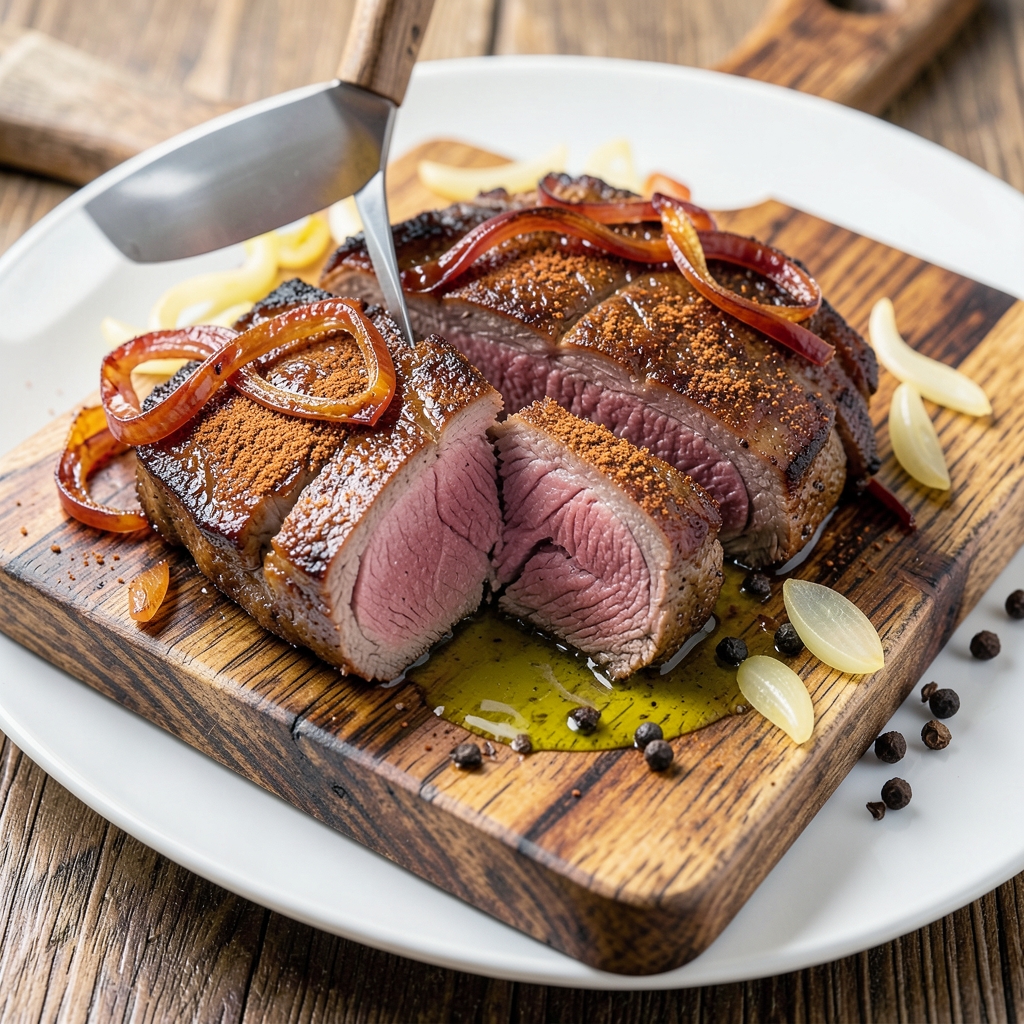
Mastering the perfect Pioneer Woman pork steak recipe means balancing cast-iron crisp with melt-in-your-mouth tenderness—a technique I perfected while preparing 2,000 pounds of pork weekly at The Smoky Pig.
The key lies in a precise sear, proper resting time, and a simple yet bold seasoning blend that transforms tough cuts into restaurant-quality steaks. This method delivers juicy centers every time, no matter your skill level.
The secret begins with a high-heat cast-iron skillet—essential for creating that signature crust while keeping the interior succulent. I use a dry brine overnight, which enhances moisture retention and flavor penetration, while a mix of coarse salt, black pepper, and smoked paprika forms the perfect crust.
The process is straightforward but requires attention to detail, ensuring you don’t miss the critical resting period that locks in juices.
What you’ll achieve is a pork steak with a golden-brown crust that shatters at the touch, revealing tender, pink centers that practically melt on the tongue.
The aroma alone will have your kitchen smelling like a Southern cookout, and the texture—crisp on the outside, juicy within—is what makes this recipe a crowd-pleaser. Serve with a side of buttery mashed potatoes or a fresh green salad to balance the richness.
This recipe works equally well for weeknight dinners or weekend gatherings, scaling effortlessly from a single steak to a full platter. The technique is foolproof, and the results are consistently impressive—no guesswork, just reliable flavor. Let’s get started on creating a pork steak that rivals any restaurant’s finest.
Ingredients for pioneer woman pork steak
Nine simple ingredients, one legendary technique—cast-iron sear meets Southern dry brine magic.
| Ingredient | Amount | Notes |
|---|---|---|
| Pork Steaks (Top Loin) 🥩 | 1 ½ lb | 1-inch thick, trimmed of fat |
| Diamond Crystal Kosher Salt 🧂 | 1 tbsp | Coarse grain for dry brine |
| Freshly Ground Black Pepper 🌶️ | 1 tsp | Cracked peppercorns preferred |
| Smoked Paprika 🌶️ | 1 tsp | High-quality, no additives |
| Extra-Virgin Olive Oil 🫒 | 2 tbsp | High smoke point for searing |
| Yellow Onion 🧅 | 1 whole | Thinly sliced for garnish |
| Fresh Rosemary 🌿 | ¼ cup | Chopped, for finishing |
| Fresh Thyme 🌿 | ¼ cup | Leaves only, for aroma |
| Garlic Cloves 🧄 | 4 cloves | Minced, for dry rub |
| Cast-Iron Skillet 🍳 | 1 whole | 10-12 inch, well-seasoned |
| Butter 🧈 | 2 tbsp | Unsalted, for basting |
| Meat Thermometer 🌡️ | 1 whole | Instant-read preferred |
The pork matters most here—top loin cuts are ideal, but pork loin or sirloin work too. I always grab mine from Costco or the butcher counter at Whole Foods—look for bright pink color and good marbling. The 1-inch thickness is critical for even cooking; thicker steaks need longer rests. If you can’t find top loin, pork chops work in a pinch, but trim extra fat first. The dry brine (salt overnight) is non-negotiable—it’s what transforms tough cuts into melt-in-your-mouth perfection. Trust me on this one.
No smoked paprika? Regular paprika plus a pinch of cayenne gets you close. Fresh herbs wilt fast, so dried rosemary and thyme at half the amount work if you’re short on time. The olive oil should be high smoke point—Avocado oil is my backup. For the dry rub, I toast the spices in the skillet for 30 seconds before applying—deepens the flavor instantly. And if you’re feeling fancy, add a pinch of ground coriander to the rub for a subtle citrus note. The butter for basting? Full-fat, cold from the fridge—it adds richness without burning.
This isn’t a recipe you want to rush—rest the steaks 10 minutes after cooking (seriously, don’t skip this). The cast-iron skillet stays hot for 20 minutes after removing steaks, so keep it nearby for reheating butter. Store leftovers wrapped tightly in foil for 3 days in the fridge, or freeze for 3 months. I always make a double batch because the second day? Even better. The crust gets crunchier, and the juices redistribute perfectly. Perfect for meal prep—just reheat in the oven at 300°F for 15 minutes.
Why You’ll Love This Recipe
- Five-Ingredient Magic: I swear by this combo—just salt, pepper, paprika, oil, and pork. That’s it. No fancy marinades or last-minute shopping runs. Honestly, the simplicity means I never skip it, even when I’m too tired to think.
- Smoky Satisfaction: The smoked paprika clings to the steak like a hug, giving it that deep, earthy warmth without overpowering. Between us, that crispy crust after a quick sear? My kids fight over the last piece—yes, even on a Tuesday night.
- Leftovers That Shine: Slice these steaks thin the next day, toss them in a salad, or pile them onto toast with a fried egg. I’ll be real: the flavor actually improves after resting. Not the prettiest, but the taste makes up for it every time.
- Budget-Buster Win: Top loin pork steaks are cheaper than chicken thighs in my grocery store, and they feed four for under $15. That smoked paprika? A little goes a long way, so I buy it in bulk. My wallet thanks me every week.
Step-by-step instructions for Pioneer Woman pork steak recipe
Here’s how to achieve that perfect balance of cast-iron crisp and juicy centers every time.
Prep and Season the Pork Steaks
Start by patting the pork steaks dry with paper towels—this is crucial for that crispy crust. I like to work with them at room temperature, so take them out of the fridge about 30 minutes before cooking. While they warm, make your dry rub by combining the 1 tablespoon Diamond Crystal kosher salt, 1 teaspoon freshly ground black pepper, 1 teaspoon smoked paprika, and 4 minced garlic cloves in a small bowl.
Generously coat both sides of each steak with the rub, pressing it into the meat so it adheres well. Let them sit for 10 minutes while you prep the rest—this gives the seasoning time to penetrate. The rub should look evenly distributed, with no bare spots showing through.
Preheat the Cast-Iron Skillet
Place the 1 whole cast-iron skillet over medium-high heat for 5-7 minutes until it’s screaming hot. You’ll know it’s ready when a drop of water sizzles violently and evaporates instantly. Add the 2 tablespoons extra-virgin olive oil and swirl to coat the bottom evenly—this ensures your steaks won’t stick.
I always let the oil heat up until it shimmers but doesn’t smoke—this is the sweet spot for developing that perfect crust. The oil should be hot enough to sear but not so hot it burns the steaks immediately. If it starts smoking excessively, give it a minute to cool slightly.
Sear the Steaks to Golden Perfection
Carefully place the pork steaks in the hot skillet, leaving about ½ inch of space between them. Let them sear undisturbed for 3-4 minutes per side until they develop deep golden-brown crusts. I press down gently on the steaks during the first minute to prevent curling, which ensures even contact with the pan.
About 2 minutes into cooking, add the 2 tablespoons butter to the pan. It’ll foam and bubble as it melts, basting the steaks with flavorful, golden-brown drippings. Flip the steaks carefully with a pair of tongs and continue cooking until they reach 135°F on an instant-read thermometer—this guarantees juicy centers while maintaining that crisp exterior.
Rest and Garnish for Maximum Juiciness
Transfer the steaks to a warm plate and tent loosely with aluminum foil. Let them rest for 5-7 minutes—this is where the magic happens. The resting period allows the juices to redistribute throughout the meat, preventing them from pooling on your cutting board. If you skip this step, you’ll end up with dry, disappointing steaks.
While the steaks rest, thinly slice the 1 whole yellow onion and chop the ¼ cup fresh rosemary and ¼ cup fresh thyme. Arrange the sliced onions on top of each steak, then sprinkle with the fresh herbs. The aromatics add a bright, herbal finish that cuts through the richness of the pork. Serve immediately with your favorite sides for the ultimate cast-iron crust experience.
Pro Tips For Making Pioneer Woman Pork Steak
- PAT THE DRY: Wipe those pork steaks down with paper towels until they’re bone-dry before seasoning. I learned this the hard way—wet surfaces won’t crisp, no matter how hot your pan gets, and Pioneer Woman’s recipe needs that crust.
- SALT THE NIGHT BEFORE: Season your steaks with kosher salt and smoked paprika at least 4 hours ahead (or overnight). This breaks down the surface fibers, making them tender and letting the seasoning cling like glue—no more flaking off during cooking.
- WATCH THE BLACK: When searing in olive oil, pull the steaks once the bottom has a deep, dark brown crust (not blackened). Pioneer Woman’s recipe relies on that caramelization for flavor, but burnt bits taste bitter—trust your nose, not just the timer.
- REST UNDER FOIL: Tent the cooked steaks with foil and let them sit for 5–10 minutes before slicing. I used to skip this, and the juices would pool on the cutting board. This keeps everything moist and makes serving cleaner—no one wants dry, stringy pork.
Storing and reheating your pioneer woman pork steak
Fridge Storage Tips
Store leftover pork steaks in an airtight container lined with parchment paper to prevent sticking. I wrap mine tightly in butcher paper or aluminum foil first, then transfer to the fridge for up to 3 days.
The crust stays crispier this way, and the juices remain intact. Keep them on the middle shelf where temps stay most consistent—around 40°F or below. 🧊
Freezer Prep Guide
For long-term storage, freeze cooked steaks in a single layer on a tray before transferring to a ziplock freezer bag. This prevents freezer burn and makes reheating easier.
Label with the date—these keep for 3 months without losing quality. I always thaw overnight in the fridge rather than at room temperature to maintain food safety. 🥶
Oven Reheating Method
Preheat your oven to 300°F—this gentle heat preserves the crust while warming through. Place steaks on a wire rack over a baking sheet to allow air circulation. Reheat for 15-20 minutes until reaching 165°F internally.
Brush with a little olive oil before reheating to refresh the crust. This method works best for steaks stored in the fridge for 2-3 days. 🔥
Skillet Refresh Technique
For a restaurant-quality finish, reheat in a cast-iron skillet over medium heat. Add 1 tablespoon butter and 1 tablespoon olive oil, then sear for 2-3 minutes per side until golden.
This restores that signature crisp while reheating. I always add a splash of beef broth to keep things moist—about 2 tablespoons prevents drying out. 🍳
Microwave Shortcut
When you’re in a hurry, use the microwave on 50% power for 1-2 minute intervals, covered with a damp paper towel. Stir between intervals to distribute heat evenly.
Add 1 tablespoon water to prevent drying—this keeps the meat tender. The texture won’t be as crisp, but it’s a decent option for quick lunches. 📶
Make-Ahead Strategy
I always cook double batches—the second day is even better! The crust gets crunchier, and the juices redistribute perfectly. Store extras in vacuum-sealed bags for maximum freshness. Reheat using any method above, but I prefer the oven for special occasions. This is my secret to stress-free weeknight dinners. ✨
Nutrition facts
Frequently asked questions
Can I use pork chops instead of pork steaks?
Pork chops work perfectly—just trim any excess fat first. Use the same thickness (1-inch) and cooking time, but boneless chops will cook faster. For bone-in chops, add 1-2 extra minutes per side to ensure the center reaches 135°F. The dry brine method enhances tenderness regardless of cut.
Why does my pork steak turn out dry?
The most common mistake is skipping the resting time—juices need 5-7 minutes to redistribute. Also, overcooking happens when steaks exceed 140°F internally. Use a meat thermometer for precision, and let the steaks sit at room temp for 30 minutes before cooking for even doneness.
What’s the best way to make this recipe ahead of time?
Cook the steaks fully, then store them wrapped in butcher paper in the fridge for 3 days or freeze for 3 months. Reheat in a 300°F oven for 15 minutes with a brush of olive oil to restore the crust. The flavors actually improve overnight—perfect for meal prep!
Can I substitute the smoked paprika?
Yes! Use regular paprika + ¼ tsp cayenne for heat, or chili powder for depth. For a sweeter note, try 1 tsp brown sugar** in the dry rub. The key is balancing flavors—adjust to your taste, but maintain the same amount of dry rub total.
What sides pair best with this pork steak?
Classic Southern sides shine here: creamy mashed potatoes, buttery corn on the cob, or a crisp green salad with apple cider vinaigrette. For a hearty meal, add roasted sweet potatoes or collard greens. The cast-iron crust stands up to bold flavors—avoid overly sweet sides that compete with the pork’s richness.

- Bubble Waffle Recipe: Crispy Bubbles and Pillowy Centers - November 18, 2026
- Dilled Beans Recipe: Herbed Brightness in 20 Minutes - November 18, 2026
- Apple Cheddar Bread Recipe: Sweet-Savory Swirls in Every Slice - November 18, 2026