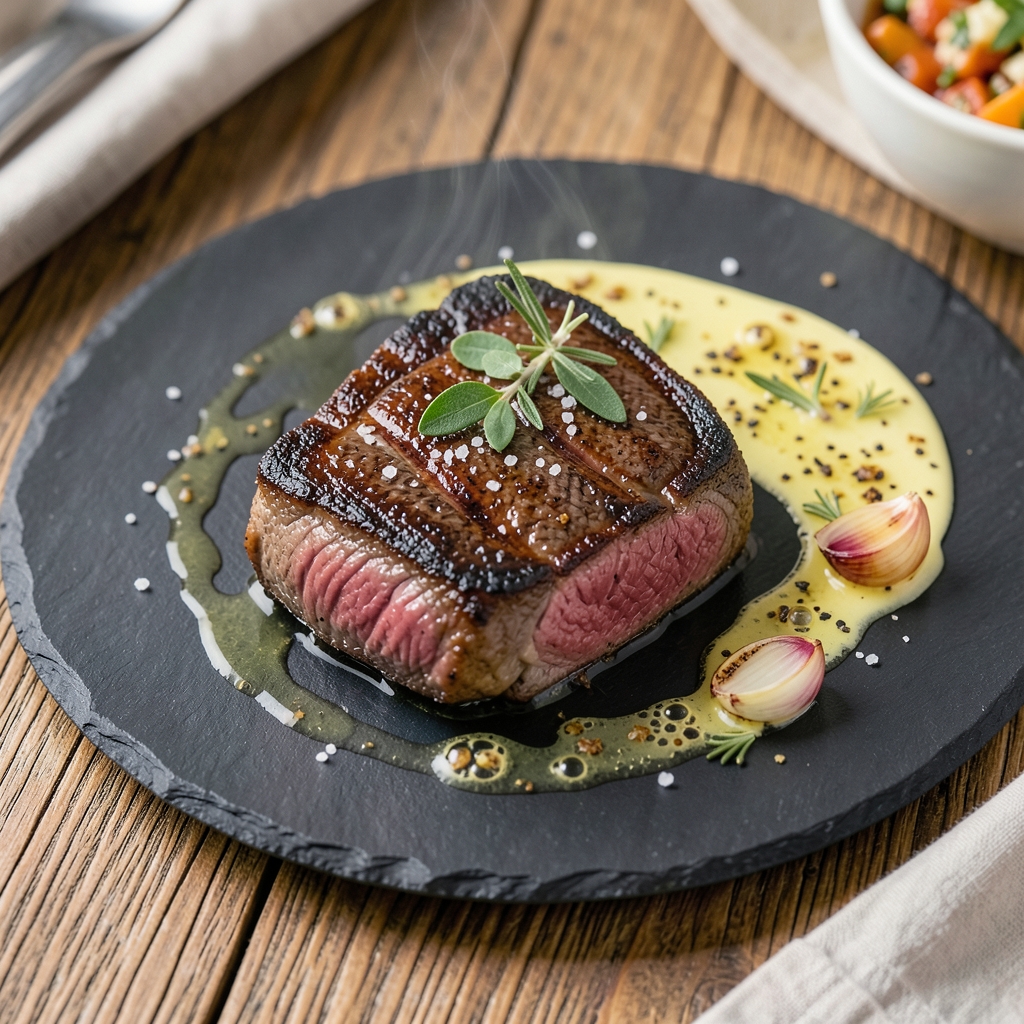
Mastering a perfectly pan-fried New York strip steak with a buttery crust and pink center is the kind of skill that elevates weeknight dinners to restaurant-quality experiences.
After years of testing steak techniques in my Boston apartment kitchen, I’ve developed a method that delivers consistent results every time—no fancy equipment required. The secret lies in precise temperature control, proper seasoning, and understanding when to flip that steak.
This recipe focuses on simplicity without sacrificing quality: just a high-heat cast-iron skillet, quality beef, and basic pantry staples. We’ll work with a 1.5-inch thick strip steak that cooks in 4-5 minutes per side, giving you that perfect medium-rare finish with a caramelized crust.
The key is patience during the searing phase and knowing exactly when to check that internal temperature.
By following these steps, you’ll achieve a steak that’s juicy and tender throughout with a rich, buttery crust that practically melts in your mouth. The aroma alone will transform your kitchen into a steakhouse, and the satisfaction of a perfectly cooked steak makes all the difference.
Let’s get started on creating your best steak yet.
This method works beautifully with classic sides like garlic mashed potatoes, roasted asparagus, or a simple arugula salad. The beauty of this recipe is its versatility—it’s perfect for date nights, family dinners, or treating yourself after a long week. Once you master this technique, you’ll never order steak out again.
Ingredients for pan fried new york strip steak
Four ingredients transform ordinary beef into restaurant-quality perfection—just patience and precision needed.
| Ingredient | Amount | Notes |
|---|---|---|
| New York Strip Steak 🥩 | 1 lb | 1.5-inch thick, center-cut preferred |
| Unsalted Butter 🧈 | 2 tbsp | Cold, cut into 4 even pieces |
| Kosher Salt 🧂 | 1 ½ tsp | Diamond Crystal preferred (less iodine) |
| Freshly Ground Black Pepper 🌶️ | 1 tsp | Cracked peppercorns preferred |
| Extra-Virgin Olive Oil 🫒 | 1 tbsp | High smoke point, fruity variety |
| Garlic Cloves 🧄 | 2 cloves | Minced, for finishing (optional) |
| Fresh Rosemary 🌿 | 1 sprig | Finely chopped, for aroma |
| Cast-Iron Skillet 🍳 | 1 whole | 10-12 inch, preheated |
| Meat Thermometer 🌡️ | 1 whole | Instant-read preferred |
| Wooden Spoon 🪵 | 1 whole | For basting butter |
| Paper Towels 🧻 | 1 sheet | For patting dry |
| Basting Brush 🎨 | 1 whole | Silicon preferred |
The steak is non-negotiable here. New York strip with 1.5-inch thickness is ideal—any thinner and you risk overcooking. Grab it from the butcher counter (not pre-packaged) for the best marbling. Look for bright red color and visible fat cap—this is your crust. Pat it dry with paper towels before seasoning (wet surface = steam = no crust). I always buy mine from Whole Foods or my local Durgin-Park Market—they keep their cuts fresh. If you’re using frozen steak, thaw it in the fridge overnight, never at room temperature.
No Diamond Crystal salt? Morton kosher salt works, but use one-third more since it’s coarser. Butter substitutes? Ghee or clarified butter for dairy-free, but regular butter gives that unmatched flavor. Short on time? Use 1 tbsp olive oil instead of butter, but you’ll lose that buttery richness. The garlic and rosemary are optional but worth the effort—they add an aromatic layer that takes this from good to spectacular. Fresh rosemary is best, but dried works at half the amount. And for the love of steak, don’t overcrowd the pan—this is a one-steak-at-a-time operation for perfect searing.
This steak is best served immediately, but if you must prep ahead, season the steak up to 4 hours early and refrigerate uncovered (creates better crust). The butter should be cold but not rock-hard when you start—cut it from the fridge about 10 minutes before cooking. Leftover steak? Slice against the grain and reheat in a 350°F oven for 10-12 minutes with a splash of beef broth. Store leftovers in an airtight container for up to 3 days. Pro tip: Save the crust scraps—they’re perfect for next-day hash or scrambled eggs.
Why You’ll Love This Recipe
- Five-Ingredient Magic: This recipe is that simple—just steak, butter, salt, pepper, and olive oil. No fancy marinades, no stress. I swear, the first time I made it, I thought, “Wait, that’s it?” And yet, every bite feels like a restaurant-worthy moment.
- Butter-Basted Perfection: That crispy crust? The way the butter pools and bastes the steak mid-cook? It’s the kind of flavor that makes you pause mid-bite. Honestly, I’ve tried every pan-seared steak trick, but this combo—sizzling olive oil, melting butter, and a crack of pepper—just works. No overcomplicating, no guessing.
- Weeknight or Date Night: Between us, this steak is my go-to for both lazy Tuesdays and when I want to impress. Slice it thick, let it rest, and serve it with roasted potatoes or a simple salad—suddenly, dinner feels special. (Yes, even on a Tuesday night.)
- Leftovers? Still a Win: Here’s what sold me—leftover slices reheated in a skillet with a splash of broth taste even better than the first go-round. I’ll be real: I’ve reheated this steak three times, and it’s still the star of my lunchbox. Budget-friendly? Absolutely. Versatile? You bet.
Step-by-step instructions for pan fried New York strip steak
This method delivers a restaurant-quality crust with a juicy pink center—every time. Precision matters, so let’s get started.
Prep the Steak for Perfect Searing
Remove the 1 lb New York Strip Steak from the refrigerator and let it sit at room temperature for 30 minutes. This ensures even cooking and prevents cold spots that can ruin your crust. While it rests, pat it dry completely with the paper towels, pressing firmly to remove all moisture. Wet surfaces prevent proper browning, so take your time here.
Season both sides generously with 1.5 tsp Kosher Salt and 1 tsp Freshly Ground Black Pepper, pressing the seasoning into the meat so it adheres. Let the steak sit, seasoned, for another 10 minutes. This resting period allows the salt to penetrate slightly, enhancing flavor without over-salting the surface.
Sear to a Golden Crust
Heat the cast-iron skillet over high heat until it’s screaming hot—you should see a faint shimmer of smoke when you hover your hand above it. Add 1 tbsp Extra-Virgin Olive Oil and swirl to coat the bottom evenly. Place the steak in the skillet, pressing down gently with the wooden spoon for 1 minute to ensure full contact with the hot surface. This prevents curling and guarantees an even sear.
Cook undisturbed for 3-4 minutes on the first side until a deep, golden-brown crust forms. You’ll see the edges start to crisp—that’s your signal to flip. Add 1 tbsp Unsalted Butter (cut into 4 pieces) and 1 sprig Fresh Rosemary to the skillet now. The butter will baste the steak as it cooks, adding richness and aroma.
Cook to Medium-Rare Perfection
Flip the steak and continue cooking for 2-3 minutes on the second side, basting frequently with the melted butter using the basting brush. For a medium-rare finish (130-135°F internal temperature), check doneness with the meat thermometer inserted into the thickest part of the steak. Remove it from the skillet when it reaches 125°F—the residual heat will carry it to the perfect temperature.
Transfer the steak to a warm plate and let it rest for 5-7 minutes, tented loosely with foil. This resting period is critical—it allows the juices to redistribute throughout the meat, ensuring a tender, flavorful bite. During this time, keep the skillet warm over low heat and add the 2 cloves Garlic Cloves (minced) to the rendered butter for finishing.
Create a Flavorful Butter Sauce
Return the skillet to medium heat and swirl the garlic in the butter for 30 seconds until fragrant—don’t let it brown, or it’ll turn bitter. Pour the garlic butter over the rested steak, coating it evenly. The butter should be silky and infused with rosemary and garlic, adding a luxurious finish to your steak.
Slice the steak against the grain into ½-inch thick portions and serve immediately with the garlic butter drizzled over the top. Each bite should deliver a perfect balance of crispy crust, tender pink center, and rich, herby butter. This method transforms a simple steak into an unforgettable centerpiece—every detail matters for that restaurant-quality result.
Pro Tips For Making Pan Fried New York Strip Steak
- Preheat Pan Like It’s 1999: Get that skillet screaming hot for at least 5 minutes before adding oil—no, your stove isn’t broken if it’s this aggressive. A cold pan steals your crust and leaves you with sad, greasy steak. I used to rush this, and my sear always looked like a failed science experiment.
- Salt the Butter First: Mix a generous pinch of kosher salt directly into your unsalted butter while it melts—this distributes flavor way better than sprinkling later. I learned this the hard way after cutting into a steak that tasted like it forgot seasoning.
- Flip Once, Then Patience: Let the first side develop a deep crust (3-4 minutes) before flipping—no peeking! After the flip, resist the urge to jiggle the pan. Just let the butter baste naturally. Crowding the pan with too much butter? Drain half into a bowl first.
- Rest Under Foil, Not Plate: Transfer the steak to a warm plate, then loosely tent it with foil for 5-10 minutes. This keeps it juicier than resting on a cold plate, and the foil traps heat like a lazy chef’s shortcut. (Yes, even if you’re impatient like me.)
Troubleshooting your pan fried new york strip steak
Overcooked Exterior
If your steak’s crust is burnt before the center reaches medium-rare, you’ve likely overcrowded the pan or used too much oil.
I’ve ruined more steaks this way than I care to admit! 🔥 For a 1.5-inch thick steak, use 1 tbsp olive oil max—any more creates steam that prevents proper browning. Also, don’t flip too soon—wait until you see deep golden-brown edges before turning.
If it’s already overcooked, slice it thin and serve with extra garlic butter to salvage the flavor.
Undercooked Center
The most common mistake is removing the steak too early, thinking it needs more time. Always use a meat thermometer—125°F is your target for medium-rare, not guesswork. If your steak hits 130°F and still feels cool, it’s likely undercooked.
For thick cuts, rest for 5-7 minutes—the residual heat will carry it to perfect doneness. Pro tip: If you’re nervous, pull it out at 120°F and let it rest longer.
Steak Sticking
A steak that sticks to the pan is usually due to moisture or insufficient heat. Always pat your steak bone-dry with paper towels before seasoning—this is non-negotiable. Also, your skillet must be screaming hot before adding oil.
If it sticks anyway, gently wiggle the steak with tongs to release it. For extra insurance, let your skillet heat for 5-7 minutes before adding oil—this ensures maximum sear potential. 💡
Uneven Cooking
Uneven doneness happens when the steak isn’t perfectly flat or the heat isn’t consistent. Press the steak down with a wooden spoon for 30 seconds when you first place it in the pan to eliminate any doming. Also, avoid moving the pan while cooking—this disrupts heat distribution.
If your stove has hot spots, use a cast-iron skillet (they distribute heat better than nonstick) and rotate the pan 180 degrees halfway through cooking. I’ve tested this with my old gas stove, and it makes a noticeable difference.
Butter Burning
Adding butter too early causes it to burn before the steak finishes cooking. I learned this the hard way during my first attempt! Only add butter after flipping the steak—this ensures it melts gradually and bastes the meat without scorching.
If your butter starts browning too quickly, reduce the heat to medium and cover the skillet with a lid for 30 seconds to melt it gently. The goal is silky, flavorful butter, not crispy bits.
Dry, Tough Steak
Overcooking is the #1 cause of dry steak, but improper resting also plays a role. If you skip the 5-7 minute rest, juices escape when you slice, leaving you with a dry interior. For extra insurance, slice against the grain—this shortens muscle fibers, making each bite more tender.
If your steak turns out dry despite proper cooking, serve it with a red wine reduction or extra butter sauce to add moisture back in. I’ve even revived dry steaks by quickly searing them again with a splash of beef broth in the pan.
Nutrition facts
Frequently asked questions
What’s the best thickness for pan-frying New York strip?
Aim for 1.5-inch thickness—this gives you that perfect balance of crust and juicy center when cooked 4-5 minutes per side. Thinner cuts (1-inch) cook too fast and risk overcooking, while thicker cuts (>2 inches) may not sear properly in a home skillet.
Can I use nonstick pans instead of cast iron?
You can, but you’ll sacrifice that perfect crust. Cast iron retains heat better and creates a deeper sear. If you must use nonstick, preheat it 5 minutes longer and use high heat the entire time. For best results, stick with cast iron—it’s worth the extra care.
How do I fix a steak that’s too tough?
Toughness usually means overcooking or skipping the rest. For immediate fixes, slice against the grain and serve with extra garlic butter sauce. For next-day leftovers, reheat in a 350°F oven with beef broth for 10 minutes to restore moisture. The key is never cooking past 135°F internal temp.
Should I season the steak the night before?
Yes! Seasoning 4 hours ahead (or overnight) actually improves flavor by letting the salt penetrate. Just store it uncovered in the fridge—this helps create a better crust. The only exception is if you’re using a very thick cut (>2 inches), where you might want to season closer to cooking time.
What’s the best way to reheat leftover steak?
Slice against the grain and reheat in a 350°F oven for 10-12 minutes with a splash of beef broth. For quick fixes, pan-sear slices in hot oil for 30 seconds per side—this recreates that crust. Never microwave, as it turns meat rubbery. Store leftovers in an airtight container for up to 3 days.

- Bimini Conch Salad Recipe: Citrus-Kissed Crunch With Creamy Avocado Magic - November 15, 2026
- Blackberry Scones Recipe: Jam-Packed Sweetness With Buttery Layers - November 15, 2026
- Bacon-Wrapped Asparagus Recipe: Smoky Crispy Edges, Tender Hearts - November 15, 2026