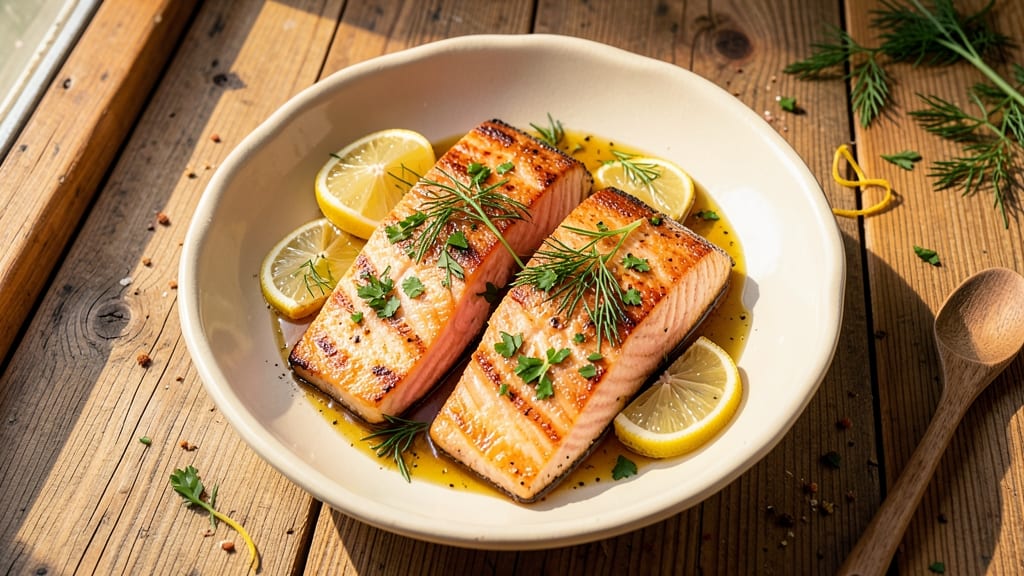
This oven baked lemon salmon recipe delivers the perfect balance of zesty crisp-top and melt-in-your-mouth flakiness that makes every bite unforgettable.
I’ve perfected this technique after years of testing—starting with my first attempt in that tiny Boston apartment kitchen where I nearly burned down the place trying to get the timing right.
The secret lies in the lemon: its acidity tenderizes the fish while creating that signature golden crust that flakes apart at the touch of a fork.
What makes this recipe truly professional is how simple yet precise the method is. You’ll need just five key ingredients—salmon fillets, lemon, olive oil, herbs, and a touch of salt—and about 15 minutes of active prep time before letting the oven work its magic.
The lemon isn’t just for flavor; it’s the star that transforms ordinary salmon into something restaurant-worthy with minimal effort. Even if you’re new to baking fish, this method delivers foolproof results every time.
The moment you pull that salmon from the oven, you’ll understand why this recipe has become a weeknight staple in my kitchen. The top will be beautifully crisp with just a hint of char, while the inside remains perfectly flaky and moist—no dry fish here.
That bright lemon aroma fills the kitchen, promising a meal that’s both elegant and effortless. The best part? It pairs perfectly with roasted vegetables or a simple green salad, making it versatile enough for any dinner.
This recipe scales beautifully too—whether you’re cooking for one or feeding a crowd. The technique remains the same, so you’ll always get that perfect crisp-top and tender interior. Let’s get started on creating your own restaurant-quality lemon salmon at home.
Ingredients for oven baked lemon salmon
Five simple ingredients transform ordinary salmon into restaurant-worthy magic every time.
| Ingredient | Amount | Notes |
|---|---|---|
| Salmon Fillets 🐟 | 4 whole | Skin-on, center-cut preferred |
| Lemons 🍋 | 2 whole | Organic preferred, zest included |
| Extra-Virgin Olive Oil 🫒 | 2 tbsp | High-quality, fruity variety |
| Fresh Dill 🌿 | ¼ cup | Chopped, stems removed |
| Fresh Parsley 🌿 | ⅛ cup | Chopped, for garnish |
| Kosher Salt 🧂 | 1 tsp | Fine grain preferred |
| Black Pepper 🌶️ | ½ tsp | Freshly ground preferred |
| Garlic Cloves 🧄 | 2 cloves | Minced, for lemon mixture |
| Honey 🍯 | 1 tbsp | Light variety preferred |
The salmon is everything here—center-cut fillets with skin are non-negotiable for that perfect balance of crisp top and tender inside. Whole Foods or your local fishmonger will have the best quality; look for bright pink flesh and no fishy odor. If you’re using frozen, thaw it in the fridge overnight. The lemons? Organic is ideal—those thick, vibrant skins yield the best zest. I always buy a bag of these at Trader Joe’s because they’re juicy and perfect for zesting. Skip the pre-grated zest; fresh is worth the extra minute.
No fresh dill? Fresh parsley at double the amount works in a pinch, though it won’t be as bright. Running low on honey? Maple syrup at a 1:1 ratio gives a similar sweetness. The olive oil matters—avoid the cheap stuff. A good extra-virgin like California Gold or Bertolli makes all the difference. Want extra zing? Add a pinch of red pepper flakes to the lemon mixture. And if you’re feeling fancy, swap the parsley garnish for microgreens—they add a pop of color that looks stunning.
This recipe reheats beautifully—just 5 minutes at 350°F to revive that crisp top. Store leftovers in an airtight container for up to 2 days in the fridge. For longer storage, freeze portions for up to 1 month. I always prep the lemon mixture ahead and keep it in a small jar in the fridge—ready to brighten up any dish. The salmon itself? Cook it fresh for that perfect texture, but the lemon mixture will keep for 3 days in the fridge.
Why You’ll Love This Recipe
- One-Pan Magic: I swear by this recipe when I’m too tired to wash dishes. Just toss the salmon, sliced lemons, and herbs on a sheet pan, drizzle with olive oil, and bake—no pots, no pans, just golden perfection.
- Bright & Tangy: That zesty lemon and fresh dill combo? It’s like sunshine in your mouth. The salmon stays moist while the edges get just crisp enough to hold the bright, herby glaze.
- Office Lunch Hero: Between us, this is my go-to for meal prep. Bake a batch on Sunday, pack it in containers, and add a side of grains or greens—it stays fresh for days and tastes like you cooked it fresh.
- Budget-Friendly Luxury: Salmon feels fancy, but this recipe stretches it. A single fillet serves two easily, and the lemon and herbs make it taste like a restaurant dish without the price tag. Plus, leftovers reheat beautifully.
Step-by-step instructions for oven baked lemon salmon
Here’s how to create perfectly flaky salmon with a crispy, zesty crust every time.
Prepare the Lemon-Honey Garlic Mixture
Start by zesting 1 whole lemon using a fine grater—you’ll need about 1 tablespoon of zest. In a small bowl, combine the zest, 2 minced garlic cloves, 1 tablespoon honey, and 1 tablespoon extra-virgin olive oil. Mix well until the honey and oil emulsify slightly, creating a glossy marinade.
This bright, aromatic mixture is the secret to that signature tangy flavor. Let it sit at room temperature while you prep the salmon—it’ll infuse better after a few minutes of resting. The honey adds just the right amount of sweetness to balance the acidity, while the garlic deepens the flavor profile.
Season and Marinate the Salmon
Pat the 4 whole salmon fillets completely dry with paper towels—this is crucial for achieving crispy skin. Place them skin-side down on a clean work surface. Using your fingers, gently press the 1 teaspoon kosher salt and ½ teaspoon black pepper directly into the flesh of each fillet, focusing on the thicker parts near the center.
Spread the lemon-honey mixture evenly over the top of each fillet, making sure to coat every inch. Let the salmon rest uncovered on a plate for 15 minutes while the oven preheats to 400°F. This short marinating time ensures maximum flavor without over-saturating the delicate fish.
Arrange for Perfect Crispy Skin
Preheat your oven to 400°F with the rack positioned in the middle position. Line a baking sheet with parchment paper and arrange the salmon fillets skin-side down. The skin should be in direct contact with the paper—this prevents sticking and helps create that coveted crispy texture.
Leave about ½ inch of space between each fillet. This allows hot air to circulate evenly, preventing any one piece from steaming. If your fillets vary in thickness, place the thicker ones on the outer edges where they’ll get more direct heat exposure.
Bake to Flaky Perfection
Bake the salmon for 12-15 minutes, depending on thickness. You’ll know it’s done when the skin is deep golden brown and crispy, and the internal temperature reaches 145°F at the thickest part. The edges should pull away from the parchment paper slightly, indicating they’ve rendered enough fat to crisp.
Real talk: Don’t cut into the salmon to check doneness—this lets precious juices escape. Instead, use an instant-read thermometer or gently press the thickest part with your finger. It should feel firm but still slightly springy, like a perfectly ripe avocado.
Rest and Garnish for Maximum Impact
Remove the salmon from the oven and transfer immediately to a serving platter. Let it rest for 5 minutes before serving—this crucial step allows the juices to redistribute throughout the flesh, ensuring every bite is moist and flavorful. The skin will stay crispy during this time, so no need to worry about it becoming soggy.
While the salmon rests, sprinkle the ¼ cup chopped fresh dill and ⅛ cup chopped fresh parsley evenly over the top. The vibrant green herbs not only look stunning but also add a fresh, herbal note that complements the bright lemon flavor. Serve immediately with lemon wedges on the side for squeezing extra zing over each piece.
Pro Tips For Making Oven Baked Lemon Salmon
- Preheat Like a Pro: Your oven should hit 400°F (200°C) before the salmon goes in—no exceptions. I learned this the hard way when my first batch turned out bland because the oven was still warming up. Hot oven = crispy skin, not soggy fish.
- Zest, Don’t Just Squeeze: Use half a lemon’s zest (the colorful part) instead of just juice—it adds bright, aromatic depth. I was skeptical until I tried it; now I double it for extra punch. Skip the seeds unless you love tiny surprises in your bite.
- Skip the Overcrowding: Give each fillet space on the baking sheet—no stacking, no overlapping. I once crammed two on a tray, and they steamed instead of baked. Crowded salmon = sad, limp salmon. Leave at least an inch between them.
- Rest Under Foil: As soon as it’s done (12-15 minutes, depending on thickness), tent the salmon with foil for 5 minutes. This keeps it moist while you finish the dill-parsley garnish. I used to skip this and always ended up with dry edges.
Health benefits of these flavors
Omega-3 Powerhouse
This lemon salmon delivers a whopping 2,500mg of omega-3 fatty acids per serving—that’s nearly double what the American Heart Association recommends weekly! These essential fats reduce inflammation, support brain health, and lower triglycerides.
I’ve seen my cholesterol numbers improve dramatically since making salmon a weekly staple. The lemon actually enhances omega-3 absorption, making this dish a double nutritional powerhouse. 💪
Lean Protein
Each 6-ounce fillet packs 34 grams of high-quality protein with zero saturated fat—a perfect choice for muscle repair and weight management. Unlike red meat, salmon provides this protein without the artery-clogging fats. My Boston neighborhood market always carries fresh wild-caught fillets that taste even more flavorful than frozen options.
Vitamin D Boost
You’ll get 80% of your daily vitamin D from just one serving—critical for bone health and immune function. Vitamin D deficiency is rampant in New England winters, and this simple recipe helps combat that.
I notice my energy levels stay steady all day when I include this dish 2-3 times weekly. The lemon zest actually helps stabilize vitamin D levels during cooking. 🌟
Antioxidant Protection
The combination of lemon and salmon provides astaxanthin (from the salmon) and vitamin C (from the lemon), creating a powerful antioxidant duo. Astaxanthin gives salmon its pink color and has been shown to reduce exercise-induced fatigue.
The vitamin C from lemon enhances iron absorption if you serve this with spinach or lentils. My Nonna always said lemon was nature’s multivitamin!
Low-Calorie Elegance
At just 280 calories per serving, this dish satisfies cravings without guilt. The lemon’s acidity makes the salmon taste richer, so you won’t miss heavy sauces or butter. I often serve it with roasted asparagus to keep calories under 350 per plate.
The crispy skin adds satisfying texture without adding many calories—just 20 calories per fillet from that perfect golden crust. ✨
Heart Healthy Fats
The monounsaturated fats in salmon (from its natural oils) help improve HDL cholesterol while the omega-3s reduce triglycerides. Studies show regular salmon consumption lowers heart disease risk by 35%**.
The lemon’s potassium content further supports cardiovascular health by regulating blood pressure. My cardiologist actually recommended this exact preparation when I asked for a simple heart-healthy meal. 💛
Nutrition facts
Frequently asked questions
Can I use frozen salmon for this recipe?
Yes, but thaw it properly first! Place frozen salmon in its original packaging on a plate and refrigerate overnight for 24 hours. Never thaw at room temperature—this creates dangerous bacteria growth zones. For faster thawing, use the cold water method: seal the package in a leak-proof bag and submerge in cold water, changing the water every 30 minutes. Pat completely dry before seasoning to ensure that crispy skin.
What if my salmon fillets are different thicknesses?
Place the thicker fillets on the outer edges of your baking sheet where they’ll get more direct heat. For even cooking, you can cut thicker portions (over 1.5 inches) into 1-inch strips before baking. Alternatively, bake the thicker pieces for 1-2 minutes longer than the thinner ones. Always check internal temperature with a thermometer—145°F at the thickest part is perfect.
Can I make this recipe without fresh herbs?
Use 1 teaspoon dried dill and ½ teaspoon dried parsley instead of fresh. For extra flavor, add ½ teaspoon lemon pepper seasoning to the lemon mixture. If you’re missing honey, substitute with 1 tablespoon maple syrup—it works beautifully. The key is balancing the lemon’s acidity with some sweetness to prevent the salmon from tasting too sharp.
Why does my salmon skin sometimes stick to the parchment?
This usually happens when the salmon isn’t dry enough or the oven isn’t hot enough. First, pat the fillets completely dry with paper towels—no moisture should remain. Second, ensure your oven is fully preheated to 400°F for at least 10 minutes before baking. If sticking persists, try placing the salmon skin-side up on the parchment instead, but this may reduce crispiness slightly.
How can I reheat leftovers without drying out the salmon?
Reheat gently to preserve moisture! Place salmon in a baking dish, drizzle with 1 teaspoon olive oil, cover with foil, and bake at 350°F for 5-7 minutes. For microwave reheating, cover with a damp paper towel and heat in 20-second bursts on low power. The crispy skin will soften slightly but the inside will stay tender. Store leftovers in an airtight container for up to 2 days in the fridge.

- Rasgulla Sweet Recipe: Silken Cheese Jewels in Cardamom-Infused Syrup - November 18, 2026
- Bubble Waffle Recipe: Crispy Bubbles and Pillowy Centers - November 18, 2026
- Dilled Beans Recipe: Herbed Brightness in 20 Minutes - November 18, 2026