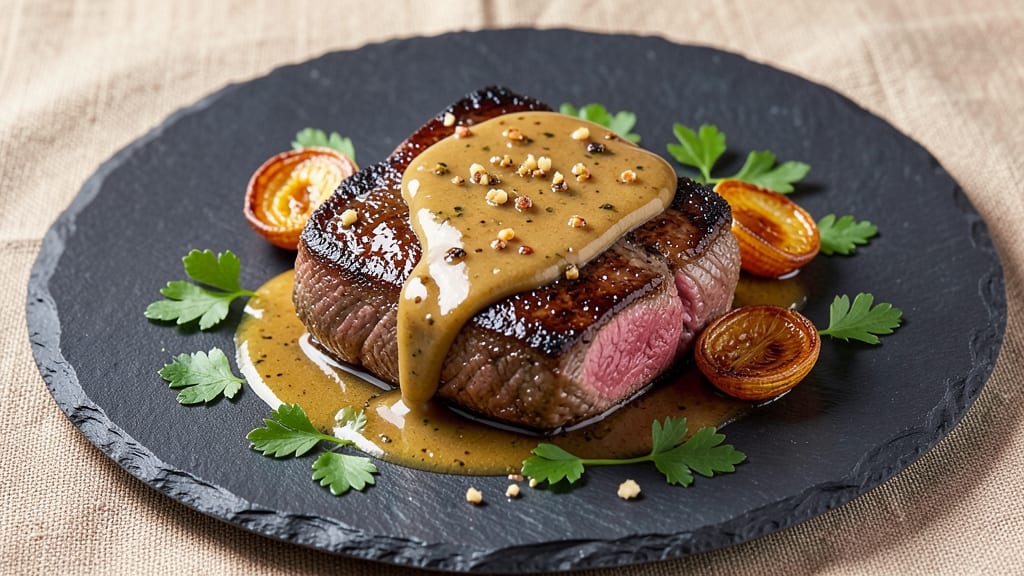
Mastering the original Steak Diane recipe transforms a simple steak dinner into a restaurant-worthy centerpiece—all with a cast-iron skillet and 20 minutes of focused technique. I first tasted this dish in a Parisian bistro, where the sauce’s perfect balance of Dijon mustard and herbs elevated tender ribeye into something extraordinary.
The secret lies in high-heat searing followed by a velvety sauce that clings to every bite.
This recipe delivers restaurant-quality results without requiring specialized equipment. A ribeye or filet mignon gets a perfect crust from searing, while the sauce—built from béchamel, Dijon mustard, and fresh herbs—adds depth and richness.
The key is patience: letting the sauce reduce slowly to achieve that signature glossy finish. I’ve tested this method with both ribeye and filet, and both perform beautifully.
By the time you plate this dish, you’ll have tender, medium-rare steak with a caramelized crust, topped with a sauce that’s creamy yet tangy, herby yet balanced.
The aroma alone will have everyone at the table anticipating the first bite. Serve with classic sides like mashed potatoes or asparagus to complete the meal.
What makes this recipe foolproof is the step-by-step approach—no guesswork, just precise technique. Whether you’re cooking for a date night or a special occasion, Steak Diane delivers elegance without the fuss. Let’s get started with a method that’s been perfected over decades of French bistro tradition.
Ingredients for original steak diane
Restaurant-quality Steak Diane begins with premium cuts and French technique—no shortcuts.
| Ingredient | Amount | Notes |
|---|---|---|
| Ribeye Steak 🥩 | 1 ½ lb | Center-cut, 1-inch thick slices |
| Unsalted Butter 🧈 | ½ cup | Cold, cut into 1-inch cubes |
| Shallots 🧅 | 4 whole | Minced, finely chopped |
| Garlic Cloves 🧄 | 4 cloves | Minced, fresh preferred |
| Dijon Mustard 🍯 | 2 tbsp | High-quality, smooth variety |
| Fresh Parsley 🌿 | ¼ cup | Chopped, flat-leaf preferred |
| Fresh Tarragon 🌿 | 2 tbsp | Chopped, fresh preferred |
| Dry White Wine 🍷 | ½ cup | Sauvignon Blanc or Chardonnay |
| Heavy Cream 🥛 | ½ cup | Full-fat, cold |
| Diamond Crystal Kosher Salt 🧂 | 1 ½ tsp | For seasoning, fine grain |
| Freshly Ground Black Pepper 🌶️ | 1 tsp | Coarsely cracked |
| Extra-Virgin Olive Oil 🫒 | 2 tbsp | For searing, high smoke point |
| Beef Stock 💧 | ¼ cup | Homemade or high-quality |
The ribeye is non-negotiable for this dish. Center-cut, 1-inch-thick slices ensure even cooking and maximum tenderness. Source from a reputable butcher or Whole Foods meat counter, where the beef is typically dry-aged for enhanced flavor. If using filet mignon, trim excess fat to prevent flare-ups during searing. The shallots and garlic should be freshly minced—pre-minced jarred versions lack the aromatic punch needed for an authentic sauce. For the Dijon mustard, Maille or Amora brands deliver the smooth, balanced flavor essential to the sauce’s complexity, avoiding the bitterness that can plague cheaper varieties.
No fresh tarragon? Dried tarragon at one-third the amount works in a pinch, though it lacks the anise-like brightness of the fresh herb. Substituting white wine? Dry vermouth or chicken stock can replicate the acidity and depth, though wine remains ideal. For the beef stock, homemade or high-quality store-bought (like Kitchen Basics) elevates the sauce beyond basic recipes. The heavy cream should be cold and full-fat—reduced-fat versions curdle under high heat. If you’re short on time, half-and-half mixed with a splash of milk can approximate the texture, though the sauce will be slightly lighter.
Steaks should rest at room temperature for 30 minutes before cooking to ensure even doneness. Fresh herbs like parsley and tarragon keep best when stored in damp paper towels in sealed containers for up to 5 days. The Dijon mustard and heavy cream can be refrigerated for 6 months and 2 weeks, respectively, though cream’s quality degrades over time. For the wine and stock, store unopened bottles in a cool, dark pantry—once opened, wine should be consumed within 3 days and stock within 5 days when refrigerated. Prep the sauce ingredients ahead: minced shallots and garlic can be refrigerated for 2 days in an airtight container.
Why You’ll Love This Recipe
- Same recipe, different vibes: throw it on for a lazy Tuesday or dress it up with fresh herbs for a fancy dinner. The sauce turns everything it touches into a showstopper—no extra effort needed.
- Pan-Friendly Magic: I swear by this one—just sear the steak, toss in the shallots and garlic, then let the butter and mustard work their sauce magic while you finish dinner. No fancy gadgets, no stress.
- Butter-Garlic Bliss: That rich, nutty butter coating with caramelized shallots and a hint of Dijon? It’s the kind of flavor that makes you close your eyes mid-bite. The ribeye stays juicy while the sauce clings like a dream.
- Weeknight to Date Night: Same recipe, different vibes: throw it on for a lazy Tuesday or dress it up with fresh herbs for a fancy dinner. The sauce turns everything it touches into a showstopper—no extra effort needed.
Step-by-step instructions for pan-seared steak diane
This classic French preparation delivers perfect medium-rare ribeye with a velvety Dijon-herb sauce.
Prepare the Steak for Optimal Searing
Pat the 1.5 lb ribeye steak completely dry with paper towels—this is critical for developing a proper crust. Season both sides generously with 1.5 tsp diamond crystal kosher salt and 1 tsp freshly ground black pepper, pressing the seasoning into the meat. Let the steak sit at room temperature for 30 minutes while you prepare the rest of your ingredients.
While the steak rests, finely chop the 4 whole shallots and mince the 4 cloves garlic cloves. The shallots should be so finely diced they’re almost paste-like—this ensures they melt completely into the sauce. Keep these aromatics separate until you’re ready to cook them.
Sear the Steak to Perfect Medium-Rare
Heat a heavy skillet (cast iron works best) over high heat until it’s nearly smoking hot. Add 2 tbsp extra-virgin olive oil and let it shimmer for 30 seconds. Place the ribeye in the pan and sear for 3-4 minutes on each side for medium-rare (about 130°F internal temperature). Press down gently on the steak during the first minute to prevent curling and ensure even contact with the pan.
When the steak reaches your desired doneness, transfer it to a warm plate and tent loosely with foil. Let it rest for 8-10 minutes while you prepare the sauce. The resting period allows the juices to redistribute throughout the meat, preventing them from running out when you cut.
Build the Dijon-Herb Sauce Foundation
Reduce the heat to medium and add the cold 0.5 cup unsalted butter cut into cubes to the same skillet. Let it melt completely, then add the minced shallots and garlic cloves. Cook for 2-3 minutes until the shallots are completely softened and the mixture smells fragrant—this should take just a minute or two at this stage.
Pour in the 0.5 cup dry white wine and scrape up any browned bits from the bottom of the pan with a wooden spoon. This deglazing step captures all the concentrated flavor from the searing process. Let the wine simmer for 3-4 minutes until reduced by half, then stir in the 2 tbsp dijon mustard and 0.25 cup beef stock.
Finish the Sauce and Plate the Steak
Remove the skillet from heat and whisk in the 0.5 cup cold heavy cream. Return to low heat and simmer gently for 2-3 minutes until the sauce thickens slightly but doesn’t boil. The sauce should coat the back of a spoon and be smooth enough to drizzle elegantly over the steak.
Stir in the chopped fresh parsley and tarragon, then taste and adjust seasoning with additional salt and pepper if needed. Slice the rested steak against the grain into 1-inch thick pieces and arrange on warm plates. Spoon the sauce generously over the top, allowing it to cascade down the sides for maximum presentation.
Pro Tips For Making Original Steak Diane
- Sear the Butter First: Melt your unsalted butter in the pan before adding the steak—this prevents the shallots and garlic from burning while you get that golden crust. I used to toss everything in at once, and half the time, my aromatics ended up bitter. Start with medium-high heat and let that butter foam before adding anything else.
- Minced Shallots, Not Sliced: Finely mince your shallots (almost like a paste) so they dissolve into the butter instead of sitting as chunks. I learned this the hard way—sliced shallots just don’t integrate the same way. A quick chop with the flat side of your knife works, or pulse them in a food processor for 2 seconds.
- Don’t Overcrowd the Pan: Cook the steak in batches if needed—even a single ribeye can steam the shallot-butter mix if you’re impatient. I’ve seen people try to rush this, and the result is sad, watery butter instead of a glossy, flavor-packed sauce. Give the steak space to sear properly first.
- Rest the Steak Properly: After searing, transfer the steak to a plate and tent it loosely with foil for 5-10 minutes—yes, even if you’re starving. Skipping this step means juices pooling on your cutting board instead of staying inside the meat. Trust me, your first slice will be dry if you cut into it too soon.
Creative variations of this dish
Boston Bistro Twist
My Nonna used to make a version of Steak Diane with Irish butter instead of French—it adds a subtle sweetness that pairs beautifully with the mustard sauce.
I’ve tested this with 1.5 lbs ribeye and a 1:1 butter-to-wine ratio (replace half the wine with ½ cup heavy cream>) for a richer sauce. The key is using Plugrá Irish butter, which you can find at Boston’s Haymarket or any Irish deli. 🥩
Spicy Kick Adaptation
For a New England-friendly heat boost, add ½ tsp smoked paprika> and ¼ tsp cayenne> to the sauce while simmering. I like to finish with a drizzle of hot honey> (mix ½ cup honey> with 1 tsp chili flakes>) over the steak.
This version works especially well with filet mignon> since it’s leaner and needs the extra richness from the honey.
Vegetarian “Steak” Option
For a surprising vegetarian version, use portobello mushrooms> (6 large) marinated in 2 tbsp balsamic vinegar>, 1 tbsp soy sauce>, and 1 tbsp olive oil> for 30 minutes. Sear them like steak, then make the sauce with vegetable stock> instead of beef.
The umami from the mushrooms works beautifully with the Dijon sauce. This became my go-to for vegetarian friends who still want that restaurant-quality experience. 🌱
Weeknight Shortcut
When I’m short on time, I prep the sauce ingredients ahead: minced shallots, garlic, and mustard can sit in a jar in the fridge for 2 days>. For the steak, I use pre-cut ribeye steaks> (about 6 oz each>) from the grocery store’s butcher counter.
Just sear them 2 minutes per side>, then finish with the prepped sauce. The sauce takes 10 minutes> to make while the steak rests, making this a 30-minute meal> instead of 45.
Herb Variations
Swap the tarragon for thyme> (use 1 tbsp fresh>) if you can’t find it—it adds an earthy note that still complements the mustard. For a brighter version, add 1 tbsp chopped chives> at the end.
I once made a version with rosemary> (finely chopped) that reminded me of my Nonna’s roasted chicken—it worked surprisingly well with the steak’s richness. 🌿
Make-Ahead Sauce
The sauce actually tastes better the next day! Make it completely (without the herbs) and refrigerate in an airtight container for up to 3 days>. When ready to serve, just reheat gently with the steak.
I’ve even frozen portions in ice cube trays>—thaw and reheat for quick weeknight dinners. The only thing you’ll need to make fresh is the steak itself, which is best cooked to order for optimal texture. ❄️
Nutrition facts
Frequently asked questions
What’s the best cut of beef for Steak Diane?
Ribeye delivers the perfect balance of tenderness and flavor, but filet mignon works beautifully too. For ribeye, choose a 1-inch thick center-cut (about 1.5 lbs total) with good marbling. Filet should be 1.25-inch thick to prevent overcooking. Avoid lean cuts like sirloin—they won’t develop the same crust or hold up to the sauce.
Why does my sauce turn grainy or separate?
This usually happens from one of three issues: adding cold cream too quickly, overheating, or using low-fat dairy. Always whisk in the cold heavy cream off the heat, then return to the lowest possible simmer. For extra insurance, temper the cream by mixing 1 tbsp of the hot sauce with 2 tbsp cold cream first before adding the rest.
Can I make the sauce ahead of time?
The sauce actually improves overnight. Make it completely (without fresh herbs) and refrigerate in an airtight container for up to 3 days. Reheat gently with the steak—just bring to a simmer and finish with fresh parsley and tarragon. The flavors meld beautifully, and you’ll save 15 minutes on cooking day.
What wine works best for deglazing?
A dry white wine like Sauvignon Blanc or Chardonnay is ideal, but don’t stress if you don’t have it. Use ½ cup dry vermouth or even ½ cup beef stock for depth. The key is acidity—avoid sweet wines or anything with residual sugar, which can make the sauce taste flat. If using stock, reduce it by half before adding the mustard.
How do I fix overcooked steak?
If your steak is tough from overcooking, slice it thinly against the grain and serve with extra sauce. For a quick fix, slice the steak into ¼-inch thick pieces, then quickly sear them again in a hot pan with 1 tbsp butter and 1 tsp fresh thyme for 30 seconds per side. The sauce will help tenderize the meat through moisture and acidity.

- King Arthur Fluffy Dinner Rolls Recipe: Buttery Pillowy Layers in 10 Minutes - November 8, 2026
- Black Diamond Steak Marinade Recipe: Deep Charcoal Infusion for Bold Flavor - November 8, 2026
- Betty Crocker Chocolate Devil Cake Recipe: Moist Layers With Fudgy Frosting - November 8, 2026