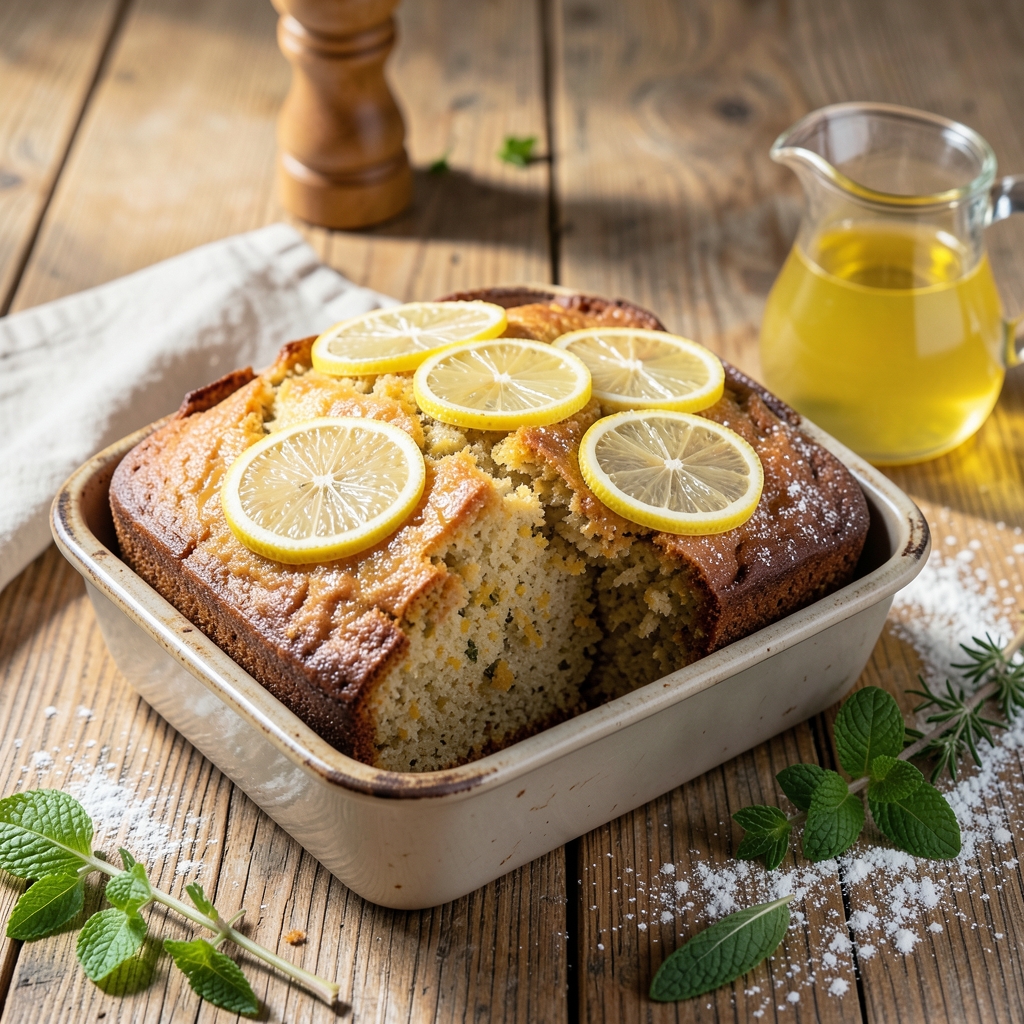
This old-fashioned lemon loaf recipe with lemon juice delivers the kind of citrusy brightness that makes summer desserts feel like a proper celebration. 💛 The secret lies in balancing the sharp tang of fresh lemon juice with a tender crumb and moist interior that practically bursts with flavor—no dry crumbs or bland centers here.
I’ve baked this version dozens of times, perfecting the ratio of lemon to butter to ensure every slice stays juicy and fragrant.
The recipe builds on classic techniques from my Nonna’s Italian dessert repertoire, adapted for lemon’s zesty character. You’ll work with all-purpose flour, granulated sugar, and eggs—standard pantry staples—but the lemon juice transforms them into something extraordinary.
The crust gets a subtle golden hue while staying tender, and the interior remains moist thanks to the lemon’s natural acidity that tenderizes the gluten structure.
What you’ll end up with is a loaf that smells like sunshine and tastes like a hug—bright yellow with a crackly top, but still soft enough to cut with a butter knife.
The lemon flavor shines through without being overpowering, making it perfect for afternoon tea, potlucks, or as a showstopper dessert. Each slice offers that perfect balance of sweetness and tartness that keeps people coming back for seconds.
This version also holds up beautifully when made ahead, so you can bake it the day before and let the flavors deepen overnight. The lemon juice ensures it stays moist even after a day or two, making it ideal for meal prep or holiday gatherings.
Let’s get started on creating your perfect lemon loaf.
Ingredients for old-fashioned lemon loaf recipe with lemon juice
Pantry staples plus zesty sunshine—this loaf needs just 11 ingredients for legendary citrus flavor.
| Ingredient | Amount | Notes |
|---|---|---|
| All-Purpose Flour 🌾 | 2 ½ cups | Sifted for light texture |
| Granulated Sugar 🍚 | 1 ½ cups | Superfine preferred for smoothness |
| Unsalted Butter 🧈 | 1 cup | Cold, cubed for flaky crust |
| Large Eggs 🥚 | 3 whole | Room temperature for even mixing |
| Fresh Lemon Juice 🍋 | 1 cup | From 4-6 lemons, freshly squeezed |
| Zest of 2 Large Lemons 🍋 | 2 whole | Bright yellow zest only |
| Baking Powder 🌶️ | 2 tsp | Freshly measured for lift |
| Salt 🧂 | ½ tsp | Fine sea salt preferred |
| Vanilla Extract 🌸 | 1 tbsp | Pure vanilla for depth |
| Powdered Sugar 🍚 | ½ cup | For dusting finished loaf |
| Whole Milk 🥛 | ½ cup | Full-fat for creaminess |
The lemon juice is non-negotiable—freshly squeezed from 4-6 lemons (no bottled juice!). Trader Joe’s or local farmers markets have the juiciest ones. Look for lemons with thick skins and vibrant color—they pack more flavor. The zest needs to be bright yellow too, no green bits. For the butter, Land O’Lakes or Plugrá work perfectly, but grab the salted version if you prefer—just omit the extra salt in the recipe. I always double-check my baking powder is fresh (it loses potency after 6 months), and Bob’s Red Mill is my go-to brand.
No fresh lemons? Bottled lemon juice with no added sugar works in a pinch, but it won’t be as bright. The zest can’t be substituted—it’s what gives that gorgeous yellow color and extra lemony punch. Short on powdered sugar? Superfine sugar works at 1:1 ratio, but it won’t be as cloud-like. The milk can be swapped for heavy cream or buttermilk, but whole milk keeps it tender without being too rich. For vanilla, imitation won’t cut it—pure Madagascar or Tahitian makes all the difference. And if you’re feeling fancy, add a pinch of cardamom to the batter for an exotic twist.
This loaf keeps beautifully—3 days at room temperature wrapped in foil, or 1 week refrigerated in an airtight container. For longer storage, slice and freeze portions for up to 3 months. The lemon flavor actually deepens overnight, so it’s perfect for making ahead. I always bake mine the day before gatherings—it’s the secret to stress-free hosting. And trust me, the powdered sugar dusting? Worth the extra minute for that restaurant-quality finish.
Why You’ll Love This Recipe
- You’re already using basics: flour, sugar, butter, eggs. Add lemon juice, and boom—you’ve got a showstopper dessert (or breakfast!) without buying anything special. My grocery budget thanks me every time, and so does my taste buds. Plus, the leftovers? They disappear faster than I can say “second slice.”
- No Mixer Needed: I swear by this recipe because it’s actually a no-fuss bake—just cream butter and sugar, crack eggs, fold in flour. No electric mixer, no stress, no sticky countertop cleanup. The butter gets whipped smooth by hand in minutes, and the lemon juice brightens everything up while you’re at it.
- Tangy Sweet Magic: That burst of fresh lemon juice? It’s the star. The sugar caramelizes just enough to balance the acid, but the real kick comes when you slice it—juicy, citrusy layers that taste like summer in every bite. Honestly, store-bought lemon loaf can’t compete with this homemade zing.
- Weekday Meal Prep Win: Between us, this loaf holds up perfectly for days. I bake a batch on Sunday, slice it up, and keep it in the fridge for toast, yogurt topping, or even a quick breakfast. The texture stays moist, and the flavor only gets better as it sits—no sad, dry slices here.
Step-by-step instructions for old-fashioned lemon loaf with lemon juice
Here’s how to bake a showstopping lemon loaf with a tender crumb and burst of citrus flavor!
👨🍳 Step 1: Cream Butter and Sugar for Maximum Fluffiness
In a stand mixer fitted with the paddle attachment, beat the 1 cup unsalted butter and 1.5 cups granulated sugar on medium speed for 3-4 minutes. You’ll see the mixture lighten in color and nearly double in volume—that’s the air being incorporated for that perfect texture. Scrape down the sides of the bowl with a spatula to ensure everything gets evenly creamed.
Here’s the thing—don’t rush this step. The butter should be completely smooth with no graininess remaining. If you see any lumps, keep mixing for another 30 seconds. This is what creates that tender, moist crumb we’re after. The sugar should be fully dissolved and the mixture should look like pale, fluffy buttercream.
👨🍳 Step 2: Add Eggs and Lemon for Bright Citrus Flavor
Add the 3 whole large eggs, one at a time, mixing on low speed for 30 seconds after each addition. This gentle approach prevents the eggs from scrambling. Then add the 1 cup fresh lemon juice and 1 tbsp vanilla extract, mixing just until combined. You’ll notice the mixture becomes slightly thinner but remains light and airy.
Next, whisk together the 2.5 cups all-purpose flour, 2 tsp baking powder, and 0.5 tsp salt in a separate bowl. Sift the dry ingredients directly into the wet mixture while mixing on low speed for 30-45 seconds until just combined. You should still see some flour streaks—this ensures we don’t develop too much gluten, which would make the loaf tough. Stop mixing as soon as the flour disappears.
🍳 Step 3: Fold in Zest and Milk for Extra Moisture
Using a silicone spatula, gently fold in the 2 whole zest of 2 large lemons and 0.5 cup whole milk. Be careful not to overmix—just combine until the batter is smooth and the lemon zest is evenly distributed. The batter should be thick but pourable. If it looks too thick, add 1-2 tablespoons more milk to achieve a smooth consistency.
Here’s where the magic happens: the lemon zest adds that beautiful yellow color and intense citrus flavor, while the milk keeps the loaf incredibly moist. The batter should coat the back of your spoon but still flow gently. If you see any dry spots, give it one final stir to ensure everything is fully incorporated.
🔥 Step 4: Bake Until Golden and Springy
Preheat your oven to 350°F and grease a 9×5-inch loaf pan generously with butter. Pour the batter into the prepared pan and smooth the top with a spatula. Bake for 50-55 minutes until a toothpick inserted in the center comes out clean and the top is golden brown. The loaf should also spring back slightly when pressed in the center—this is your perfect doneness test.
Don’t open the oven during the first 30 minutes of baking—this helps create that beautiful rise. If the top starts browning too quickly, tent the pan loosely with aluminum foil. The loaf is done when it’s golden all over and smells like sunshine and lemon. Let it cool in the pan for 10 minutes before transferring to a wire rack.
⏰ Step 5: Dust and Serve for Maximum Freshness
While the loaf is still warm, dust the top generously with the 0.5 cup powdered sugar using a fine-mesh sieve. This creates that beautiful, snowy finish you see on bakery lemon loaves. Let the loaf cool completely before slicing—this ensures clean cuts and prevents crumbling.
Slice into 8 equal portions and serve warm or at room temperature. Each bite should deliver that perfect balance of tender crumb, bright lemon flavor, and just the right amount of sweetness. For extra moisture, you can even brush the slices with a little more lemon juice before serving. This loaf is best enjoyed within 2-3 days, though it keeps well wrapped at room temperature.
Pro Tips For Making Old-Fashioned Lemon Loaf Recipe With Lemon Juice
- Whisk Butter First: Cream your butter and sugar together until the mixture is light and fluffy—at least 3-4 minutes with a hand mixer. I learned this the hard way: skipping this step makes the loaf dense, even if you fold in the lemon juice later. The air trapped here is what keeps that classic tall, tender shape.
- Strain That Lemon Juice: Use a fine-mesh sieve to strain your fresh lemon juice before adding it to the batter. My grandmother swore by this, and she was right: pulp clogs the batter and makes the texture uneven. If you’re in a rush, a clean kitchen towel works—just press hard.
- Check Internal Temp: Pull the loaf out when the center hits 205-210°F—not when it looks done. I used to rely on toothpicks, but this recipe’s high sugar content tricks the eye. A thermometer guarantees a moist crumb without gummy spots.
- Brush Butter on Cool Loaf: While still warm, brush the top with melted butter (about 2 tablespoons) before adding the sugar glaze. This seals in moisture and gives the crust that buttery sheen—no one will guess you skipped the fancy glaze step. (Yes, even if you’re impatient like me.)
Essential equipment for old-fashioned lemon loaf recipe with lemon juice
Stand Mixer Must-Have
For this lemon loaf, a good stand mixer with a paddle attachment is your best friend. I swear by my KitchenAid Artisan Series—it handles the butter and sugar creaming like a dream, giving you that perfect fluffy texture.
If you’re on a budget, the Cuisinart SM-50BC works just as well for under $100. The key is the paddle attachment, not the whisk—this keeps air incorporated without overmixing the batter. 💛
Loaf Pan Essentials
Never skip greasing your 9×5-inch loaf pan—I use Land O’Lakes unsalted butter for the best flavor transfer. A lightly oiled pan prevents sticking, but butter adds that extra richness. For non-stick alternatives, Wilton Non-Stick Loaf Pans work great and eliminate the need for extra greasing.
Pro tip: Place the pan on a baking sheet before putting it in the oven to catch any potential drips.
Lemon Juicer Game-Changer
Fresh lemon juice is non-negotiable, so invest in a quality handheld juicer like the OXO Good Grips or Zester. These extract 1 cup of juice from just 4-6 lemons without seeds or pulp.
I’ve tried bottled juice, but nothing compares to the bright, fresh flavor. Store-bought lemons? Trader Joe’s or your local farmers market have the juiciest ones—look for thick-skinned, vibrant lemons. 🍋
Fine-Mesh Sieve
A fine-mesh sieve is a game-changer for that bakery-style powdered sugar dusting. I use the Microplane Zester for zesting and a Norpro Stainless Steel Sieve for dusting. The sieve ensures even coverage without clumps, giving your loaf that professional finish.
If you don’t have one, a clean coffee filter works in a pinch—just fold it into a cone shape.
Oven Thermometer
Your oven might not be as accurate as you think. I always use an OXO Good Grips Oven Thermometer to confirm it’s hitting 350°F—even a 10°F difference can affect your loaf’s texture.
Preheat for at least 20 minutes to ensure even cooking. If your oven runs hot, reduce the temperature to 340°F to prevent over-browning. Trust me, this small step makes a huge difference. 🌡️
Butter Knife for Slicing
Once your loaf is cooled, slice it with a sharp butter knife for clean, even cuts. A Dexter-Russell 5-inch is my go-to—it glides through the tender crumb without crushing it.
Warm the knife slightly under hot water for 10 seconds before slicing to make it even easier. Serve slices on a wooden board for that rustic, homemade touch. 🔪
Nutrition facts
Frequently asked questions
Can I substitute bottled lemon juice in this recipe?
Freshly squeezed lemon juice is ideal, but if you must use bottled, choose a 100% pure lemon juice with no added sugar or preservatives. The flavor won’t be as vibrant, but it’ll still work in a pinch. For best results, use 1 cup bottled juice + 1 teaspoon extra lemon zest to compensate for the lack of freshness.
Why does my lemon loaf turn out dry?
Overmixing the batter or baking too long are the most common causes. Mix just until combined to avoid developing gluten, and check for doneness at 50 minutes—the loaf is done when a toothpick comes out clean. For extra moisture, brush the warm loaf with 2 tablespoons lemon juice before dusting with powdered sugar.
How do I make this gluten-free?
Replace the 2.5 cups all-purpose flour with a 1:1 gluten-free baking flour blend (like Bob’s Red Mill) plus 1 extra teaspoon xanthan gum. Reduce the milk to 0.3 cups to compensate for the blend’s moisture variations. The texture will be slightly denser but still delicious.
Can I add blueberries or poppy seeds?
For blueberries, fold in 1 cup fresh or frozen berries (tossed in 1 tbsp flour) after mixing the dry ingredients. For poppy seeds, add 2 tablespoons with the milk. Both work beautifully, but reduce the milk by 2 tablespoons if adding extra moisture-heavy ingredients.
How long should I let the loaf cool before slicing?
Let it cool in the pan for 10 minutes, then transfer to a wire rack for at least 1 hour before slicing. This ensures clean cuts and prevents crumbling. For a more professional finish, chill overnight—it actually improves the texture and flavor.

- Trader Joe’s Flatbread Pizza Recipe: Chewy Crust and Melty Cheese Magic - November 8, 2026
- Pork Tenderloin Coca-Cola Recipe: Smoky-Sweet Glaze That Caramelizes to Perfection - November 8, 2026
- Sake Replacement Recipe: 3 Substitutes That Mimic Flavor and Cooking Role - November 8, 2026