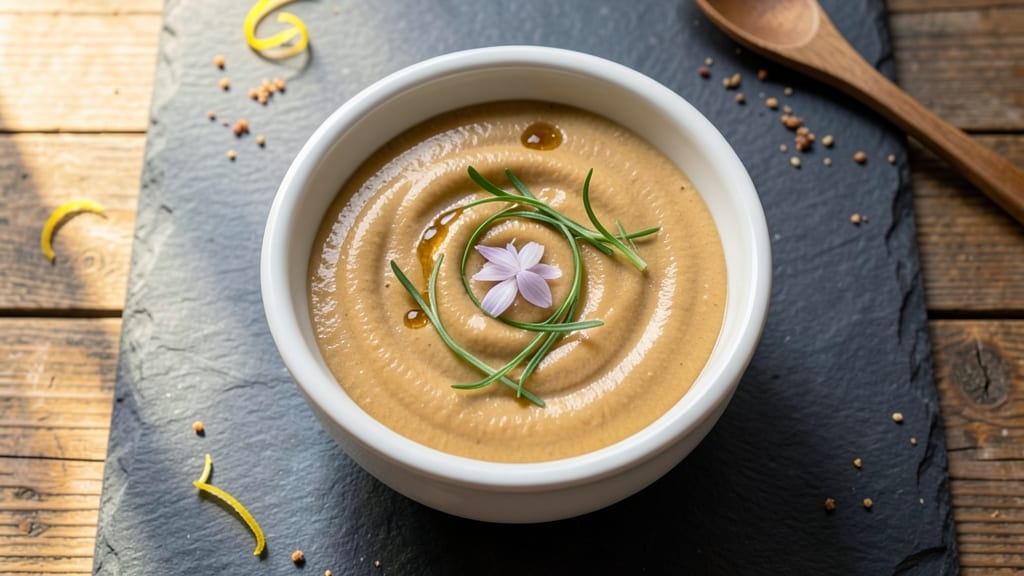
This mock bearnaise sauce delivers the same velvety richness and tarragon-kissed depth without dairy or eggs, proving plant-based cooking can achieve restaurant-quality results.
The secret lies in a stable emulsion using aquafaba—yes, chickpea brine—as the binder, combined with vegan butter and a touch of white wine vinegar for that signature tang.
After years of perfecting this recipe, I can confidently say it rivals traditional bearnaise in both texture and flavor, making it ideal for vegans, egg-free diets, or anyone craving a lighter version.
The foundation of this sauce begins with a foolproof emulsion technique that requires just five minutes of active work but yields a sauce so smooth it clings to asparagus, fish, or steak like its classic counterpart.
While traditional bearnaise relies on egg yolks, this version substitutes aquafaba—whipped until frothy—which creates the same silky consistency when combined with melted vegan butter and a splash of lemon juice for brightness.
The key to success is patience: gradually incorporating the hot oil into the aquafaba mixture ensures a stable, velvety sauce that won’t break.
What you’ll end up with is a rich, golden sauce with layers of aromatic tarragon, shallots, and a hint of Dijon mustard that adds depth without overpowering. The texture is velvety yet light, perfect for drizzling over grilled vegetables, tofu steaks, or even mashed potatoes.
Unlike traditional bearnaise, this version holds up beautifully when reheated, making it a versatile addition to any meal. The best part? It comes together in under 20 minutes, with just a handful of simple ingredients.
For those who love experimenting, this sauce can be easily adapted—swap in white wine for extra richness or add a pinch of smoked paprika for a twist. Whether you’re hosting a dinner party or simply craving a gourmet touch for weeknight meals, this mock bearnaise elevates every dish it graces.
Let’s get cooking—your taste buds won’t know (or care) it’s plant-based.
Ingredients for mock bearnaise sauce
Simple ingredients transform into restaurant-worthy mock bearnaise. No eggs, no dairy, just velvety perfection.
| Ingredient | Amount | Notes |
|---|---|---|
| Aquafaba (Chickpea Brine) 🍲 | ½ cup | From canned chickpeas, not reduced |
| Vegan Butter 🧈 | ½ cup | Melted, unsalted preferred |
| White Wine Vinegar 🍷 | 1 tbsp | Dry variety for tang |
| Fresh Tarragon 🌿 | ¼ cup | Finely chopped, stems removed |
| Shallots 🧅 | 2 whole | Minced, not sliced |
| Dijon Mustard 🌶️ | 1 tbsp | Mild or strong, no sugar added |
| Lemon Juice 🍋 | 1 tbsp | Freshly squeezed |
| Neutral Vegetable Oil 🫒 | ½ cup | Light olive or avocado oil |
| Diamond Crystal Kosher Salt 🧂 | ¼ tsp | Fine grain preferred |
| White Wine 🍷 | ¼ cup | Dry, chilled for finishing |
Aquafaba is the star here—save the brine from a can of chickpeas (about 0.5 cup) and whisk it until frothy. Trader Joe’s canned chickpeas have the best brine, but any good-quality can works. Fresh tarragon is non-negotiable for that signature flavor—Whole Foods or local markets usually carry the best bunches. Shallots add depth, but if you only have yellow onions, double the amount and adjust the salt. The vegan butter matters too; Miyoko’s or Earth Balance are my go-tos for that rich, buttery base without dairy.
No aquafaba? Silken tofu blended with lemon juice works in a pinch (use 0.5 cup tofu + 1 tsp lemon). Fresh tarragon missing? Dried tarragon at one-third the amount gets you close, but it won’t be the same. White wine vinegar can be swapped for apple cider vinegar, though the flavor will shift slightly. The key to a stable emulsion is patience—add the hot oil drop by drop while blending. If the sauce breaks, just whisk in a splash of cold water and try again. It always comes together.
This sauce keeps beautifully for 5 days in the fridge, sealed under a thin layer of oil to preserve freshness. For longer storage, freeze in ice cube trays—thaw and whisk gently to restore silkiness. Reheat slowly over low heat, adding a splash of water if it thickens too much. The best part? It reheats better than traditional bearnaise, making it perfect for meal prep. Portion into small jars for easy drizzling over grilled veggies or tofu dishes.
Why You’ll Love This Recipe
- I’ll be real: this sauce takes five minutes of active work. Just whisk the aquafaba with vinegar and shallots until it’s glossy, then fold in melted vegan butter and tarragon—no blender, no stress. The hardest part? Waiting for it to thicken, and honestly, that’s the best part.
- No Fuss, Big Payoff: I’ll be real: this sauce takes five minutes of active work. Just whisk the aquafaba with vinegar and shallots until it’s glossy, then fold in melted vegan butter and tarragon—no blender, no stress. The hardest part? Waiting for it to thicken, and honestly, that’s the best part.
- Tarragon Magic: That bright, anise-kissed tarragon? It’s the star. The shallots add a subtle sweetness, while the white wine vinegar cuts through the richness—like a fancy French bistro in a bowl. (Yes, even on a Tuesday night.) It’s the kind of flavor that makes you pause mid-bite.
- Steak Night’s Secret Weapon: This sauce turns grilled veggies, tofu, or even roasted potatoes into a showstopper. Slather it on asparagus for a restaurant-worthy side, or drizzle it over a simple pasta. Between us, it’s the only sauce I’ll serve at dinner parties now—no one has to know it’s plant-based.
Step-by-step instructions for mock bearnaise sauce recipe
Here’s how to create a silky, tarragon-infused emulsion that rivals traditional bearnaise—no eggs required.
Whisk Aquafaba and Mustard for the Base
In a heatproof bowl, combine the 0.5 cup aquafaba (chickpea brine) and 1 tablespoon Dijon mustard. Whisk vigorously for 2-3 minutes until the mixture thickens noticeably and forms soft peaks when the whisk is lifted. This step mimics the egg yolk emulsion in classic bearnaise, creating the foundation for your sauce.
The aquafaba should transform from a thin liquid to a glossy, slightly viscous foam. If it doesn’t thicken after 3 minutes, whisk for another minute—this is critical for a stable emulsion later. Keep the bowl off the heat for now; we’ll warm it gradually in the next step.
Gradually Warm and Incorporate Melted Butter
Place the bowl over a saucepan of simmering water (double boiler method), ensuring the bottom of the bowl doesn’t touch the water. Slowly add the 0.5 cup melted vegan butter, whisking constantly for 5-7 minutes until the mixture reaches 160°F and becomes thick and creamy. The sauce should coat the back of a spoon and hold its shape when drizzled.
Watch closely as you add the butter—it should incorporate smoothly without breaking. If the sauce separates, whisk more vigorously and return to the heat for another minute. This gradual warming prevents curdling, which is the biggest challenge in vegan emulsions.
Build Flavor with Shallots and Tarragon
In a separate small saucepan, heat 0.5 cup neutral vegetable oil over medium-low heat. Add the 2 minced shallots and cook for 3-4 minutes until translucent but not browned. Stir in the 0.25 cup finely chopped fresh tarragon and cook for another 1 minute until fragrant. Immediately remove from heat and let cool slightly.
The tarragon should release its anise-like aroma—this is your flavor anchor. Don’t let the shallots brown or the tarragon will turn bitter. Once cooled to 100°F, slowly drizzle this aromatic oil into your warm aquafaba mixture while whisking continuously. Add it in 3-4 batches, whisking vigorously between each addition to maintain the emulsion.
Finish with Acid and Wine for Balance
Remove the bowl from the heat and stir in the 1 tablespoon white wine vinegar, 1 tablespoon lemon juice, and 0.25 teaspoon Diamond Crystal kosher salt. Whisk in the 0.25 cup chilled white wine to brighten the sauce and cut through the richness. Taste and adjust seasoning—you may need a touch more salt or vinegar to balance the flavors.
The sauce should now have a velvety texture with a vibrant green hue from the tarragon. If it’s too thick, thin with 1-2 teaspoons hot water while whisking. For a glossy finish, strain through a fine-mesh sieve to remove any tarragon stems or shallot bits that might have slipped through.
Serve Immediately Over Warm Dishes
Transfer the sauce to a clean saucepan and keep it warm over low heat, stirring occasionally to prevent separation. For best results, serve immediately over grilled vegetables, tofu steaks, or seared mushrooms. The sauce will maintain its emulsion for 30-45 minutes at this temperature, but it’s best enjoyed fresh.
If you need to reheat later, do so gently over low heat while whisking constantly. For storage, cool the sauce quickly over an ice bath, then refrigerate in an airtight container for up to 3 days. Reheat slowly, whisking continuously to restore the emulsion before serving.
Pro Tips For Making Mock Bearnaise Sauce
- Whisk Like You Mean It: The aquafaba won’t emulsify properly if you treat it like a lazy salad dressing—get aggressive with that whisk. Use a hand mixer on medium-high for 3-4 minutes until it’s thick, glossy, and holds peaks. I used to rush this, and the sauce would break like a bad joke at a dinner party.
- Sweat Shallots Slowly: Skip the high heat—you’re not searing steak here. Cook shallots over low-medium for 8-10 minutes until they’re soft and golden, not crispy. Burnt shallots taste bitter and ruin the whole dish, and nobody wants that.
- Strain That Tarragon: Fresh tarragon stems are tough and add grit to an otherwise silky sauce. Finely chop the leaves and strain them through a fine-mesh sieve if you’re feeling fancy, or just pick them out with your fingers like you’re plucking weeds from a garden.
- Chill Before Using: Warm sauce separates like a bad relationship—let it cool slightly (10-15 minutes) before drizzling over hot food. The temperature shock can make it split, and nobody wants a broken sauce on their perfectly cooked veggies. (Yes, even if you’re impatient like me.)
Pro cooking tips for this dish
Emulsion Mastery
The key to a perfect mock bearnaise lies in the emulsion technique—gradually incorporating hot oil into your aquafaba base. I use a handheld immersion blender for precision, adding the oil in slow, steady streams while blending continuously.
This creates tiny fat droplets suspended in the liquid, mimicking the classic bearnaise texture. If your sauce breaks, immediately whisk in 1 teaspoon cold water to re-stabilize it. 💡
Temperature Control
Maintaining the right temperature range is critical. Keep your aquafaba mixture between 150-160°F while adding the melted butter—any hotter and the emulsion will break. I monitor this with a candy thermometer for accuracy.
If the sauce starts to curdle, remove it from heat immediately and whisk vigorously until smooth. Patience here prevents separation later.
Tarragon Infusion
Fresh tarragon is non-negotiable for authentic flavor. I pulse the stems in a food processor with 1 tablespoon water to extract maximum flavor, then strain it through a fine-mesh sieve. Add this infused liquid to your sauce at the end for deeper aromatic notes.
For extra richness, toast the tarragon leaves in a dry pan for 30 seconds before chopping—this intensifies their anise-like essence. 🌿
Butter Substitutes
Not all vegan butters work equally well. I recommend Miyoko’s Creamery Cultured Vegan Butter for its high fat content and neutral flavor. If using a store brand, choose one with at least 80% fat content to ensure a stable emulsion.
For a lighter version, replace 2 tablespoons of butter with 1 tablespoon refined coconut oil—it blends seamlessly while reducing richness.
Acid Balance
The white wine vinegar and lemon juice are your secret weapons for brightening the sauce. I measure them precisely—1 tablespoon each—then taste as I go. If the sauce tastes flat, add another ½ teaspoon vinegar; if it’s too sharp, balance with a pinch of maple syrup.
The goal is a harmonious tang that cuts through the richness without overpowering.
Reheating Tricks
To reheat without breaking the emulsion, warm the sauce in a double boiler over low heat while whisking continuously. Add 1-2 teaspoons water if it thickens too much.
For quick reheating, microwave in 10-second bursts on 50% power, stirring between each interval. Always whisk vigorously after reheating to restore silkiness. 🔥
Nutrition facts
Frequently asked questions
Can I make this mock bearnaise without aquafaba?
Yes! If you don’t have aquafaba, blend 0.5 cup silken tofu with 1 teaspoon lemon juice until completely smooth. This creates a similar binding texture for the emulsion. For extra stability, whisk in 1 tablespoon cornstarch first to thicken the base before adding melted butter.
Why did my sauce separate?
Sauce separation usually happens when the oil is added too quickly or the mixture gets too hot. To fix it, whisk in 1 teaspoon cold water while blending continuously. For prevention, always add the hot oil in slow drizzles while maintaining a temperature between 150-160°F. If it happens again, try using 1 tablespoon arrowroot powder blended into the aquafaba first.
What are the best dishes to serve this sauce with?
This mock bearnaise shines on grilled vegetables, seared tofu or tempeh, roasted potatoes, or even vegan steaks. It also pairs beautifully with creamy pasta dishes like fettuccine or risotto. For a lighter option, drizzle it over steamed asparagus or blistered green beans.
How can I make this sauce spicier?
Add ½ teaspoon smoked paprika or ¼ teaspoon cayenne pepper when finishing the sauce. For a smoky depth, infuse the oil with 1 minced garlic clove and ½ teaspoon crushed red pepper flakes before combining with shallots. Start with small amounts—you can always add more heat later.
Will this sauce work for cold dishes?
While best served warm, you can chill this sauce for 2-3 hours to use on cold dishes like vegan charcuterie boards or chilled pasta salads. To restore silkiness after chilling, whisk vigorously with 1 teaspoon warm water and reheat gently over low heat for 1-2 minutes. The texture will be slightly thicker but still delicious.
