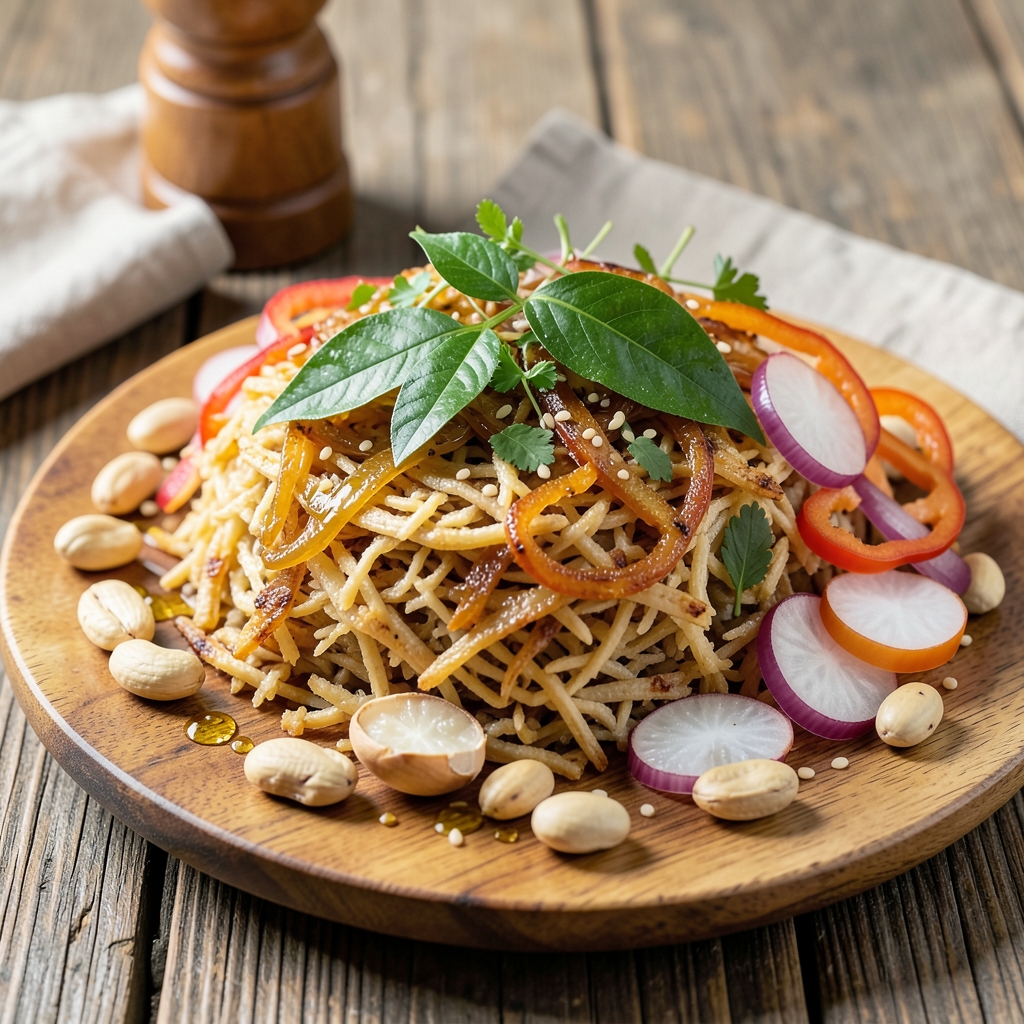
This mix veg poha recipe transforms fluffy rice flakes into a vibrant, crunchy masterpiece that balances textures and flavors perfectly. The key lies in proper tempering—those sizzling mustard seeds and curry leaves create an aromatic base that elevates every bite.
I’ve perfected this dish after testing it in my small Boston kitchen, where space forces efficiency without sacrificing quality.
The magic begins with toasting the poha until it’s crisp at the edges yet remains tender inside, then layering in sautéed vegetables that add color and freshness. A splash of lemon juice at the end brightens the dish, cutting through the richness while preserving the traditional flavors.
This recipe delivers restaurant-quality results with simple techniques anyone can master.
What you’ll end up with is a dish that’s light yet satisfying—crispy peanuts add texture, turmeric infuses the poha with golden color, and the spiced vegetables bring depth. It’s the kind of meal that feels special but comes together in under 30 minutes.
Perfect for weeknight dinners or weekend brunches, this poha adapts easily to vegetarian preferences with paneer or stays classic with optional protein additions.
Whether you’re serving it to guests or treating yourself to a flavorful lunch, this mix veg poha recipe proves that simple ingredients can create extraordinary results. The balance of textures and flavors makes it unforgettable—just like the meals my Nonna used to make in our tiny kitchen. Let’s get cooking!
Ingredients for mix veg poha
Simple ingredients transform into a vibrant, crunchy dish that feels special every time.
| Ingredient | Amount | Notes |
|---|---|---|
| Poha (Flattened Rice Flakes) 🍚 | 2 cups | Uncooked, thick variety preferred |
| Yellow Turmeric Powder 🌿 | 1 tsp | Freshly ground preferred |
| Mustard Seeds 🌶️ | 1 tbsp | Whole, for tempering |
| Curry Leaves 🌿 | ¼ cup | Fresh, dried at 1/4 amount |
| Peanuts 🥜 | ½ cup | Crushed, unsalted preferred |
| Red Onion 🧅 | 1 whole | Finely chopped |
| Green Chilies 🌶️ | 2 whole | Slit lengthwise, seeds removed |
| Fresh Cilantro 🌿 | ¼ cup | Chopped, stems removed |
| Lemon Juice 🍋 | 2 tbsp | Freshly squeezed |
| Paneer 🧀 | 4 oz | Cubed, optional protein |
| Vegetable Oil 🫒 | ½ cup | For tempering |
| Salt 🧂 | 1 tsp | Adjust to taste |
| Black Salt (Kala Namak) 🧂 | ¼ tsp | Optional, for sulfuric flavor |
| Cumin Seeds 🌿 | ½ tsp | For extra depth |
The poha is the star—thick, uncooked flakes toast up beautifully while staying tender. Grab the yellow variety at Indian markets or the international aisle; it’s pricier but worth it. Whole Foods or Trader Joe’s usually carry it, but if you can’t find it, regular rice flakes work in a pinch. Toast the peanuts separately in a dry pan until golden—they add that perfect crunch. For turmeric, freshly ground has the most vibrant color, but the powdered stuff works fine if you’ve got it.
No curry leaves? Dried leaves at half the amount or even a pinch of dried thyme gets you close. Skip the paneer if you’re avoiding protein, but the dish still holds up—just add extra peanuts for crunch. Fresh cilantro is ideal, but dried at one-third the amount works if you’re in a bind. The green chilies can be swapped for jalapeños or serranos if you like more heat. For the tempering, mustard seeds and cumin are non-negotiable—they create that signature aroma.
Poha keeps best in an airtight container for 3 days in the fridge, though it’s best eaten fresh. The peanuts stay crispy for 1 week if stored separately. Double the batch—it reheats beautifully, and the flavors actually improve the next day. I always make extra to toss into salads or eat as a snack. The lemon juice is best added right before serving, so don’t forget that final brightening step!
Why You’ll Love This Recipe
- No Chopping Needed: I swear by this when I’m too tired to dice onions. The mix veg comes pre-cut—just toss it in, and the poha soaks up all the flavors while you stir. Honestly, it’s my lazy-day hero.
- Turmeric Magic: That bright yellow turmeric powder? It’s not just for color—it gives the poha a warm, earthy kick that makes every bite feel special. Between us, the mustard seeds and curry leaves sizzling in oil take it to another level.
- Lunchbox Superstar: Pack it cold or reheat it—this holds up perfectly for work lunches or kids’ school meals. My daughter actually asks for it now, and I’ve even served it at potlucks. (Yes, even on a Tuesday night.)
- Pocket-Friendly Feast: A bag of poha and a handful of spices cost less than takeout, but it feeds four for under five bucks. The peanuts add crunch without breaking the bank, and leftovers? Still delicious the next day.
Step-by-step instructions for mix veg poha recipe
This turmeric-spiced poha comes together faster than you can say “crunchy peanuts.”
Toast the Poha Until Golden and Fluffy
Heat a large, heavy-bottomed skillet over medium-high heat. Add the 2 cups poha (flattened rice flakes) and spread them evenly in a single layer. Toast for exactly 3 minutes, stirring constantly with a spatula to prevent burning. You’ll see the poha puff up slightly and turn a pale golden color—this is when they’re perfectly toasted and ready for flavor infusion.
Here’s the thing—don’t walk away. The poha can burn in seconds if you’re not paying attention. Once they’re golden, immediately remove from heat and transfer to a large bowl. The residual heat will keep them warm while you prepare the rest of the ingredients.
Prepare the Tempering with Mustard Seeds and Spices
In the same skillet (no need to clean it—the flavorful bits add depth), heat 0.5 cup vegetable oil over medium heat. Add the 0.5 tsp cumin seeds and let them sizzle for 10 seconds until fragrant. Then add the 1 tbsp mustard seeds and cook for another 15 seconds until they begin to pop.
Next, add the 0.25 cup curry leaves and the 2 slit green chilies. Cook for 30 seconds until the curry leaves turn dark green and the chilies soften slightly. This is when you’ll smell that wonderful aromatic punch—the foundation of your poha’s flavor profile. Remove from heat and pour this tempering over the toasted poha.
Mix in Vegetables and Paneer
Add the finely chopped 1 whole red onion and the 4 oz cubed paneer to the warm poha. Gently fold everything together with a spatula, making sure the vegetables and paneer are evenly distributed. Sprinkle the 1 tsp yellow turmeric powder, 1 tsp salt, and 0.25 tsp black salt (kala namak) over the mixture and fold again.
Here’s where it gets fun—the texture contrast. The fluffy poha absorbs the spices while the paneer adds protein and the onion brings sweetness. Let the mixture sit for 2 minutes so the flavors can meld together. This is also when you’ll notice the turmeric’s vibrant yellow color transforming the dish.
Add Lemon and Garnish with Peanuts and Cilantro
Squeeze the 2 tbsp lemon juice over the poha mixture and fold gently. The acidity brightens all the flavors and cuts through the richness. In a small dry skillet, toast the 0.5 cup crushed peanuts over medium heat for 2-3 minutes until they turn a rich golden brown and smell nutty. This is crucial—they should be crispy, not burnt.
Finally, sprinkle the toasted peanuts and 0.25 cup chopped fresh cilantro over the poha. The peanuts add that satisfying crunch you crave in every bite, while the cilantro brings freshness. Give everything one final gentle mix, and your mix veg poha is ready to serve.
Serve Immediately for Maximum Freshness
Transfer the poha to serving bowls while it’s still warm. The perfect poha should have fluffy yet slightly crispy rice flakes, tender paneer, and crunchy peanuts in every bite. The lemon juice should make your mouth pucker slightly, while the spices warm your palate.
I know it seems like too much, but trust me—this balance of textures and flavors is exactly what makes this dish so special. Serve with extra lemon wedges on the side if you’re feeling fancy, or with a side of spicy green chutney for dipping. Enjoy while warm for the best experience!
Pro Tips For Making Mix Veg Poha
- SOAK POHA JUST ENOUGH: The flakes should be pliable but not mushy—about 20 minutes in warm water (not boiling). I learned this the hard way by over-soaking and ending up with a gluey mess. Drain immediately after, or they’ll turn into rice paste.
- CRACK MUSTARD SEEDS LOW: Start the tempering on medium-low heat—mustard seeds burn faster than you’d think. If they pop too aggressively, they’ll turn bitter before the curry leaves even get a chance to sing. Let them sizzle gently first, then add the curry leaves.
- SKIP THE PEANUT CRUSH: Use whole, lightly toasted peanuts—they add texture and crunch that ground peanuts can’t match. Toast them separately in a dry pan for 2-3 minutes until golden, then chop roughly. This keeps the dish from turning into a peanut butter puddle.
- STIR POHA ON LOW: After draining, spread the poha on a plate and gently toss it with a splash of lemon juice and turmeric while still warm. Then cook it on low heat with the tempering—high heat will dry it out before the veggies even soften. Think “simmer, don’t fry.”
Regional styles of this recipe
Maharashtrian Style
In Maharashtra, poha is often made with a twist that includes 2 tbsp of grated coconut and 1 tsp of jaggery for a subtle sweetness. I like adding 1 tbsp of finely chopped mint leaves alongside the cilantro for a refreshing herbal note.
The dish is typically served with a side of spicy tamarind chutney—just mix 1 tbsp tamarind paste, 1 tsp red chili powder, and 1 tsp sugar with water to make a tangy dip. 🌿
Goan Fusion Twist
Goan poha incorporates 1 tbsp of Goan vinegar (or apple cider vinegar) instead of lemon juice, giving it a tangier kick. I also add ½ tsp of fennel seeds to the tempering for a unique licorice-like aroma.
For extra richness, many Goan versions include 2 tbsp of cashew paste mixed into the poha. The dish pairs beautifully with Goan-style fried fish, like pomfret or kingfish, for a coastal-inspired meal. 🍺
South Indian Adaptation
In South India, poha is often called dalia and is cooked with 1 tbsp of coconut oil instead of vegetable oil. The tempering includes 1 tsp of asafoetida (hing) for a distinct umami depth, and the dish is garnished with 1 tbsp of roasted chana dal for added protein.
I’ve found that adding ½ tsp of black pepper to the mix elevates the flavors, especially when served with coconut milk drizzled on top. 🌶️
Bengali-Inspired Version
Bengali poha often skips paneer and instead uses 1 tbsp of mustard oil for the tempering, giving it a bold, pungent flavor. I like adding 1 tsp of sugar to balance the spices and ½ cup of shredded raw mango for a sweet-and-sour contrast.
The dish is typically finished with 1 tbsp of chopped coriander seeds for a nutty crunch. Serve it with boiled potatoes on the side for a heartier meal. 💫
Punjabi Crunchy Style
Punjabi poha is all about texture—it includes ½ cup of roasted makhana (fox nuts) and 1 tbsp of chopped dried fenugreek leaves for a unique earthy flavor. The tempering often includes 1 tsp of garam masala for warmth, and the dish is finished with 1 tbsp of chopped scallions.
This version is perfect for a quick, protein-rich lunch, especially when paired with yogurt-based raita. 🥜
Nutrition facts
Frequently asked questions
Can I use regular rice flakes instead of thick poha?
Thin rice flakes work in a pinch, but they won’t give you that perfect fluffy texture. For the best results, look for the thick, uncooked variety at Indian markets or the international aisle. If you can’t find it, try rice vermicelli (broken into pieces) as a substitute, though the texture will differ slightly.
How do I prevent the poha from burning while toasting?
Toast the poha over medium-high heat in a single layer, stirring constantly every 15-20 seconds. Use a heavy-bottomed skillet to distribute heat evenly. If it starts to brown too quickly, reduce the heat slightly. The key is keeping it moving—burnt poha ruins the whole dish.
What’s the best way to store leftover poha?
Store in an airtight container in the fridge for up to 3 days. The peanuts stay crispy if kept separately. Reheat gently in a dry pan over low heat, adding a splash of water to restore moisture. For longer storage, freeze for up to 1 month, but texture may change slightly.
Can I make this recipe without paneer?
Skip the paneer and add extra 0.25 cup chopped boiled potatoes or 0.5 cup grated carrots for texture. The dish will still be hearty and flavorful. For protein, try chickpeas or tofu cubes instead.
Why does my poha taste bland?
Blandness usually means the tempering wasn’t cooked long enough. Mustard seeds should pop audibly and curry leaves darken before adding to poha. Boost flavors by adding 0.5 tsp extra black pepper or 1 tsp amchur (dry mango powder) at the end. Freshly ground spices make a huge difference too!
