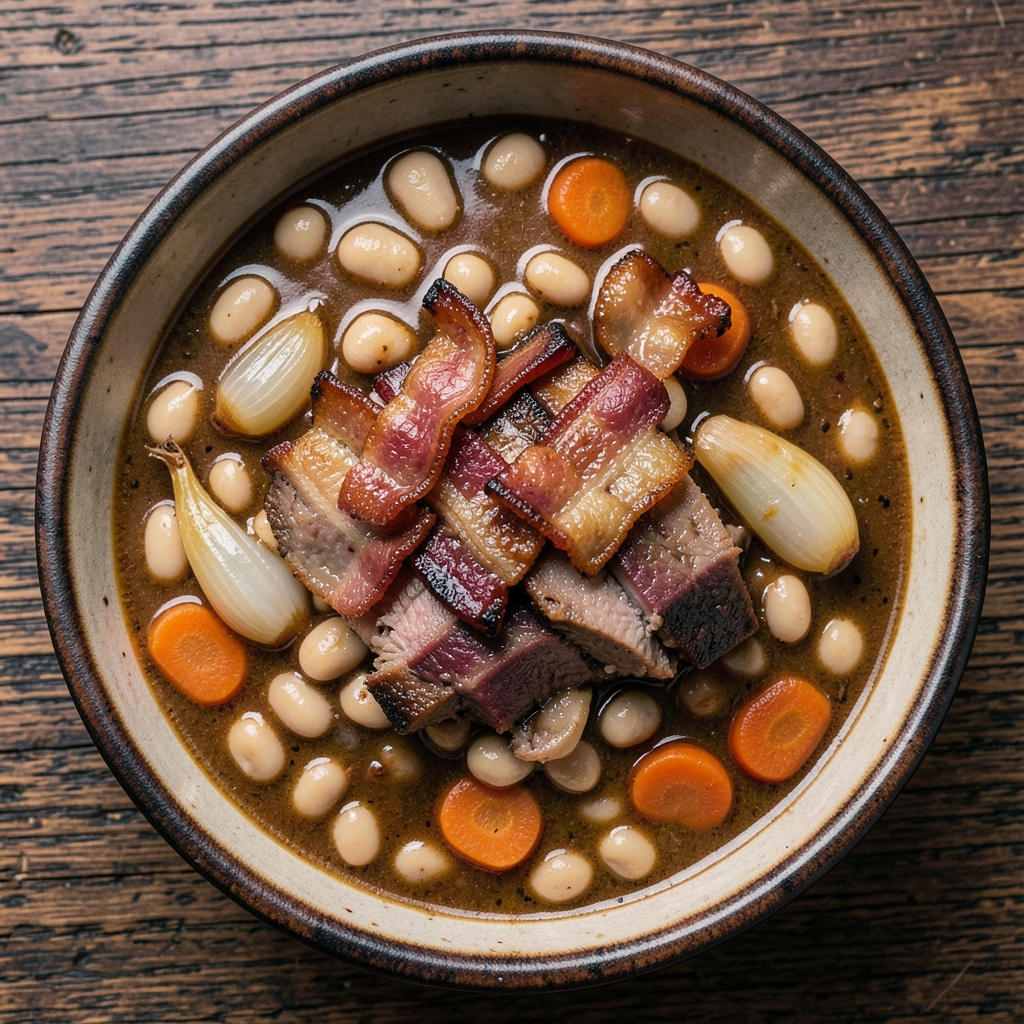
This McGuire’s Irish Pub Senate Bean Soup recipe brings the rich, smoky flavors of Boston’s most iconic pub to your kitchen—slow-simmered until every ingredient melts into velvety perfection. 🌟 I first tasted it during a chilly New England winter when a steaming bowl of this hearty soup felt like coming home after a long day, and I knew I had to recreate it.
The secret lies in the balance of smoky bacon, tender beans, and a deep, savory broth that builds flavor with each passing hour.
What sets this recipe apart is the slow-simmered depth that transforms simple ingredients into something extraordinary. Unlike quick versions, this method develops layers of flavor as the beans soften and the broth reduces, creating a soup that’s both comforting and complex.
The smoky bacon adds a depth that’s impossible to replicate with shortcuts, while the blend of white beans and pork shoulder ensures a hearty, satisfying bite. It’s the kind of soup that tastes even better the next day, making it perfect for meal prep or feeding a crowd.
By the time you’re done, you’ll have a rich, smoky, and deeply flavorful soup that rivals the original—creamy yet substantial, with each spoonful delivering a perfect balance of savory, smoky, and slightly sweet notes.
The aroma alone will fill your kitchen with warmth, and the texture is just right: tender beans, melt-in-your-mouth pork, and a broth so flavorful it disappears too quickly.
This is the kind of recipe that turns a simple weeknight into a cozy gathering, just like the ones I remember from my Nonna’s kitchen.
Serve it with crusty bread for soaking up every last drop, or pair it with a simple green salad to balance the richness. The beauty of this recipe is its versatility—it’s hearty enough for a cold winter’s day but simple enough to make anytime you crave a taste of home.
Let’s get started on creating this Irish-American classic.
Ingredients for mcguire’s irish pub senate bean soup
Six ingredients for the base, plus a few pantry staples to build smoky, velvety depth.
| Ingredient | Amount | Notes |
|---|---|---|
| Pork Shoulder 🍖 | 2 lb | Bone-in preferred for flavor |
| Thick-Sliced Bacon 🥓 | 8 oz | Smoky variety for depth |
| Great Northern Beans 🌾 | 2 cups | Dried, soaked overnight |
| Navy Beans 🌾 | 1 cup | Dried, soaked overnight |
| Yellow Onion 🧅 | 1 whole | Chopped, medium size |
| Carrots 🥕 | 4 whole | Medium size, peeled |
| Celery Stalks 🧅 | 3 whole | Fresh, chopped |
| Garlic Cloves 🧄 | 4 cloves | Peeled, rough chopped |
| Tomato Paste 🍅 | ½ cup | Squeeze tube preferred |
| Beef Broth 💧 | 4 cups | Low-sodium preferred |
| Bay Leaves 🍃 | 2 whole | Fresh, if possible |
| Thyme Sprigs 🌿 | 2 whole | Fresh, or 1 tsp dried |
| Salt 🧂 | 1 ½ tsp | Kosher or sea salt |
| Black Peppercorns 🌶️ | ½ tsp | Freshly cracked |
| Butter 🧈 | 2 tbsp | Unsalted, for finishing |
The pork shoulder is non-negotiable here—it’s what gives this soup its legendary richness. Costco or Whole Foods usually have great cuts, but any grocery store’s butcher section will work. Look for a piece with good marbling, not too lean. I always ask for it to be cut into 1-inch chunks before I even get home. The bacon? Thick-cut, smoky is key—no flimsy pre-cooked slices. Trader Joe’s has a great smoked variety that’s perfect, or grab whatever’s on sale at the deli counter. The beans need soaking overnight (or quick-soaked with boiling water for 2 hours), but don’t skip it—they’re the heart of this soup.
No pork shoulder? Chicken thighs work in a pinch, but the flavor will be lighter. Fresh thyme is ideal, but dried works at half the amount if that’s what you’ve got. The tomato paste can be those little squeeze tubes from Trader Joe’s—no waste, and they keep forever. Carrots and celery can be swapped for whatever’s in your crisper, but the ratio matters: about 1 cup total chopped veggies. The beef broth? Low-sodium is crucial—you’ll be adding salt later, and you don’t want to overdo it. A good homemade stock is even better if you’ve got it.
This soup tastes even better the next day, so make a big batch. Store in the fridge for up to 5 days, or freeze portions for 3 months. I like to portion it into quart-sized containers—perfect for lunches. The butter at the end is worth it (trust me), but if you’re watching calories, just skip it. The soup will still be delicious. Leftovers reheat beautifully—just add a splash of water or broth if it gets too thick.
Why You’ll Love This Recipe
- One-Pot Magic: I swear by this recipe when I’m too tired to wash extra bowls—just dump everything into a heavy pot, let it simmer, and walk away. That pork shoulder falls apart like a dream, and the bacon adds this smoky richness without needing a separate pan.
- Pork & Bacon Bomb: Between us, the combo of slow-cooked pork shoulder and crispy bacon edges is ridiculously satisfying. It’s hearty enough to fill you up but light enough you won’t feel sluggish afterward—honestly, my husband asks for seconds before I even finish serving.
- Leftovers That Shine: This soup actually improves the next day. The flavors meld deeper, and it’s perfect for packing lunches or reheating for dinner. I’ll be real: I’ve made it on Sunday just so I’d have easy bowls all week.
- Budget-Friendly Feast: Pork shoulder and beans stretch this recipe to feed four for under $15. It’s my go-to when groceries are tight but I still want something that feels special—not cheap, just smart. Plus, the onions caramelize naturally, so you’re not sacrificing flavor.
Step-by-step instructions for slow-cooked Irish pub-style bean soup
Here’s how to build rich, smoky layers that make this soup taste like it’s been simmering all day.
🔥 Step 1: Render the Bacon and Build the Flavor Base
Cut the 8 oz thick-sliced bacon into ¼-inch pieces and cook in a large Dutch oven over medium heat until the fat renders and the bacon becomes deep golden brown (about 8-10 minutes). Real talk: don’t rush this—crispy bacon equals deep flavor.
Remove the bacon with a slotted spoon and set aside, leaving the rendered fat in the pot. Add the chopped yellow onion, chopped carrots, and chopped celery stalks to the bacon fat. Cook for 8-10 minutes until the vegetables soften and the onion becomes translucent. Here’s the thing—this slow cooking caramelizes the veggies, creating that sweet, deep base flavor you want in every spoonful.
🍳 Step 2: Toast the Beans and Add Aromatics
Add the 2 cups soaked great northern beans and 1 cup soaked navy beans to the pot. Stir to coat them in the bacon fat and roast for 5 minutes at medium heat. This toasting step develops a nutty flavor in the beans—don’t skip it, or they’ll stay bland.
Next, add the 4 peeled garlic cloves (roughly chopped), 0.5 cup tomato paste, 4 cups beef broth, 2 whole bay leaves, and 2 whole thyme sprigs. Stir everything together and bring to a gentle boil. Once boiling, reduce heat to low and let it simmer uncovered for 45 minutes, stirring occasionally. This initial simmer helps break down the beans and infuse the broth with all those smoky, savory notes.
🔥 Step 3: Add the Pork Shoulder and Simmer Low and Slow
Add the 2 lb bone-in pork shoulder to the pot, making sure it’s fully submerged in the broth. Return to a gentle simmer (the liquid should bubble softly) and cover the pot. Here’s the moment that matters: simmer for 3-4 hours until the pork is fork-tender and the beans are creamy but still hold their shape. I know it seems like a long time, but this slow cooking transforms tough pork into melt-in-your-mouth goodness.
After 3 hours, check the pork with a fork. If it’s not tender yet, keep simmering—this soup only gets better with time. If it’s falling apart, it’s ready. Don’t worry about overcooking; the pork will keep getting more flavorful as it sits.
🥘 Step 4: Finish with Crispy Bacon and Rich Butter
Remove the pork shoulder from the pot and let it rest on a cutting board for 10 minutes. While it rests, return the bacon you set aside earlier to the pot and cook over medium heat until crispy again (about 3-4 minutes). Remove the bacon with a slotted spoon and set aside.
Shred the pork shoulder using two forks, discarding any large fat chunks or bone fragments. Return the shredded pork to the pot along with the crispy bacon. Stir in the 2 tbsp unsalted butter and let it melt into the soup for 2 minutes. Taste and adjust seasoning with 1.5 tsp salt and 0.5 tsp freshly cracked black peppercorns. The butter adds a luxurious finish that ties everything together.
⏰ Step 5: Serve Warm with Fresh Herbs
Ladle the soup into bowls and garnish with fresh parsley (if you have it) for a pop of color. Serve immediately while still steaming—this soup is best enjoyed fresh out of the pot. The flavors meld beautifully as it sits, but the texture of the beans and pork is at its peak when hot.
Each spoonful delivers that perfect balance of smoky bacon, tender pork, and creamy beans in a rich, savory broth. This is the kind of soup that warms you up from the inside out, and it’s even better the next day if you have leftovers (though I doubt you will).
Pro Tips For Making Mcguire’S Irish Pub Senate Bean Soup
- Brown the Bacon Slow: I used to rush this step, and the bacon ended up greasy instead of crisp. Instead, cook it on medium-low heat for 8-10 minutes, stirring occasionally—this renders the fat properly without burning, and the flavor stays rich. The extra time here makes the whole soup taste deeper.
- Soak Beans Overnight: Skipping the soak? Don’t. Great Northern and Navy beans need at least 8 hours in cold water to soften properly. I learned this the hard way—undercooked beans turn to mush instead of holding their shape. Drain and rinse before adding them to the pot.
- Sear Pork Shoulder First: The recipe might say to simmer everything together, but sear the pork shoulder in batches over medium-high heat for 3-4 minutes per side. A quick crust locks in moisture and adds texture that slow cooking alone won’t give. (Yes, it’s extra work, but the result is worth it.)
- Simmer, Don’t Boil: After everything’s in the pot, keep the heat at a gentle simmer—not a rolling boil. I used to crank it up, and the beans would split, turning the soup into a gluey mess. A low simmer (small bubbles, occasional skimming) keeps the beans intact and the broth clear.
Common mistakes when making this dish
Skipping the Soak
I’ve made this mistake more times than I’d admit—skipping the overnight soak for the beans. The result?
A soup that’s grainy, unappetizing, and nowhere near as creamy as it should be. Dried beans need that soak time to soften properly, and cutting corners here means your soup will taste like it’s missing something.
If you’re short on time, use the quick-soak method: boil the beans for 2 minutes, then let them sit off the heat for 1 hour before adding them to the pot. Trust me, your taste buds will thank you. 🌱
Rushing the Pork
This is where most home cooks go wrong—they think 3-4 hours is too long and pull the pork too soon. The pork shoulder needs that time to become fork-tender, not just slightly cooked. If you check it at 2.5 hours and it’s still tough, keep it going.
The magic happens in that slow simmer, where the collagen breaks down and the meat absorbs all those smoky, savory flavors. I’ve learned the hard way: patience is key here, or you’ll end up with chewy, unsatisfying bites. ⏳
Overcrowding the Pot
If your Dutch oven is too small for the ingredients, you’ll end up with a watery, bland soup instead of the rich, velvety texture you want. Start with a 6-quart Dutch oven—that’s the sweet spot for this recipe.
If you’re using a smaller pot, cook the bacon and veggies first, then remove some of the liquid before adding the beans and pork. Overcrowding steams the ingredients instead of browning them, which is where all the deep flavor lives.
A little planning upfront saves a lot of disappointment later. 🍲
Ignoring the Butter Finish
That final 2 tablespoons of butter isn’t just for flavor—it’s what ties everything together. Skipping it means your soup will taste flat, even if all the other steps were perfect. The butter melts into the broth, rounding out the smoky, salty, and savory notes.
I used to think it was unnecessary, but after tasting the difference, I now consider it non-negotiable. It’s the little touches like this that elevate a good soup to a great one. 🧈
Not Tasting as You Go
Seasoning this soup is all about balance, and the only way to get it right is to taste as you go. After the initial simmer, check the broth for saltiness—it should be rich but not overwhelming.
Adjust with kosher salt gradually, because you can always add more, but you can’t take it out. The same goes for pepper: a few cracks of freshly ground black peppercorns brightens the flavors without overpowering them.
I’ve ruined batches by waiting until the end to season, so trust me when I say: taste early and often. 🌶️
Using the Wrong Broth
This isn’t the time for low-calorie or salt-packed broths. The beef broth you use should be rich, deeply flavored, and—most importantly—low in sodium. If you’re using store-bought, check the label: anything with more than 300mg of sodium per serving will throw off your seasoning.
Homemade stock is even better, but if you’re in a pinch, a good-quality low-sodium beef broth from the store will work. Don’t skimp here; the broth is the soul of this soup. 💧
Nutrition facts
Frequently asked questions
Can I make this soup in a slow cooker?
Use the same ingredients and follow the first two steps (bacon, veggies, and beans) in a skillet. Then transfer everything to a 6-quart slow cooker, add the pork shoulder, and cook on low for 8 hours or high for 5 hours. The slow cooker method actually enhances the tenderness of the pork while keeping the flavors deep and rich. Just remember to crisp the bacon and finish with butter at the end.
What can I substitute if I don’t have pork shoulder?
For a similar texture, use chicken thighs (bone-in works best) or smoked sausage like kielbasa, sliced into chunks. If you’re vegetarian, swap the pork for extra-firm tofu or mushrooms (like cremini or portobello) for umami depth. Just note that the flavor profile will shift slightly—pork shoulder is key for that authentic Irish pub taste.
How do I know when the beans are done?
The beans should be creamy but not mushy—they should hold their shape but still break down slightly when pressed with a spoon. Test one after 3 hours of simmering. If they’re still firm, keep cooking for another 30-60 minutes. Overcooked beans turn to paste and lose their satisfying texture, so aim for that perfect tender-creamy balance.
Can I make this soup ahead of time?
This soup actually tastes better the next day! Store it in an airtight container in the fridge for up to 5 days, or freeze portions for 3 months. The flavors meld beautifully overnight, and reheating on the stove with a splash of water or broth restores the perfect consistency. It’s perfect for meal prep—just reheat and garnish with fresh parsley before serving.
Why does my soup taste bland?
Most likely, you’re missing one of three key elements: bacon fat, butter finish, or proper seasoning. Make sure you’re browning the bacon thoroughly (not just cooking it) and finishing with the butter. Taste as you go—this soup needs layered seasoning, not just salt at the end. If it’s still bland, add a pinch of smoked paprika or a splash of red wine to deepen the flavor.

- Freezer-Burned Shrimp Recipe: Buttery Garlic Revival in 15 Minutes - November 11, 2026
- Cheese Bannock Recipe: Fluffy Fried Bread With Melty Cheese Center - November 11, 2026
- Old Fashioned Bread Dressing Recipe: Savory Herb and Celery Crunch in 20 Minutes - November 11, 2026