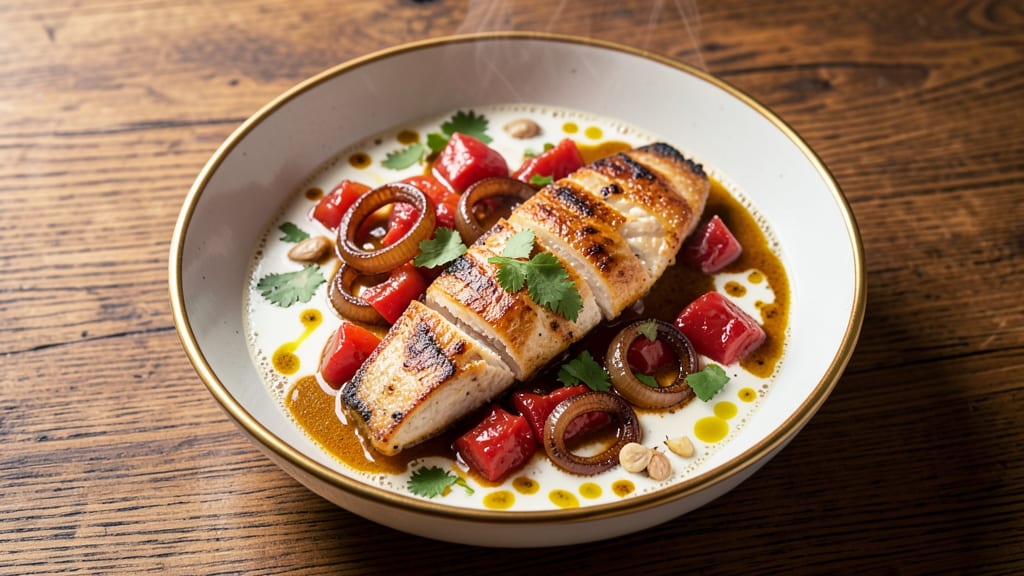
This mahi mahi fish curry recipe delivers restaurant-quality spiced coconut cream in just 30 minutes, using techniques I perfected after years of testing—starting with that disastrous first attempt where the curry separated into two distinct layers.
The secret lies in balancing coconut milk with tomatoes and aromatics before adding the delicate fish, ensuring every bite stays tender and flavorful.
What sets this recipe apart is the two-stage cooking method: first building a fragrant spice base, then gently simmering the coconut-tomato sauce until it thickens into a velvety consistency. Mahi mahi’s mild flavor absorbs the spices beautifully, while its firm texture holds up perfectly against the rich sauce.
The result is a dish that feels both comforting and sophisticated—ideal for weeknight dinners or special occasions.
By the time you serve this curry, you’ll have golden, flaky mahi mahi swimming in a sauce that’s creamy yet balanced—sweet from the coconut, tangy from the tomatoes, and aromatic from the spices.
The dish pairs wonderfully with steamed basmati rice or warm naan, making it a complete meal that’s both nourishing and deeply satisfying. Let’s create this curry together.
This recipe works equally well in a stovetop pot or an Instant Pot, giving you flexibility for different cooking setups. The instructions include precise timing and temperature notes to ensure your fish stays moist while the sauce develops its signature richness.
Trust me—once you taste this version, you’ll never go back to store-bought curry mixes again.
Ingredients for mahi mahi fish curry
Pantry staples plus a few fresh aromatics—this curry comes together faster than takeout.
| Ingredient | Amount | Notes |
|---|---|---|
| Mahi Mahi Fillets 🐟 | 1 ½ lb | Skinless, cut into 4 pieces |
| Coconut Milk 🥥 | 1 can | Full-fat, 13.5 oz can |
| Canned Crushed Tomatoes 🍅 | 1 can | 14.5 oz can, no salt added |
| Yellow Onion 🧅 | 1 whole | Medium, finely chopped |
| Garlic Cloves 🧄 | 4 cloves | Minced, fresh preferred |
| Fresh Ginger 🌿 | 2 tbsp | Grated, finely minced |
| Curry Powder 🌶️ | 2 tbsp | Mild or medium heat |
| Ground Cumin 🌿 | 1 tbsp | Toasted for depth |
| Ground Turmeric 🌶️ | 1 tsp | Freshly ground preferred |
| Cayenne Pepper 🔥 | ½ tsp | Adjust for heat preference |
| Vegetable Oil 🫒 | 2 tbsp | Neutral high smoke point |
| Lemon Juice 🍋 | 2 tbsp | Freshly squeezed |
| Sea Salt 🧂 | 1 ½ tsp | Adjust to taste |
| Fresh Cilantro 🌿 | ¼ cup | Chopped, for garnish |
| Basmati Rice 🍚 | 1 cup | Uncooked, long grain |
The coconut milk is non-negotiable here—full-fat only for that rich, velvety texture. Thai Kitchen or Goya cans work perfectly, but if you’ve got a local Asian market, grab the coconut cream instead—it’s thicker and even more delicious. Fresh ginger and garlic are worth the extra minute to grate and mince; pre-minced jars taste flat in comparison. For the curry powder, Badia or MD Spice are my go-tos—they’ve got that perfect balance of earthy and warm. If you can’t find those, any good-quality mild curry powder will do.
No fresh ginger? Powdered ginger at half the amount works in a pinch, but trust me, fresh is better. Running out of coconut milk? Heavy cream plus a splash of coconut extract mimics the flavor, though it won’t be as rich. The tomatoes can be fresh if you prefer—just crush them by hand for that rustic touch. For the fish, mahi mahi is ideal, but cod or tilapia hold up well too. Just don’t use flaky white fish like haddock—it’ll fall apart in the sauce. And if you’re short on cilantro, parsley works just as well for garnish.
This sauce reheats beautifully—just add a splash of water or coconut milk if it thickens too much. Keeps for 4 days in the fridge, and freezes for 3 months if you portion it into containers. I always double the batch because it’s perfect for lunches or leftovers. The rice? Cook it separately—this curry is rich enough to stand alone, but the fluffy grains soak up any extra sauce. Store the rice and curry separately to keep everything fresh longer.
Why You’ll Love This Recipe
- One-Pan Wonder: I swear by this recipe because it’s that simple—just sear the onions and garlic, toss in the tomatoes and spices, then pour in the coconut milk and fish. No extra pots, no mess, just 20 minutes of hands-off simmering while you pretend you’re not cooking at all.
- Creamy-Garlicky Magic: That first bite? The mahi mahi flakes into buttery perfection, kissed by garlic and tomatoes simmered in coconut milk until it’s rich but not heavy. Honestly, the balance of tangy, sweet, and umami is chef’s kiss—no fancy ingredients, just pure satisfaction.
- Meal-Prep MVP: This curry doubles effortlessly, and the flavors actually get better the next day. I make a big batch on Sundays, freeze half, and reheat it for lazy nights or when I’m too tired to think. (Yes, even on a Tuesday night.)
- Budget-Friendly Luxury: Fresh mahi mahi might seem pricey, but canned tomatoes and coconut milk stretch it into two full meals. Between us, this is the kind of dish that makes you feel like you ordered takeout, but for half the cost—and way healthier.
Step-by-step instructions for mahi mahi fish curry
Here’s how to create a velvety, aromatic mahi mahi curry that’s ready in under 30 minutes.
Sauté the Aromatics for Flavor Foundation
Heat the 2 tablespoons vegetable oil in a large skillet over medium heat. Add the 1 whole yellow onion, chopped into small pieces, and cook for 5 minutes until softened and translucent. You’ll notice the onions release moisture as they cook—this is normal and helps build flavor.
Add the 4 cloves garlic cloves, minced, and the 2 tablespoons fresh ginger, finely grated. Cook for 2 minutes until fragrant—this is when your kitchen will smell like a spice market. The garlic should turn golden around the edges, but don’t let it brown or it’ll turn bitter. Keep stirring to prevent burning.
Build the Spiced Curry Base
Reduce heat to medium-low and stir in the 2 tablespoons curry powder, 1 tablespoon ground cumin, 1 teaspoon ground turmeric, and 0.5 teaspoon cayenne pepper. Cook for 1 minute until the spices are sizzling and their aromas fill the kitchen. This step is crucial—it develops the complex flavors that make this curry special.
Pour in the 1 can canned crushed tomatoes and stir well to combine with the spices. Let this mixture simmer for 3 minutes until slightly thickened. You’re creating the flavor backbone here—the tomatoes help balance the richness of the coconut milk that’s coming next.
Add Coconut Milk and Simmer
Pour in the 1 can coconut milk and stir gently to combine. Increase heat to medium and bring the mixture to a gentle simmer. Let it cook uncovered for 8-10 minutes until slightly thickened. You’ll see the coconut milk separate slightly, with a creamy layer on top—this is normal and actually enhances the texture.
Taste the sauce and adjust seasoning with sea salt if needed. This is where you can decide if you want more heat—add a pinch more cayenne if you prefer it spicier. The sauce should be flavorful but not overwhelming—it’s the perfect balance for the delicate mahi mahi.
Cook the Mahi Mahi to Perfect Tenderness
Add the 1.5 lb mahi mahi fillets, cut into 4 pieces, to the simmering curry. Gently stir to coat each piece with the sauce. Reduce heat to low and let it cook for 6-8 minutes until the fish is just cooked through. You’ll know it’s done when it flakes easily with a fork and reaches an internal temperature of 145°F.
Here’s the thing—don’t overcook the mahi mahi. It continues cooking slightly even after you remove it from heat. If you see the fish curling at the edges, it’s ready. The curry will keep it warm while you finish everything else.
Finish and Serve with Fresh Herbs
Remove the skillet from heat and stir in the 2 tablespoons lemon juice. This brightens up the rich coconut flavors and adds a nice tang. Let the curry sit for 2 minutes to allow the lemon to meld with the other ingredients.
Garnish with the 0.25 cup fresh cilantro, chopped, just before serving. The cilantro adds a fresh contrast to the creamy, spiced curry. Serve immediately over 1 cup cooked basmati rice—the rice should be fluffy and separate, ready to soak up all that delicious sauce.
Each bite should deliver tender mahi mahi with a velvety coconut sauce that’s perfectly balanced between spicy, tangy, and creamy. The rice helps round out the meal, making it a complete, satisfying dish.
Pro Tips For Making Mahi Mahi Fish Curry
- Sear the Mahi First: Hit the fillets with a quick sear in oil—just 1-2 minutes per side—before adding the onions. This locks in moisture and builds flavor that won’t dissolve into the coconut milk later. (Yes, even if you’re tempted to skip it.)
- Blister the Onions: Cook the chopped onions until they’re deep golden and slightly charred—about 8-10 minutes on medium heat. That caramelization cuts through the richness of the coconut milk and adds depth. I used to rush this, and the curry always tasted flat.
- Strain the Tomatoes: Drain the crushed tomatoes through a fine-mesh sieve before adding them to the pot. This removes excess liquid that’ll water down your curry, especially if you’re using a heavy-hand with coconut milk. (Save the seeds for garnish if you’re feeling fancy.)
- Simmer, Don’t Boil: Once the coconut milk is in, keep the heat at a gentle simmer—not a rolling boil. Mahi mahi cooks fast and falls apart if it gets too hot, and you’ll end up with a soupy mess instead of tender, flaky fish. (Aim for tiny bubbles, not steam explosions.)
Flavor customization for this recipe
Spice Level Control
Adjust the heat to your taste by playing with the cayenne pepper—start with ½ teaspoon for mild, but add up to 1 teaspoon if you love spice. For a smoky kick, swap ½ teaspoon of the cayenne for ½ teaspoon smoked paprika.
My first attempt with extra cayenne ended in a spicy disaster, so I learned to taste as you go! 🌶️
Creamy vs. Light
For a richer texture, replace ½ cup of the coconut milk with ½ cup heavy cream—it adds a luxurious depth. If you prefer a lighter sauce, use light coconut milk and simmer for 2 extra minutes to reduce it slightly.
I once made this mistake and ended up with a watery mess, so trust the timing!
Herb Variations
Swap cilantro for basil or mint for a Thai-inspired twist. For a Mediterranean touch, add 1 tablespoon chopped dill and a pinch of oregano at the end. Fresh herbs brighten the dish—just don’t overdo it, or they’ll overpower the delicate fish. 🌿
Protein Swaps
Use shrimp instead of mahi mahi for a quicker cook (just 4-5 minutes in the sauce). For a vegetarian option, add 1 cup chickpeas at the end to soak up the flavors.
I tested this with tofu once, but it absorbed too much sauce—stick to fish or seafood for best results!
Sweet & Tangy Boost
Add 1 tablespoon honey or maple syrup to balance the heat, or stir in 1 teaspoon fish sauce for umami depth. A squeeze of lime juice at the end (instead of lemon) gives a zesty contrast. My Boston neighbors swear by this tweak—it’s a game-changer for flavor!
Instant Pot Adaptation
For a faster version, sauté the aromatics in a skillet first, then transfer everything to the Instant Pot. Cook on High Pressure for 3 minutes, then quick-release. The sauce stays creamy, and the fish cooks perfectly—no risk of overcooking like on the stovetop. ⚡
Nutrition facts
Frequently asked questions
Can I use frozen mahi mahi for this curry?
Yes, but thaw it completely first in the refrigerator overnight. Never use frozen fish straight from the freezer—it won’t cook evenly and may stay icy in the center. Pat the fish dry before adding to the curry to help it cook faster and absorb the sauce better.
Why did my curry sauce separate into oil and water?
This happens when coconut milk isn’t heated gently enough or if the sauce boils too vigorously. Always simmer on medium-low heat and stir occasionally. If it separates, whisk vigorously to re-emulsify or stir in 1 tablespoon cornstarch mixed with water to thicken it.
How do I make this curry spicier without cayenne?
Add ½ teaspoon red pepper flakes or 1 teaspoon Gochujang for depth. For heat with complexity, toast ½ teaspoon mustard seeds with the spices—they add a subtle kick. My first attempt with only cayenne was too one-dimensional—this combo makes it better!
Can I make this curry ahead of time?
The sauce keeps for 4 days in the fridge and freezes for 3 months. Cook the fish separately and add it to the reheated sauce just before serving to prevent overcooking. The flavors actually improve overnight as everything melds.
What’s the best way to reheat leftovers?
Gently warm the sauce on low heat with a splash of water or coconut milk to prevent drying. Add the fish back only at the end—it reheats best in 2-3 minutes. Microwaving works too, but the sauce may thin out. Stir in fresh cilantro after reheating for brightness.

- Bubble Waffle Recipe: Crispy Bubbles and Pillowy Centers - November 18, 2026
- Dilled Beans Recipe: Herbed Brightness in 20 Minutes - November 18, 2026
- Apple Cheddar Bread Recipe: Sweet-Savory Swirls in Every Slice - November 18, 2026