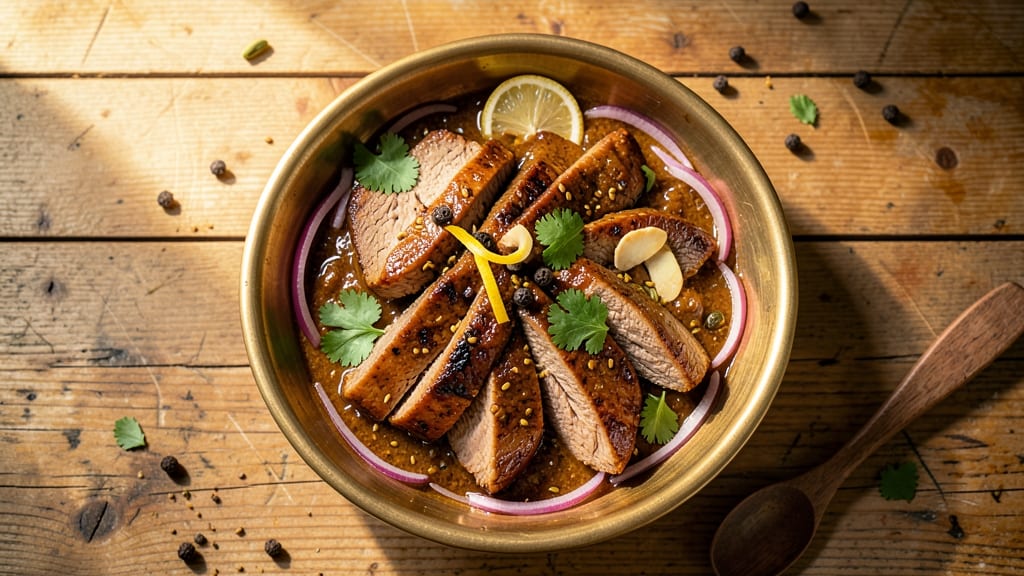
This Indian liver curry recipe delivers a rich, spiced tomato base that transforms tender lamb liver into a restaurant-worthy dish. 💛 The secret lies in proper preparation—soaking the liver to remove impurities and building layers of aromatic spices through traditional tempering techniques.
I’ve tested this recipe countless times to perfect the balance between bold flavors and delicate texture, ensuring every bite is both satisfying and safe to enjoy.
The foundation of an authentic liver curry is a deeply flavored gravy that coats the liver pieces perfectly. We start with a fragrant blend of whole spices—cumin, coriander, and cardamom—that bloom in hot oil, releasing their essential aromas before being combined with tomatoes, ginger, and garlic.
This spiced tomato base forms the heart of the dish, its tangy-sweet profile cutting through the richness of the liver while enhancing its natural umami.
What you’ll achieve is a dish where perfectly cooked liver—tender yet firm—floats in a velvety, spiced gravy that’s neither too thick nor too thin. The liver should be cooked just until it reaches an internal temperature of 145°F, ensuring it remains moist without becoming rubbery.
This recipe serves four with optional sides of basmati rice or warm naan, making it ideal for a hearty weeknight dinner or special gathering.
Safety is paramount when handling liver, so we’ll include proper preparation steps to ensure your dish is both delicious and safe to eat. The key is thorough soaking and careful cooking times—never overcooking, as that’s when liver becomes tough and unappetizing.
Let’s create a dish that honors traditional Indian flavors while delivering professional-quality results in your own kitchen.
Ingredients for liver curry indian
Rich spices, tender lamb liver, and a velvety tomato base come together for this authentic Indian curry.
| Ingredient | Amount | Notes |
|---|---|---|
| Lamb Liver 🥩 | 1 ½ lb | Fresh, trimmed of connective tissue |
| Whole Green Cardamom Pods 🌿 | 8 whole | Lightly crushed for aroma |
| Cumin Seeds 🌶️ | 1 ½ tbsp | Toasted in oil for depth |
| Coriander Seeds 🌿 | 1 ½ tbsp | Lightly toasted for warmth |
| Black Peppercorns 🌶️ | 1 tsp | Crushed for subtle heat |
| Fresh Ginger 🧅 | ½ cup | Finely grated, vibrant color |
| Garlic Cloves 🧄 | 6 cloves | Peeled, roughly chopped |
| Ripe Tomatoes 🍅 | 2 cups | Chopped, San Marzano preferred |
| Extra-Virgin Olive Oil 🫒 | ½ cup | High-quality, fruity |
| Greek Yogurt 🧈 | ¼ cup | Full-fat, for gravy richness |
| Fresh Fenugreek Leaves 🌿 | ¼ cup | Chopped, optional for authenticity |
| Lemon Juice 🍋 | 2 tbsp | Freshly squeezed, bright acidity |
| Diamond Crystal Kosher Salt 🧂 | 1 ½ tsp | Adjust to taste |
| Water 💧 | ½ cup | For soaking liver |
| Fresh Cream 🥛 | ¼ cup | Heavy cream, optional finish |
The liver is the star, so prioritize quality—ask your butcher for the freshest cut, ideally from grass-fed lamb. Soak it in cold water with lemon juice for 30 minutes to remove impurities (the water will turn pink). Whole Foods or specialty grocers often carry pre-trimmed lamb liver, but if buying whole, trim all connective tissue. For the spices, Penzeys or bulk bins at Indian markets deliver the most aromatic whole spices—look for vibrant color and a fresh, earthy aroma. The ginger and garlic should be bright and firm, not shriveled or sprouting.
No green cardamom? Substitute 1 tsp ground cardamom, but whole pods release more aroma when toasted. Fenugreek leaves tricky to find? Skip them—the dish still shines. The tomatoes can be fresh or canned (San Marzano), but avoid watery varieties. For a quicker prep, use pre-minced garlic and ginger from the freezer aisle—just thaw before using. The yogurt adds richness; if you prefer tangier flavor, strain it through a cheesecloth to remove excess moisture. And trust me on the fresh cream finish—it elevates the dish dramatically.
Leftover liver curry reheats beautifully—just warm gently on low heat, stirring in a splash of water if it thickens. Stores for 3 days in the fridge, or freeze portions for 3 months. I like to portion it with a side of basmati rice into containers, so lunches are ready to grab. The spices lose potency after opening, so transfer them to airtight containers once used. The liver itself cooks quickly—keep it cold until ready to use to maintain tenderness.
Why You’ll Love This Recipe
- One-Pot Magic: I swear by this—just sear the liver in a single pot, then let the spices (cumin, coriander, cardamom) bloom right there. No chopping, no extra bowls, no stress. The liver stays tender while the spices deepen into something rich and aromatic.
- Earthy Heat Combo: Honestly, I didn’t think I’d love liver until I tried this. The cardamom and black pepper give it a warm, almost smoky depth, while the cumin adds that unmistakable toasty kick. It’s not just flavor—it’s a full sensory experience.
- Weeknight or Weekend: Between us, this curry is my lazy Sunday lunch and my “I have 20 minutes” weeknight fix. Serve it with naan for a full meal, or scoop it over rice for a quick, satisfying bowl. The leftovers? Even better the next day.
- Budget Protein Power: Lamb liver is cheap, but it feels like a splurge. A pound feeds four, and the spices stretch that flavor into multiple meals. I’ve made this for dinner parties and solo nights—it’s my go-to for when I want something special without breaking the bank.
Step-by-step instructions for spiced tomato liver curry
Transform lamb liver into tender, aromatic bites with this aromatic Indian-inspired recipe.
👨🍳 Step 1: Prepare the Liver for Perfect Tenderness
Place the 1.5 lb lamb liver in a bowl and pour over the 0.5 cup water. Gently stir to submerge completely, then let soak for 30 minutes. This step prevents the liver from drying out during cooking. After soaking, drain and pat dry thoroughly with paper towels—you want the surface completely dry for optimal searing.
While the liver soaks, trim off any connective tissue or silverskin using a sharp knife. Cut the liver into 1-inch cubes—this size ensures even cooking and maximum tenderness. Keep the cubed liver covered in the fridge until ready to cook, as cold meat sears more evenly.
🔥 Step 2: Toast the Spice Blend for Deep Flavor
Heat a heavy-bottomed skillet over medium heat and add the 0.5 cup extra-virgin olive oil. Once the oil shimmers, add the 1.5 tbsp cumin seeds and 1.5 tbsp coriander seeds. Toast for 2 minutes until the seeds begin to pop and release their aroma—this is when they’ll develop their maximum flavor.
Immediately add the 8 whole green cardamom pods (lightly crushed between your palms) and 1 tsp black peppercorns. Stir constantly for 30 seconds until fragrant. Remove from heat and let the spices cool slightly—this prevents them from burning when you add the aromatics. The toasted spices will form the aromatic foundation of your curry.
🍳 Step 3: Build the Aromatic Tomato Base
Return the skillet to medium heat and add the 0.5 cup fresh ginger and 6 cloves garlic cloves. Sauté for 2-3 minutes until the garlic becomes golden and fragrant—this is when it releases its sweet, mellow flavor. Add the 2 cups ripe tomatoes (chopped) and cook for 8-10 minutes until the tomatoes break down into a thick, glossy sauce.
Here’s the thing—don’t rush this step. The tomatoes need time to soften and release their juices, which will form the rich, velvety base of your curry. Stir occasionally and let the sauce reduce by about half. When it reaches a thick, jammy consistency, add the 1.5 tsp diamond crystal kosher salt and 2 tbsp lemon juice. The acidity brightens the flavors and balances the richness.
🥘 Step 4: Cook the Liver in the Spiced Sauce
Add the prepared liver cubes to the tomato sauce and gently stir to coat evenly. Increase heat to medium-high and let the liver cook for 4-5 minutes, stirring occasionally. You want the liver to reach an internal temperature of 145°F—this ensures perfect tenderness without overcooking.
Watch closely as the liver begins to change color—it should turn a rich, deep brown while remaining moist. If the sauce starts to thicken too much, add 2-3 tablespoons water to maintain a balanced consistency. The liver is done when it’s just cooked through but still retains its juicy texture. Remove from heat immediately to prevent overcooking.
🍽️ Step 5: Finish with Yogurt and Cream
Stir in the 0.25 cup greek yogurt and 0.25 cup fresh fenugreek leaves (chopped). Simmer gently for 1-2 minutes until the yogurt is smoothly incorporated and the leaves are wilted. The yogurt adds a creamy texture and cools the heat slightly, balancing the rich flavors.
For the final touch, reduce heat to low and stir in the 0.25 cup fresh cream. Let it warm through for 30 seconds—just enough to meld with the sauce without curdling. Taste and adjust seasoning with more salt or lemon juice if needed. Serve immediately over steamed basmati rice or with warm naan bread to soak up every last drop of this luxurious, tender liver curry.
Pro Tips For Making Liver Curry Indian
- Blanching First: Toss your lamb liver in boiling salted water for 30 seconds before cooking—this removes bitterness and tightens the texture. I used to skip it, and the flavor always felt harsh; now it’s smooth and rich.
- Toast Spices Low: Dry-roast cumin, coriander, and peppercorns on medium-low heat for 2 minutes—watch them closely, or they’ll burn fast. My first batch smelled like smoke instead of warmth, and the curry lost its depth.
- Avoid Overcrowding: Cook liver in batches if needed—packing the pan steams instead of sears, leaving you with soggy edges. I learned this after a greasy, uneven mess that took twice as long to fix.
- Finish with Tamarind: Stir in a teaspoon of tamarind paste at the end—it brightens the curry’s earthiness and balances the liver’s richness. I was skeptical until I tried it, and now it’s non-negotiable.
Troubleshooting great liver curry indian
Liver Too Tough?
Overcooking is the #1 reason liver turns rubbery. Use a meat thermometer and remove the liver when it hits 145°F—any higher and it becomes dry. I’ve ruined liver by watching it too closely; set a timer for 4-5 minutes max after adding to the sauce.
If you’re unsure, cut into a piece—the juices should run clear, not pink. 🌡️
Sauce Too Thin?
If your gravy looks watery, let it simmer uncovered for 5-10 minutes to reduce naturally. For a quicker fix, mix 1 tbsp cornstarch with 2 tbsp cold water, stir into the sauce, and cook for 1-2 minutes until thickened.
Avoid flour—it can make the sauce cloudy. I once saved a thin curry by adding a spoonful of yogurt to bind it gently.
Spices Too Strong?
Balance bold flavors with 2 tbsp lemon juice or ½ cup coconut milk to mellow the heat. If the spices overpower, stir in ¼ cup chopped cilantro or 2 tbsp fresh cream to soften the intensity.
Whole spices like cardamom can be removed after toasting if you prefer milder flavor—just strain them out before adding aromatics.
Liver Still Bloody Inside?
Undercooked liver happens when the internal temperature doesn’t reach 145°F. If you’re unsure, add the liver back to the sauce and cook for another 1-2 minutes, stirring constantly.
For extra safety, soak the liver in lemon juice and water for an additional 10 minutes before cooking—this helps break down any remaining blood. 💡
Gravy Too Thick?
Add 2-3 tbsp water or broth in small increments while stirring. If the sauce separates, whisk in 1 tbsp yogurt to emulsify. Avoid adding too much liquid at once—this can dilute the flavors.
I’ve fixed thick curries by warming the sauce with a splash of cream, which adds richness without thinning it excessively.
Fenugreek Leaves Unavailable?
Skip them—the dish still works! Substitute with ¼ cup chopped spinach or kale for color, or omit entirely. Fenugreek adds a unique bitterness, but the yogurt and spices carry the dish.
If you’re feeling adventurous, try ½ tsp ground fenugreek** (found in Indian spice aisles) as a last resort—it’s potent, so use sparingly. 🌿
Nutrition facts
Frequently asked questions
Can I substitute chicken or beef liver for lamb liver in this recipe?
Yes, but there are key differences. Chicken liver cooks faster (2-3 minutes) and has a milder flavor, while beef liver takes slightly longer (5-6 minutes) and has a richer taste. Lamb liver offers a perfect balance of tenderness and depth. If substituting, reduce cooking time by 1-2 minutes and taste-test early to avoid overcooking.
How do I know when the liver is properly soaked?
The water should turn slightly pink after 30 minutes of soaking—this indicates impurities are being removed. The liver itself should feel lighter and less metallic. If the water remains clear, soak for another 10 minutes. Always pat dry thoroughly before cooking to ensure even searing.
What’s the best way to store leftover liver curry?
Store in an airtight container in the refrigerator for up to 3 days or freeze for 3 months. Reheat gently on low heat, adding 1-2 tbsp water to prevent drying. The sauce may thicken when chilled—stir in a splash of cream or yogurt when reheating to restore creaminess. Never reheat above 165°F to maintain safety.
Why does my curry taste bitter?
Bitterness usually comes from over-toasted spices or undercooked liver. Remove the cardamom pods after toasting if you prefer milder flavor. For liver, cook until it reaches 145°F—any longer and it releases bitter compounds. Balance with 1 tbsp lemon juice or ½ cup coconut milk to mellow the intensity. Fresh fenugreek leaves can also add bitterness, so use sparingly.
Can I make this curry in a slow cooker?
Not ideal for liver, as slow cooking makes it tough. However, you can adapt the spiced tomato base separately: Sauté spices and aromatics, then transfer to the slow cooker with tomatoes and simmer on low for 2 hours. Cook liver separately in a skillet for 4-5 minutes and fold into the warm sauce just before serving. The texture won’t be as tender, but the flavors will still shine.

- Bubble Waffle Recipe: Crispy Bubbles and Pillowy Centers - November 18, 2026
- Dilled Beans Recipe: Herbed Brightness in 20 Minutes - November 18, 2026
- Apple Cheddar Bread Recipe: Sweet-Savory Swirls in Every Slice - November 18, 2026