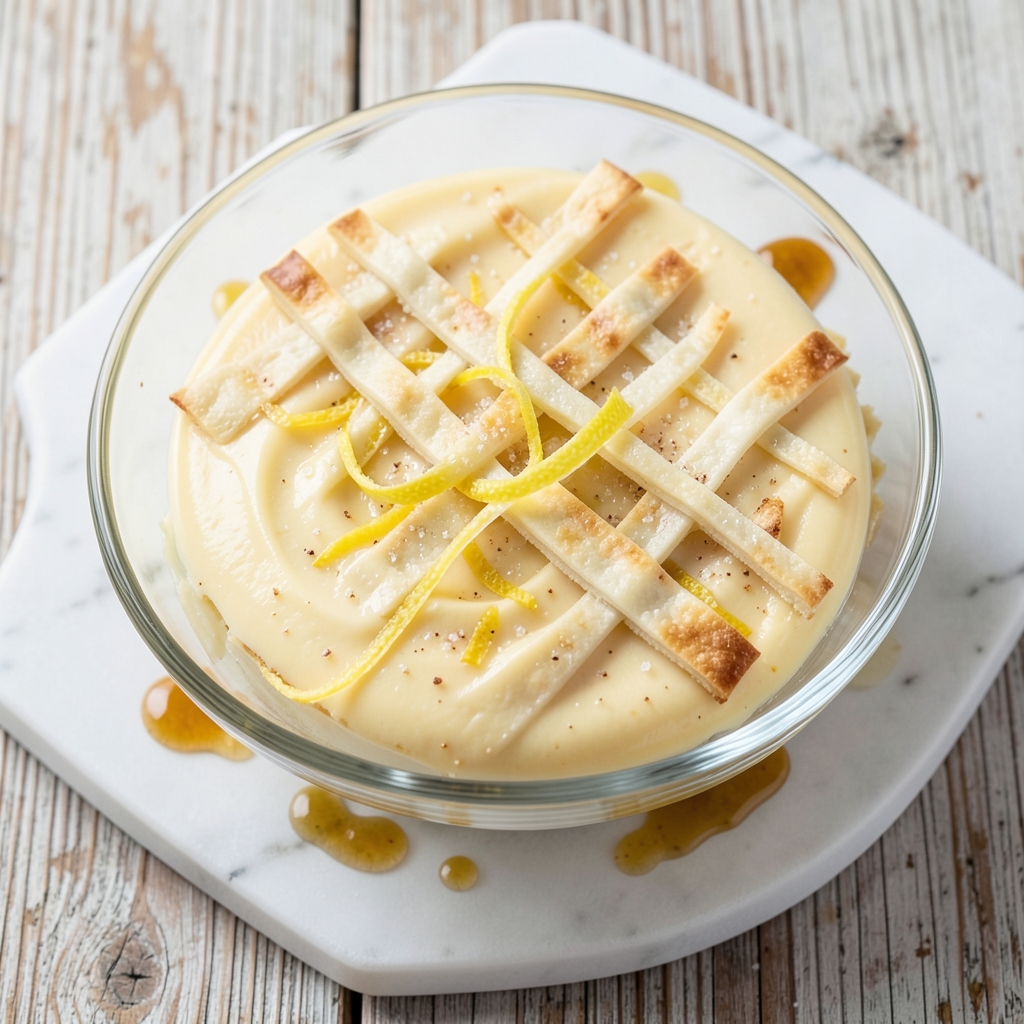
This lemon custard cake filling transforms a simple sponge into a showstopping dessert with its vibrant citrus swirl and velvety smoothness. The secret lies in balancing acidity and richness—just like my Nonna used to do when she’d pull out the lemon rind from her famous dolci.
I’ve perfected this recipe over years of baking trials, ensuring the filling stays perfectly set yet luscious, never grainy or watery.
The magic happens in the custard base, where egg yolks and sugar create a silky texture, while lemon zest and juice add that bright, zesty punch.
Baking the filling between layers of cake ensures it sets just enough to hold its shape while remaining tender enough to melt in your mouth. This isn’t just filling—it’s the star of the dessert, turning ordinary cake into something restaurant-worthy.
What you’ll end up with is a cake that’s crisp on the outside, moist in the middle, and bursting with that signature lemon custard swirl. The filling holds its form beautifully, slicing cleanly without crumbling, while still delivering that creamy, tangy flavor in every bite.
It’s the kind of dessert that makes people pause mid-bite and ask, “How did you do this?”
Perfect for birthdays, dinner parties, or just because—this filling pairs especially well with a buttery vanilla sponge or almond cake. Let’s get baking!
Ingredients for lemon custard cake filling
Six eggs, bright citrus, and buttery richness—this filling turns simple cake into a restaurant-worthy masterpiece.
| Ingredient | Amount | Notes |
|---|---|---|
| Large Egg Yolks 🥚 | 6 whole | Fresh, room temperature preferred |
| Granulated Sugar 🍚 | 1 ½ cups | Superfine for smoother texture |
| Unsalted Butter 🧈 | ½ cup | Cold, cubed for custard base |
| All-Purpose Flour 🌾 | ¼ cup | Sifted for smooth filling |
| Lemon Zest 🍋 | 2 tbsp | From 2 large organic lemons |
| Fresh Lemon Juice 🍋 | ½ cup | Strained, no pulp |
| Heavy Cream 🥛 | 1 cup | Full-fat for richness |
| Vanilla Extract 🌿 | 1 tbsp | Pure, high-quality vanilla |
| Salt 🧂 | ¼ tsp | Fine sea salt |
| Cornstarch 🌾 | 1 tbsp | For thickening stability |
| Vanilla Sponge Cake Layers 🍰 | 2 whole | 8-inch diameter, homemade or store-bought |
The yolks are non-negotiable here—fresh, room-temperature eggs create the silkiest custard. Trader Joe’s or Whole Foods sell organic eggs that work perfectly, but any good-quality eggs will do. For the butter, Plugrá or Land O’Lakes are reliable, but don’t use salted—it throws off the balance. The sugar? Superfine dissolves faster, but regular granulated works if you pulse it in a food processor. I always grab organic lemons from the grocery store’s produce section—they’ve got more zest and juice than conventional ones.
No vanilla sponge cake layers? Homemade vanilla cake is ideal, but a good-quality store-bought version (like Betty Crocker or Duncan Hines) works too. Short on heavy cream? Half-and-half plus 1 tbsp cream cheese mimics the richness. The cornstarch is key—it keeps the filling from getting grainy when baked. Bob’s Red Mill makes a great brand if you’re buying it in bulk. For the lemon juice, freshly squeezed is a must—bottled juice tastes flat in comparison. Want extra zing? Add a pinch of cayenne pepper to the filling.
This filling keeps beautifully in the fridge for up to 5 days, sealed tightly between layers of plastic wrap. For longer storage, freeze it for up to 3 months—just thaw overnight in the fridge before serving. I like to make a double batch and freeze half, so I always have a backup for last-minute guests. The cake layers should be stored separately in an airtight container, wrapped in foil to keep them fresh. When baking, let everything come to room temperature first—cold ingredients mess with the custard’s texture
Why You’ll Love This Recipe
- I swear by this trick: just toss the egg yolks, sugar, and butter into a saucepan and melt them together over low heat. The flour and lemon zest? Stir in at the end. No blender, no stand mixer—just a spoon and patience. (Yes, even on a Tuesday night.)
- You already have everything: eggs, sugar, butter, flour. No specialty ingredients, no last-minute grocery runs. And the leftovers? They keep for days in the fridge—perfect for quick desserts when inspiration strikes. Between us, this is my budget-friendly secret for fancy-feeling treats.
Step-by-step instructions for lemon custard cake filling
Here’s how to create a velvety lemon custard filling that perfectly complements your vanilla sponge cake layers.
Whisk Egg Yolks and Sugar Until Pale and Thick
In a medium heatproof bowl, whisk together the 6 whole large egg yolks and 1.5 cups granulated sugar over a double boiler until the mixture becomes pale yellow and thickens noticeably. This should take about 5-7 minutes of constant whisking. You’ll know it’s ready when the mixture coats the back of a spoon and leaves a ribbon trail when you lift the whisk.
Here’s the thing—this step is critical for creating that signature silky texture. The sugar should dissolve completely, and the mixture should be smooth without any graininess. If you’re using super-fine sugar, it will dissolve faster than regular granulated sugar, so keep whisking until fully combined.
Cook the Custard Base Over Gentle Heat
Remove the bowl from the double boiler and let it cool slightly for 2 minutes. While it cools, melt the 0.5 cup unsalted butter in a small saucepan over low heat. Once melted, immediately pour the butter into the egg yolk mixture while whisking constantly to prevent scrambling.
Return the bowl to the double boiler and continue cooking, stirring constantly with a wooden spoon, until the mixture reaches 170°F on an instant-read thermometer. This should take about 8-10 minutes. The custard will thicken noticeably as it heats, but don’t stop stirring—this prevents lumps and ensures a smooth final texture.
Incorporate Lemon and Vanilla Flavors
Remove the custard from heat and let it cool for 5 minutes. Then stir in the 2 tablespoons lemon zest, 0.5 cup fresh lemon juice, 1 tablespoon vanilla extract, and 0.25 teaspoon salt. The mixture should become noticeably more aromatic with a bright citrus scent. This is where the filling gets its signature tangy sweetness.
I like to press the lemon zest through a fine-mesh strainer to remove any bitter pith, but if you’re using pre-zested lemons, make sure it’s finely grated. The lemon juice should be freshly strained to avoid any pulp that could make the filling grainy.
Thicken and Cool the Filling
In a small bowl, whisk together the 0.25 cup all-purpose flour and 1 tablespoon cornstarch. Gradually whisk this dry mixture into the warm custard until fully combined. Then slowly pour in the 1 cup heavy cream while whisking constantly to prevent curdling.
Return the mixture to the double boiler and cook for another 5-7 minutes, stirring constantly, until it thickens to a pudding-like consistency. It should coat the back of a spoon and leave a clean trail when you run your finger through it. Let it cool completely to room temperature, stirring occasionally to prevent a skin from forming.
Assemble and Chill the Cake
Place one of the 2 whole vanilla sponge cake layers on a serving plate. Spread about half of the cooled custard filling evenly over the cake layer, leaving a ½-inch border around the edges. Top with the second cake layer and gently press down to create a smooth surface.
Spread the remaining custard filling over the top of the cake, then use a long serrated knife to create decorative swirls. Cover the cake and refrigerate for at least 4 hours or overnight to allow the filling to fully set. The cake will keep in the refrigerator for up to 3 days, though I promise you won’t have any leftovers!
Pro Tips For Making Lemon Custard Cake Filling
- Whisk yolks cold: Grab your bowl of egg yolks straight from the fridge—no room temp nonsense. I learned this the hard way: warm yolks scramble when they hit the hot butter, and suddenly you’re fixing curdled custard instead of baking. Keep them chilled until the last minute, then whisk them like your life depends on it.
- Melt butter slow: Unsalted butter burns faster than you’d think, especially when you’re eager to get cooking. Melt it over low heat—just enough to soften, not sizzle—and stir constantly. If it browns, you’ve lost that rich, buttery depth the custard needs. (Yes, even if you’re impatient like me.)
- Sift flour first: Dump that flour in dry, and you’re asking for lumps in your filling. Sift it through a fine-mesh strainer directly into the yolk mixture, then whisk like you mean it. This isn’t the prettiest method, but it’s the tastiest—no one wants a grainy custard fighting for texture with the lemon zest.
- Zest fresh, strain zest: Skip the pre-grated zest—it’s bitter and dull. Use a microplane on fresh lemons, then strain the zest through a fine sieve to catch any pith. (I know, it’s extra work, but that bitter pith turns your custard into a sad, puckery mess.) Store the zest in the fridge until you’re ready to mix—it keeps its brightness longer.
Serving suggestions for this dish
Classic Presentation
Serve your lemon custard cake on a chilled glass cake stand to let the vibrant yellow filling shine. Dust the top with powdered sugar for a snowy contrast, or add a few edible gold leaf flakes for an elegant touch.
I like to slice it with a hot knife—just dip it in hot water and wipe dry—so each piece comes out perfectly clean. 🍋
Fresh Fruit Garnish
Top each slice with thin lemon slices or raspberries for a pop of color and acidity that cuts through the richness. A small mint leaf adds a sophisticated herbal note.
For extra drama, arrange the fruit in a circular pattern around the cake before slicing. My Nonna always said fresh fruit makes any dessert feel special.
Whipped Cream Finish
Lightly whip ½ cup heavy cream with 1 tsp powdered sugar and ½ tsp vanilla extract until soft peaks form. Pipe rosettes around the plate or dollop on top of each slice.
This adds airiness and balances the dense custard. For a Boston twist, fold in 1 tbsp lemon curd for extra zing. 🥛
Warm Spiced Tea Pairing
Serve with Earl Grey tea or chamomile tea to complement the lemon’s brightness. A splash of honey in the tea enhances the citrus notes. For something stronger, pour a small glass of dry Prosecco—the bubbles cleanse the palate between bites.
I always keep a pot of tea brewing when I bake this cake.
Individual Servings
For parties, portion the cake into ramekins or mason jars with individual cake layers and filling. Top with a berry compote or caramel drizzle for a modern twist. These make perfect grab-and-go desserts—just refrigerate until ready to serve. Guests will love the convenience and portion control. 🍽️
Seasonal Variations
In summer, add blueberries or blackberries to the filling for a berry-lemon fusion. For winter, infuse the custard with cinnamon and top with candied citrus peel. The filling’s versatility lets you adapt it to any season while keeping that signature tangy sweetness. 🌶️
Nutrition facts
Frequently asked questions
Can I make this lemon custard filling ahead of time?
This filling keeps beautifully in the fridge for up to 5 days when stored in an airtight container. For longer storage, freeze it for 3 months—just thaw it overnight in the fridge before assembling your cake. The texture remains silky when properly stored, so it’s perfect for meal prep or last-minute gatherings.
What’s the secret to preventing a grainy custard?
Graininess happens when the custard cooks too fast or ingredients aren’t properly combined. Always whisk constantly over gentle heat and use a thermometer to reach exactly 170°F. Also, strain the lemon juice and press zest through a fine-mesh sieve to remove any bitter pith. The cornstarch helps create that perfect smooth texture when properly incorporated.
Can I substitute heavy cream with something lighter?
For a lighter version, replace half the heavy cream with whole milk or half-and-half, but add 1 tbsp cream cheese to maintain richness. The custard will be slightly less decadent but still delicious. If using lighter cream, reduce cooking time by 1-2 minutes to prevent curdling. The filling will still set beautifully when chilled.
How do I fix a custard that’s too thin?
If your custard is too runny, don’t panic! Mix 1 tsp cornstarch with 1 tbsp cold water to make a slurry, then stir it into the warm custard. Cook for another 3-5 minutes while stirring constantly until it thickens. For a quick fix, you can also whisk in 1 tbsp cold butter to help stabilize the texture.
Can I use this filling in other desserts besides cake?
This versatile filling works perfectly in tarts, cheesecakes, or even as a panna cotta substitute. For tarts, spread it in a crust and bake at 350°F for 20-25 minutes. For cheesecake, mix it into the batter before baking. The lemon flavor pairs beautifully with almond crusts or gingersnap cookies too.

- Lemon Pound Cake Recipe: Bright Citrus Layers With Buttery Crumb - November 18, 2026
- Spumoni Cake Recipe: Layers of Fruit, Cream, and Chocolate Magic - November 18, 2026
- Chocolate Gnache Recipe: Silky Smooth Pour With Perfect Snap - November 18, 2026