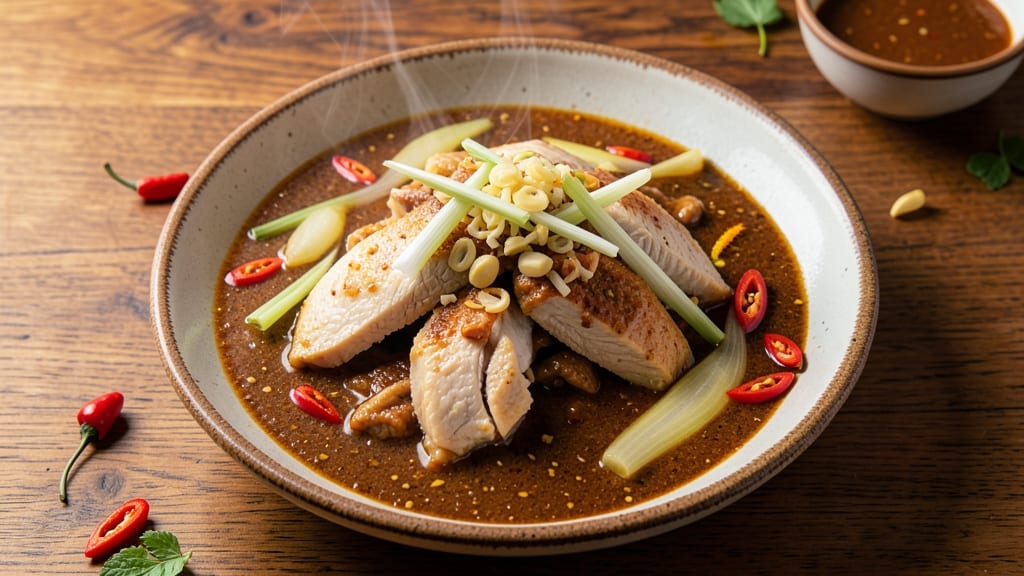
This fragrant Laos curry recipe brings the bold flavors of Southeast Asia to your kitchen with its signature lemongrass and galangal heat. The aromatic paste—made with fresh herbs and spices—builds layers of complexity that transform simple ingredients into something extraordinary.
I first discovered Lao curry during a trip to Vientiane, where the balance of sour, spicy, and savory flavors left me craving more. That experience inspired me to recreate it at home, where I perfected the technique of slow-building the curry paste and letting the flavors meld over time.
The secret to authentic Lao curry lies in its three essential components: the fragrant paste (galangal, lemongrass, kaffir lime leaves), the rich coconut milk base, and the perfect balance of sour (tomato) and spicy (chilies).
Unlike other Southeast Asian curries, Lao versions often feature a tangy, slightly sweet profile that comes from fermented fish sauce or tamarind. This recipe uses chicken as the protein, but it works equally well with beef, shrimp, or tofu for a vegetarian adaptation.
The dish is designed to be flexible yet precise—each ingredient plays a role in creating harmony.
By the time you serve this curry, your kitchen will smell like a bustling Lao market, and your taste buds will experience the perfect marriage of heat and brightness.
The lemongrass infuses the coconut milk with a citrusy aroma, while the galangal adds a peppery depth that’s unmistakably Southeast Asian. The dish is rich enough to stand alone but pairs beautifully with steamed jasmine rice, which soaks up every last drop of the fragrant sauce.
Whether you’re feeding a family or treating yourself to an exotic dinner, this curry delivers restaurant-quality results with a homemade touch.
For those new to Lao cuisine, I’ve included tips for balancing flavors and substitutions for hard-to-find ingredients like galangal (ginger works in a pinch). The recipe also highlights how to adjust the spice level to suit your palate—because the best curry is one that brings people together, not tears.
Let’s get cooking!
Ingredients for laos curry
The aromatic trio of lemongrass, galangal, and kaffir lime leaves transforms simple ingredients into this fragrant Lao curry masterpiece.
| Ingredient | Amount | Notes |
|---|---|---|
| Chicken Breast 🍗 | 1 ½ lb | Boneless, skinless, cut into bite-sized pieces |
| Fresh Lemongrass 🌿 | 3 stems | Outer leaves removed, cut into 2-inch pieces |
| Galangal Root 🌿 | ½ cup | Peeled, finely minced or grated |
| Kaffir Lime Leaves 🍋 | 4 whole | Stems removed, torn into large pieces |
| Thai Bird's Eye Chilies 🌶️ | 3 whole | Seeds removed for less heat |
| Shallots 🧅 | ½ cup | Finely minced or grated |
| Garlic Cloves 🧄 | 6 cloves | Peeled, minced |
| Coconut Milk 🥥 | 1 can | Full-fat, 13.5 oz can |
| Fish Sauce 🍶 | 2 tbsp | Red Boat preferred |
| Lime Juice 🍋 | ¼ cup | Freshly squeezed |
| Sugar 🍚 | 1 tbsp | White granulated |
| Tomato Paste 🍅 | 1 tbsp | Squeeze tube preferred |
| Jasmine Rice 🍚 | 1 ½ cups | Uncooked, for serving |
| Vegetable Oil 🫒 | 2 tbsp | For cooking |
| Salt 🧂 | 1 tsp | Diamond Crystal kosher |
Galangal is the heart of this curry—find it at Asian markets or substitute ginger if needed (though it won’t be identical). The Red Boat fish sauce is a game-changer for authentic umami, but any quality fish sauce works. For lemongrass, look for fresh, pale stems with tight layers—Thai or Vietnamese markets usually have the best selection. Kaffir lime leaves can be found frozen in many grocery stores, which works perfectly. If you can’t find galangal, ginger at half the amount will keep the dish going, though it’ll lack that peppery depth. The Thai chilies should be bright red—bird’s eye chilies pack serious heat, so adjust to taste.
No fresh lemongrass? Dried lemongrass stalks work in a pinch, but rehydrate them first. Out of fish sauce? Soy sauce or oyster sauce can stand in, though the flavor will shift slightly. The tomato paste adds a tangy brightness—Trader Joe’s squeeze tubes are perfect for this. For a vegetarian version, swap the chicken for extra-firm tofu pressed and cubed. The coconut milk should be full-fat for that creamy texture, but if you’re watching calories, light coconut milk works too. Just know it’ll be slightly thinner. The lime juice should be freshly squeezed—bottled juice lacks the bright acidity that balances the richness.
This curry reheats beautifully—taste even better the next day as flavors meld. Store leftovers in an airtight container in the fridge for 4-5 days, or freeze for 3 months. I like to portion mine into containers with rice so lunches are ready in seconds. The jasmine rice should be steamed to perfection—use a 1:1.5 rice-to-water ratio and let it sit covered for 10 minutes after cooking. The curry sauce keeps well in the fridge for 5 days if you make it ahead, so double the batch for easy meals all week.
Why You’ll Love This Recipe
- One-Pot Magic: I swear by this curry for lazy nights—just toss the chicken, lemongrass, and galangal into a pot with the broth, and let it simmer. No chopping mountains of veggies, no extra pans, just pure, aromatic satisfaction.
- Citrusy Heat Bomb: That first whiff of galangal and kaffir lime leaves hitting the pan? It’s like a flavor explosion. The lemongrass keeps it bright, the chilies add a slow-building warmth, and the chicken stays tender—ridiculously good with just a squeeze of lime.
- Leftovers That Shine: Between us, this curry tastes better the next day—yes, really. The flavors meld into something deeper, and it reheats like a dream. Pack it for lunch or freeze portions; it’s my go-to for busy mornings.
- Budget-Friendly Flex: Chicken breast keeps it affordable, but the galangal and lime leaves make it feel special. Honestly, I use half the galangal in a batch and still get that signature punch—plus, the rest goes into stir-fries or soups all week.
Step-by-step instructions for Laos curry recipe
Here’s how to build this aromatic, heat-kissed curry that delivers restaurant-quality depth in your own kitchen.
Prepare the Herb Paste Foundation
In a food processor, combine the 3 stems of fresh lemongrass, 0.5 cup of galangal root, 4 whole kaffir lime leaves, 3 whole Thai bird’s eye chilies, 0.5 cup of shallots, and 6 cloves of garlic. Pulse until you achieve a coarse, chunky paste—this texture is essential for releasing maximum flavor. You want visible flecks but no liquid pooling. Transfer this vibrant green paste to a bowl and set aside.
This aromatic base is the heart of your curry. The lemongrass and galangal provide that signature citrusy, peppery depth, while the kaffir lime leaves add a floral brightness. Don’t skip the chilies—they’re what gives this dish its signature heat without overpowering the other flavors. If you’re sensitive to spice, you can remove some seeds from the chilies before processing.
Build the Curry Base with Rich Flavor Layers
Heat the 2 tablespoons of vegetable oil in a heavy-bottomed pot over medium heat until shimmering. Add the herb paste and cook for 5-6 minutes, stirring constantly, until the raw aroma gives way to deep, toasty fragrance. You’ll see the paste darken slightly and release its essential oils—this is when the magic happens.
Once fragrant, add the 1 tablespoon of tomato paste and stir for 1 minute to cook it out. This step develops the sauce’s complexity. Then pour in the 1 can of coconut milk and stir gently to combine. The mixture will look thick and almost curdled at first, but don’t worry—this will emulsify beautifully as it simmers. Bring to a gentle simmer and let it cook uncovered for 10 minutes to allow the flavors to meld.
Incorporate the Chicken and Seasonings
Add the 1.5 lb of chicken breast pieces to the simmering curry. Stir gently to coat each piece in the coconut milk mixture. Season with the 2 tablespoons of fish sauce, 0.25 cup of lime juice, 1 tablespoon of sugar, and 1 teaspoon of salt. The fish sauce will add umami depth, while the lime juice brightens the dish and cuts through the richness of the coconut milk.
Simmer gently for 15-18 minutes, or until the chicken is cooked through and tender. You’ll know it’s done when the internal temperature reaches 165°F and the meat pulls away cleanly from the bone. The curry should have thickened slightly and developed a glossy sheen. If it’s too thin, simmer uncovered for another 5 minutes to reduce. Taste and adjust seasoning—you might need a touch more salt or lime juice to balance the flavors.
Finish with Jasmine Rice and Garnish
While the curry simmers, cook the 1.5 cups of jasmine rice according to package instructions—typically 15 minutes in a rice cooker or steamer. The rice should be fluffy and separate, with no liquid remaining.
To serve, spoon the fragrant curry over the jasmine rice. The rice will soak up the rich coconut milk beautifully, creating each bite with perfect texture. Garnish with additional kaffir lime leaves if desired—their floral aroma complements the dish perfectly. Serve immediately while the chicken is still juicy and the curry is steaming hot, as the flavors are at their peak.
Pro Tips For Making Laos Curry
- Pound the Chicken: Skip the knife for boneless breasts—use a meat mallet or rolling pin to flatten them to ½-inch thickness. This guarantees even cooking and juicy results, especially since chicken breast can turn rubbery when overcooked. (Yes, it’s messy, but worth it.)
- Bruise the Galangal: Don’t slice it thin—smash the galangal root with the side of your knife first. This releases its oils and aroma into the curry paste, giving it that deep, peppery kick. I learned this the hard way after making a batch that tasted flat.
- Toast the Paste: Cook the curry paste (lemongrass, galangal, chilies, etc.) in the pot for 3–4 minutes until it fragrant and slightly darkened. This step removes the raw taste and builds flavor—don’t rush it, even if you’re eager to add the chicken.
- Save the Lime Leaves: Tear the kaffir lime leaves by hand instead of chopping them. Whole leaves infuse the broth beautifully, and you can fish them out before serving. If you must chop, do it finely—large pieces turn bitter when overcooked. (I’ve done both; the torn leaves win.)
Common mistakes when making perfect results
Overcooking the Paste
I’ve seen this happen more times than I can count—especially when you’re eager to get to the good part. The herb paste needs just 5-6 minutes of gentle cooking to release its flavors without burning.
If you let it darken too much, it turns bitter and smoky, ruining the delicate balance of citrus and pepper. I learned this the hard way during my first attempt when I got distracted by a phone call and walked away for too long. 🔥
Watch the pot closely and stir constantly. The paste should smell fragrant and slightly sweet—not charred or acrid. If it starts to smoke, immediately reduce the heat and let it cool slightly before continuing. Remember, this paste is the foundation of your curry, so treat it with care.
Skipping the Simmer Time
Rushing the 10-minute simmer after adding coconut milk is another common mistake. This step allows the flavors to meld and the sauce to emulsify properly. If you skip it, your curry will taste disjointed—like each ingredient is fighting for attention rather than working together.
I once made this error when I was running late for a dinner party and ended up with a curry that lacked depth and cohesion.
Patience is key here. Let the coconut milk come to a gentle simmer and cook uncovered. This helps reduce any excess liquid and concentrate the flavors. The sauce should thicken slightly and develop a glossy sheen.
If you’re short on time, at least simmer for 5 minutes—it’ll still be better than skipping it entirely.
Ignoring the Chicken’s Doneness
Using a meat thermometer is non-negotiable for this recipe. I’ve seen people pull chicken out of curries that’s still pale in the center, and it’s a game-changer for texture and safety.
The chicken should reach an internal temperature of 165°F—any lower, and you risk dry, rubbery meat or worse, foodborne illness. I once served curry with undercooked chicken to a group of friends, and let’s just say it wasn’t a repeat performance. 🤢
If your chicken is cooking too quickly, reduce the heat to low and let it simmer gently. Overcooking can also dry out the meat, so keep an eye on it.
The best way to check doneness is to gently pull a piece apart with tongs—it should separate easily and look opaque throughout.
Balancing Flavors Incorrectly
Lao curry is all about balance—sour, spicy, sweet, and savory should harmonize. I’ve tasted curries that were either too salty, too sour, or overwhelmingly spicy because the cook didn’t adjust the seasonings properly.
The key is to taste as you go and adjust gradually. Start with the fish sauce and lime juice, then add sugar or salt as needed.
If your curry tastes too sour, add a pinch of sugar or a splash of coconut milk. Too spicy? Stir in a bit more coconut milk or a spoonful of tomato paste to mellow the heat.
Too bland? A dash of fish sauce or a squeeze of lime can brighten it up. Trust your taste buds—this is where the magic happens.
Using Low-Quality Ingredients
This is where many home cooks cut corners, and it shows. Using old or low-fat coconut milk, cheap fish sauce, or wilted herbs will result in a curry that lacks depth and complexity.
I once used a can of coconut milk that had been sitting in my pantry for months, and the flavor was noticeably off. Fresh, high-quality ingredients make all the difference. 💡
Invest in a good Red Boat fish sauce, fresh lemongrass and galangal from an Asian market, and full-fat coconut milk. If you can’t find galangal, ginger is a substitute, but it won’t be the same.
The same goes for kaffir lime leaves—frozen is fine, but fresh is best. Don’t skimp on these ingredients; they’re the soul of your curry.
Nutrition facts
Frequently asked questions
Can I make this Lao curry vegetarian?
Swap the chicken for extra-firm tofu pressed and cubed, or use mushrooms or jackfruit for texture. For extra umami, add 1 tablespoon soy sauce or 1 teaspoon miso paste when simmering. The coconut milk and fish sauce (or soy sauce substitute) will still provide that signature depth, just without meat.
How do I adjust the spice level?
Lao curry should balance heat with brightness. For milder heat, remove seeds from all chilies before processing and reduce to 2 whole chilies. For extra spice, keep seeds in and add 1 extra chili. Always taste before serving—you can mellow heat by adding 1 tablespoon more coconut milk or 1 teaspoon sugar.
What if I can’t find galangal?
Galangal is essential for authentic flavor, but you can substitute ginger at half the amount (0.25 cup instead of 0.5 cup). It won’t be identical—the galangal’s peppery aroma is unique—but it’ll still work. For best results, use fresh ginger and add 1 extra kaffir lime leaf to compensate for the missing depth.
Can I make this curry ahead of time?
Yes! This curry tastes even better the next day as flavors meld. Store in an airtight container in the fridge for 4-5 days or freeze for 3 months. Reheat gently on low heat, stirring occasionally, and add a splash of water or coconut milk if it thickens too much. The rice can be cooked separately and reheated with a splash of water.
What sides pair best with Lao curry?
Jasmine rice is traditional, but you could also serve with steamed rice noodles, crusty bread, or roasted vegetables. For a complete meal, add a simple Lao-style salad with shredded cabbage, carrots, and a lime dressing. The curry’s rich coconut milk pairs beautifully with something fresh and crunchy to cut through the richness.

- Alligator Bread Recipe: Crunchy Herb-Crusted Bites with Creamy Center - November 9, 2026
- Old Fashioned Hot Spiced Apple Cider Recipe: Cozy Spice Infusion for Winter Nights - November 9, 2026
- Tuna Steak Recipe: Seared Rare With Buttery Crisp Edges - November 9, 2026