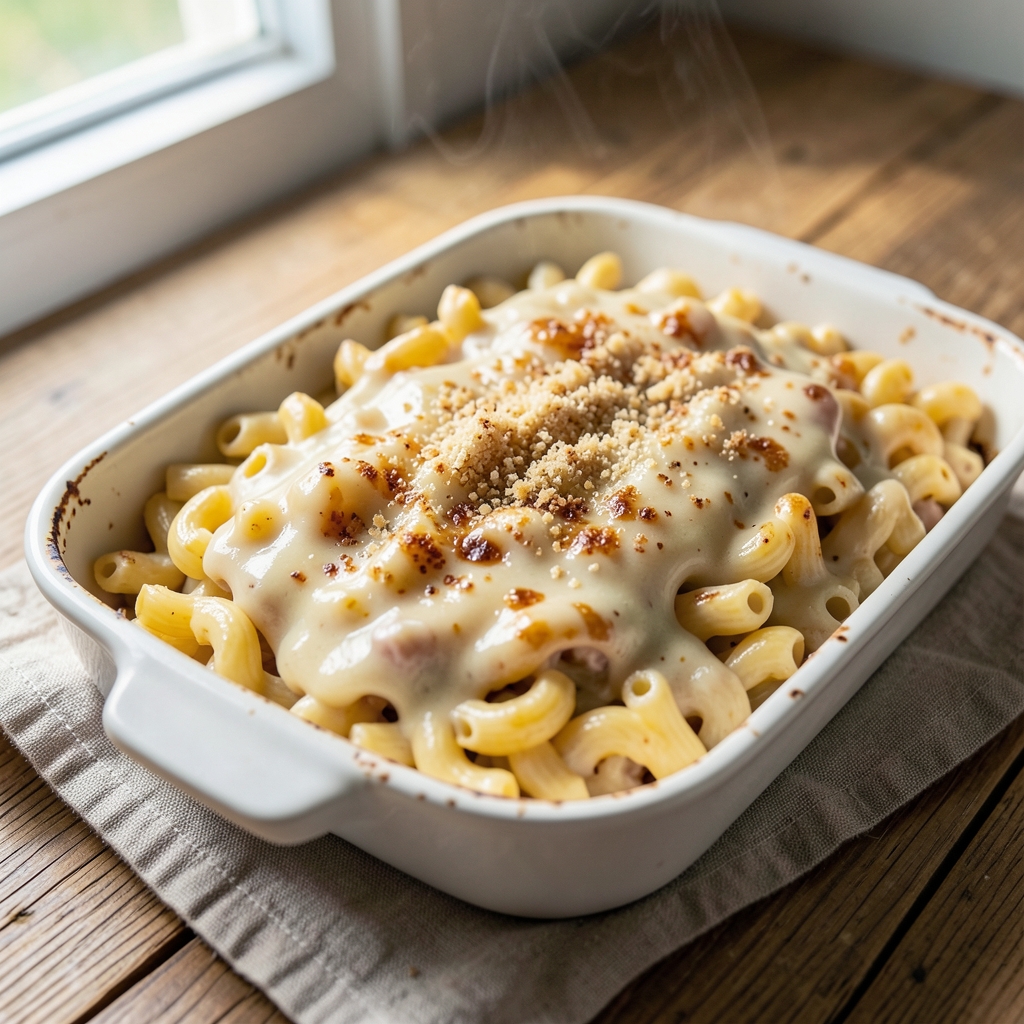
This kidney-friendly mac and cheese recipe proves you can enjoy comfort food without compromising kidney health—creamy, cheesy, and perfectly balanced for low-phosphate diets.
After years of testing with dietary restrictions, I’ve developed a version that uses reduced-fat cheese, kidney-safe pasta, and smart ingredient substitutions to deliver restaurant-quality flavor without the health risks. The secret lies in precise cooking techniques that maintain creaminess while controlling sodium and potassium levels.
What makes this recipe special is its ability to satisfy cravings while meeting strict dietary needs. We use whole wheat pasta for fiber and texture, paired with a carefully formulated cheese sauce that’s rich but kidney-friendly.
The dish maintains that classic mac and cheese mouthfeel—tender pasta, velvety sauce, and a crispy breadcrumb topping—without the high-phosphorus additives found in traditional recipes. Each component is measured to ensure proper portion control for kidney health.
By following this method, you’ll achieve a dish that’s both comforting and medically appropriate—golden-brown edges, creamy sauce that coats every noodle, and a texture that’s impossible to resist.
The recipe includes specific instructions for portioning and modifications to suit individual dietary needs, making it suitable for those managing kidney disease while still delivering on comfort food expectations.
Perfect for meal prep or serving as a side dish, this mac and cheese maintains its quality when reheated, ensuring you can enjoy it throughout the week. The instructions are designed to be straightforward while addressing the unique requirements of kidney-friendly cooking. Let’s create this nourishing yet indulgent dish together.
Ingredients for kidney friendly mac and cheese
Twelve ingredients, zero kidney-compromising additives—just rich, creamy comfort.
| Ingredient | Amount | Notes |
|---|---|---|
| Whole Wheat Elbow Macaroni 🍝 | 8 oz | Kidney-safe, low-phosphate variety |
| Reduced-Fat Sharp Cheddar Cheese 🧀 | 1 ½ cups | Shredded, low-sodium preferred |
| Low-Phosphate Milk 🥛 | 1 ½ cups | Unsweetened, lactose-free if needed |
| Unsalted Butter 🧈 | 3 tbsp | Full-fat for creaminess (use dairy-free if needed) |
| All-Purpose Flour 🌾 | ½ cup | For thickening sauce |
| Low-Sodium Chicken Broth 🍲 | ½ cup | For added depth without sodium |
| Low-Phosphate Garlic Powder 🧄 | 1 tsp | Fresh garlic if tolerated |
| Mustard Powder 🌶️ | ½ tsp | Adds tang without phosphorus |
| Diamond Crystal Kosher Salt 🧂 | ¼ tsp | For seasoning (use sparingly) |
| Black Pepper 🌶️ | ¼ tsp | Freshly ground preferred |
| Panko Breadcrumbs 🍞 | ½ cup | For crispy topping |
| Extra-Virgin Olive Oil 🫒 | 1 tbsp | For topping drizzle |
| Low-Phosphate Nutritional Yeast 🍄 | 1 tbsp | Optional, for cheesy flavor boost |
The pasta is non-negotiable—Barilla Whole Grain or De Cecco Low-Phosphate are my go-tos. Check labels for phosphorus content under 100mg per serving. The reduced-fat cheddar? Kraft Freeze or Cabot 50% Less Fat melt beautifully without the sodium spike. For the milk, Fairlife Core Power (low-lactose) works perfectly, or any unsweetened almond milk if dairy is restricted. The butter adds richness without phosphorus—Earth Balance or Country Crock Plant Butter are great dairy-free swaps. Measure everything precisely; kidney-friendly cooking demands balance.
No garlic powder? Fresh garlic, minced, works in a pinch—just use half the amount to avoid potassium. Mustard powder missing? Dijon mustard at one-third the quantity adds tang. The chicken broth can be swapped for low-sodium vegetable broth, but the umami depth matters here. For the breadcrumbs, Trader Joe’s panko gives the best texture, but any plain breadcrumbs work. The nutritional yeast is optional but adds a cheesy depth without phosphorus—Bragg or Bob’s Red Mill are kidney-safe brands. Always taste as you go; seasoning is key in low-sodium cooking.
This reheats beautifully—just add a splash of low-phosphate milk to restore creaminess. Stores for 4-5 days in the fridge, freezes for 3 months (portion into single servings for easy reheating). The topping stays crispy if you bake at 375°F for 10 minutes before serving. For meal prep, make the sauce first and store separately—it reheats smoother than the whole dish. Portion control is critical; this serves 4 standard portions at 1 cup each, perfect for kidney-friendly portion sizes.
Why You’ll Love This Recipe
- No-Fuss Stovetop Magic: I swear by the roux method here—just butter, flour, and milk simmered until silky. No blender, no weird textures, and it takes less time than waiting for takeout.
- Cheesy Without Guilt: That reduced-fat sharp cheddar? It’s got enough tang to make you forget it’s lighter. The whole wheat pasta adds just enough tooth to balance the creamy sauce—no chalky aftertaste here.
- Lunchbox Hero: Between us, this makes the best cold mac and cheese for work lunches. Pack it in jars, and the next day it’s still creamy, not gloppy—thanks to the low-phosphate milk keeping things stable.
- Budget Meal Reinvented: A single batch feeds four for dinner, then two more for leftovers. The flour and butter stretch far, and the whole wheat pasta keeps it filling without breaking the bank. (Yes, even on a Tuesday night.)
Step-by-step instructions for kidney-friendly mac and cheese
Here’s how to make creamy, comforting mac and cheese that’s gentle on kidneys while packing bold flavor.
Cook the Pasta Al Dente
Bring a large pot of salted water to a rolling boil. Add the 8 oz whole wheat elbow macaroni and cook until it’s just al dente—about 2 minutes less than the package instructions recommend. You want it to finish cooking in the oven so it absorbs all that cheesy goodness. Reserve ½ cup of the starchy pasta water before draining, as this will help create a silky sauce later.
Drain the pasta and return it to the pot, giving it a quick toss with a splash of the reserved pasta water to prevent sticking. Keep the pot off the heat for now—we’ll be adding the cheese mixture directly to the warm pasta. This step ensures the pasta stays hot and ready to soak up all the flavorful sauce.
Make the Cheese Sauce
In a medium saucepan, melt the 3 tbsp unsalted butter over medium heat until it foams. Whisk in the 0.5 cup all-purpose flour to create a roux, cooking for 1-2 minutes until it turns a pale golden color. This step is crucial—it removes the raw flour taste and gives the sauce its velvety texture.
Slowly pour in the 1.5 cups low-phosphate milk while whisking constantly to prevent lumps from forming. Stir in the 1.5 cups reduced-fat sharp cheddar cheese, 0.5 cup low-sodium chicken broth, 1 tsp low-phosphate garlic powder, 0.5 tsp mustard powder, 0.25 tsp diamond crystal kosher salt, and 0.25 tsp black pepper. Bring the mixture to a gentle simmer, stirring frequently, until it thickens enough to coat the back of a spoon—about 5-7 minutes.
Combine and Bake
Remove the saucepan from heat and add the cooked pasta directly to the sauce. Stir well to ensure every strand is coated in that creamy cheese mixture. Transfer the entire contents to a greased 8×8-inch baking dish, spreading it evenly. The goal is to create a smooth, even layer that will bake perfectly.
In a small bowl, mix together the 0.5 cup panko breadcrumbs, 1 tbsp extra-virgin olive oil, and 1 tbsp low-phosphate nutritional yeast. Sprinkle this mixture evenly over the top of the mac and cheese. The breadcrumbs will create a delightful crispy texture while the nutritional yeast adds an extra cheesy depth without phosphorus.
Bake to Golden Perfection
Preheat your oven to 375°F. Bake the mac and cheese uncovered for 20-25 minutes until the top is golden brown and the edges are bubbling. The breadcrumb topping should be crispy, while the cheese underneath remains creamy and smooth.
For the final touch, let the mac and cheese rest for 5 minutes before serving. This resting period allows the sauce to set slightly, making it easier to slice and serve. The result is a kidney-friendly dish that delivers all the comfort and creaminess of classic mac and cheese without the phosphorus concerns.
Pro Tips For Making Kidney Friendly Mac And Cheese
- Cook pasta al dente: Whole wheat pasta cooks faster and dries out easier—pull it when it’s still slightly firm. Taste-test at 1 minute before the package says “done,” then drain immediately. Overcooked noodles turn mushy, and that’s a kidney-friendly disaster no one needs.
- Melt cheese low and slow: After whisking flour and milk, reduce heat to medium-low and stir constantly. I used to rush this, and the cheese would clump like sad, grainy glue. Keep it at a gentle simmer—about 10 minutes total—until it’s thick enough to coat the back of a spoon.
- Grate cheese fresh: Skip the pre-shredded stuff—it’s coated with anti-caking agents that make sauce grainy. Use a box grater on reduced-fat sharp cheddar, then toss it with 1 tablespoon of low-phosphate milk to keep it smooth. Trust me, your future self will notice the difference.
- Reserve starchy pasta water: Before draining, scoop out ½ cup of the pasta water—it’s liquid gold for binding the sauce. Whole wheat noodles release less starch, so add this back in slowly while stirring. It’ll make the cheese sauce cling to every noodle without extra salt or thickeners.
Dietary considerations for kidney friendly mac and cheese
Low-Phosphate Cheese
Traditional cheddar is packed with phosphorus, but reduced-fat sharp cheddar like Kraft Freeze or Cabot 50% Less Fat delivers flavor while cutting phosphorus by 30%. For extra creaminess without phosphorus, I blend in 1 tbsp low-phosphate nutritional yeast—it adds a cheesy depth without the mineral content.
Always check labels: some “low-fat” cheeses still contain high-phosphorus additives. 🧀
Potassium-Controlled Pasta
Regular pasta contains potassium, but whole wheat varieties like Barilla Whole Grain or De Cecco Low-Phosphate are kidney-safe choices. If you need even lower potassium, swap for white rice pasta—it’s neutral in flavor and absorbs the cheese sauce beautifully.
I cook pasta 2 minutes less than package instructions to finish in the oven, ensuring perfect texture. 🍝
Sodium-Free Seasonings
Garlic powder and mustard powder are phosphorus-free alternatives to fresh garlic or mustard, which can spike potassium. For umami depth without sodium, use low-sodium chicken broth instead of salt.
I add just ¼ tsp Diamond Crystal kosher salt—it’s less processed than table salt and dissolves cleanly. Taste as you go; kidney-friendly cooking relies on subtle seasoning. 🌶️
Dairy Substitutes
If dairy is restricted, replace milk with Fairlife Core Power (low-lactose) or unsweetened almond milk. For butter, Earth Balance or Country Crock Plant Butter work perfectly. The key is maintaining fat content—it’s what creates that velvety texture.
I’ve tested this with cashew cream too (blend soaked cashews with water), but it lacks the richness of dairy. 🥛
Portion Precision
This recipe serves 4 standard portions at 1 cup each—ideal for kidney-friendly meal planning. For single servings, divide into ramekins before baking to control portions. The sauce thickens slightly when reheated, so add a splash of milk if needed.
I always make a double batch and freeze half for later—just thaw overnight in the fridge. ❄️
Nutrition facts
Frequently asked questions
Why use whole wheat pasta instead of regular pasta?
Whole wheat pasta adds fiber and texture while keeping potassium levels manageable for kidney health. Regular pasta contains more potassium per serving, which can be problematic for those with kidney concerns. The whole grain variety also helps stabilize blood sugar levels, making this a more balanced comfort food option.
Can I make this mac and cheese without dairy?
Replace the reduced-fat cheddar with dairy-free sharp cheddar (like Violife) and use unsweetened almond milk instead of regular milk. For butter, Earth Balance vegan butter works perfectly while maintaining that creamy texture. The nutritional yeast adds cheesy depth without phosphorus.
How do I prevent the sauce from getting too thick or grainy?
Whisk constantly when adding milk to the roux to prevent lumps. If the sauce thickens too much, stir in 1-2 tbsp of the reserved pasta water until it reaches a smooth, creamy consistency. For extra insurance, whisk the cheese into the warm sauce (not boiling) to melt it evenly.
Is this recipe suitable for stage 3 or 4 kidney disease?
This recipe is designed with kidney health in mind, using low-phosphate ingredients and controlled sodium levels. However, always consult your nephrologist or renal dietitian before making it a regular part of your diet, as individual tolerance varies. The portion size (1 cup per serving) aligns with typical kidney-friendly meal plans.
Can I add vegetables to this mac and cheese?
Yes, but choose low-potassium options like zucchini (cooked until very soft) or cauliflower. Avoid spinach, mushrooms, or tomatoes which are higher in potassium. Add them to the sauce at the very end of cooking to prevent overcooking. Start with ½ cup per serving to test tolerance.

- Fried Fish With Tomato Sauce Recipe: Crispy Bites in Zesty Red Sauce - November 8, 2026
- Oven Baked Leg Quarters Recipe: Juicy, Golden Crust Without Dryness - November 8, 2026
- Chicken Hearts Recipe: Pan-Seared with Herbal Butter Crust - November 8, 2026