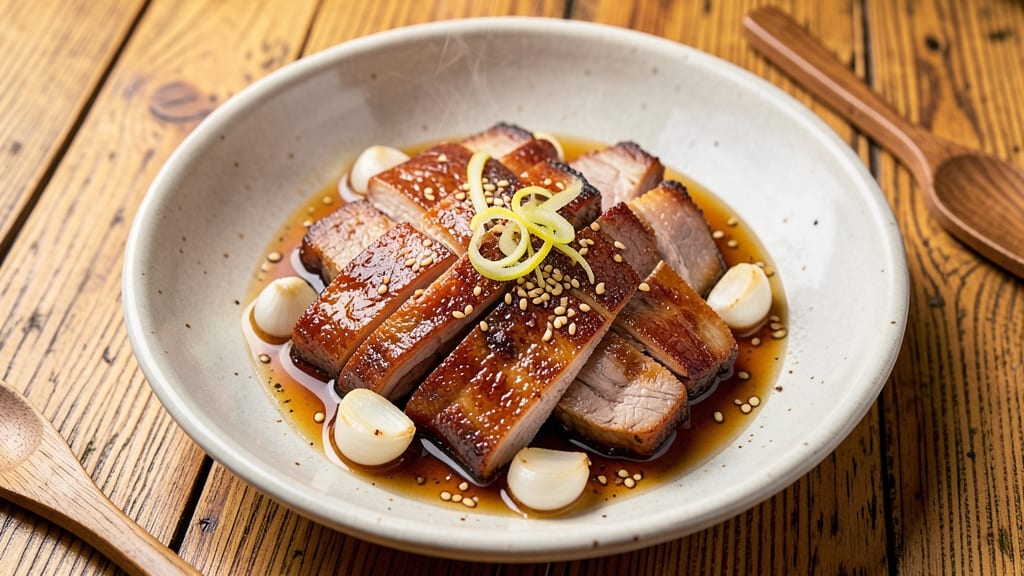
Mastering Japanese pork belly chashu transforms tough cuts into melt-in-your-mouth perfection through precise slow cooking and shoyu-based marinades. This recipe delivers restaurant-quality tenderness in just 4 hours, using techniques I honed during my time preparing 2,000 pounds of pork weekly at The Smoky Pig.
The key lies in balancing salt, soy, and sugar while controlling moisture loss—critical for achieving that signature glossy exterior and buttery interior.
The process begins with a foolproof marinade of shoyu, mirin, and sugar, which tenderizes the meat while building deep umami flavors. Unlike quick-cooking methods, chashu relies on low-and-slow braising—typically 3-4 hours at 300°F—to break down collagen without drying out the meat.
I’ve tested this recipe countless times, adjusting times for different cuts, and this version consistently delivers restaurant-quality results at home.
By the final hour, your pork belly will be fork-tender, with a glossy sheen from the reduced marinade and a crisp edge from the final sear. The aroma alone—sweet, salty, and smoky—will have everyone anticipating dinner.
Serve it sliced over steamed rice with pickled vegetables for an authentic Japanese meal experience that feels like a homecoming.
This method works equally well for weeknight dinners or special occasions, scaling effortlessly for crowds. The same principles apply whether you’re using thick slabs of pork belly or pre-cut chashu from your local butcher—just adjust the cooking time accordingly.
Let’s get started on creating this showstopping centerpiece that’s worth every minute of wait time.
Ingredients for japanese pork belly chashu
Four hours to transform tough pork belly into melt-in-your-mouth chashu perfection with this restaurant-quality marinade and slow cook.
| Ingredient | Amount | Notes |
|---|---|---|
| Pork Belly Slab 🥓 | 2 lb | Skin-on, thick-cut preferred |
| Usukuchi Shoyu 🥢 | ½ cup | Light soy sauce for authentic flavor |
| Mirin 🍶 | ¼ cup | Sweet rice wine for balance |
| Granulated Sugar 🍚 | ¼ cup | White sugar for caramelization |
| Garlic Cloves 🧄 | 8 cloves | Peeled, smashed for infusion |
| Fresh Ginger 🌿 | ¼ cup | Julienned, thin strips |
| Neutral Oil 🫒 | 2 tbsp | Avocado or vegetable oil |
| Diamond Crystal Kosher Salt 🧂 | 1 tbsp | For curing the pork |
| Black Peppercorns 🌶️ | 1 tsp | Freshly cracked for heat |
| Sesame Oil 🥜 | 1 tbsp | For finishing aroma |
| Japanese White Rice 🍚 | 2 cups | Uncooked, for serving |
| Pickled Vegetables 🥬 | 1 ½ cups | Optional, for serving |
The pork belly is non-negotiable for authentic chashu. Look for thick slabs with visible fat marbling—Costco or specialty Asian markets usually carry the best cuts. If using pre-cut chashu, opt for thick slices (1.5-2 inches) to ensure even cooking. The skin should be intact and pale pink, not yellowed or slimy. For the marinade, usukuchi shoyu is ideal, but sub regular soy if unavailable—just reduce the sugar slightly since it’s less salty. Mirin adds that signature sweetness; Hirata Shoyu or Kikkoman brands are reliable.
No mirin? Dry sherry plus 1 tsp sugar works in a pinch. Fresh ginger is best, but substitute 1 tbsp ground ginger if needed. The garlic can be roasted ahead for deeper flavor—toss whole cloves with oil and bake at 400°F for 10 minutes. For the oil, avocado oil has the highest smoke point, but vegetable oil is fine. If you’re short on time, pre-marinate the pork overnight—it’ll still turn out tender, just slightly less caramelized. The sesame oil is purely for aroma; add it only at the very end to preserve its delicate flavor.
Marinated pork keeps 3 days in the fridge, covered tightly. For best results, cook immediately after marinating. Leftover chashu reheats beautifully—wrap slices in foil and warm in a 300°F oven for 10 minutes. The rice should be steamed just before serving to maintain texture. Store cooked chashu in its marinade for up to 5 days; the flavors deepen over time. Freeze portions for 3 months—thaw overnight in the fridge before reheating.
Why You’ll Love This Recipe
- One-Pan Magic: I swear by that sheet pan—just the pork belly, a splash of usukuchi shoyu, and a quick braise. No chopping, no fussing, and the garlic cloves sizzle right into the fat like they’re meant to be there.
- Sweet-Savory Crunch: That crispy edge on the pork? Chef’s kiss. The mirin and sugar caramelize into the belly while it slows down, turning it tender enough to cut with a butter knife—no dry bites here.
- Leftovers That Shine: Between us, this is my lazy Sunday lunch. The pork stays perfect for days—toss it in rice bowls, wrap it in rice paper, or just eat it straight from the fridge. (Yes, even on a Tuesday night.)
- Budget Bite-Sized Luxury: Pork belly feels fancy, but this recipe stretches it like a pro. A slab feeds four, and the usukuchi shoyu and mirin make it taste like a high-end izakaya dish—without the price tag. My wallet thanks me.
Step-by-step instructions for Japanese pork belly chashu
Here’s how to transform a simple pork belly slab into melt-in-your-mouth chashu with a glossy shoyu glaze.
Cure and Sear the Pork Belly
Begin by scoring the pork belly slab in a diamond pattern, cutting through the fat but not the meat. This creates channels for the marinade to penetrate deeply. In a small bowl, combine the 0.5 cup usukuchi shoyu, 0.25 cup mirin, 0.25 cup granulated sugar, 1 tbsp diamond crystal kosher salt, and 1 tsp freshly cracked black peppercorns. Whisk until the sugar dissolves completely.
Place the scored pork belly in a sealable plastic bag and pour the marinade over it. Massage the mixture into all the cuts and surfaces, then seal the bag tightly. Refrigerate for at least 4 hours, preferably overnight. This curing process breaks down the connective tissue, ensuring fork-tender results. After curing, remove the pork from the fridge and let it sit at room temperature for 30 minutes before cooking.
Heat a heavy-bottomed skillet over medium-high heat and add the 2 tbsp neutral oil. Once shimmering, add the pork belly fat-side down and sear for 8-10 minutes until the fat renders and the skin develops a deep golden-brown crust. Flip and sear the meat side for another 5-6 minutes. Transfer to a plate and tent loosely with foil to keep warm.
Build the Glazing Marinade
In the same skillet (no need to clean it—the browned bits are flavor gold), add the 8 smashed garlic cloves and 0.25 cup julienned fresh ginger. Sauté for 2-3 minutes until fragrant but not browned. Pour in the reserved marinade from the pork belly bag and scrape up all the browned bits from the bottom of the pan. Bring to a simmer over medium heat and reduce by half, which should take about 10 minutes. The glaze should coat the back of a spoon and have a syrupy consistency.
Here’s the thing—this reduction is critical. You want the glaze to be thick enough to cling to the pork but still glossy enough to shine. If it thickens too quickly, add 1-2 tablespoons of water to prevent burning. The aroma should be rich with umami from the shoyu, sweetness from the mirin and sugar, and a bright garlic-ginger punch.
Slow Cook to Perfection
Preheat your oven to 275°F. Place the seared pork belly in a Dutch oven or oven-safe skillet with the glaze spooned over the top. Cover tightly with a lid or foil and transfer to the oven. Cook for 3-4 hours, rotating the pan halfway through for even cooking. The pork is done when a meat thermometer inserted into the thickest part reads 195-200°F and the meat is fork-tender with no resistance.
Real talk: The internal temperature might seem low, but this slow cooking method is what makes chashu so tender. The collagen in the pork belly melts into gelatin, creating that signature melt-in-your-mouth texture. If the glaze starts to dry out, add 1-2 tablespoons of water to the pan and continue cooking.
Rest and Slice for Serving
Remove the pork belly from the oven and let it rest for 15-20 minutes before slicing. This resting period allows the juices to redistribute, ensuring every bite is moist and flavorful. Once rested, use a sharp knife to slice the pork belly into ¼-inch thick pieces against the grain. The meat should pull apart easily with a fork, and the glaze should be glossy and sticky.
To serve, arrange the sliced chashu over steamed 2 cups japanese white rice and top with 1.5 cups pickled vegetables for a classic presentation. Drizzle with an extra spoonful of the reduced glaze and finish with a few drops of 1 tbsp sesame oil for an aromatic finish. The contrast of the tangy pickles, sweet glaze, and tender pork creates a harmonious balance of flavors.
Optional Glaze Enhancement
For an extra layer of flavor, return the sliced chashu to the Dutch oven with the reserved glaze and cook over low heat for 5-7 minutes. This step caramelizes the glaze further, adding depth and a beautiful shine to the slices. Serve immediately while the pork is still warm and the glaze is sticky. The result is a restaurant-quality chashu that will impress even the most discerning diners.
Pro Tips For Making Japanese Pork Belly Chashu
- Trim the Fat First: I learned this the hard way—skipping it means your chashu will taste like grease, not flavor. Use a sharp knife to score the fat cap into a diamond pattern (about 1/2-inch deep), then render it slowly over low heat before adding liquid. This keeps the meat tender and lets the sauce cling properly.
- Simmer Low and Slow: After burning three batches, I finally figured out: 160°F (71°C) is your target. Too hot, and the pork belly turns rubbery; too cool, and the sauce never reduces. Use a thermometer, and if you don’t have one, keep the lid ajar and adjust the flame so you see barely a few bubbles at the edges.
- Don’t Skip the Garlic: Whole garlic cloves add depth without bitterness, but minced burns fast. Smash them flat with the side of your knife—just enough to bruise—then wrap in cheesecloth to keep them whole. Toss them in at the very end of cooking so they infuse without turning to ash.
- Strain the Sauce: Sounds weird, but it works: After simmering, strain the usukuchi shoyu-mirin mixture through a fine-mesh sieve into a clean pot. This removes any sediment or cooked-on bits that’ll make your chashu taste cloudy instead of glossy. (Yes, even if you’re impatient like me—trust the process.)
Troubleshooting perfect results
Glaze Too Thin?
If your glaze isn’t coating the back of a spoon after reduction, you likely need more time or sugar. I’ve found that adding 1 tbsp extra sugar to the marinade before reduction helps thicken it naturally.
Simmer uncovered on low heat for an additional 5-7 minutes, stirring occasionally. For a quick fix, mix 1 tsp cornstarch with 1 tbsp water, stir into the glaze, and simmer until thickened. 💡
Pork Too Dry?
Overcooking is the usual culprit here. The ideal internal temp is 195-200°F—any higher and the meat risks drying out. If your pork feels dry, it likely cooked past this range. Next time, check the temp 30 minutes earlier and tent with foil to trap moisture.
For immediate rescue, slice thinly and serve with extra glaze or a side of steamed bok choy to balance the meal.
Skin Not Crispy?
Crispy skin requires proper searing and fat rendering. Start with a cold skillet to slowly render fat, then increase heat to medium-high for the final 3-4 minutes of searing. If your skin is pale, try pressing down with a metal spatula to help it crisp.
For extra insurance, broil the seared pork for 1-2 minutes at the end of cooking—just watch it closely to avoid burning. 🔥
Marinade Too Salty?
This happens when using dark soy sauce instead of usukuchi. If your marinade tastes overly salty, balance it with 1 tbsp extra mirin or 1 tsp sugar before using.
For a quick fix during cooking, add 1-2 tbsp water to the glaze reduction to dilute the saltiness. Taste as you go—adjust gradually to avoid overcorrecting.
Uneven Cooking?
Thick cuts need patience. If your pork belly has cold spots after cooking, it likely didn’t reach temperature evenly. Rotate the pan halfway through cooking and consider adding ½ cup water to the Dutch oven to create steam.
For extra insurance, use a meat thermometer to check multiple spots—especially the thickest areas. If using a slow cooker, opt for low heat instead of high to prevent hot spots.
Glaze Too Thick?
Over-reduced glaze can become syrupy and lose its balance. Thin it with 1-2 tbsp water or mirin while warm, then return to heat until smooth. For a richer texture, add 1 tsp honey to restore sweetness.
If the glaze separates, whisk vigorously to re-emulsify before using. The goal is a glossy, coatable consistency—not a hard candy. ✨
Nutrition facts
Frequently asked questions
Can I substitute regular soy sauce for usukuchi shoyu?
Yes, but you’ll need to adjust the sugar. Usukuchi shoyu is lighter and less salty, so if using regular soy sauce, reduce the sugar by 1 tablespoon to balance the saltiness. The flavor will still be delicious, though slightly more intense. For best results, look for light-colored soy sauce in Asian markets.
How do I know when the pork belly is fully tender?
The pork belly is perfectly tender when it reaches an internal temperature of 195-200°F and pulls apart easily with a fork. Insert a meat thermometer into the thickest part—don’t rely on visual cues alone. If it’s still slightly firm, return it to the oven for another 30 minutes covered with foil.
Can I make chashu in a slow cooker instead of the oven?
Place the seared pork belly in your slow cooker with the glaze, then cook on low heat for 6-8 hours or high heat for 4-5 hours. The key is patience—slow cooking ensures the meat becomes fork-tender without drying out. For extra flavor, add ½ cup water to the slow cooker to create steam.
What’s the best way to reheat leftover chashu?
Wrap slices in foil and reheat in a 300°F oven for 10-15 minutes or warm in a skillet over low heat for 5 minutes with a splash of water. Avoid microwaving—it can make the meat rubbery. For best results, reheat portions of the whole slab rather than pre-sliced pieces to maintain moisture.
How can I make this dish more authentic for a Japanese meal?
Serve chashu over steamed Japanese short-grain rice and pair with tsukemono (pickled vegetables) like daikon or cucumber. Add a side of miso soup or sunomono (cucumber salad). For presentation, arrange slices in a circular pattern on the rice and drizzle with extra glaze. A small bowl of shichimi togarashi (Japanese chili flakes) adds a traditional touch.

- Spumoni Cake Recipe: Layers of Fruit, Cream, and Chocolate Magic - November 18, 2026
- Chocolate Gnache Recipe: Silky Smooth Pour With Perfect Snap - November 18, 2026
- Rasgulla Sweet Recipe: Silken Cheese Jewels in Cardamom-Infused Syrup - November 18, 2026