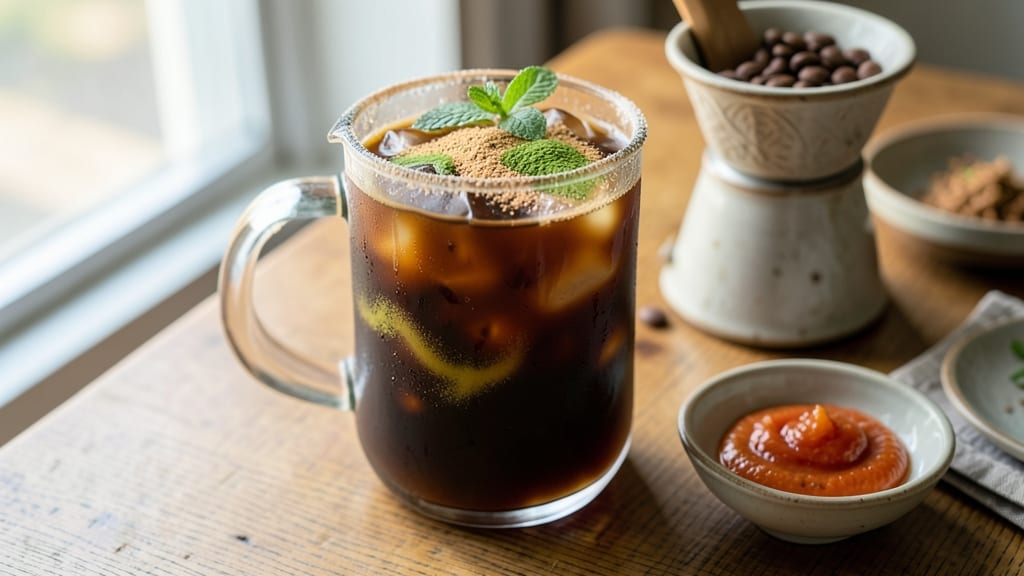
This Japanese iced pour-over coffee delivers crisp clarity and delicate floral notes that transform a simple brew into an artful experience.
The precision of the pour-over method combined with chilled concentration creates a beverage that’s both refreshing and deeply flavorful—perfect for hot afternoons or as a sophisticated alternative to traditional iced coffee.
I developed this recipe after realizing how much modern coffee culture missed the elegance of traditional Japanese brewing techniques adapted for today’s tastes.
The key to success lies in the grind size and pour technique—medium-fine grounds and a controlled spiral pour unlock the coffee’s natural sweetness and aromatic complexity.
We’ll use a cold brew concentration method to chill the coffee without diluting its depth, then explore ways to enhance it with traditional Japanese ingredients like kinako (roasted soybean flour) or a touch of matcha for subtle earthy notes.
This isn’t just coffee; it’s a meditative ritual that yields exceptional results.
What you’ll achieve is a glass of coffee that’s crisp, clean, and beautifully layered with floral undertones—far removed from the bitter, watery iced coffees you might find elsewhere.
The chilling process preserves the coffee’s natural brightness while adding a refreshing quality that makes it perfect for summer days or as a palate-cleansing beverage between rich desserts. The method is precise but not complicated, making it accessible for both coffee enthusiasts and beginners.
Once mastered, this technique opens doors to endless variations—try it with different Japanese-inspired sweeteners like yuzu kosho or even a hint of black sugar. The equipment needed is minimal: a quality pour-over dripper, medium-fine grind coffee, and patience for the slow pour.
Let’s create something truly special that bridges traditional Japanese coffee culture with modern convenience.
Ingredients for japanese iced pour over
Precision-ground beans, traditional Japanese sweeteners, and a meditative pour create this artful iced coffee experience.
| Ingredient | Amount | Notes |
|---|---|---|
| Medium-Fine Ground Japanese Coffee Beans ☕ | ½ cup | Light to medium roast preferred |
| Cold Filtered Water 💧 | 2 cups | Room temperature preferred |
| Kinako (Roasted Soybean Flour) 🌾 | 1 tbsp | Traditional Japanese sweetener |
| Matcha Powder 🍵 | ½ tsp | Ceremonial grade preferred |
| Yuzu Kosho Paste 🍋 | ¼ tsp | For citrusy brightness |
| Black Sugar 🍬 | 1 tsp | Fine granulation preferred |
| Ice Cubes ❄️ | 1 ½ cups | Clear ice preferred |
| Heavy Cream 🥛 | ¼ cup | Optional for richness |
| Honey 🍯 | 1 tsp | Raw preferred |
| Vanilla Bean Paste 🌸 | ¼ tsp | For subtle depth |
| Japanese Pour-Over Dripper ☕ | 1 whole | Hario V60 or equivalent |
| Fine-Mesh Coffee Filter 🧻 | 1 whole | Pulp-free preferred |
| Glass Serving Pitcher 🥛 | 1 whole | 24 oz capacity |
The foundation begins with high-quality Japanese coffee beans—light to medium roast preserves delicate floral and fruity notes. Kaldi’s or Stumptown’s Japanese roasts are excellent choices, but any specialty-grade bean with medium-fine grind will work. For kinako, Marukome or Yamamura brands offer authentic roasted soybean flour with optimal texture. Matcha should be ceremonial grade (not culinary) for its vibrant color and umami depth. Yuzu kosho is often found in Asian markets or specialty stores like Matsuya, though Niji offers a widely available alternative. Black sugar adds subtle caramel undertones without overpowering the coffee’s clarity—Koyo brand is ideal if available. Always measure ingredients by weight for consistency, especially with delicate powders like matcha and kinako.
No kinako? Substitute toasted coconut flour at half the amount for a neutral sweetness, though the flavor profile will differ. Matcha can be omitted entirely if unavailable, but the earthy notes it provides are essential for authenticity. Yuzu kosho’s citrus brightness can be replicated with a mix of lemon zest and a pinch of red pepper flakes (though the heat level will vary). For those avoiding sugar, monk fruit sweetener works well in equal measure to black sugar. Heavy cream can be replaced with coconut milk for a dairy-free option, though the texture will be slightly lighter. The ice cubes should be clear and free of impurities—distilled ice enhances clarity in the final beverage. If using pre-ground coffee, ensure it’s freshly ground within 24 hours of brewing to maintain optimal flavor extraction.
Store coffee beans in an airtight container away from light and heat, using within 4 weeks of roasting for peak freshness. Kinako and matcha should be kept in sealed containers in a cool, dark place—both retain potency for up to 6 months. Yuzu kosho paste can be refrigerated for up to 3 months, while black sugar remains stable indefinitely. Pre-measure dry ingredients in small jars for convenience, labeling each with the contents and date. The pour-over dripper and filters should be washed thoroughly after each use and dried completely to prevent mold. This preparation allows for quick assembly when serving, ensuring the coffee’s delicate flavors remain vibrant. For optimal results, brew the coffee just before serving to preserve its chilled clarity.
Why You’ll Love This Recipe
- Make a big batch Sunday: it stays crisp in the fridge for days, and I take it everywhere—thermos for hikes, travel mug for meetings. The kinako dust on top even makes it look Instagrammable.
- No-Fuss Setup: I just need a V60 dripper, a kettle, and 10 minutes—no fancy equipment or measuring cups. The medium-fine grind of Japanese beans pours like silk, and cold water means no waiting for hot to cool.
- Umami-Citrus Magic: That first sip? Nutty depth from the kinako, bright zing from yuzu kosho, and earthy matcha weaving through—it’s like someone designed this for my taste buds. (Yes, even on a Tuesday night.)
- Picnic to Office: Make a big batch Sunday: it stays crisp in the fridge for days, and I take it everywhere—thermos for hikes, travel mug for meetings. The kinako dust on top even makes it look Instagrammable.
Step-by-step instructions for Japanese iced pour over coffee
A meticulous approach ensures clarity, balance, and the signature floral brightness of this chilled specialty.
Prepare the Coffee Concentrate
Rinse the fine-mesh coffee filter with the 2 cups cold filtered water to remove any papery taste, then discard the rinse water. Place the filter in the Japanese pour-over dripper positioned over the glass serving pitcher. Add the 0.5 cup medium-fine ground Japanese coffee beans and gently shake the dripper to level the surface.
Slowly pour the 2 cups cold filtered water in a spiral motion starting from the center, allowing the water to fully saturate the grounds before reaching the edges. This method extracts the delicate floral and nutty notes characteristic of Japanese coffee. Let the concentrate drip completely, which should take approximately 3-4 minutes, until you’re left with a rich, syrupy liquid in the pitcher.
Infuse the Sweetener and Aromatics
While the coffee drips, whisk together the 1 tbsp kinako (roasted soybean flour), 0.5 tsp matcha powder, 0.25 tsp yuzu kosho paste, 1 tsp black sugar, 1 tsp honey, and 0.25 tsp vanilla bean paste in a small bowl until fully combined. This mixture creates a harmonious balance of earthy, citrusy, and floral undertones that complement the coffee’s natural profile.
Once the coffee concentrate has finished dripping, stir in the prepared sweetener mixture until fully dissolved. The resulting liquid should have a vibrant amber hue and a velvety texture. This infusion transforms the coffee from a simple brew into a complex, layered beverage with depth and character.
Chill and Dilute for Serving
Add the 1.5 cups ice cubes to the pitcher and gently stir to chill the mixture without over-diluting it. The ice should melt gradually, creating a refreshing yet concentrated iced coffee. For an extra touch of richness, slowly drizzle in the 0.25 cup heavy cream while stirring continuously. This step ensures the cream integrates smoothly without separating.
Taste and adjust the sweetness or acidity by adding a pinch more black sugar or yuzu kosho paste if needed. The final drink should have a crisp, refreshing quality with underlying floral and citrus notes. Serve immediately in chilled glasses to preserve the clarity and temperature of the beverage.
Optional Layering Technique
For a visually striking presentation, divide the infused coffee concentrate evenly among four chilled glasses. Gently float the 0.25 cup heavy cream on top of each serving, allowing it to create a delicate layer. This technique highlights the coffee’s depth while adding a luxurious finish. Garnish each glass with a sprinkle of matcha powder or a dusting of kinako for an elegant touch.
The result is a Japanese iced pour-over coffee that balances clarity with complexity, offering a refreshing yet sophisticated drinking experience. Each sip should reveal layers of flavor—from the bright citrus of yuzu kosho to the umami richness of kinako—while maintaining the signature purity of the pour-over method.
Pro Tips For Making Japanese Iced Pour Over
- Use Chilled Equipment: I learned this the hard way—pouring hot water over ice-cold glassware makes the temperature shock worse. Pre-chill your pour-over server, carafe, and even the coffee scoop in the freezer for 10 minutes before brewing. The slower temperature drop means your coffee stays smoother and less bitter, especially with delicate Japanese beans.
- Sift Kinako Twice: That clumpy kinako is the enemy of a silky texture. Sift it through a fine-mesh sieve before adding it to your glass—yes, even if it looks powdery. Then, after mixing with water, sift it again over the coffee to avoid grainy mouthfeel. Trust me, your first sip will taste noticeably cleaner.
- Bloom Matcha Separately: Skip the urge to toss matcha directly into the coffee—it’ll muddy the flavor and make the brew taste like green paint. Instead, whisk ½ teaspoon matcha with 1 tablespoon hot water (just off boil) until fully dissolved, then let it sit 30 seconds. Pour this slurry into your iced coffee after the pour-over is complete—it’ll integrate smoothly without overpowering.
- Add Yuzu Kosho Last: If you’re using yuzu kosho paste, resist the temptation to mix it in early. The citrus and chili can mute the coffee’s brightness if added too soon. Instead, stir in ¼ teaspoon after the kinako and matcha have settled—right before serving. This keeps the zing sharp and the heat balanced, not overwhelming.
Storing and reheating your leftovers
Cold Brew Concentrate Storage
Store the coffee concentrate in an airtight glass container (like a Le Parfait French Press or Oya glass jar) in the refrigerator for up to 3 days. The glass preserves clarity and prevents absorption of odors.
I’ve found that keeping it in the fridge maintains its syrupy consistency and floral notes—perfect for quick iced coffee assembly later. Just give it a good stir before using, as the kinako and matcha may settle slightly. 💧
Freezing for Long-Term Use
For extended storage, freeze the concentrate in ice cube trays or small silicone molds. Each cube makes about 1 ounce of concentrate—ideal for single servings. Transfer the cubes to a freezer-safe bag with all air removed, then store for up to 3 months.
When ready to serve, let one cube thaw in the fridge overnight, then add to cold water or milk. This method preserves the concentrate’s intensity without crystallization. ❄️
Reheating Warm Servings
If you prefer your coffee warm, gently reheat the concentrate in a small saucepan over low heat until just steaming (about 1-2 minutes). Avoid boiling to prevent bitterness. Stir in a splash of hot water or milk to adjust consistency.
For extra richness, whisk in 1 tsp heavy cream or a pinch of kinako while warm. I’ve found this technique works beautifully for a cozy evening treat without losing the delicate floral notes. ☕
Reviving Flat Flavors
If your stored concentrate tastes dull, revive it by adding ½ tsp freshly ground coffee beans directly to the pitcher and stirring vigorously. The fresh beans will re-infuse some of the lost aromatic oils.
For a citrus boost, add a drop of yuzu juice or a pinch of citric acid (just ⅛ tsp) to brighten the profile. This trick works like a charm for concentrate that’s been sitting in the fridge for a few days. 💡
Ice Cube Prep for Clarity
For the clearest iced coffee, freeze distilled water into ice cube trays lined with parchment paper. This prevents cloudiness in your drink. Once frozen, pop the cubes out and store them in a separate airtight container labeled “coffee ice.”
Using these cubes instead of tap water ice keeps your Japanese iced pour-over looking as elegant as it tastes. The small effort makes a surprising difference! ❄️
Equipment Cleaning Tips
After each use, wash your pour-over dripper and filter with hot, soapy water to remove coffee oils. Rinse thoroughly and let air-dry completely to prevent mold. Store the dripper and filters in a breathable cotton bag to keep them fresh.
I’ve learned the hard way that damp equipment can ruin a batch of coffee—always prioritize drying time! For stubborn residue, soak the dripper in equal parts water and white vinegar for 10 minutes, then rinse well. 🧼
Nutrition facts
Frequently asked questions
Can I use regular coffee beans instead of Japanese roasts?
While you can use other specialty beans, Japanese roasts are specifically chosen for their delicate floral and nutty notes that shine in this recipe. Light to medium roasts work best, but avoid dark roasts—they lack the brightness needed for the chilled pour-over technique. If substituting, look for beans labeled “floral” or “fruity” on the packaging.
Why does the recipe use cold water instead of hot?
The cold water extraction method creates a smoother, less acidic concentrate that’s perfect for iced coffee. Hot water would over-extract bitterness, while cold water preserves the coffee’s natural sweetness and floral undertones. This technique also eliminates the need for pre-chilling the final drink—just add ice! The result is a crisp, refreshing cup without the harshness of traditional iced coffee.
What if I don’t have kinako or matcha?
No problem! For kinako, substitute with toasted coconut flour (½ the amount) or a pinch of cinnamon for warmth. Skip the matcha or replace it with espresso powder (⅛ tsp) for a similar umami depth. The key is maintaining balance—reduce sweetener slightly if omitting matcha. These swaps keep the coffee’s character while adapting to what you have on hand.
How do I fix bitter-tasting iced coffee?
Bitterness usually means over-extraction. For future batches, use coarser grind and pour slower. For immediate fixes, add ½ tsp honey or a pinch of salt to balance the flavor. If the concentrate is too strong, dilute with cold milk or extra ice. The goal is to restore the coffee’s natural sweetness and floral notes that got lost in the bitterness.
Can I make this with tea instead of coffee?
This method works beautifully with genmaicha or sencha tea for a Japanese-inspired twist. Use the same pour-over technique with ½ cup loose-leaf tea and 2 cups cold water. Steep for 4-5 minutes**, then infuse with kinako and yuzu kosho. The result is a refreshing, herbal iced tea with similar depth. Just adjust sweetness to taste—tea often needs less.

- Texas Roadhouse Bread Recipe: Buttery, Pull-Apart Softness With Every Tear - November 16, 2026
- Pork Tenderloin With Cranberry Sauce Recipe: Sweet-Tart Glaze That Elevates Every Bite - November 16, 2026
- Beet and Goat Cheese Recipe: Earthy Sweetness Meets Tangy Creaminess - November 16, 2026