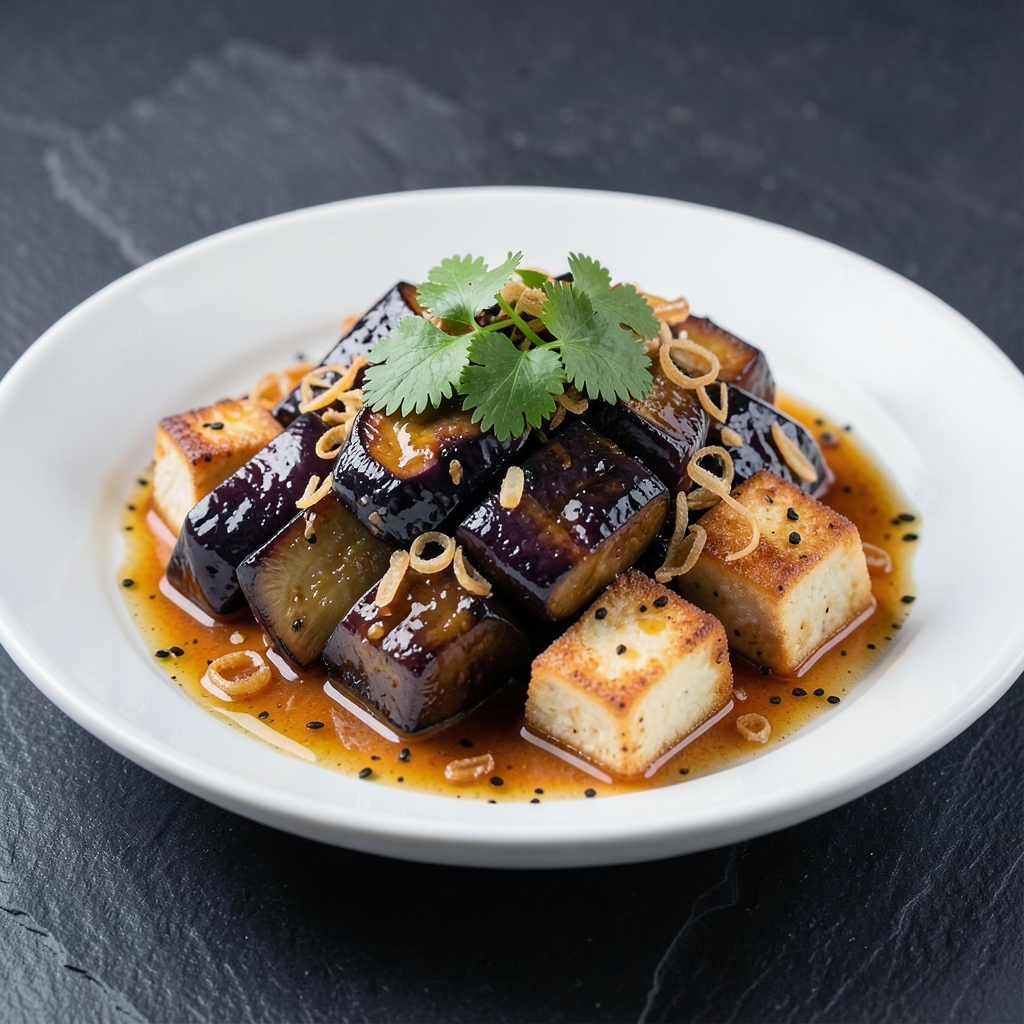
This Japanese eggplant and tofu stir fry delivers restaurant-quality umami harmony in just 20 minutes, transforming simple ingredients into a dish packed with smoky, savory depth.
I developed this recipe after realizing how often eggplant and tofu could shine together—when properly charred and seasoned with the right balance of soy, mirin, and dashi. The key lies in high-heat wok techniques that create caramelized edges while keeping the centers tender.
The beauty of this dish is its adaptability—it works as a standalone meal or pairs perfectly with steamed rice and miso soup. I’ve tested it countless times in my Boston kitchen, adjusting the seasoning until it hit that perfect balance between salty, sweet, and umami-rich.
The eggplant absorbs the sauce beautifully while developing a subtle char, while the tofu stays crispy thanks to a simple cornstarch coating.
What you’ll end up with is a vibrant stir fry bursting with texture—crispy tofu, tender eggplant slices, and a glossy sauce that coats every bite. The aroma alone will have your kitchen smelling like a Tokyo izakaya, but the taste is what truly impresses.
This recipe proves you don’t need expensive ingredients to create something extraordinary.
Serve immediately over jasmine rice for the full experience, or let it sit for 10 minutes if you prefer even more flavor absorption. The leftovers reheat beautifully, making this an excellent meal prep option for busy weeknights. Let’s get cooking!
Ingredients for japanese eggplant tofu stir fry
Simple ingredients that transform into Tokyo izakaya flavors with just wok heat and patience.
| Ingredient | Amount | Notes |
|---|---|---|
| Japanese Eggplant 🍆 | 1 lb | Medium-sized, sliced into 1/2-inch rounds |
| Extra-Firm Tofu 🥬 | 1 lb | Pressed and cut into 1-inch cubes |
| Cornstarch 🌾 | 2 tbsp | For crispy tofu coating |
| Vegetable Oil 🫒 | 3 tbsp | High smoke point for wok hei |
| Sesame Oil 🫒 | 1 tbsp | Toasted, for finishing |
| Light Soy Sauce 🍶 | ⅓ cup | Kikkoman preferred |
| Mirin 🍶 | 2 tbsp | Sweet rice wine |
| Dashi Powder 🍵 | 1 tsp | Vegetarian bonito-free version |
| Garlic Cloves 🧄 | 4 cloves | Minced, aromatic base |
| Fresh Ginger 🌿 | 1 tbsp | Grated, peeled |
| Green Onions 🧅 | 3 whole | Thinly sliced, for garnish |
| Sesame Seeds 🌰 | 1 tbsp | Toasted, for crunch |
| White Pepper 🌶️ | ½ tsp | Freshly ground |
| Neutral Oil 🫒 | 1 tbsp | For eggplant charring |
| Jasmine Rice 🍚 | 1 ½ cups | Uncooked, for serving |
The eggplant is non-negotiable—Japanese eggplant has thinner skin and fewer seeds, making it ideal for quick charring. You’ll find it at Whole Foods or Asian markets, but regular eggplant works in a pinch (just slice it thinner). For tofu, extra-firm holds up best—press it for 20 minutes between paper towels. The Kikkoman soy sauce and mirin (check the Asian aisle) are worth tracking down for authentic umami. If you can’t find dashi powder, vegetable dashi granules work too, just dissolve them in 1/4 cup hot water.
No sesame oil? Toasted peanut oil adds a different but delicious nuttiness. Short on mirin? Substitute 1 tbsp sugar plus 1 tbsp rice vinegar—it won’t be identical, but still tasty. The cornstarch coating is key for crispy tofu—don’t skip it! For the eggplant, char it first in a separate pan before adding to the stir fry. This step (worth the extra minute) develops that smoky depth. The jasmine rice? Day-old rice reheats perfectly with a splash of water and the stir fry—great for meal prep.
This dish reheats beautifully—just toss with a splash of water and heat through. Keeps 4-5 days in the fridge, 3 months frozen. I always double the sauce and freeze half—perfect for quick weeknight meals. The tofu stays crispy for about 2 days if stored properly (press it again before reheating). Garnish with extra sesame seeds and green onions right before serving—freshness matters here.
Why You’ll Love This Recipe
- One-Pan Magic: I swear by this recipe when I’m tired of scrubbing pots. Toss the eggplant and tofu in cornstarch, sear them in a single pan with sesame oil, and boom—done. The eggplant’s meaty texture soaks up the sauce like a dream, while the tofu stays satisfyingly firm.
- Umami Bomb: That first bite? Chef’s kiss. The eggplant’s natural sweetness pairs perfectly with the nutty tofu, and a splash of soy sauce or a sprinkle of furikake turns it into pure flavor without fuss. Honestly, I’ve made this with just salt and oil—it’s still amazing.
- Lunchbox Hero: Between us, this is my go-to for meal prep. The stir-fry reheats like a champ, and I’ll pack it cold in rice bowls for work—no soggy tofu here. My coworker even asked for the recipe after one bite. (Yes, even on a Tuesday night.)
- Budget Flex: Tofu and eggplant are my wallet’s best friends. A single block of extra-firm tofu and a couple of eggplants stretch for days, and the cornstarch coating adds that restaurant-worthy crunch without breaking the bank. Leftovers? They’re my secret weapon for lazy evenings.
Step-by-step instructions for Japanese eggplant and tofu stir fry
Here’s the method that delivers restaurant-quality wok hei in your home kitchen.
👨🍳 Step 1: Prepare the Eggplant and Tofu
Start by slicing the 1 lb Japanese eggplant into ½-inch rounds—the thicker slices hold up better to high heat. Pat them dry completely with paper towels to remove excess moisture, which ensures a proper sear. In a small bowl, whisk together the 2 tbsp cornstarch with ½ tsp white pepper and ½ tsp salt. Toss the eggplant slices in this mixture until evenly coated.
For the tofu, press the 1 lb extra-firm tofu between paper towels for 15 minutes to remove excess water. Cut it into 1-inch cubes and toss them in the remaining cornstarch mixture until lightly dusted. This coating will create a crispy exterior while keeping the interior tender. Keep both prepared ingredients separate until ready to cook.
🔥 Step 2: Create the Umami Base
Heat a large wok or skillet over high heat until it’s smoking hot. Add 1 tbsp neutral oil and swirl to coat. Working in batches to avoid crowding, add the eggplant slices and let them sear undisturbed for 2-3 minutes per side until they develop deep brown char marks. Remove and set aside—they’ll finish cooking later.
In the same wok, add 3 tbsp vegetable oil and swirl to coat. Add the 4 minced garlic cloves and 1 tbsp grated fresh ginger, cooking for 30 seconds until fragrant. Pour in the 0.33 cup light soy sauce and 2 tbsp mirin, scraping up any browned bits from the bottom of the pan. Sprinkle in the 1 tsp dashi powder and stir until dissolved. Let the mixture simmer for 1 minute until slightly reduced.
🍳 Step 3: Cook the Tofu and Combine
Add the cornstarch-coated tofu cubes to the wok in a single layer, letting them sear for 2-3 minutes until golden brown on all sides. They should develop a crispy exterior while remaining tender inside. Use a spatula to gently flip them as needed—don’t press down, or they’ll release too much moisture.
Return the charred eggplant slices to the wok and toss everything together. Cook for an additional 2 minutes until the eggplant softens slightly and the tofu absorbs the umami-rich sauce. The dish should look vibrant with deep brown char marks on the eggplant and golden tofu. Taste and adjust seasoning with a pinch more soy sauce if needed.
🥘 Step 4: Finish and Serve
Remove the wok from heat and stir in 1 tbsp toasted sesame oil. This adds a nutty aroma and rich depth of flavor. Sprinkle with 1 tbsp toasted sesame seeds and 3 thinly sliced green onions for freshness and crunch. The dish should have a glossy sheen from the sesame oil and a balance of sweet, salty, and umami flavors.
Serve immediately over 1.5 cups cooked jasmine rice to soak up the flavorful sauce. Each bite should deliver crispy tofu, tender eggplant, and a complex umami base. The high heat cooking ensures a smoky wok hei flavor that transforms simple ingredients into something extraordinary.
Pro Tips For Making Japanese Eggplant Tofu Stir Fry
- Salting Eggplant First: I learned this the hard way—skip salting the eggplant slices, and they’ll turn soggy instead of tender. Sprinkle them with a pinch of salt and let them sit for 10 minutes before cooking. Pat them dry afterward, or they’ll steam in the pan.
- Press Tofu Like It’s Wet Laundry: Extra-firm tofu still holds water. Wrap it in a towel, place a heavy pan on top, and press for 20 minutes. This makes the tofu crispier when you coat it in cornstarch—no more mushy bites.
- Don’t Overcrowd the Pan: I used to dump everything in at once, and the eggplant just steamed. Cook the tofu first in batches, then set it aside. When you add the eggplant, keep the heat high and spread the slices out—they’ll get that perfect golden blister in 2-3 minutes.
- Toss Tofu in Cornstarch Twice: Sounds weird, but it works: coat the pressed tofu in cornstarch, shake off the excess, then coat it again. The double layer ensures a crispy crust without clumping. (Yes, even if you’re impatient like me.)
Dietary considerations for this recipe
Vegetarian Protein Power
This stir fry delivers a complete vegetarian protein punch thanks to the tofu and eggplant combination. A 1 lb serving of extra-firm tofu provides about 20 grams of protein, while eggplant adds fiber and essential vitamins.
The dish is naturally gluten-free (assuming you use tamari instead of regular soy sauce for those with gluten sensitivities) and contains no dairy. 💪
Low-Carb Adaptation
For a lower-carb version, simply omit the rice serving and focus on the stir fry itself. The eggplant and tofu combo provides satisfying texture without heavy carbs. I’ve tested this with cauliflower rice—just cook it separately and serve on the side.
The dish remains hearty and flavorful while cutting carbs significantly. The cornstarch coating on tofu adds minimal carbs but maximizes crispiness.
Gluten-Free Swaps
Regular soy sauce contains wheat, so for a truly gluten-free version, substitute tamari or gluten-free soy sauce. I recommend San-J Tamari for authentic umami without gluten. Also check your dashi powder—some versions contain wheat.
The Kikkoman gluten-free soy sauce works perfectly and keeps the same flavor profile. Don’t forget to verify all your seasonings for hidden gluten sources.
Allergen Considerations
This dish is naturally free from common allergens like dairy, eggs, and nuts. However, sesame seeds are used as a garnish, so if you have a sesame allergy, simply omit them.
The cornstarch coating on tofu is typically safe unless you have a corn allergy—then you can use arrowroot powder instead. Always double-check ingredient labels, especially for pre-made dashi powders which sometimes contain hidden allergens.
Meal Prep Friendly
The components of this stir fry prep beautifully for meal prep. Store the cooked tofu and eggplant separately in airtight containers for up to 4 days in the fridge. When ready to eat, simply reheat the ingredients together with a splash of water to restore moisture.
The sauce can be made ahead and stored separately. For freezing, I recommend freezing the sauce in ice cube trays—just thaw and use as needed. The texture holds up surprisingly well when reheated properly. 💡
Nutritional Boost Options
Want to add more nutrition? Stir in ½ cup chopped shiitake mushrooms for extra umami and B vitamins. Or add 1 cup baby spinach at the end of cooking—it wilts quickly while absorbing all those delicious flavors.
For a fiber boost, serve with steamed bok choy on the side. These additions keep the dish vegetarian while adding valuable nutrients without compromising the original flavors.
Nutrition facts
Frequently asked questions
Why does Japanese eggplant work better than regular eggplant in this recipe?
Japanese eggplant has thinner skin and fewer seeds, which means it chars more evenly and absorbs flavors better. The flesh is also less spongy, so it holds up perfectly to high-heat stir-frying without turning mushy. Regular eggplant can work in a pinch, but you’ll need to slice it thinner and watch it closely to avoid overcooking.
Can I make this stir fry without a wok?
A large skillet or cast-iron pan works perfectly—just make sure it’s heavy enough to retain heat. The key is getting your pan as hot as possible before adding oil. If your pan isn’t wide enough, cook the eggplant and tofu in batches to avoid crowding. The high heat is what creates that signature smoky flavor, so don’t rush this step.
What’s the best way to keep the tofu crispy?
Press the tofu thoroughly first to remove excess water, then coat it in cornstarch before cooking. The cornstarch creates a crispy exterior while keeping the inside tender. Cook the tofu in a single layer at high heat and don’t press it down with your spatula—this releases moisture and makes it soggy. The secret is patience: let it sear undisturbed for 2-3 minutes per side.
How can I make this dish spicier?
Add ½ tsp red pepper flakes or 1 tsp gochujang (Korean chili paste) to the sauce for heat. For a smoky kick, stir in ½ tsp smoked paprika with the dashi powder. If you love fresh chili, toss in 2 thinly sliced Thai bird’s eye chilies at the end of cooking. Start with less and adjust to taste—this sauce is already flavorful!
Can I use frozen tofu instead of fresh?
Frozen tofu works but requires extra pressing to remove all moisture. Thaw it first, then press between paper towels for 30 minutes***, changing the towels every 10 minutes. The texture will be slightly different but still delicious. For best results, use extra-firm tofu and double-check the cornstarch coating—this helps maintain crispiness despite the extra moisture.

- Rose Water Recipe: Floral-Infused Syrup for Cocktails and Desserts - November 9, 2026
- Old Fashioned Fried Cabbage Recipe: Crispy Layers and Smoky Bacon Bite - November 9, 2026
- Boiled Salad Recipe: Warm, Creamy Comfort With Crispy Croutons - November 8, 2026