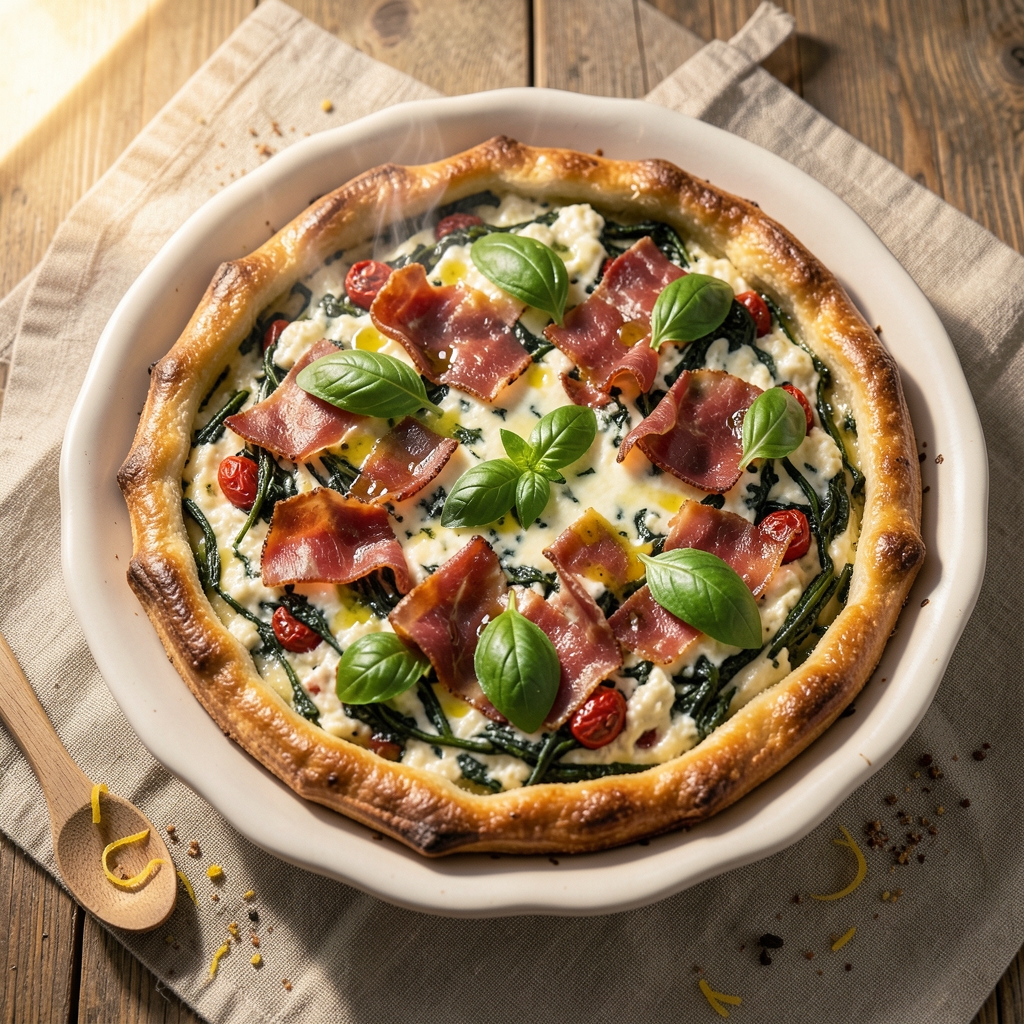
This Italian pie recipe delivers the perfect balance of flaky crust and sweet ricotta filling that reminds me of Nonna’s kitchen.
Standing on a stool as a kid, I’d watch her roll out dough thinner than my math homework while telling stories about Italy—now I’ve finally perfected her technique for home cooks. The secret lies in chilled butter and proper resting times that transform simple ingredients into something extraordinary.
What makes this recipe special is the foolproof method for achieving that signature Italian flakiness without advanced skills. We’ll use a simple all-butter crust with just a few ingredients, then layer it with a velvety ricotta filling spiced with cinnamon and lemon zest.
The result is a pie that’s tender yet sturdy, with a golden crust that practically sings when you cut into it.
By the time you pull this pie from the oven, your kitchen will smell like a Roman bakery and everyone at the table will be reaching for seconds. The crust remains crisp around the edges while staying tender in the center, perfectly cradling the sweet, slightly tangy ricotta filling.
This is comfort food at its finest—simple enough for weeknights but impressive enough for company.
Whether you’re making it for a family gathering or a quiet Sunday dessert, this pie delivers restaurant-quality results with basic techniques. Let’s get started on creating your own taste of Italy right in your own kitchen.
Ingredients for italian pie
Pantry staples and a few Italian touches create this golden, flaky pie that tastes like Nonna’s kitchen.
| Ingredient | Amount | Notes |
|---|---|---|
| All-Purpose Flour 🌾 | 3 cups | Sifted for flaky crust |
| Unsalted Butter 🧈 | 1 cup | Cold, cubed, not softened |
| Granulated Sugar 🍚 | ¼ cup | Plus 1 tbsp for sprinkling |
| Large Eggs 🥚 | 1 whole | Cold, for binding |
| Ice Water 💧 | ½ cup | Chilled for dough handling |
| Salt 🧂 | ½ tsp | Fine sea salt preferred |
| Ricotta Cheese 🧀 | 15 oz | Whole milk, not part-skim |
| Granulated Sugar 🍚 | ½ cup | For filling sweetness |
| Large Eggs 🥚 | 2 whole | Room temperature for filling |
| All-Purpose Flour 🌾 | ¼ cup | For filling texture |
| Ground Cinnamon 🍃 | 1 tsp | Freshly ground preferred |
| Lemon Zest 🍋 | 1 tbsp | From 1 large lemon |
| Vanilla Extract 🌿 | ½ tsp | Pure alcohol-free if preferred |
| Pinch 🌶️ | 1 pinch | Nutmeg, optional |
The butter is non-negotiable here—European-style unsalted with high fat content (82% or more) gives that signature flakiness. Plugrá or President brands are my go-tos, but any cold, cubed butter works. Keep those cubes frozen until you’re ready to mix them into the flour—this prevents melting and ensures perfect layers. The ricotta? Whole milk only—part-skim makes the filling gummy. I grab mine from Whole Foods or the Italian market, but regular grocery stores carry it too. Look for tubs, not those pre-packaged containers—they’re watered down.
No vanilla extract? Vanilla bean paste works perfectly, or even a scraped vanilla bean. Short on lemon? Orange zest at the same amount gives a different but lovely twist. The cinnamon should be fresh—if it smells like dust, toss it. For the crust, bread flour can replace all-purpose if you want extra flakiness, but I’ve never had complaints with the regular stuff. The eggs need to be cold for the dough but room temp for the filling—don’t skip this step. And if you’re feeling fancy, add a pinch of cardamom to the filling for that authentic Italian touch.
The butter dough keeps best wrapped in plastic in the fridge for 3 days—it actually improves as it rests. The filling can be prepped a day ahead and stored in a sealed container. For the crust, don’t thaw it before baking—just roll it out cold. This pie reheats beautifully—350°F for 10-15 minutes with foil over the edges if it’s browning too fast. Leftovers? They practically disappear—this is the kind of dessert people ask for seconds on.
Why You’ll Love This Recipe
- Foolproof Dough: I swear by this crust—just flour, butter, sugar, and ice water. No kneading, no fuss, and it still turns out tender every time. The sugar in the dough? It keeps it from getting tough, even when baked.
- Golden Crust Magic: That crispy, buttery edge with a flaky center? It’s all in the cold butter and quick chilling. Honestly, the moment it comes out of the oven, the whole kitchen smells like a bakery. Worth the 10-minute wait.
- Weeknight Workhorse: Slice it for breakfast, dinner, or dessert—it’s my go-to for potlucks, school lunches, or when I’m too tired to cook. Freezes like a dream, too, so I always have a backup. (Yes, even on a Tuesday night.)
- Budget-Friendly Luxury: Four simple ingredients, zero specialty items. The butter gives it that rich feel without breaking the bank, and a single pie feeds four—or one very hungry person for two meals. My daughter picks out the sugar for the dough, but still asks for seconds.
Instructions for flaky crust hugging sweet ricotta filling
Here’s how to build a pie with layers that melt in your mouth—both the crust and the filling.
Craft the Perfect Flaky Crust
In a large bowl, combine the 3 cups all-purpose flour and 0.5 teaspoon salt. Cut in the 1 cup cold cubed unsalted butter using a pastry cutter or your fingers until the mixture resembles coarse crumbs with pea-sized butter pieces. This texture is key—it ensures pockets of butter that create steam during baking, resulting in that signature flakiness.
Add the 0.25 cup granulated sugar and the 1 cold large egg, mixing just until the dough begins to come together. Then pour in the 0.5 cup ice water all at once. Gently stir with a wooden spoon until the dough forms a shaggy mass. Avoid overmixing—you’re looking for a dough that holds together when pressed but still feels slightly rough.
Turn the dough out onto a lightly floured surface and knead it just 4-5 times until it comes together. Divide it into two equal discs, wrap each in plastic wrap, and refrigerate for at least 30 minutes. This chilling step is non-negotiable—it firms up the dough so it doesn’t shrink when rolled out.
Prepare the Sweet Ricotta Filling
In a medium bowl, combine the 15 ounces ricotta cheese, 0.5 cup granulated sugar, 2 room temperature large eggs, 0.25 cup all-purpose flour, 1 teaspoon ground cinnamon, 1 tablespoon lemon zest, 0.5 teaspoon vanilla extract, and the 1 pinch nutmeg (if using). Whisk vigorously until the mixture is smooth and fully combined—this ensures an even texture without any lumps in your pie.
Taste the filling and adjust the sweetness if needed. I usually find the ricotta’s natural tang balances perfectly with the sugar, but if you prefer it sweeter, add a bit more. The lemon zest adds a bright citrus note that cuts through the richness, while the cinnamon and nutmeg provide that classic Italian spice warmth.
Cover the bowl and refrigerate the filling while you roll out the crust. This keeps it cool and prevents the eggs from cooking prematurely when you assemble the pie.
Assemble the Pie for Maximum Flakiness
Preheat your oven to 375°F. On a lightly floured surface, roll out one of the chilled dough discs into a 12-inch circle—about 1/8-inch thick. Transfer it to a 9-inch pie dish, gently pressing it into the bottom and up the sides. Trim any excess dough hanging over the edge, leaving about 1/2-inch for crimping later.
Pour the ricotta filling into the prepared crust, spreading it evenly to within 1/2-inch of the edge. This prevents the filling from bubbling over during baking. Roll out the second dough disc into another 12-inch circle and place it over the filling. Trim both crusts to even edges, leaving about 1/2-inch overhang.
To create the classic fluted edge, fold the overhanging dough under itself at the rim, then press firmly to seal. Use a fork to crimp the edges decoratively, pressing down to create those iconic pie ridges. Brush the top crust with a bit of ice water or egg wash (beaten egg) for a golden finish.
Bake to Golden Perfection
Place the assembled pie on a parchment-lined baking sheet to catch any drips. Bake at 375°F for 45-50 minutes, until the crust is deep golden brown and the filling is just set in the center. The edges should look crisp, and the filling should jiggle slightly when the pie is gently shaken.
Here’s the trick: if the crust starts browning too quickly, tent it loosely with aluminum foil. You want that beautiful color, but you don’t want the bottom to burn before the filling is fully cooked. A toothpick inserted into the center should come out clean or with just a few moist crumbs attached.
Remove the pie from the oven and let it cool on a wire rack for at least 2 hours before slicing. This resting period allows the filling to set completely and prevents a runny center. Serve warm or at room temperature—either way, you’ll get that perfect balance of flaky crust and creamy, spiced ricotta filling.
Pro Tips For Making Italian Pie
- Chill the Dough Properly: I learned this the hard way—rolling out dough straight from the fridge leads to cracks and tears. Wrap the dough in plastic and refrigerate for at least 30 minutes before handling, or pop it in the freezer for 15 if you’re in a hurry. Cold dough behaves better and gives you cleaner edges when shaping.
- Cut Butter in Small Batches: Using cold, cubed butter is non-negotiable, but I used to dump it all in at once and end up with greasy, uneven crumb. Work in 2-3 tablespoons at a time, mixing just until it starts to coat the flour before adding more. This keeps the texture tender without turning your pie dough into butter soup.
- Don’t Overmix the Filling: The second you see streaks of flour in the butter-sugar mixture, stop. Overmixing develops gluten and makes the filling dense instead of flaky. Use a pastry cutter or your fingers to mix until the butter is pea-sized—no smaller, no larger. This is the thing that matters most for that perfect Italian pie texture.
- Preheat Pan and Oven Together: Cold pans + room-temperature oven = soggy bottoms. Place your pie dish in a preheated oven for 5 minutes before baking, then transfer it to the lower rack. This ensures even heat distribution and a golden crust from the start. (Yes, even if you’re impatient like me, this step saves you from fixing a watery mess later.)
Serving suggestions for italian pie
Classic Presentation
Serve this Italian pie warm with a dusting of powdered sugar and a sprinkle of ground cinnamon right from the oven. The contrast of warm pie with cool sugar creates a magical first bite.
I like to cut it into 8 equal wedges using a sharp chef’s knife—this ensures clean slices that show off the golden crust. For extra flair, add a few whole roasted almonds or toasted pine nuts on top before serving. 🍽️
Coffee Pairing
A strong Italian espresso or a creamy cappuccino cuts through the richness of the ricotta beautifully. I recommend a dark roast like Lavazza or Illy—their bold flavors complement the pie’s sweetness without overpowering it.
For a non-coffee option, try a glass of chilled sparkling water with lemon to refresh your palate between bites.
Seasonal Fruit Topping
In summer, top each slice with fresh berries like strawberries or raspberries—just a few berries add bright acidity that balances the sweet filling. For autumn, I love adding thinly sliced pear or poached apple slices warmed in a pan with 1 tsp honey and a pinch of cinnamon.
The fruit softens slightly when placed on warm pie, creating a luscious contrast.
Make-Ahead Serving
This pie actually tastes better the next day, so I often make it a day ahead for gatherings. Store it in an airtight container at room temperature, then reheat slices in a 350°F oven for 5-8 minutes to restore that warm, gooey texture.
For a quick serving, place slices on a baking sheet and warm under the broiler for 1-2 minutes—just watch closely to avoid burning.
Dessert Platter Styling
For a showstopping dessert spread, arrange pie slices alongside other Italian treats like affogato (espresso-drowned gelato) or cannoli. Use a wooden board as your base and scatter edible flowers or crushed pistachios around the edges.
The golden crust looks stunning against dark chocolate or caramel drizzles—just add a few drops of chocolate sauce before serving.
Café-Style Serving
For a café-inspired presentation, serve pie slices on small white plates with a side of vanilla bean gelato or mascarpone whipped cream. Add a silver spoon and a mini espresso cup on the side for that authentic Italian trattoria vibe.
The contrast of creamy gelato with flaky crust is pure magic—trust me, your guests will thank you.
Nutrition facts
Frequently asked questions
Can I make this Italian pie without ricotta?
For a savory version, replace the ricotta with a mix of 1 cup cottage cheese, 1 cup shredded mozzarella, and 1/2 cup grated Parmesan. Add 1/2 cup spinach, 1/2 cup sun-dried tomatoes, and a pinch of red pepper flakes for an Italian-inspired twist. For a fruit pie, use 2 cups mashed berries or peaches instead.
Why does my crust turn out tough instead of flaky?
Overworking the dough or using warm butter are the most common culprits. Always keep your butter cold and handle the dough minimally. Chill the dough for at least 30 minutes between rolling and baking, and avoid pressing down on it while it bakes—this prevents steam from escaping, which is what creates flakiness.
How do I store leftover Italian pie?
Store in an airtight container at room temperature for up to 3 days. For longer storage, refrigerate for up to 5 days or freeze for 3 months. To reheat, warm slices in a 350°F oven for 5-8 minutes until the edges are crisp again. The filling will soften slightly but remains delicious.
Can I use a deep-dish pie pan instead of a 9-inch dish?
Yes, but adjust the filling amount to avoid overflowing. For a 9-inch deep-dish pan, reduce the ricotta to 12 ounces and the eggs to 1. The extra depth adds richness, but be cautious—the filling may need 5-10 extra minutes in the oven to fully set. Use a pie weight or dried beans on the bottom crust if it starts browning too quickly.
What’s the secret to getting the perfect golden crust?
Brush the top crust with egg wash (1 egg beaten with 1 tablespoon water) before baking, then sprinkle with powdered sugar or coarse sugar for extra shine. Bake on the lower oven rack for even browning, and rotate the pan halfway through if your oven has hot spots. The crust should be deep golden, not dark brown.

- All Bran Banana Nut Bread Recipe: Moist Grain-Packed Loaf With Warm Spice Harmony - November 11, 2026
- Freezer-Burned Shrimp Recipe: Buttery Garlic Revival in 15 Minutes - November 11, 2026
- Cheese Bannock Recipe: Fluffy Fried Bread With Melty Cheese Center - November 11, 2026