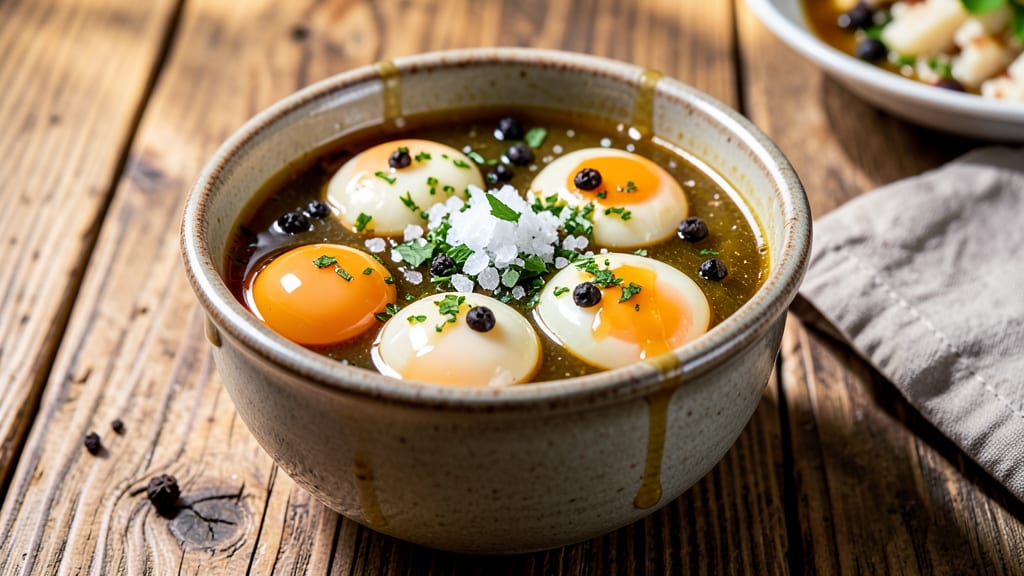
This horseradish pickled eggs recipe transforms ordinary hard-boiled eggs into a bold, spicy crunch that adds excitement to any meal. Growing up in Boston, I learned how pickled eggs could turn a simple breakfast into something special—especially when that kick of horseradish comes into play.
The tangy, spicy flavor profile cuts through rich foods like nothing else, making these eggs a game-changer for brunches, charcuterie boards, or even as a side to fried chicken.
The process is straightforward but requires patience for that perfect balance of sharp horseradish and tender eggs. You’ll need just a few ingredients—vinegar, sugar, and of course, fresh horseradish—to create a pickling solution that infuses flavor without overpowering the eggs.
Unlike quick-pickled versions, this method lets the eggs develop depth over time, resulting in a texture that’s crisp on the outside and creamy inside, with a spicy bite that lingers.
Once pickled, these eggs keep for weeks in the refrigerator, making them a foolproof addition to meal prep. The horseradish adds a complex, fiery edge that elevates sandwiches, salads, or even deviled eggs.
Whether you’re hosting a brunch or just craving something with a little bite, this recipe delivers restaurant-quality results with minimal effort. Let’s get started!
Here’s the best part: you can adjust the spice level to your taste by controlling the amount of horseradish. For those who love a mild kick, a lighter hand works perfectly, while adventurous eaters can go all out.
The versatility of these eggs makes them a professional’s secret weapon—simple to make but impossible to resist.
Ingredients for horseradish pickled eggs
Eight simple ingredients transform ordinary eggs into bold, spicy crunch for any meal.
| Ingredient | Amount | Notes |
|---|---|---|
| Large Eggs 🥚 | 8 whole | Fresh, room temperature preferred |
| White Vinegar 💧 | 2 cups | Distilled preferred for clarity |
| Granulated Sugar 🍚 | ½ cup | Light brown sugar for depth |
| Fresh Horseradish Root 🌿 | ¼ cup | Grated, organic preferred |
| Diamond Crystal Kosher Salt 🧂 | 1 ½ tbsp | For proper brine balance |
| Black Peppercorns 🌶️ | 1 tbsp | Crushed, for subtle heat |
| Mustard Seeds 🌾 | 1 tsp | Yellow or brown preferred |
| Bay Leaves 🍃 | 2 whole | For aromatic depth |
| Water 💧 | 2 cups | Filtered for best flavor |
| Extra-Virgin Olive Oil 🫒 | 1 tbsp | For final drizzle |
The horseradish is non-negotiable here—fresh root from a specialty store like Whole Foods or Trader Joe’s gives you that signature sharpness. If you can’t find organic, regular works, but avoid anything rubbery or discolored. Grate it yourself for maximum potency (pre-grated loses its kick fast). For the eggs, room temperature is key—they’ll peel easier and absorb more flavor. I always use cage-free eggs for better texture, but any large eggs will do. The vinegar? Distilled white vinegar keeps things clear, but apple cider vinegar adds subtle sweetness if you prefer.
No fresh horseradish? Pre-grated horseradish from a jar works in a pinch, but use half the amount—it’s milder. Running low on mustard seeds? Dried mustard powder at double the amount mimics the texture. The bay leaves can be skipped if you’re short, but they add that subtle earthy note that makes these eggs feel restaurant-quality. For the sugar, light brown sugar adds a caramelized depth, but white sugar keeps things classic. If you’re feeling adventurous, swap the olive oil for avocado oil—it’s neutral and won’t compete with the horseradish’s bold flavor. Always use kosher salt for pickling; it dissolves better than table salt.
These eggs develop their best flavor after 3-5 days in the fridge, but they’ll keep for up to 3 weeks if stored properly. Use airtight jars or containers, and always submerge the eggs completely in the brine. The longer they sit, the more intense the horseradish flavor becomes—perfect for when you want that extra kick. I like to portion them into small jars for easy snacking, and they make an amazing addition to charcuterie boards or sandwich platters. The brine can be reused for up to 2 weeks if you refresh it with a splash of vinegar and water.
Why You’ll Love This Recipe
- No-Fuss Pickling: I swear by this—just boil eggs, toss them in vinegar, sugar, and grated horseradish, then let them sit. No fancy jars, no stress. The hardest part is peeling the eggs, and honestly, that’s the same for every pickled egg recipe.
- Spicy-Sweet Magic: That horseradish cuts through the richness like a knife—bright, sharp, and just sweet enough from the sugar. It’s the kind of flavor that makes you reach for seconds, even if you’re not usually a horseradish fan.
- Party Ready: Serve them at picnics, game day, or even as a fancy appetizer. They keep for weeks, so you’re always covered. My in-laws still ask for the recipe after every holiday spread.
- Pennies Per Serving: Eggs are cheap, vinegar and sugar even cheaper. You’re looking at under $1 per serving for something that tastes like you slaved over it. Budget win, flavor win.
Step-by-step instructions for horseradish pickled eggs
Here’s how to transform ordinary eggs into vibrant, spicy pickled gems with crisp texture and bold flavor.
Hard-Boil the Eggs to Perfect Doneness
Place the 8 whole large eggs in a saucepan and cover them completely with cold water by about 1 inch. Bring to a rolling boil over high heat, then immediately reduce to medium-low heat and maintain a gentle simmer for exactly 10 minutes. This precise timing ensures the yolks remain creamy while the whites set completely.
Transfer the eggs to an ice bath for 10 minutes to halt cooking. The temperature contrast prevents overcooking and makes peeling effortless. Once cooled, peel the eggs under running water to remove any remaining shell fragments. You’ll want smooth, clean eggs for the best texture in your final pickled mixture.
Prepare the Horseradish Paste
Using a box grater or food processor, finely grate the 0.25 cup fresh horseradish root until you achieve a smooth, paste-like consistency. The fresher the horseradish, the more intense the flavor will be in your final product. Transfer the grated horseradish to a small bowl and set aside.
This is where the magic happens—fresh horseradish delivers that signature sharp, peppery bite that makes these eggs so special. If using pre-grated horseradish, be aware it may contain additives that could affect texture and flavor. The fresh version gives you complete control over the intensity.
Create the Brine Mixture
In a medium saucepan, combine the 2 cups white vinegar, 0.5 cup granulated sugar, 1.5 tablespoons diamond crystal kosher salt, 1 tablespoon crushed black peppercorns, 1 teaspoon mustard seeds, and 2 whole bay leaves. Bring the mixture to a gentle boil over medium heat, stirring until the sugar and salt completely dissolve.
Remove from heat and let the brine cool to room temperature. The sugar should dissolve completely, creating a clear, slightly syrupy liquid. This balanced brine will penetrate the eggs evenly, creating that perfect tangy-sweet contrast with the horseradish. The mustard seeds and bay leaves add subtle complexity that elevates the flavor profile.
Combine Eggs and Brine
Place the peeled eggs in a clean, airtight glass jar or container. Pour the cooled brine over the eggs, ensuring they are completely submerged. Add the horseradish paste, distributing it evenly around the eggs. The horseradish will sink to the bottom, but that’s perfect—it will infuse the eggs as they pickle.
Seal the container and refrigerate for at least 48 hours before consuming. The longer they pickle, the more intense the flavors become. After 48 hours, the eggs will develop that signature tangy crunch and vibrant green hue from the horseradish. For maximum flavor, let them pickle for up to 1 week.
Finish and Serve
Before serving, carefully remove the eggs from the jar and pat them dry with paper towels. Drizzle each egg with 1 tablespoon extra-virgin olive oil to enhance their natural flavors and add a luxurious finish. The oil creates a beautiful sheen and balances the sharp horseradish with its smooth, fruity notes.
These pickled eggs are perfect served at room temperature as an appetizer or added to salads and sandwiches for a spicy crunch. The combination of tangy, sweet, and sharp flavors creates a complex profile that works beautifully with rich meats, creamy cheeses, or fresh greens. Enjoy within 2 weeks for the best texture and flavor.
Pro Tips For Making Horseradish Pickled Eggs
- USE COLD EGGS: Grab eggs straight from the fridge—room temperature eggs crack like overripe fruit. The cold shock helps the whites hold together while boiling, so they stay intact when you drop them into the pickling liquid. I learned this the hard way after watching a batch of eggs turn into a sad, watery mess.
- GRATE HORSERADISH FINE: Skip the food processor—fresh horseradish loses its kick when pulverized. Use a box grater or microplane and stop when it’s still slightly chunky. The texture matters more than you’d think; too fine, and it turns into a paste that clumps. Too coarse, and you’ll taste raw bits. Aim for a rough, sand-like consistency.
- WEIGH THE SALT: Diamond Crystal kosher salt is fluffy—don’t eyeball it. For a quart jar, use 1.5 tablespoons (not the rounded heaping kind). Too much salt makes the eggs taste like a science experiment gone wrong, and too little won’t preserve them properly. A kitchen scale takes the guesswork out of it.
- COVER THE EGGS FULLY: Vinegar should completely submerge the eggs—no peeking out. If it doesn’t, add more vinegar or water (1:1 ratio) to cover them by at least an inch. I once left mine half-submerged, and by day three, the exposed parts were rubbery. Trust me, the vinegar bath needs to be a full immersion.
Common mistakes when making perfect results
Over-Spicing the Brine
I’ve learned the hard way that too much horseradish can turn your perfect pickled eggs into a spicy nightmare. The key is balance—start with the 0.25 cup fresh horseradish called for, and taste the paste before adding it to the jar.
If you’re unsure, make a small batch first. Remember, the eggs will absorb more flavor over time, so err on the side of caution. A little goes a long way, and you can always add more later if needed. 🌶️
Skipping the Ice Bath
One of the biggest mistakes I see is skipping the 10-minute ice bath after boiling the eggs. This step isn’t just about peeling—it ensures the eggs cook evenly and stay creamy inside.
Without it, you risk overcooked yolks or eggs that peel poorly, ruining the texture you worked so hard to achieve. Pro tip: Use a large bowl of ice water and gently swirl the eggs around to cool them evenly.
Using Old or Poor-Quality Eggs
Freshness matters more than you’d think. If your eggs are past their prime, they’ll absorb the brine unevenly and develop a rubbery texture. Always use eggs that are no more than 1 week old for the best results.
I like to buy them from local farms or the back of the grocery store where they’re less likely to have been sitting for weeks. Older eggs may still work, but they’ll lack that crisp, clean bite you’re aiming for.
Not Submerging the Eggs Fully
The eggs need to be completely covered by the brine to pickle evenly and avoid developing a sour or off flavor. If any part of the egg is exposed, it can dry out or ferment unevenly.
After adding the eggs to the jar, press them down gently to ensure they’re fully submerged. If needed, add a little extra vinegar or water to cover them completely. This small step makes a huge difference in the final texture and flavor.
Rushing the Pickling Time
I get it—you want to eat these eggs right away! But horseradish pickled eggs need at least 48 hours to develop their signature tangy crunch. Trying to eat them sooner will leave you with bland, under-seasoned eggs.
The longer they sit (up to 1 week), the more intense and complex the flavors become. Trust the process—your patience will be rewarded with eggs that pack a serious punch. ⏳
Ignoring the Brine’s Role
The brine isn’t just a liquid to soak the eggs—it’s the flavor foundation. If you skip dissolving the sugar and salt completely, you’ll end up with a gritty, uneven texture. Stir the brine while it heats to ensure everything dissolves smoothly.
Once cooled, give it a taste before adding the eggs. If it’s too strong or weak, adjust with a pinch more salt or a splash of vinegar. A well-balanced brine is the secret to eggs that taste amazing every time.
Nutrition facts
Frequently asked questions
How long do these horseradish pickled eggs keep in the fridge?
These eggs stay fresh for up to 3 weeks when stored properly in the refrigerator. The key is keeping them fully submerged in the brine inside an airtight container. After that time, you might notice the texture softening or the horseradish flavor becoming more intense—best to enjoy them within the first 2 weeks for peak crunch and flavor.
Can I adjust the spice level in this recipe?
For a milder kick, reduce the horseradish to 0.125 cup or add a pinch of sugar to balance the heat. If you love spice, increase to 0.375 cup or add a dash of cayenne pepper to the brine. Remember, the eggs absorb more flavor over time, so start conservative and adjust as you taste.
What’s the best way to serve these eggs?
These pickled eggs shine as a spicy crunch on charcuterie boards, alongside fried chicken, or in sandwiches with creamy fillings. Try them halved on deviled eggs for extra zing, or add to salads for a bold contrast. The olive oil drizzle before serving enhances their natural flavors—perfect for brunch or game day appetizers!
Can I make this recipe with jarred horseradish instead of fresh?
Yes, but expect a milder flavor. Use half the amount (about 0.125 cup) since jarred horseradish is less potent. For best results, combine it with a pinch of black pepper or cayenne to boost the heat. Fresh horseradish delivers that signature sharpness, but jarred works in a pinch when you’re short on time.
Why do my pickled eggs turn cloudy?
Cloudiness often happens when eggs aren’t fully submerged or the brine isn’t properly balanced. Ensure all eggs are completely covered by the liquid, and stir the cooled brine before adding eggs to distribute flavors evenly. If cloudiness persists, the eggs may need a few extra hours in the fridge to fully absorb the brine.

- Eggs Supreme Recipe: Fluffy Custard With Crispy Herb-Topped Magic - November 11, 2026
- All Bran Banana Nut Bread Recipe: Moist Grain-Packed Loaf With Warm Spice Harmony - November 11, 2026
- Freezer-Burned Shrimp Recipe: Buttery Garlic Revival in 15 Minutes - November 11, 2026