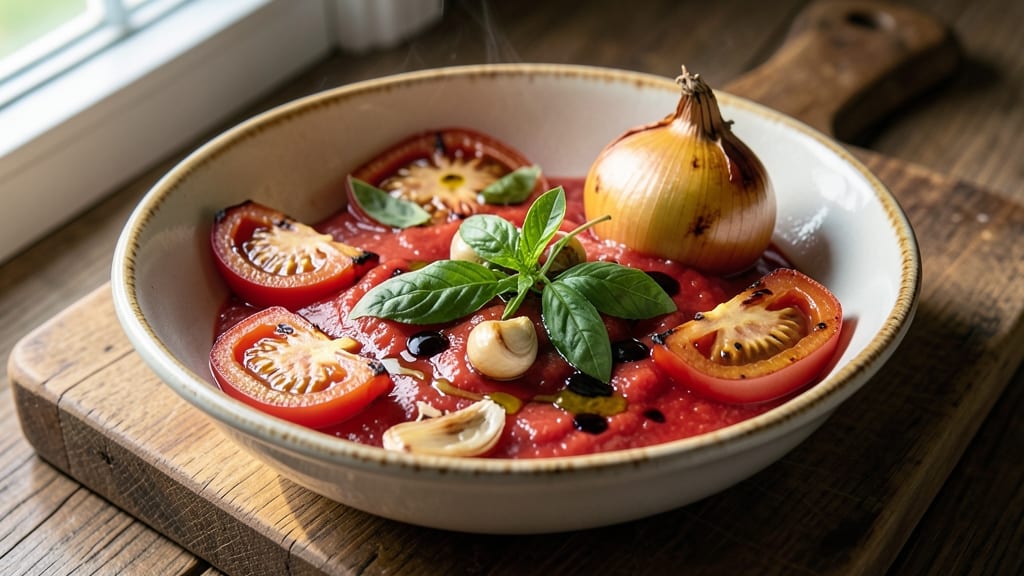
Creating homemade tomato puree transforms ordinary meals into restaurant-quality dishes with just a few simple ingredients and patience. The rich, velvety texture becomes the perfect base for sauces, soups, and stews—something my Nonna always insisted on making from scratch.
This recipe delivers a smooth, seedless puree that’s far superior to store-bought versions, with a depth of flavor you can’t replicate.
The process is straightforward but requires attention to detail: simmering fresh tomatoes until they break down completely, then blending and straining for that signature silky consistency. I’ve perfected this method over years of testing, ensuring it works with any variety of tomatoes—whether you’re using garden-fresh heirlooms or affordable canned tomatoes.
The result is a versatile puree that keeps well in the freezer for months, ready to elevate your cooking whenever inspiration strikes.
What makes this puree exceptional is its ability to serve as the foundation for countless dishes—think creamy marinara, hearty soups, or even as a glaze for meats. The key lies in balancing acidity and salt, which prevents bitterness and enhances sweetness.
This version stays true to its Italian roots while being completely vegan-friendly and adaptable to any kitchen.
Once you master this technique, you’ll never buy puree again. Whether you’re prepping for a week of sauces or need a quick base for a last-minute dinner, this recipe delivers consistent, professional-quality results every time. Let’s get started on creating your own smooth, seedless tomato puree today.
Ingredients for homemade tomato puree
Fresh tomatoes, aromatic herbs, and a touch of acidity—this puree transforms into the velvety base for your favorite dishes.
| Ingredient | Amount | Notes |
|---|---|---|
| Fresh Roma Tomatoes 🍅 | 4 lbs | Heirloom or vine-ripened preferred |
| Extra-Virgin Olive Oil 🫒 | ¼ cup | High-quality, fruity variety |
| Yellow Onion 🧅 | 1 whole | Medium size, roughly chopped |
| Garlic Cloves 🧄 | 4 cloves | Peeled, lightly crushed |
| Fresh Basil Leaves 🌿 | ¼ cup | Packed, stems removed |
| Balsamic Vinegar 🍷 | 1 tbsp | Aged, for acidity balance |
| Diamond Crystal Kosher Salt 🧂 | 1 ½ tsp | Adjust to taste |
| Freshly Ground Black Pepper 🌶️ | ½ tsp | Freshly cracked preferred |
| Granulated Sugar 🍯 | 1 tbsp | Optional, for sweetness |
| Water 💧 | 1 cup | For thinning if needed |
The tomatoes are the heart of this puree, so Roma tomatoes are ideal—they’re meaty and low-seed, giving you that smooth texture without extra straining. If you’re using garden-fresh heirlooms, Trader Joe’s or local farmers markets often have the best varieties, but any ripe tomatoes work. For convenience, San Marzano canned tomatoes (crushed or whole) are a game-changer—they’re naturally sweet and low-acid, perfect for purees. Look for ones labeled ‘whole peeled’ to skip the peeling step. The basil and balsamic vinegar add depth, but don’t skip the garlic—it’s the secret to that authentic Italian flavor. I always double-check my tomatoes for bruises or soft spots, as those can make the puree bitter.
No fresh tomatoes? Canned San Marzano tomatoes are the next best thing, and they keep for months in your pantry. Short on basil? Dried basil at one-third the amount works, but fresh is worth the extra minute to wash and tear. The balsamic vinegar can be swapped for red wine vinegar or lemon juice if you’re out, but balsamic gives that classic sweet-tart balance. For a quicker version, tomato paste diluted with water (1 part paste to 2 parts water) can mimic the texture, though it lacks the fresh tomato brightness. If your puree turns out too thick, add water 1 tbsp at a time—it’s better to thin gradually than overdo it. The sugar is optional but helps balance acidity, especially if you’re using tart tomatoes like cherry varieties.
This puree freezes beautifully—portion into ice cube trays for easy single-use servings, then transfer to a sealed bag. It keeps in the freezer for up to 6 months without losing quality. For fridge storage, cover tightly and use within 1 week. I always label my containers with the date and what it’s for—’marinara base’ or ‘soup starter’—so I don’t forget. The puree also reheats wonderfully; just warm it gently on the stove or in the microwave, stirring occasionally. If you’re prepping a big batch, divide it into containers before freezing to avoid clumping. Trust me, having this on hand makes weeknight cooking a breeze.
Why You’ll Love This Recipe
- No-Chop Nightmare: I swear by this—just halve the Roma tomatoes and toss them in a pot. No dice, no fuss, and the skins soften right into the sauce. Honestly, my lazy Sundays now include this as a given.
- Garlic-Basil Magic: That slow simmer with minced garlic and fresh basil? It’s the secret weapon. The oil pulls all the sweetness from the tomatoes while the basil brightens every spoonful—like summer in a jar.
- Pantry Superhero: Freeze half the batch for lasagna night or pasta sauce emergencies. I’ve used it in soups, dips, even grilled cheese—it’s the unsung MVP of my meal prep. (Yes, even on a Tuesday night.)
- Budget Flavor Boost: A pound of Roma tomatoes costs less than a jar of store-bought puree, and it tastes like you slaved over it. The onion and garlic add depth without breaking the bank—this is my go-to when I’m feeding a crowd.
Step-by-step instructions for homemade tomato puree
Here’s how to transform fresh tomatoes into a velvety, seedless puree perfect for sauces and soups.
Prep and Roast the Tomatoes for Deep Flavor
Preheat your oven to 425°F and line a baking sheet with parchment paper. Cut the 4 lbs fresh Roma tomatoes in half lengthwise, removing the cores. Place them cut-side down on the prepared sheet, leaving space between each tomato. Drizzle with the 0.25 cup extra-virgin olive oil and sprinkle with 1.5 tsp diamond crystal kosher salt. Roast for 45-50 minutes until the skins darken and collapse slightly.
This roasting step caramelizes the natural sugars in the tomatoes, intensifying their sweetness and creating a rich, complex base. The high heat also helps break down the skins for easier removal later. If you notice the tomatoes browning too quickly, tent the pan with foil to prevent burning while maintaining the roast.
Blister the Aromatics for Maximum Flavor
While the tomatoes roast, heat a large skillet over medium heat. Add the 1 whole yellow onion, chopped into ½-inch pieces, and cook for 8-10 minutes until softened and golden. Add the 4 cloves garlic cloves and cook for 30 seconds until fragrant but not browned. Remove from heat and set aside.
This step develops the onion’s natural sweetness and deepens the garlic’s flavor without burning them. The aromatics will mingle beautifully with the roasted tomatoes, creating a more complex puree. Don’t rush this step—properly cooked onions form the flavor foundation of your puree, so take your time to achieve that perfect golden color.
Peel, Seed, and Combine Ingredients
Transfer the roasted tomatoes to a large bowl. Using a spoon, carefully peel off the skins and remove the seeds, discarding both. Add the blistered onions and garlic to the tomatoes. Stir in the 0.25 cup fresh basil leaves, 1 tbsp balsamic vinegar, 0.5 tsp freshly ground black pepper, and 1 tbsp granulated sugar. Let the mixture sit for 10 minutes to meld flavors.
The sugar in this step isn’t just for sweetness—it helps balance the acidity of the tomatoes and vinegar, creating a more harmonious flavor profile. The basil adds freshness that brightens the puree, while the balsamic vinegar introduces a subtle tang that prevents flatness. This resting period allows all the flavors to integrate before blending, resulting in a more cohesive puree.
Blend Until Silky Smooth
Transfer the tomato mixture to a blender or food processor. Add 1 cup water if needed to help with blending. Puree until completely smooth, scraping down the sides as needed. For an ultra-smooth texture, strain the puree through a fine-mesh sieve or food mill to remove any remaining skins or seeds.
This blending process should yield about 4 cups of puree, perfect for your 4 servings. The water acts as a thinning agent if the mixture becomes too thick during blending. If you prefer a thicker consistency, simply reduce the water slightly or omit it entirely. The puree should have a velvety texture with no visible chunks, ready to use as a base for your favorite sauces or soups.
Simmer for Concentrated Flavor (Optional)
For a more concentrated puree, transfer it to a saucepan and simmer over low heat for 15-20 minutes, stirring occasionally. This step reduces the liquid content, intensifying the tomato flavor. If the puree becomes too thick, add 1-2 tablespoons water at a time until you reach your desired consistency.
This optional simmering step creates a more robust puree that works particularly well for hearty sauces or as a base for tomato paste. The low heat ensures you don’t lose any of the developed flavors while concentrating the essence of the tomatoes. Taste as you go—you’re aiming for a balance between intensity and smoothness that suits your specific recipe needs.
Pro Tips For Making Homemade Tomato Puree
- Char the Onion Slowly: I used to rush this step and end up with a bitter, sharp flavor that ruined the whole puree. Instead, cook the diced onion in olive oil over medium-low heat for about 10-12 minutes—until it’s deep golden and almost caramelized, but not browned. This sweetens the base and makes the puree taste richer without needing extra sugar.
- Blanch Tomatoes First: Skip the peeling step by cutting a shallow “X” on the bottom of each Roma tomato, then plunging them into boiling water for 30 seconds. They’ll peel effortlessly, and the quick cook jumpstarts the breakdown of their flesh, so your puree thickens faster and smoother.
- Strain Twice for Smoothness: One pass through a fine-mesh sieve leaves behind stubborn bits. For ultra-silky puree, press the strained mixture through a nut milk bag or cheesecloth—it’s tedious, but the result is worth it, especially if you’re using this for sauces or soups where texture matters.
- Salt the Puree Early: Add a pinch of salt (about ¼ teaspoon per pound of tomatoes) while cooking, not at the end. It draws out moisture and helps break down the tomatoes’ pectin, making the puree thicker and more stable—plus, it prevents that bland, flat taste that happens when you season too late.
Essential equipment for homemade tomato puree
Blender Essentials
You don’t need a fancy blender for this puree—I’ve made it successfully with my trusty Ninja BN601 food processor, but any high-powered blender with at least a 4-cup capacity works. For ultra-smooth results, I recommend a Vitamix or Blendtec, though they’re pricier.
The key is a sharp blade to handle the tomato skins and seeds. If your blender struggles, add 1-2 tablespoons water at a time to help it puree smoothly. 💫
Straining Tools
A fine-mesh sieve or food mill makes all the difference for that restaurant-quality texture. I keep a OXO Good Grips food mill in my kitchen—it’s perfect for removing seeds and skins while keeping the pulp intact.
If you don’t have one, a cheesecloth or double-layered coffee filter works in a pinch, though it requires more elbow grease. For small batches, a handheld strainer like the Norpro Strainer is a budget-friendly option.
Heat Control Tools
For roasting tomatoes, a baking sheet with edges (like USA Pan Half-Sheet Pans) prevents spills in your oven. I also recommend a digital meat thermometer to monitor oven temperature—some ovens run hot, and 425°F is critical for proper caramelization.
A heat-resistant spatula helps remove roasted tomatoes without burning your hands, and I always keep one nearby. For simmering, a heavy-bottomed saucepan like All-Clad Stainless prevents scorching.
Storage Containers
For fridge storage, I use glass Pyrex bowls with airtight lids—they’re microwave-safe and easy to clean. For freezing, quart-sized silicone ice cube trays are my secret weapon—they let me portion puree into single-use servings before transferring to freezer bags.
I label everything with masking tape and a Sharpie to track dates. If you’re short on space, stackable glass containers like Rubbermaid Brilliance work well in tight triple-decker freezers. 🥫
Budget-Friendly Swaps
No fancy equipment? No problem. A wooden spoon and large pot work perfectly for simmering. For straining, a clean kitchen towel stretched over a bowl catches seeds and skins. I’ve even used a handheld immersion blender in a deep pot when my food processor was occupied.
The key is patience—hand-mashing tomatoes with a fork gives you control over texture. Even my Nonna made puree with just a copper pot and wooden spoon in her tiny Boston kitchen.
Nutrition facts
Frequently asked questions
Can I use canned tomatoes instead of fresh for this puree?
For convenience, San Marzano canned tomatoes work beautifully—they’re naturally sweet and low-acid, perfect for purees. Use 28 oz canned tomatoes (about 3.5 cups) instead of fresh, and skip the roasting step. Just crush them by hand, then proceed with the recipe from Step 3. The texture will be slightly thicker, but you can adjust with water as needed.
How do I prevent my puree from turning bitter?
Bitterness usually comes from overcooked tomatoes or unbalanced acidity. Roast tomatoes at 425°F for no longer than 50 minutes—burning them adds bitterness. Always include the 1 tbsp balsamic vinegar (or acid like lemon juice) and 1 tbsp sugar to balance flavors. If your puree tastes bitter after blending, stir in a pinch of sugar or a splash of vinegar to rebalance.
What’s the best way to store homemade tomato puree?
For fridge storage, keep puree in an airtight glass container for up to 1 week. For long-term storage, freeze in ice cube trays (for single servings) or quart-sized freezer bags, labeled with the date. It stays fresh for 6 months in the freezer. Thaw overnight in the fridge—never at room temperature—to preserve texture.
Can I make this puree without a blender or food processor?
Yes! If you’re short on equipment, use a pot and wooden spoon to mash the roasted tomatoes until smooth. For ultra-smooth results, strain through a clean kitchen towel or cheesecloth to remove seeds and skins. It’ll take more elbow grease, but the flavor will be just as rich. My Nonna did this in her tiny Boston kitchen—patience is key!
How can I use this puree in recipes?
This versatile puree works as a base for marinara sauce, creamy soups, or even as a glaze for meats. For sauces, simmer with garlic and herbs; for soups, blend with broth and cream. It’s also perfect for pasta dough (like tomato-based ravioli) or as a marinade for grilled vegetables. Start with 1 cup puree per recipe and adjust to taste.

- Spanish Coffee Recipe: Rich, Spiced Brew With Cinnamon Kick - November 8, 2026
- Costco Tri-Tip Steak Recipe: Smoky Grill Marks and Buttery Crust - November 8, 2026
- Maine Style Lobster Roll Recipe: Buttery Toasted Buns With Sweet Maine Lobster - November 8, 2026