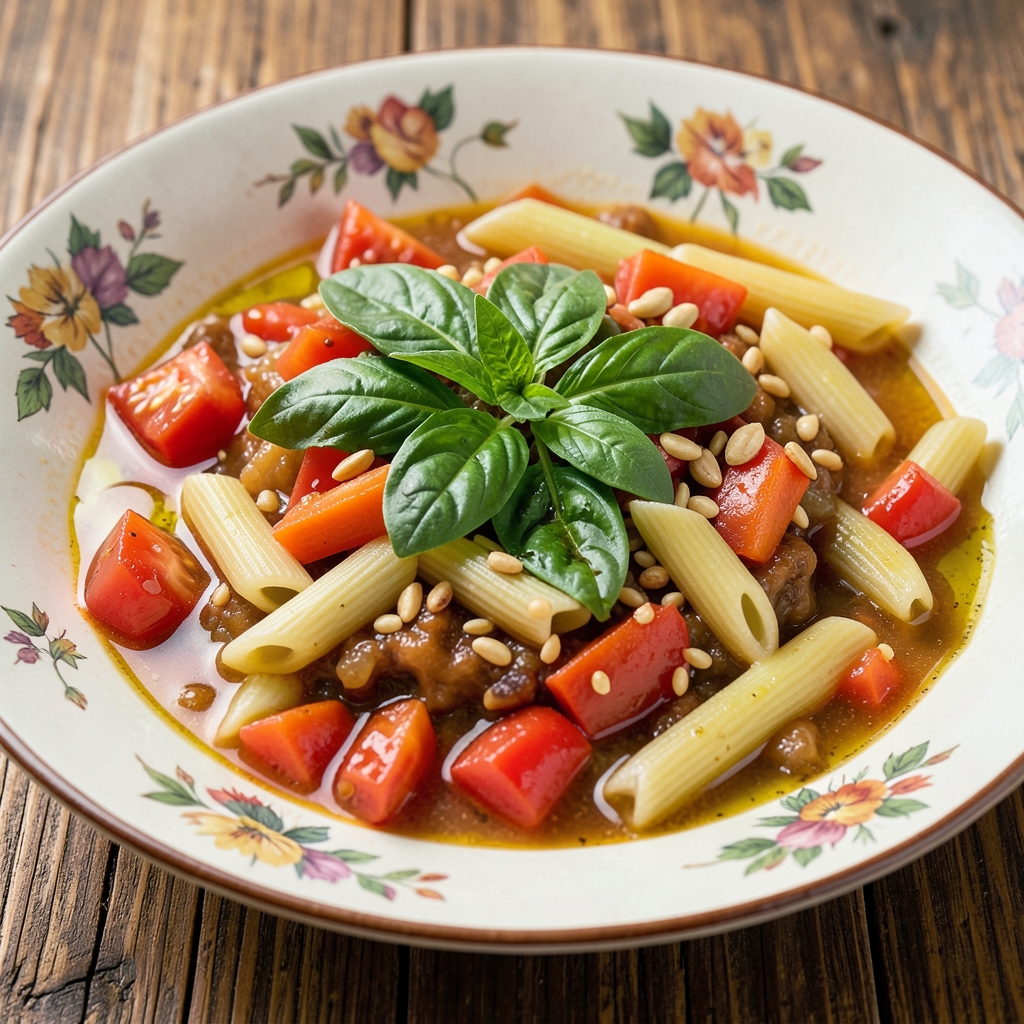
This homemade minestrone recipe brings the rustic heart of Italy to your kitchen table with its one-pot simplicity and vegetable-forward richness. Growing up in my Boston triple-decker, I learned that minestrone wasn’t just soup—it was a canvas for whatever vegetables were in season, from cannellini beans to wilted spinach.
The beauty of this dish lies in its flexibility: it’s equally at home as a vegetarian main course or a vegan centerpiece, with room for modern twists like roasted zucchini or fresh basil garnishes.
The magic happens in the slow simmer, where flavors meld into a harmonious broth that’s both comforting and nourishing. I’ve perfected this recipe through years of testing—starting with my Nonna’s handwritten notes and adapting it to modern kitchens.
The key is building layers of flavor: toasted garlic and onions form the base, while tomatoes and herbs infuse the broth with depth. Ready in about 45 minutes, this minestrone delivers restaurant-quality results without the fuss of multiple pots.
What you’ll end up with is a steaming bowl of hearty goodness—al dente pasta, tender vegetables, and protein-rich beans all swimming in a savory, herb-infused broth. The texture is perfect: crisp-tender beans, silky pasta, and wilted greens that add freshness with every spoonful.
Serve it with a crisp white wine spritzer or a steaming cup of herbal tea to complete the meal. This is the kind of dish that warms the soul and fills the house with inviting aromas.
Whether you’re feeding a family, meal prepping for the week, or simply craving a comforting bowl of soup, this minestrone adapts effortlessly. The recipe includes a traditional vegetarian version, but you can easily add grilled chicken or sausage for a meaty twist.
Let’s get cooking—your taste buds (and leftovers) will thank you.
Ingredients for homemade minestrone
Pantry staples plus seasonal veggies—this minestrone is all about rustic Italian comfort.
| Ingredient | Amount | Notes |
|---|---|---|
| Extra-Virgin Olive Oil 🫒 | ½ cup | High quality, fruity |
| Yellow Onion 🧅 | 1 whole | Medium, diced |
| Garlic Cloves 🧄 | 4 cloves | Freshly minced |
| Carrots 🥕 | 2 cups | Diced, medium-sized |
| Celery Stalks 🌿 | 3 stalks | Diced, fresh |
| Canned Diced Tomatoes 🍅 | 2 cups | San Marzano preferred |
| Vegetable Broth 💧 | 4 cups | Low-sodium preferred |
| Cannellini Beans 🌱 | 1 ½ cups | Canned, drained |
| Kidney Beans 🌱 | 1 cup | Canned, drained |
| Ditalini Pasta 🍝 | 1 cup | Uncooked, small tubes |
| Fresh Spinach 🌿 | 4 cups | Chopped, loosely packed |
| Fresh Basil Leaves 🌿 | ¼ cup | Chopped, for garnish |
| Dried Oregano 🌿 | 1 tsp | Italian or Mediterranean |
| Salt 🧂 | 1 ½ tsp | Kosher or sea salt |
| Black Pepper 🌶️ | ½ tsp | Freshly ground |
The olive oil sets the flavor foundation, so look for extra-virgin with a fruity kick. I grab mine from Trader Joe’s or Whole Foods—avoid the cheap stuff that smells like paint. For the beans, cannellini and kidney give you that classic texture, but any white bean works. The San Marzano tomatoes at Italian markets or Muir Glen in stores are worth the splurge—they’re sweeter and less acidic. Fresh basil? Farmers markets have the best, but the grocery store kind works too if you use it right away.
No fresh basil? Dried oregano at double the amount gets you close. Short on celery? Substitute with extra onion or fennel—both add sweetness. The pasta can be any small shape—orzo or acini di pepe work great. For a vegan twist, swap the vegetable broth for water plus 1 tbsp soy sauce. If you’re in a pinch, low-sodium broth plus a pinch of salt works, but taste as you go. The spinach wilts fast, so add it last—frozen works too, no need to thaw first.
This soup tastes even better the next day—make extra for lunches. Keeps for 5 days in the fridge, freezes for 3 months. I portion mine into containers with a sprinkle of basil on top—microwave 2 minutes to reheat. The broth thickens as it cools, so add a splash of water if it’s too stiff. Garnish with fresh basil and a drizzle of olive oil before serving—trust me on that. Leftovers? Even better for sandwiches.
Why You’ll Love This Recipe
- Sauté-and-Simmer Simplicity: I swear by this—just dice the onion, chop the carrots and celery into big chunks (no need for precision), and toss them into the olive oil with garlic. The pot does all the work while you stir occasionally. Honestly, it’s the kind of recipe that makes me feel like I’ve earned my dinner without actually breaking a sweat.
- Garlic-Glazed Magic: That moment when the garlic cloves turn golden in the olive oil? Pure flavor gold. The sweetness of the carrots, the earthy celery, and the rich umami from the broth all marry together like a cozy hug in a bowl. Between us, I’ve never met a minestrone that didn’t taste like a warm embrace after a long day.
- Leftovers That Beg for More: This soup only gets better the next day—like a good wine, but without the fancy label. I make a double batch on Sundays, and by Wednesday, it’s the star of my lunch. The flavors meld overnight, and the texture? Creamy from the beans, hearty from the veggies. My kids even ask for it, and that’s saying something.
- Pantry-to-Plate Budget Win: No fancy ingredients here—just the basics you already have. A yellow onion, a few carrots, celery stalks, and garlic cloves (which I buy in bulk because they’re my secret weapon). It’s the kind of meal that stretches a few dollars into a full week of lunches, and honestly? That’s my kind of cooking—simple, smart, and satisfying.
Step-by-step instructions for homemade minestrone
Here’s how to create a rich, flavorful minestrone that tastes like a cozy Italian kitchen.
Sauté the Vegetable Base
Heat the 0.5 cup extra-virgin olive oil in a large pot over medium heat. Add the 1 whole diced yellow onion, 2 cups diced carrots, and 3 stalks diced celery stalks. Cook for 8-10 minutes until the vegetables begin to soften and the onion becomes translucent.
This slow cooking process draws out moisture and develops deep flavor. Stir occasionally to prevent browning. You’ll know it’s ready when the vegetables release their natural juices and smell sweetly aromatic. Add the 4 cloves minced garlic cloves and cook for another 30 seconds until fragrant—don’t let it brown or it’ll turn bitter.
Build the Flavor Foundation
Stir in the 2 cups canned diced tomatoes, 1 tsp dried oregano, 1.5 tsp salt, and 0.5 tsp black pepper. Cook for 5 minutes while stirring occasionally, allowing the tomatoes to break down and release their juices. This creates a rich, slightly chunky base for your soup.
I like to press the tomatoes lightly with a wooden spoon to help them break apart. This step is where all the flavors meld together, so don’t rush it. You should see the mixture darken slightly as the tomatoes cook down and release their sweet, tangy essence.
Simmer with Beans and Broth
Pour in the 4 cups vegetable broth and bring the mixture to a gentle boil. Reduce heat to low and add the 1.5 cups cannellini beans and 1 cup kidney beans. Simmer uncovered for 15 minutes while stirring occasionally. The beans will begin to heat through and absorb the flavorful liquid.
This is where the soup starts to come together. You’ll notice the broth darken slightly as it infuses with the bean flavors. Taste occasionally and adjust seasoning if needed—minestrone should be hearty and flavorful, not bland. The beans should be heated through but still hold their shape.
Add Pasta and Finish with Greens
Add the 1 cup uncooked ditalini pasta and cook for 8-10 minutes or until al dente. The pasta should absorb the broth while maintaining a slight bite. In the last 2 minutes, stir in the 4 cups chopped fresh spinach—it wilts quickly and adds vibrant color and nutrients.
Don’t overcook the pasta or it’ll turn mushy. You want each bite to have that perfect al dente texture. The spinach should wilt completely and disappear into the soup, adding freshness and a pop of green color. This is the moment when the soup truly becomes minestrone—comforting, hearty, and full of texture.
Garnish and Serve
Remove from heat and let the soup sit for 5 minutes to allow flavors to meld. Ladle into bowls and garnish with 0.25 cup chopped fresh basil leaves. The basil adds a bright, fresh finish that balances the hearty flavors of the soup.
Serve immediately while hot. Each spoonful should deliver a perfect balance of vegetables, beans, pasta, and rich broth. The basil on top adds a fresh aroma that makes the soup feel complete. This is a one-pot wonder that gets better as leftovers—perfect for meal prep or feeding a crowd.
Pro Tips For Making Homemade Minestrone
- SOFTEN THE VEGETABLES FIRST: I used to toss raw carrots and celery straight into the pot—big mistake. Give them a 5-minute head start in boiling water (or microwave with a splash of water) before adding to the soup. They’ll break down faster and release flavor instead of sitting like rocks.
- SWEAT ONIONS LOW AND SLOW: After burning three batches of onions, I finally learned: keep the heat at a gentle simmer, not a sizzle. Let them cook for 8-10 minutes until translucent and just starting to caramelize—this builds the base flavor without bitterness.
- SALT THE WATER LIKE THE OCEAN: Minestrone needs bold flavor, so don’t skimp on the broth. Add 1½ tablespoons of salt per quart of water (yes, even if your broth is already salted). Taste it—it should taste like you’d want to drink it straight.
- RESERVE THE LAST LADLE OF BROTH: Before adding beans or pasta, scoop out ½ cup of broth and stir it into the finished soup. This keeps the texture light instead of turning gluey—trust me, your future self will notice the difference.
Regional styles of these flavors
Northern Italian Rustic
In Northern Italy, minestrone becomes a hearty winter staple with seasonal vegetables like cardoon, artichokes, and Swiss chard. I once made this version using fresh fava beans and potatoes—roasted first for extra depth.
The broth is richer here, often made with tomato paste instead of fresh tomatoes, and includes a splash of white wine to brighten the flavors. Serve with crusty bread and a sprinkle of Parmigiano-Reggiano for that authentic Northern Italian touch. 🥖
Southern Italian Tomato-Forward
Down South, minestrone leans into sun-ripened tomatoes, eggplant, and zucchini for a lighter, more vibrant broth. I love adding roasted red peppers and fresh basil to this version, which is common in Sicily and Calabria.
The pasta is often orecchiette or penne, and the dish finishes with a drizzle of extra-virgin olive oil and a pinch of red pepper flakes. This version is perfect for summer when tomatoes are at their peak. 🍅
Tuscan Bean-Heavy
Tuscany’s minestrone is all about borlotti beans and cannellini beans, slow-cooked until tender with kale, carrots, and celery. The broth is often thickened with a bit of bread or polenta, giving it a rustic, almost stew-like texture.
I add a splash of dry white wine and a bay leaf for depth. This version is a vegan powerhouse, packed with protein and fiber, and pairs beautifully with a Chianti Classico on the side. 🍷
Modern Twist with Roasted Veggies
For a contemporary take, I roast the carrots, zucchini, and bell peppers before adding them to the pot. Roasting caramelizes the veggies, adding a deeper, sweeter flavor that elevates the soup.
I also like to stir in a handful of fresh herbs like thyme or rosemary at the end for an aromatic finish. This version is great for meal prep—just reheat and garnish with fresh basil or a sprinkle of chili flakes. 🔥
Boston-Style Comfort
Growing up in Boston, my Nonna used to make minestrone with local seasonal veggies like kale, potatoes, and butternut squash. She’d add a dash of nutmeg for warmth and finish with a grated Parmesan that we’d shave ourselves.
This version is heartier, almost like a New England chowder-meets-minestrone, and perfect for cold winters. Serve with crusty sourdough and a steaming mug of chai tea for the ultimate cozy meal. ❄️
Nutrition facts
Frequently asked questions
Can I make this minestrone without canned beans?
For homemade beans, use 1.5 cups cooked cannellini beans and 1 cup cooked kidney beans. Soak overnight, then simmer for 1-1.5 hours until tender. Pro tip: Add a bay leaf to the soaking water for extra flavor.
What’s the best pasta shape for minestrone?
Small shapes like ditalini, orzo, or acini di pepe work best—they hold up well in broth and disappear into the soup. Avoid large shapes like penne or rigatoni, which can make the soup too thick.
How do I make this recipe vegan?
Skip the Parmesan and use vegetable broth instead of chicken broth. For extra umami, add 1 tbsp nutritional yeast or 1 tsp soy sauce to the broth. The beans and tomatoes provide plenty of protein!
Why did my minestrone turn out too thick?
Minestrone thickens as it cools—add ½ cup water or broth and reheat if needed. For prevention, simmer uncovered and stir occasionally. If using fresh tomatoes, reduce cooking time to 3-4 minutes to avoid excess liquid.
Can I prep this ahead of time?
Yes! Make it 1-2 days ahead—flavors deepen overnight. Store in an airtight container and reheat on the stove with 1 splash of water. Freeze for 3 months by portioning into containers with basil on top.

- Whippy Icing Recipe: Light-as-Air Frosting With Secret Stabilizer Trick - November 16, 2026
- Breakfast Bagel Recipe: Toasted Everything Bagel With Cream Cheese Twist - November 16, 2026
- Butternut Squash Pie Recipe With Evaporated Milk: Silky-Smooth Texture Without Canning - November 16, 2026