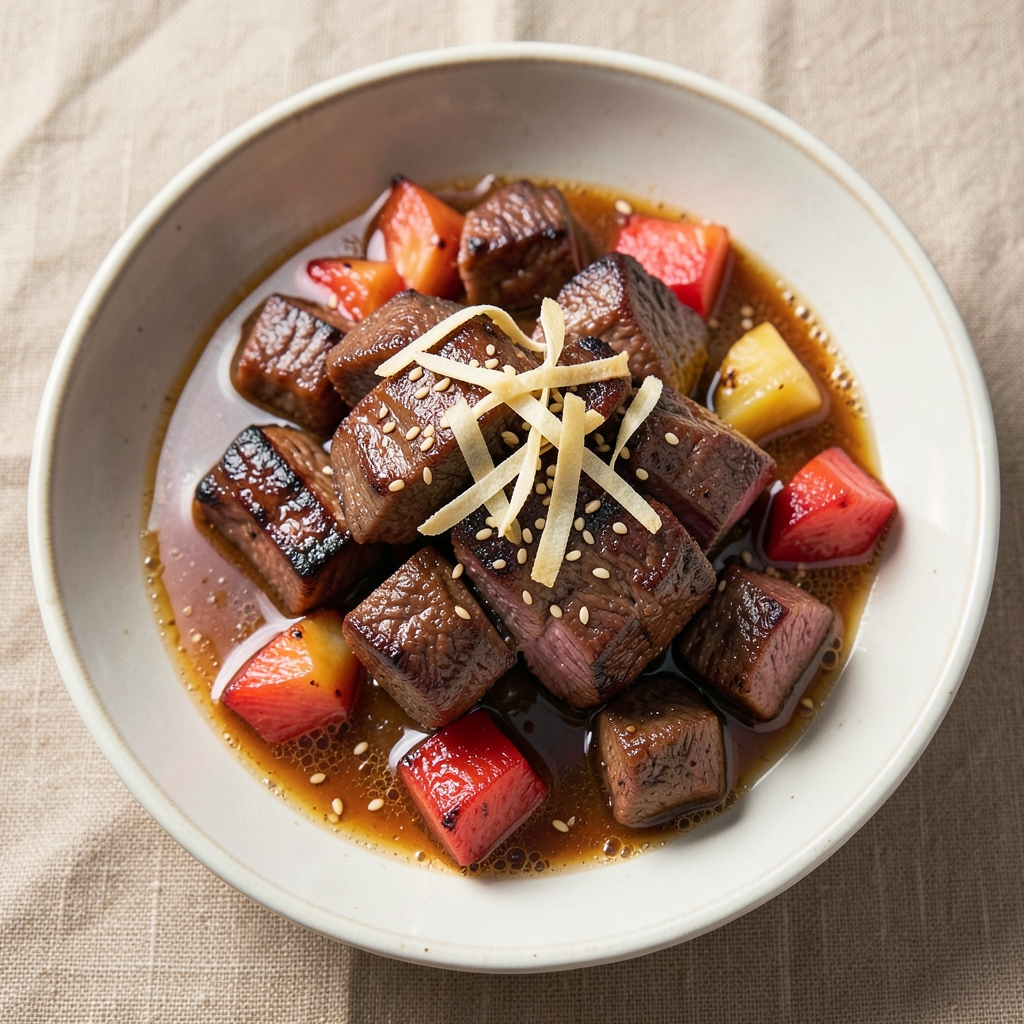
This Hawaiian teriyaki beef recipe transforms simple ingredients into a dish that tastes like a tropical vacation—juicy beef braised in a sweet-tangy pineapple glaze with just the right balance of ginger and soy.
I developed this after years of experimenting with teriyaki, looking for that perfect harmony between tender beef and vibrant Hawaiian flavors. The secret lies in marinating the beef overnight, which ensures it stays fork-tender while absorbing the rich, caramelized glaze.
What makes this recipe special is its simplicity combined with restaurant-quality results. You’ll start with a quick marinade of soy sauce, pineapple juice, and ginger, then sear the beef to lock in flavors before braising it in the same sticky-sauce until it’s fall-apart tender.
The pineapple adds natural sweetness that caramelizes beautifully, while the ginger brings warmth that cuts through the richness. Ready in just under 2 hours, this dish delivers the kind of bold flavors that make weeknight dinners feel like a celebration.
By the time you serve it, you’ll have perfectly tender beef swimming in a glossy, aromatic glaze that’s sweet, savory, and just a little tangy. The beef stays juicy and flavorful, while the sauce clings to every bite, creating a dish that’s as impressive as it is delicious.
Serve it over steamed jasmine rice or with a side of stir-fried vegetables for a complete meal that feels like a vacation in every bite.
This recipe is incredibly versatile—use it for family dinners, potlucks, or even meal prep. The leftovers taste just as good reheated, making it perfect for busy weeks.
Whether you’re a seasoned cook or just starting out, this Hawaiian teriyaki beef will become a staple in your recipe rotation. Let’s get cooking!
Ingredients for hawaiian teriyaki beef
Juicy beef, tropical pineapple sweetness, and sticky-sauce perfection—just 13 ingredients for a restaurant-style feast.
| Ingredient | Amount | Notes |
|---|---|---|
| Beef Chuck Roast 🥩 | 2 lb | Cut into 1-inch cubes |
| Fresh Pineapple Juice 🍍 | 1 cup | From fresh or canned pineapple |
| Soy Sauce 🥢 | ½ cup | Low-sodium preferred |
| Fresh Ginger Root 🧄 | 3 tbsp | Grated finely (about 1 oz) |
| Brown Sugar 🍚 | ½ cup | Packed firmly |
| Garlic Cloves 🧄 | 6 cloves | Minced finely |
| Extra-Virgin Olive Oil 🫒 | 2 tbsp | For searing beef |
| Honey 🍯 | 2 tbsp | Wildflower preferred |
| Sesame Oil 🫒 | 1 tbsp | Toasted sesame oil |
| Diamond Crystal Kosher Salt 🧂 | 1 ½ tsp | Adjust to taste |
| Freshly Ground Black Pepper 🌶️ | 1 tsp | Cracked peppercorns |
| Jasmine Rice 🍚 | 1 ½ cups | Uncooked, for serving |
| Green Onions 🧅 | 4 whole | Sliced thin for garnish |
The beef is everything here. Chuck roast is your best bet—it stays tender while absorbing all that caramelized pineapple glaze. Costco or Whole Foods usually sell it pre-cubed, which saves time, but if you’re buying a whole roast, ask the butcher to cut it into 1-inch pieces. Look for good marbling (those little white fat streaks)—that’s what keeps the meat juicy. Fresh pineapple juice is ideal, but canned pineapple juice from a glass jar works too (skip the syrup). The ginger? Freshly grated makes all the difference—dried just won’t cut it here.
No fresh ginger? Ground ginger at half the amount is a decent swap, but it lacks that bright punch. Running low on pineapple juice? Pineapple tidbits drained work in a pinch—just blend them with a splash of water to make 1 cup. The soy sauce can be any good-quality brand, but low-sodium lets you control the saltiness better. For extra depth, add a 1 tbsp of mirin if you’ve got it. The brown sugar caramelizes beautifully, but turbinado sugar adds a nice crunch if you’re feeling fancy. And if you’re making this ahead, double the sesame oil—it adds that nutty aroma that makes everything taste restaurant-worthy.
This sauce gets better with time, so make it a day ahead if possible. Store it in a sealed container in the fridge for up to 5 days—the flavors meld beautifully. The beef reheats wonderfully—just warm it gently in the sauce over low heat. For meal prep, portion the beef and sauce separately and reheat together. The rice? Cook it fresh when serving—it’s the perfect neutral base to let those tropical flavors shine. Garnish with those green onions right before serving (they wilt fast), and a sprinkle of toasted sesame seeds if you’ve got them.
Why You’ll Love This Recipe
- One-Pan Magic: I swear by this recipe when I’m too tired to scrub pots—just sear the beef, toss in the pineapple juice and ginger, and let it slow-cook. The sauce thickens right in the pan, so you’re left with minimal cleanup and maximum flavor.
- Sweet-Savory Bang: That combo of brown sugar caramelizing with soy and pineapple? It’s like a flavor explosion in your mouth. The ginger adds this bright, zesty kick that cuts through the richness, and honestly, I’ll take that over dry teriyaki any day.
- Leftovers That Shine: This recipe actually improves the next day. The beef gets even more tender, and the sauce clings to every bite—perfect for quick lunches or reheating with steamed rice. My kids ask for it at least twice before it’s gone.
- Budget-Friendly Feast: A chuck roast stretches far, and the pineapple juice (not syrup!) keeps costs down while adding real depth. Between us, this is the kind of meal that makes grocery money stretch without sacrificing taste—no sad, watery leftovers here.
Step-by-step instructions for Hawaiian teriyaki beef
Here’s how to transform tough chuck roast into fork-tender, caramelized beef with that signature Hawaiian teriyaki sweetness.
Prepare the Beef for Maximum Tenderness
Begin by cutting the 2 lb beef chuck roast into 1-inch cubes—this size ensures even cooking and quick absorption of the teriyaki marinade. Pat each piece dry with paper towels to remove excess moisture, which prevents steaming in the pan and promotes better browning. In a large bowl, combine the beef cubes with 1 cup fresh pineapple juice, 0.5 cup soy sauce, 3 tbsp finely grated fresh ginger root, 0.5 cup packed brown sugar, 6 minced garlic cloves, 2 tbsp honey, and 1.5 tsp diamond crystal kosher salt. Toss everything together until the beef is fully coated in the marinade.
Let the beef marinate at room temperature for 30 minutes while you prepare the rice. This brief marinating period allows the beef to absorb just enough flavor to develop a subtle teriyaki base before the real transformation happens in the oven. If you’re short on time, even 15 minutes will work, but longer marinating yields deeper flavor penetration.
Sear the Beef for Deep Flavor and Color
Heat 2 tbsp extra-virgin olive oil in a large Dutch oven over medium-high heat until shimmering. Working in batches to avoid crowding, add the marinated beef cubes to the pan and sear for 2-3 minutes per side until they develop a deep golden-brown crust. This step is crucial—it locks in juices and creates the Maillard reaction that builds rich, caramelized flavors. Don’t rush this; you want those seared edges that will melt in your mouth later.
As you sear, you’ll notice the marinade bubbling and caramelizing on the bottom of the pan. This is exactly what you want—those sticky bits pack serious flavor. Once all the beef is seared to a deep brown, remove it from the pan and set it aside on a plate. The residual heat will keep it warm while you prepare the final touches.
Braise Until Fork-Tender
Return the Dutch oven to the stove over medium heat and add 1 tbsp toasted sesame oil. Pour in any remaining marinade from the bowl, scraping up those delicious browned bits from the bottom of the pan with a wooden spoon. Bring the mixture to a gentle simmer, then transfer the Dutch oven to a 325°F preheated oven. Place the seared beef cubes back into the pot, nestling them into the sauce.
Cover the Dutch oven with a tight-fitting lid and braise for 2.5 to 3 hours, depending on your oven’s consistency. The beef is done when it’s fork-tender—you should be able to pierce it easily with a fork, and the juices should run clear. If you’re unsure, check the internal temperature with a meat thermometer; it should read 200-205°F in the thickest piece. This low-and-slow cooking method breaks down the tough connective tissue, transforming the beef into melt-in-your-mouth bites.
Finish with Pineapple Brightness
Once the beef is tender, remove the lid and increase the oven temperature to 400°F. Return the Dutch oven to the oven for 10-15 minutes to reduce the sauce slightly and deepen its caramelized flavor. This final step intensifies the teriyaki’s sweetness and creates a glossy, sticky glaze. While the beef finishes, prepare the 1.5 cups jasmine rice according to package instructions—it should be fluffy and ready to serve when the beef is done.
Garnish each serving with thinly sliced green onions for a pop of freshness and color. The contrast between the tender, caramelized beef and the bright, slightly acidic pineapple notes in the sauce makes this dish truly special. Serve immediately over the jasmine rice, ensuring each bite is accompanied by that luscious teriyaki glaze.
Rest and Serve for Maximum Juiciness
Let the braised beef rest for 10 minutes before serving. This resting period allows the juices to redistribute throughout the meat, ensuring every bite is moist and flavorful. During this time, you can reheat any leftover sauce if needed, but the beef should stay warm and tender without additional cooking.
When you’re ready to serve, spoon the beef and its rich teriyaki sauce over the jasmine rice. The combination of tender beef, sweet and savory sauce, and fragrant rice creates a harmonious balance of textures and flavors. Don’t forget to garnish with those sliced green onions—they add a subtle crunch and freshness that elevates the dish. This Hawaiian teriyaki beef is a showstopper, perfect for family dinners or special occasions where you want to impress.
Pro Tips For Making Hawaiian Teriyaki Beef
- Sear the Roast First: Hit that chuck roast with a screaming-hot pan—no rushing—until it’s deep brown in spots. I learned this the hard way: skipping the sear means flavor hiding in the sauce instead of clinging to the meat. (Yes, even if you’re impatient like me.)
- Grate, Don’t Chop Ginger: Use a microplane for the ginger—fine, wet shreds dissolve better than chopped chunks. I was skeptical until I tried it; the sauce stays smooth, and the heat lingers without bitterness. (No, your knife skills won’t ruin this.)
- Reduce Sauce Slow: Simmer the teriyaki sauce on medium-low, stirring often, until it coats the back of a spoon. After burning three batches, I finally figured out: high heat turns it into glue, not gloss. (Your future self will thank you.)
- Pineapple Juice First: Add the fresh pineapple juice before the soy sauce—it balances the salt and keeps the sauce bright. I skip this when I’m lazy, but the dish is noticeably better when I don’t. (Sounds weird, but it works.)
Regional styles of this hawaiian teriyaki beef
Hawaiian Roots
This dish traces back to the early 20th century when Japanese immigrants brought teriyaki techniques to Hawaii, blending them with local ingredients like pineapple. The original version often used pork or chicken, but beef became popular later thanks to its rich, caramelizing qualities.
I first tried this version at a little luau spot in Maui—it was the first time I tasted how pineapple juice transforms teriyaki into something truly tropical. 🌺
Japanese-Inspired Twist
For a more authentic Japanese approach, swap the pineapple for 1 cup mirin and 1 tbsp sake in the marinade. Use Kikkoman soy sauce and add 1 tsp grated daikon radish for depth.
The sauce will be less sweet but more umami-rich. I tested this version after a trip to Tokyo, and it’s amazing—just don’t skip the sesame oil finish. 🍶
Okinawan Fusion
Okinawa’s version often includes goya (bitter melon) or shiso leaves for a unique herbal note. Add ½ cup chopped goya (sautéed until soft) to the braising liquid, and garnish with shiso leaves (available at Asian markets).
The bitterness balances the sweetness beautifully. I discovered this version at a tiny Okinawan restaurant in Boston’s Chinatown—it’s a game-changer for heat lovers. 🌶️
Modern Hawaiian Plating
For a restaurant-worthy presentation, serve the beef over forbidden black rice (its deep color contrasts stunningly) and top with quick-pickled red onions (soak thinly sliced onions in vinegar, sugar, and chili flakes for 10 minutes).
Add a sprinkle of toasted coconut flakes for texture. This version feels like a vacation dish—perfect for dinner parties. 🌴
Local Hawaiian Adaptations
In Hawaii, you’ll often see this dish served with lau lau leaves
(steamed banana or taro leaves) instead of rice. If you can find them at an Asian market, wrap the beef in the leaves with a few pineapple chunks before braising.The leaves infuse an earthy aroma that’s pure island magic. I tried this at a local potluck on Oahu—it’s a must for authentic flavor. 🌿
Boston-Style Shortcut
For a quicker version (perfect for my tiny Boston kitchen), use pre-cut beef chuck
from the store and swap the oven braise for a slow cooker on low for 6 hours with the same marinade.Add ½ cup pineapple chunks
at the end for natural sweetness. It’s not traditional, but it’s foolproof—ideal for busy weeknights. 🏙️Nutrition facts
Frequently asked questions
Can I use a different cut of beef for this recipe?
Chuck roast is ideal for its tenderness when braised, but you can substitute with flank steak or sirloin if needed. For flank steak, slice against the grain and reduce braising time to 1.5 hours. Avoid lean cuts like top round—they dry out during the long cook. The key is fat content to keep the beef juicy.
How do I make this recipe gluten-free?
Replace the soy sauce with tamari or coconut aminos (use the same amount) and check your brown sugar for gluten-free certification. All other ingredients are naturally gluten-free. The flavor stays rich and savory—just expect a slightly lighter color in the sauce.
Can I prepare this dish in a slow cooker?
After searing the beef, transfer everything to a slow cooker and cook on low for 6-7 hours or high for 3-4 hours. The sauce will be thinner, so reduce it on the stovetop before serving. For extra depth, add ½ cup pineapple chunks during the last 30 minutes. Perfect for hands-off cooking!
Why does my teriyaki sauce turn out too sweet?
Too much sugar or honey can make the sauce cloying. Balance it by adding 1 tbsp rice vinegar or 1 tsp Dijon mustard to cut the sweetness. For future batches, reduce brown sugar to ¼ cup and add 1 tbsp grated ginger to boost flavor without extra sweetness. Taste as you go!
What’s the best way to reheat leftovers?
Gently reheat in a skillet over low heat with 1 tbsp water or beef broth to prevent drying. Avoid microwaving—it makes the beef tough. For extra richness, add a splash of pineapple juice to keep the sauce glossy. Leftovers keep well for 3-4 days in the fridge.

- Ashley Mac’s Pimento Cheese Recipe: Smoky, Spiced Creaminess With Crunchy Texture - November 16, 2026
- Baguette Recipe: Crusty Golden Crunch With Airy Interior - November 16, 2026
- Texas Roadhouse Bread Recipe: Buttery, Pull-Apart Softness With Every Tear - November 16, 2026