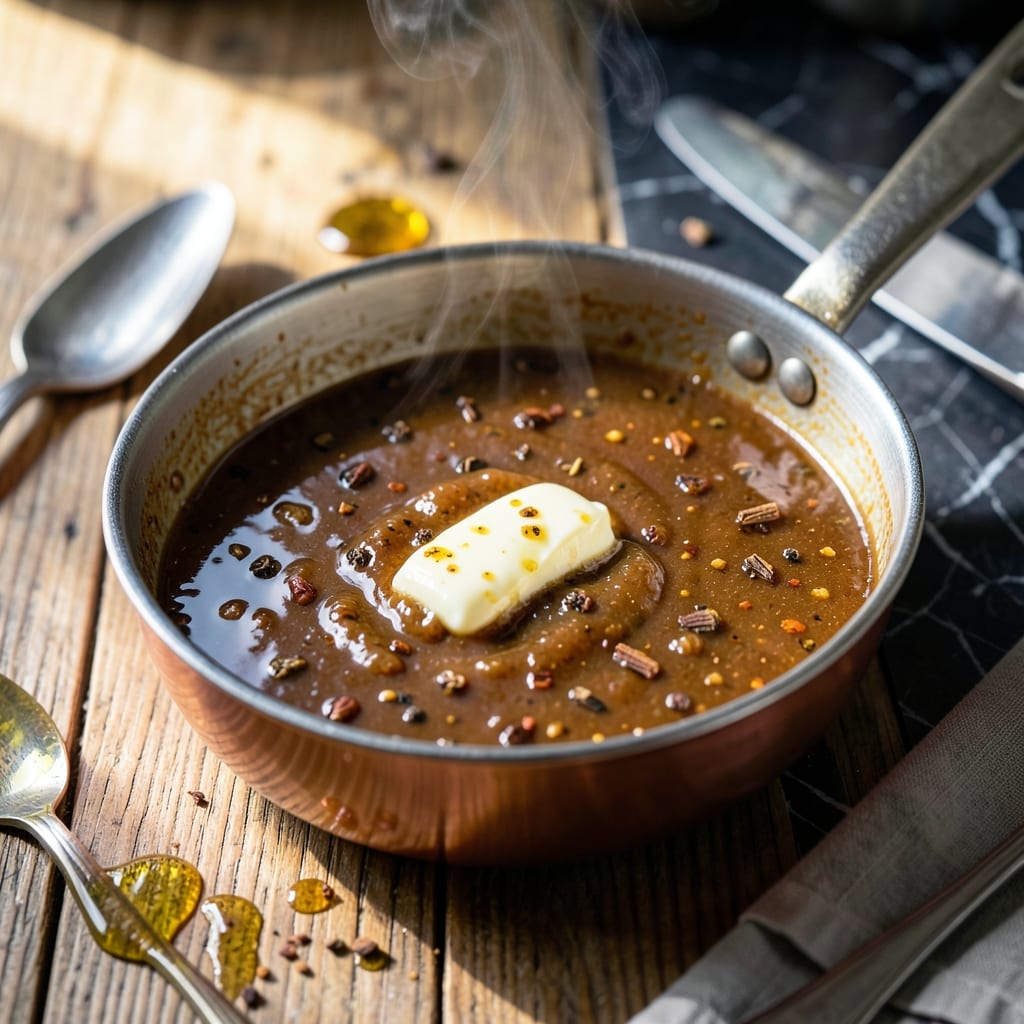
This glaze transforms an ordinary ham into a perfectly caramelized centerpiece for your holiday table. The brown sugar base creates that signature sticky sweetness everyone loves.
Simple to make with pantry staples, this recipe delivers consistent results every time. Brush it on during the last 30 minutes of baking for a glossy, golden finish that impresses without effort.
Ingredients for Ham Glaze Recipe Brown Sugar
Eight ingredients create that signature sticky sweetness everyone loves at the holiday table.
| Ingredient | Amount | Notes |
|---|---|---|
| Light Brown Sugar 🍚 | 1 ½ cups | Packed firmly for sweetness |
| Honey 🍯 | ½ cup | Clover or wildflower variety |
| Dijon Mustard 🟡 | 2 tbsp | Smooth and sharp for balance |
| Apple Cider Vinegar 🍏 | 2 tbsp | Balances the sweetness naturally |
| Unsalted Butter 🧈 | ½ cup | Melted for richness |
| Ground Cloves 🌿 | ¼ tsp | Freshly ground preferred |
| Ground Cinnamon 🌰 | ½ tsp | Warm spice for depth |
| Vanilla Extract 🌿 | 1 tsp | Pure extract for aroma |
The brown sugar is the foundation, so use light brown sugar packed firmly—it dissolves better than dark and gives the classic caramelized finish. Domino or C&H are reliable brands for consistent texture. For the honey, local clover or wildflower varieties add subtle floral notes that elevate the glaze beyond basic sweetness.
No honey? Maple syrup at equal volume works well, though the flavor profile shifts slightly. If avoiding Dijon, yellow mustard at half the amount keeps the tang without overpowering. For a smoother texture, strain the glaze after combining—removes any spice lumps. The butter can be salted if that’s what you have on hand, but reduce any additional salt in the recipe.
This keeps beautifully in an airtight container. Store in the fridge for up to 2 weeks or freeze for 3 months. Reheat gently before using—microwave in 15-second bursts to avoid burning the sugars.
Why You’ll Love This Recipe
- 5-Minute Magic: I just stir these five ingredients together on the stovetop—no chopping, no fuss.
- Sweet & Tangy: The brown sugar and honey caramelize into this rich, glossy glaze, while the mustard and vinegar cut through with a little zing.
- Holiday or Tuesday: Honestly, it works just as well for Easter dinner as it does for a random weeknight when I’m craving something special.
- Makes Extra: I always double it so I have some left over for sandwiches the next day—my kids fight over the last drop.
Step-by-Step Instructions for Ham Glaze
This method delivers a glossy, caramelized finish that elevates any holiday ham.
Step 1: Combine Sweet Base Ingredients
In a medium saucepan, combine the 1.5 cups Light Brown Sugar and 0.5 cup Honey. I pack the brown sugar firmly to ensure consistent sweetness and texture in the final glaze.
Place the saucepan over medium heat and stir constantly with a silicone spatula, breaking up any lumps in the brown sugar. You’ll notice the mixture begin to bubble gently after 2-3 minutes—this indicates the sugars are melting and combining.
Step 2: Incorporate Acid and Spices
Add the 2 tbsp Dijon Mustard, 2 tbsp Apple Cider Vinegar, 0.25 tsp Ground Cloves, and 0.5 tsp Ground Cinnamon to the saucepan. The mustard and vinegar will create a subtle tang that balances the sweetness perfectly.
Stir well to distribute the spices evenly throughout the mixture. The ground cloves and cinnamon will begin to release their aromatic compounds, filling your kitchen with a warm, inviting scent. Continue cooking for another 1-2 minutes to allow the flavors to meld.
Step 3: Add Butter and Vanilla for Depth
Reduce heat to low and stir in the 0.5 cup Unsalted Butter until completely melted. I use unsalted butter to control the sodium content precisely, allowing the natural flavors to shine.
Once the butter is fully incorporated, remove the saucepan from heat and stir in the 1 tsp Vanilla Extract. The vanilla adds a subtle floral note that complements the warm spices. The mixture should now be smooth, glossy, and have a rich amber color.
Step 4: Simmer to Desired Consistency
Return the saucepan to medium-low heat and let the glaze simmer gently for 5-7 minutes. You want it to thicken slightly, coating the back of a spoon, but still remain pourable.
Watch carefully during this stage—the glaze can go from perfect to burnt quickly. Stir frequently and remove from heat as soon as it reaches your desired consistency. The finished glaze should have a syrupy texture that will cling beautifully to your ham.
Step 5: Apply and Finish
Brush the warm glaze generously over your ham during the last 20-30 minutes of baking. I apply it in thin layers, allowing each coat to set slightly before adding the next, which builds depth of flavor and creates that coveted sticky exterior.
The glaze will bubble and caramelize in the oven, forming a beautiful mahogany crust. For an extra shine, I brush on one final coat just as the ham comes out of the oven. Let it rest for 10-15 minutes before slicing to allow the glaze to set fully.
Pro Tips For Making Ham Glaze Recipe Brown Sugar
- Simmer Low and Slow: Keep the heat at medium-low to prevent the brown sugar from burning—I learned this the hard way after ruining a batch with high heat. The glaze should thicken gradually, not caramelize into a bitter mess.
- Use Room-Temp Butter: Take the unsalted butter out 30 minutes before starting, so it melts evenly into the glaze. Cold butter can separate, leaving you with a greasy, uneven mixture.
- Skip the Boiling: Resist the urge to let the glaze reach a rolling boil, or the honey and sugar will scorch. A gentle simmer is all you need to blend the flavors without burning them.
- Add Vinegar Last: Stir in the apple cider vinegar at the very end, after removing the glaze from heat. This preserves its bright tang and prevents it from evaporating off during cooking.
Wine and Beer Pairings for ham glaze recipe brown sugar
Sweet Wine Pairings
A Riesling from Washington state or Germany pairs beautifully with this glaze, as its natural sweetness complements the brown sugar while its acidity cuts through the richness. I particularly love Chateau Ste. Michelle for its balance of fruit and mineral notes. 🍷
Rich White Options
For a fuller-bodied white, try a Viognier from California’s Central Coast. The wine’s stone fruit flavors and floral aromatics enhance the warm spices in your glaze. Yalumba from Australia offers an excellent, affordable option.
Light Beer Choices
A wheat beer with citrus notes, like Blue Moon Belgian White, provides refreshing contrast to the sticky sweetness. The orange peel and coriander in the beer brighten each bite. Serve chilled at 45°F for optimal flavor.
Dark Beer Pairings
For beer lovers who prefer darker styles, a brown ale like Newcastle offers caramel and toffee notes that mirror the glaze’s sweetness. The nutty undertones create a harmonious pairing without overwhelming the dish.
Dessert Wine
A chilled Moscato d’Asti from Italy makes a festive pairing with its light effervescence and peach flavors. Saracco produces a consistently excellent version that I reach for during Sunday family dinners. 💫
Non-Alcoholic Option
For a non-alcoholic choice, serve sparkling apple cider from your local farmers market. The bubbles and crisp apple flavor cleanse the palate between bites of glaze-coated ham.
Frequently Asked Questions
Can I use dark brown sugar instead?
Yes, but it will create a deeper molasses flavor and darker color. Reduce other sweet elements slightly to balance the stronger taste.
How do I prevent the glaze from burning?
Cook on medium-low heat and stir constantly. Remove from heat as soon as it coats a spoon, usually after 5-7 minutes of simmering.
Can I make this ahead of time?
Store in an airtight container in the fridge for up to 2 weeks. Reheat gently before using to restore the perfect consistency.
What can I use instead of Dijon mustard?
Substitute with yellow mustard (use half the amount) or whole grain mustard for similar tang. Both work well but may slightly alter the texture.
Nutrition Facts

- Maine Style Lobster Roll Recipe: Buttery Toasted Buns With Sweet Maine Lobster - November 8, 2026
- Philadelphia Cooking Cream Recipe: Thick, Velvety Base for Casseroles - November 8, 2026
- Roasted Boston Butt Recipe: Slow-Smoked Tenderness With Crispy Bark - November 8, 2026