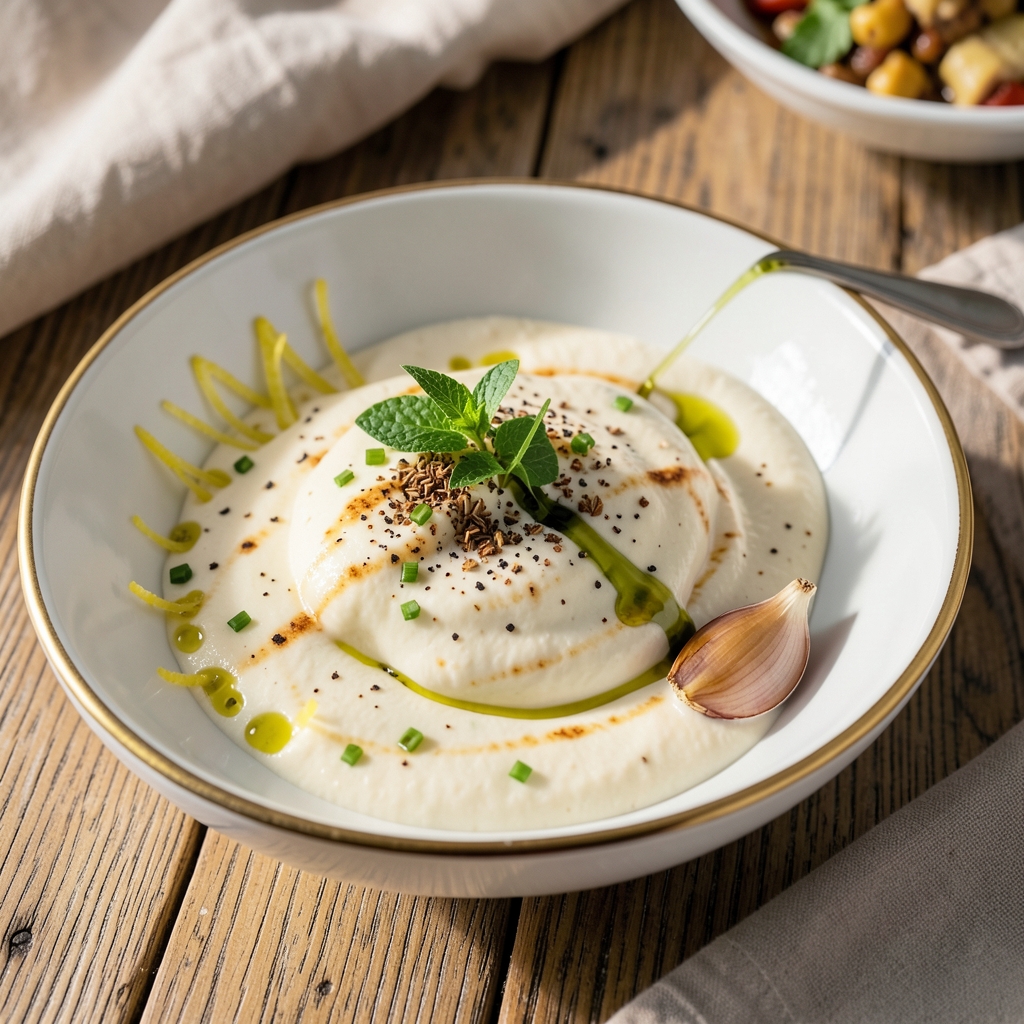
This gyro white sauce recipe delivers the perfect balance of creamy richness and bright, herby freshness—ideal for dipping pita, drizzling over gyros, or elevating any Mediterranean dish. The secret lies in a smooth, velvety base made with butter, flour, and milk, then brightened with garlic, lemon, and fresh herbs.
I developed this version after years of testing, ensuring it stays thick enough to cling to food without being overly heavy.
The sauce begins with a classic roux—equal parts butter and flour cooked until golden—to create the foundation for that signature creamy texture. Then, warm milk is whisked in gradually to prevent lumps, while garlic, lemon juice, and dried oregano infuse the mixture with bold Mediterranean flavors.
The result is a sauce that’s tangy, aromatic, and just thick enough to coat without dripping.
What sets this sauce apart is its versatility—it works as a dip for crispy fries, a topping for grilled meats, or even a spread for sandwiches. The lemon keeps it bright, while the herbs add depth, making it far more complex than store-bought alternatives.
With just a few simple ingredients and precise technique, you’ll achieve a sauce that tastes like it came from a Greek taverna.
Ready in under 15 minutes, this recipe is perfect for meal prep or last-minute gatherings. Store it in the fridge for up to 5 days, or freeze for longer shelf life. Let’s make this sauce—it’s the finishing touch your gyros (or anything else) have been missing.
Ingredients for gyro white sauce
Nine ingredients transform into a velvety sauce perfect for dipping, drizzling, or spreading.
| Ingredient | Amount | Notes |
|---|---|---|
| Unsalted Butter 🧈 | ½ cup | Cold, cubed for even cooking |
| All-Purpose Flour 🌾 | ½ cup | Sifted for smooth roux |
| Whole Milk 🥛 | 1 ½ cups | Room temperature preferred |
| Garlic Cloves 🧄 | 4 cloves | Freshly minced for bold flavor |
| Lemon Juice 🍋 | ¼ cup | Freshly squeezed, strained |
| Dried Oregano 🌿 | 1 tbsp | Mediterranean blend preferred |
| English Cucumber 🥒 | ½ cup | Seedless, finely diced |
| Red Wine Vinegar 🍷 | 1 tbsp | For tangy brightness |
| Salt 🧂 | 1 tsp | Diamond Crystal preferred |
| Black Pepper 🌶️ | ½ tsp | Freshly cracked for heat |
The butter and flour create a golden roux—the foundation of this sauce. European-style butter, like Plugrá or Land O’Lakes, works best for its higher fat content, ensuring a rich, velvety texture. For flour, King Arthur or Bob’s Red Mill all-purpose brands are ideal—they blend smoothly without lumps. The milk should be whole for creaminess, but if you’re watching calories, 2% works fine. Fresh garlic is non-negotiable here; pre-minced garlic loses its punch quickly. For the cucumber, English cucumbers are seedless and crisp, but Persian cucumbers work too if you remove the seeds. Look for cucumbers with vibrant green skin and firm texture—they’ll hold up better in the sauce.
No butter? Olive oil works in a pinch, but the sauce will have a different texture—closer to a tzatziki. Short on fresh garlic? Garlic powder at half the amount gets you close, though it lacks depth. The dried oregano can be swapped for fresh oregano at one-third the quantity, but Mediterranean oregano has a distinct flavor worth seeking out. For extra tang, add a pinch of red pepper flakes alongside the black pepper. If you don’t have red wine vinegar, lemon juice or apple cider vinegar will do, though the flavor profile shifts slightly. The cucumber can be omitted entirely if you prefer a smoother sauce—just reduce the milk by 0.25 cup to compensate.
This sauce thickens as it cools, so whisk in a splash of milk if it becomes too stiff. Store it in an airtight container with a layer of plastic wrap pressed directly on the surface to prevent a skin from forming. Keeps in the fridge for 5 days, though the cucumber may soften after 2 days. For longer storage, freeze in ice cube trays—thaw and whisk before using. The sauce reheats beautifully on the stovetop over low heat, stirring constantly to avoid curdling. Leftovers make an excellent spread for sandwiches or a dip for veggie sticks.
Why You’ll Love This Recipe
- Five-Ingredient Magic: I swear, this sauce comes together with just butter, flour, milk, garlic, and lemon—no weird pantry raids or last-minute grocery runs. Honestly, the only measuring I do is eyeballing the garlic cloves and flour, and somehow it still works every time.
- Garlic-Kissed Cream Dream: That roasted garlic simmered in butter? It melts into something rich and aromatic, while the lemon juice cuts through the richness just enough to make it bright. Between us, this is the kind of sauce that makes me forget I’m eating healthy.
- Gyro’s Best Friend: Slather it on grilled meat, drizzle it over fries, or toss it with roasted potatoes—it’s the ultimate flavor booster for anything Mediterranean. I’ll be real: my kids even ask for it on their plain toast, and that’s saying something.
- Leftovers That Don’t Suck: This sauce thickens perfectly and keeps for days in the fridge, so I can make a big batch and use it all week. No sad, watery leftovers here—just creamy, garlicky goodness waiting to be reheated and reused. Budget win, time win.
Step-by-step instructions for gyro white sauce
This method transforms simple pantry staples into a velvety, restaurant-quality sauce with a refreshing cucumber crunch.
Create a Smooth Roux for Creamy Foundation
In a medium saucepan over medium heat, melt the 0.5 cup unsalted butter until it stops bubbling but hasn’t browned. Immediately whisk in the 0.5 cup all-purpose flour and cook for 2-3 minutes until the mixture turns a pale golden color and smells nutty. This is your roux—the base that will give the sauce its signature creaminess.
Stir constantly during this time to prevent burning. You’ll know it’s ready when it thickens enough to coat the back of a spoon. If it darkens too quickly, reduce the heat slightly—you want a light roux, not a dark one. The flour will absorb the butter’s moisture and create a smooth, thickening agent that binds all the other ingredients together.
Gradually Add Milk for Velvety Texture
Slowly pour in the 1.5 cups whole milk while whisking vigorously to prevent lumps from forming. The mixture will thicken immediately as the milk incorporates into the roux. Reduce the heat to low-medium and continue cooking for 5-7 minutes, stirring constantly, until the sauce becomes thick and glossy.
This gradual addition is crucial—adding milk too quickly creates lumps that never fully dissolve. You’re aiming for a sauce that coats the back of a spoon but still flows smoothly. If it thickens too much, add 1 tablespoon water at a time until you reach the perfect consistency. The sauce should be thick enough to cling to gyro meat but still be pourable.
Infuse with Aromatics and Acid
Remove the saucepan from heat and stir in the 4 minced garlic cloves, 1 tablespoon dried oregano, 1 teaspoon salt, and 0.5 teaspoon black pepper. Let the mixture sit for 5 minutes to allow the flavors to meld together. This step develops the sauce’s complex, Mediterranean profile without overpowering its creamy base.
While the sauce rests, prepare the cucumber mixture by combining the 0.5 cup diced English cucumber, 0.25 cup lemon juice, and 1 tablespoon red wine vinegar in a separate bowl. This tangy, crunchy element balances the richness of the creamy sauce. The acidity from the lemon juice and vinegar brightens the flavors while the cucumber adds a refreshing texture contrast that’s essential to gyro sauce.
Combine and Chill for Perfect Balance
Return the sauce to low heat and stir in the cucumber mixture. Cook for an additional 2-3 minutes just to warm through—don’t let it boil or the cucumber will turn mushy. The sauce should now have a beautiful, creamy texture with visible cucumber pieces and a subtle sparkle from the lemon juice.
Transfer the sauce to a serving bowl and refrigerate for at least 1 hour before serving. This chilling time allows all the flavors to fully develop and the textures to settle. The sauce will thicken slightly as it cools, which is perfect for dipping or drizzling over gyro meat. The contrast between the cool, creamy sauce and warm pita will be irresistible.
Adjust Seasoning and Serve
Before serving, taste the sauce and adjust the seasoning if needed. You might want to add a pinch more salt to enhance the flavors or a splash more lemon juice if you prefer extra tang. The sauce should be creamy but not heavy, with a bright, fresh finish from the cucumber and lemon.
Serve immediately with gyro meat, pita bread, or as a dip for fresh vegetables. The sauce keeps well in the refrigerator for up to 3 days, making it perfect for meal prep. For an extra touch, garnish with additional cucumber pieces or a sprinkle of fresh oregano just before serving to maintain that fresh, vibrant appearance.
Pro Tips For Making Gyro White Sauce
- Whisk Like You Mean It: That first flour-butter mix isn’t just stirring—it’s a whisking job. Break up every single butter lump with quick, aggressive strokes, or you’ll end up with a sauce that fights you later. I learned this the hard way when my sauce turned into a greasy mess because I was half-hearted about it.
- Toast the Flour First: Cook the butter and flour together over medium heat for 2-3 minutes before adding milk. This step caramelizes the flour slightly, giving your sauce depth and that signature nutty richness. Skip it, and you’re just making a bland béchamel.
- Strain the Garlic: Mince the garlic fine, then press it through a mesh strainer into your sauce. This keeps the texture silky smooth instead of clumpy, and it prevents any accidental garlic bits from making your sauce taste like you’re chewing. (Yes, it’s extra work, but your mouth will notice.)
- Finish with Cold Milk: Reserve ¼ cup of the milk and chill it in the fridge while you cook the rest. When you’re ready to add the lemon juice, stir in the cold milk last—it cools the sauce faster and keeps it from curdling. Trust me, your sauce will thank you.
Essential equipment for gyro white sauce
Saucepan Essentials
Start with a medium-sized, heavy-bottomed saucepan—I recommend All-Clad Stainless Steel or Calphalon for even heat distribution. These pans prevent hot spots that can burn your roux. Avoid nonstick pans for this recipe; they don’t conduct heat well enough for a proper roux.
A whisk is non-negotiable—use a balloon whisk (like OXO Good Grips) for smooth, lump-free mixing. 🌡️
Thermometer for Precision
A kitchen thermometer ensures your roux reaches the perfect 160-170°F without burning. The ThermoWorks Thermapen is my go-to—it’s fast and accurate. Monitor the temperature closely; a roux left unattended can go from golden to burnt in seconds.
This tool also helps gauge when the sauce has thickened to the right consistency.
Mixing Tools Matter
For the milk incorporation step, a heat-resistant silicone spatula (like OXO Good Grips) works best—it won’t scratch your pan and helps scrape up any stuck bits.
A fine-mesh sieve is useful if you’re using whole milk with cream; strain it first to remove any sediment that could make the sauce grainy. A wooden spoon is fine for stirring, but avoid metal spoons that can scratch nonstick coatings.
Chilling Gear
After combining all ingredients, transfer the sauce to a glass or ceramic bowl for chilling. Glass conducts cold evenly, and the sauce won’t absorb odors like plastic might. I use Pyrex bowls—they’re durable and stackable.
For quick chilling, place the bowl in an ice bath (fill a larger bowl with ice water) for 15-20 minutes before refrigerating. This step speeds up flavor development.
Storage Containers
Store leftovers in airtight containers with a parchment paper barrier between layers to prevent a skin from forming. Glass mason jars (like Kerr or Ball) are ideal—they’re stackable and microwave-safe. Label with the date; this sauce keeps for 5 days in the fridge or 3 months in the freezer.
For freezing, portion into ice cube trays—thaw and whisk before using to restore creaminess. ❄️
Nutrition facts
Frequently asked questions
Can I make this sauce without a roux?
The roux is essential for that signature creamy texture, but you can create a lighter version by whisking 2 tablespoons melted butter with 2 tablespoons flour in the milk before heating. This method won’t be as rich, but it still works in a pinch. The sauce will be thinner—adjust consistency with 1 tablespoon cornstarch mixed with cold water if needed.
Why does my sauce turn grainy?
Graininess usually happens from three things: adding milk too quickly, overheating, or using cold ingredients. Always whisk vigorously when adding milk and keep heat at low-medium. If it happens, strain the sauce through a fine-mesh sieve to remove lumps. For prevention, warm your milk slightly before using.
How can I make this sauce dairy-free?
Replace the butter with olive oil or coconut oil, use unsweetened almond milk or oat milk (add 1 tablespoon cornstarch to thicken), and swap the cucumber for avocado or pickled jalapeños for texture. The flavor will be lighter but still delicious. For extra richness, stir in 1 tablespoon nutritional yeast at the end.
Can I use this sauce for other dishes besides gyros?
This versatile sauce works perfectly as a dip for fries or veggie sticks, a spread for sandwiches or wraps, or a topping for grilled chicken or fish. It also pairs beautifully with falafel or hummus platters. The creamy base and bright flavors make it a crowd-pleaser for any Mediterranean-inspired meal.
What’s the best way to reheat leftovers?
Reheat gently on the stovetop over low heat, stirring constantly to prevent curdling. Avoid microwaving—it can make the sauce watery. If reheating from the fridge, add 1 tablespoon milk or water to restore creaminess. For extra freshness, stir in a pinch of lemon juice or fresh herbs after reheating.

- Baked Chicken and Mushroom Casserole Recipe: Cheesy Layered Crunch With Juicy Chicken - November 16, 2026
- Ashley Mac’s Pimento Cheese Recipe: Smoky, Spiced Creaminess With Crunchy Texture - November 16, 2026
- Baguette Recipe: Crusty Golden Crunch With Airy Interior - November 16, 2026