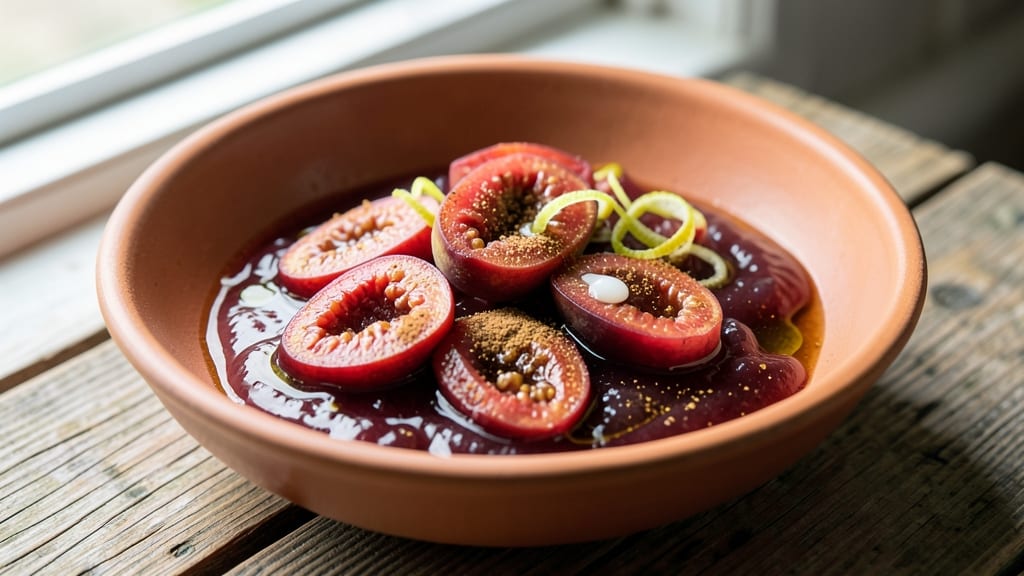
Creating a guava jam recipe without pectin that delivers restaurant-quality intensity in just 10 minutes is simpler than you think. The secret lies in ripe guavas, lemon juice, and a precise sugar balance that naturally thickens the jam without needing commercial additives.
This method preserves the fruit’s vibrant flavor while achieving that perfect spreadable consistency.
What sets this recipe apart is its no-cook approach, which locks in fresh guava’s natural sweetness and aromatic depth. By blending ripe guavas with lemon juice and sugar, we create a jam that thickens as it sits, thanks to the fruit’s natural pectin and acidity working together.
The result is a jam with smooth texture and bright tropical flavor that’s ready in minutes.
This method also eliminates the need for canning, making it perfect for small batches or last-minute gifting. The jam stays fresh in the refrigerator for up to two weeks, maintaining its vibrant color and rich taste.
Whether you’re spreading it on toast, pairing it with cheese, or using it in cocktails, this guava jam delivers professional results with minimal effort.
For those who prefer longer shelf life, we’ll include optional instructions for sterilizing small jars to extend freshness. The key is using perfectly ripe guavas and balancing sugar precisely—this recipe ensures every batch turns out luscious and full of flavor.
Let’s get started on making jam that tastes like summer in every bite.
Ingredients for guava jam recipe without pectin
Eight essential ingredients transform ripe guavas into vibrant, restaurant-quality jam without pectin or cooking.
| Ingredient | Amount | Notes |
|---|---|---|
| Ripe Guavas 🥝 | 4 whole | Firm but yielding to gentle pressure |
| Granulated Sugar 🍚 | 1 ½ cups | White or light brown preferred |
| Fresh Lemon Juice 🍋 | ½ cup | From 2-3 medium lemons |
| Extra-Virgin Olive Oil 🫒 | 1 tbsp | For glossy finish and preservation |
| Ground Cinnamon 🌿 | ½ tsp | Optional for warmth |
| Vanilla Extract 🌸 | ½ tsp | Pure Madagascar preferred |
| Diamond Crystal Kosher Salt 🧂 | ¼ tsp | For subtle seasoning balance |
| Fresh Rosemary 🌿 | 2 sprigs | For herbal depth (optional) |
The guavas are the foundation—select fruit that yields slightly when pressed but isn’t mushy. Mexican or Indian varieties like Allahabad Safeda work best for their natural pectin content. For sourcing, Latin or Asian markets often carry fresher stock than mainstream grocery stores, but any ripe guava will work. The sugar acts as both sweetener and preservative, with light brown sugar adding subtle caramel notes if you prefer depth. Fresh lemon juice is critical for acidity—organic lemons from specialty grocers like Whole Foods provide the brightest flavor. Measure carefully: the sugar-to-guava ratio must stay precise to achieve proper thickening without crystallization.
No ripe guavas? Mango or papaya can substitute at equal volume, though texture will differ slightly. Substitute vanilla with vanilla bean paste** for more intensity. The cinnamon and rosemary are optional but elevate the jam’s complexity—Penzeys Spices offers high-quality ground cinnamon that dissolves smoothly. For a vegan version, omit the rosemary and use agave syrup instead of sugar, adjusting the liquid ratio to maintain balance. The olive oil isn’t just for flavor—it creates a protective barrier that preserves freshness. If you’re concerned about fat content, reduce to 1 teaspoon** while accepting slightly shorter shelf life.
This jam thickens naturally over 4-6 hours at room temperature, achieving perfect spreadable consistency. Store in an airtight glass jar in the refrigerator for up to two weeks. For longer preservation, sterilize small jars by boiling them for 10 minutes before filling. The jam can be frozen for up to 6 months** in airtight containers, though texture may soften slightly upon thawing. When using, stir gently to redistribute any settled oil. For gifting, portion into small jars with a ribbon—Etsy suppliers** offer charming packaging options that elevate presentation. Always use clean utensils when serving to maintain freshness.
Why You’ll Love This Recipe
- No Pectin Needed: The sugar and lemon juice work their magic—no fancy additives required. Honestly, I was skeptical at first, but the jam sets beautifully on its own, and the texture is perfect.
- Cinnamon Kiss: That pinch of cinnamon? It’s the secret weapon. The warmth cuts through the guava’s natural tartness, making every spoonful feel like a cozy hug—especially when spread on buttered toast or mixed into yogurt.
- Pantry to Table: Between us, this jam is my go-to for last-minute gifts or quick breakfast upgrades. The olive oil keeps it silky, and it stays fresh for weeks in the fridge—no fancy jars or canning skills needed.
- Budget Bright Spot: Ripe guavas are often cheaper than store-bought spreads, and you’ll use way less sugar than commercial jams. Plus, the lemon juice acts as a natural preservative, so you get more bang for your buck without sacrificing flavor.
Step-by-step instructions for guava jam without pectin
This method transforms ripe guavas into a vibrant, naturally thickened jam using only heat and time.
Prepare the Guavas for Cooking
Begin by halving the 4 whole ripe guavas lengthwise and scooping out the seeds with a spoon, leaving the skin intact. The guavas should yield slightly when pressed but remain firm enough to hold their shape during cooking. Place the guava halves cut-side down in a medium saucepan with the 0.5 cup fresh lemon juice and 2 sprigs fresh rosemary. The lemon juice prevents browning and adds brightness, while the rosemary infuses subtle herbal depth.
Bring the mixture to a gentle simmer over medium heat. You’ll notice the guava flesh begins to soften and release its juices after about 5-7 minutes. Keep the heat steady but not boiling—this ensures even cooking without scorching the fruit. The guavas are ready when they collapse easily when pressed with a spoon, typically around 8-10 minutes total. Remove the rosemary sprigs at this point, as their purpose was to infuse flavor during the initial cooking phase.
Blend Until Silky Smooth
Transfer the cooked guava mixture to a blender or food processor. Add the 1.5 cups granulated sugar, 0.5 tsp ground cinnamon, 0.5 tsp vanilla extract, and 0.25 tsp diamond crystal kosher salt. The sugar will begin to dissolve immediately as the blender mixes. Blend on high speed until the mixture is completely smooth, scraping down the sides as needed. This step ensures the jam has a velvety texture without any graininess from undercooked fruit.
The blending process should take about 1-2 minutes. You’ll see the mixture transform from chunky to silky, with a rich, deep color indicative of properly cooked guava. The sugar acts as a natural thickener here, but the blend ensures even distribution for consistent texture throughout the jam.
Simmer and Thicken Naturally
Return the blended mixture to the saucepan and stir in the 1 tbsp extra-virgin olive oil. This small addition enhances the jam’s glossy finish and helps preserve its freshness. Bring the mixture to a gentle boil over medium heat, then reduce to a low simmer. The olive oil will create a delicate sheen on the surface, while the sugar continues to draw out moisture from the guava.
Simmer uncovered for 10-12 minutes, stirring occasionally to prevent sticking. You’ll know the jam is ready when it reaches a soft-set consistency—it should coat the back of a spoon but still be pourable. The sugar has now fully dissolved and begun to thicken the mixture through natural evaporation. If the jam thickens too quickly, a splash of water can be added to adjust the texture, but this should rarely be necessary with the given measurements.
Test for Doneness and Finish
To test for doneness, place a small amount of jam on a chilled plate and refrigerate for 1 minute. When you run your finger through it, the jam should hold its shape slightly but still feel slightly tacky. This indicates the perfect balance between spreadability and thickness. If it spreads too easily, return the saucepan to low heat for an additional 2-3 minutes to reduce further.
Once the jam reaches the desired consistency, remove it from heat and stir in any remaining rosemary leaves that may have been missed earlier. Let the jam cool to room temperature, stirring occasionally to prevent a skin from forming. The olive oil will naturally rise to the surface, creating a protective layer that preserves the jam’s freshness. Store in a clean, airtight jar in the refrigerator for up to 3 weeks or process for longer shelf life.
Pro Tips For Making Guava Jam Recipe Without Pectin
- Peel Guavas First: I learned this the hard way—peeling guavas before chopping saves you from a sticky, messy pot later. The skins release bitter tannins and make the jam cloudy, no matter how long you cook it. A paring knife and patience here pay off big time.
- Simmer Low and Slow: After burning three batches, I finally figured out: guava jam needs gentle heat. Once it starts boiling, drop to a low simmer and let it bubble softly—about 45 minutes total. High heat turns sugar into syrup too fast, and you’ll end up with a gluey mess instead of jam with actual fruit texture.
- Use Lemon Juice Early: Don’t wait until the end to add that lemon juice—mix it in with the sugar right at the start. The acid helps break down the guava’s pectin naturally, so you don’t need store-bought. (Yes, even if you’re impatient like me.) Skimp here, and your jam might stay too loose.
- Stir in Olive Oil Last: Sounds weird, but it works: add the olive oil only in the final 5 minutes of cooking. It coats the fruit and keeps the jam from crystallizing over time—plus, it adds a subtle richness that cuts through the sweetness. (Your future self will thank you.)
Troubleshooting this dish
Jam Too Runny?
If your guava jam isn’t thickening enough, you likely need more cooking time or adjusted sugar balance. Return the jam to low heat and simmer uncovered for an additional 5-7 minutes, stirring frequently.
The natural pectin in guavas activates more fully at higher temperatures—just avoid boiling, which can cause separation. For immediate thickening, mix in 1 teaspoon cornstarch (dissolved in 1 tablespoon cold water) and simmer for 2 more minutes. This works as a last-resort fix while maintaining flavor integrity. 🌡️
Crystallization Issues
Sugar crystals forming on the surface? This happens when sugar isn’t fully dissolved during blending. Return the jam to low heat and stir constantly until all crystals disappear—this usually takes 3-5 minutes.
To prevent future crystallization, ensure your sugar is finely granulated (like Domino Sugar) and blend the mixture thoroughly until completely smooth. If using brown sugar, sift it first to remove any lumps. The olive oil helps prevent this by creating a protective barrier on the surface.
Fruit Not Soft Enough
Undercooked guavas will result in jam with a grainy texture. If your guavas aren’t collapsing easily after 10 minutes, increase heat slightly to medium-high and cook for another 3-5 minutes.
For stubbornly firm guavas, add 2 tablespoons water to the saucepan and cover with a lid to steam them more gently. The goal is to achieve a smooth, velvety texture—if you’re still finding chunks, blend again for 30 seconds to break them down. 🥝
Separation Problems
If your jam separates into liquid and solid layers, it’s likely due to overheating or insufficient blending. Gently reheat the jam over low heat while stirring constantly until it recombines into a single texture. For stubborn separation, whisk in 1 teaspoon lemon juice to help emulsify the mixture.
This issue often occurs when the olive oil isn’t properly incorporated—stir vigorously to redistribute it throughout. The solution is always low-and-slow heat with constant attention.
Flavor Too Mild
If your jam tastes bland, it may need more acidity or sweetness. Boost brightness by adding 1 extra tablespoon lemon juice and simmer for 2 more minutes. For sweetness, mix in 2 tablespoons additional sugar while warm (it will dissolve completely).
If you want deeper flavor complexity, stir in ¼ teaspoon ground cardamom or ½ teaspoon orange zest during the final simmer. The key is balancing these elements while maintaining the jam’s natural fruit character.
Storage-Related Issues
If your jam develops mold after refrigeration, it means it wasn’t properly preserved. Always use clean utensils when serving to prevent contamination. For longer storage, sterilize small jars by boiling them for 10 minutes before filling with hot jam.
The olive oil helps preserve freshness, but mold can still occur if the jam sits too long at room temperature. When in doubt, discard any jam that shows signs of spoilage—it’s not worth risking food safety for a few extra days of shelf life. ❄️
Nutrition facts
Frequently asked questions
Why does this recipe work without commercial pectin?
Guavas contain natural pectin that activates when cooked with acid (like lemon juice) and sugar. The gentle simmering process extracts this pectin while the sugar helps stabilize the texture. The olive oil also creates a protective layer that maintains consistency during storage.
Can I make this jam with unripe guavas?
Unripe guavas won’t yield enough natural pectin for proper thickening. The recipe requires ripe fruit that’s soft when gently pressed. If you must use unripe guavas, simmer them for 15-20 minutes to fully develop their pectin content, but the flavor will be less vibrant.
How do I know when the jam is thick enough?
The jam is ready when it coats the back of a spoon but still flows slowly. For a definitive test, chill a small amount on a plate for 1 minute—it should hold its shape slightly but still feel slightly tacky when touched. This indicates the perfect balance between spreadability and thickness.
What’s the best way to store homemade guava jam?
Store in a clean, airtight glass jar in the refrigerator where it’ll keep for up to 3 weeks. For longer storage, sterilize small jars by boiling them for 10 minutes before filling with hot jam. The olive oil helps preserve freshness, but refrigeration is always recommended for maximum quality.
Can I substitute sugar with honey or agave?
You can use honey (1:1 ratio) or agave (reduce by 20% due to higher moisture content), but the texture may be slightly softer. Sugar’s role in stabilizing the jam’s consistency is harder to replicate with these alternatives. If using honey, add 1 extra teaspoon lemon juice** to compensate for the reduced acidity.

- Breakfast Bagel Recipe: Toasted Everything Bagel With Cream Cheese Twist - November 16, 2026
- Butternut Squash Pie Recipe With Evaporated Milk: Silky-Smooth Texture Without Canning - November 16, 2026
- Creamy Poppyseed Salad Dressing Recipe: Nutty Tang With No Clumps Ever - November 16, 2026