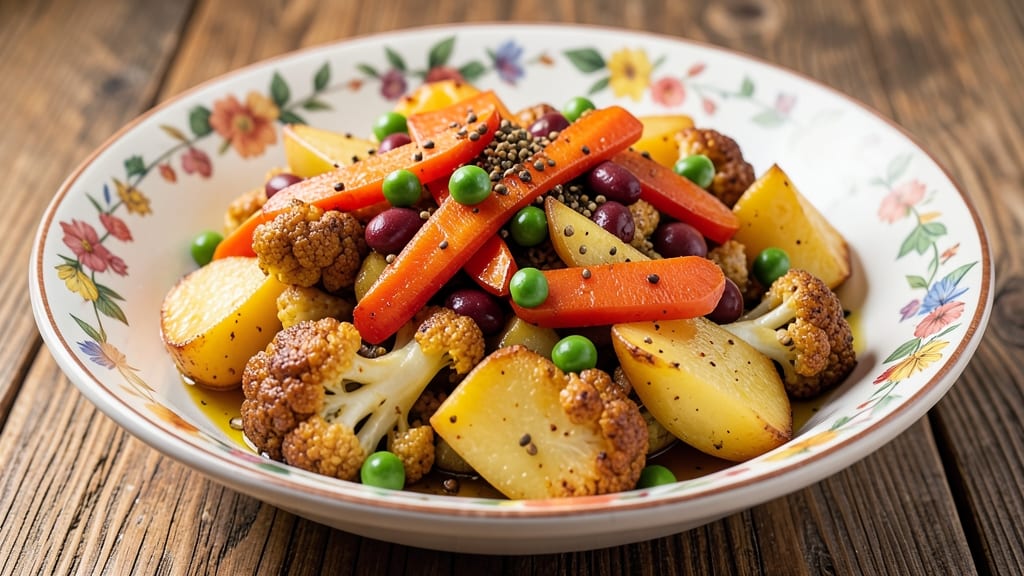
This gobi mix veg recipe transforms simple cauliflower and mixed vegetables into a restaurant-worthy vegetarian dish with crisp-tender texture and bold South Indian flavors.
The key lies in the perfect balance of spices and the right cooking technique—something I perfected after years of experimenting in my Boston kitchen, where even the smallest adjustments made a difference.
Honestly, I’ve burned more than my fair share of cauliflower before mastering this method, but the results are worth every attempt.
The beauty of this recipe is its simplicity: just a handful of vegetables, essential spices, and a few minutes of prep work. You’ll start with cauliflower cut into even florets, paired with potatoes, carrots, and beans that absorb the aromatic spices beautifully.
The secret weapon? A light coating of turmeric and mustard seeds fried in hot oil, which adds depth and prevents the vegetables from turning mushy during cooking.
What you’ll end up with is a vibrant, flavorful dish where the cauliflower stays crisp-tender on the outside while the potatoes and carrots become perfectly soft inside. The spices—cumin, coriander, red chili powder—create a symphony of flavors that’s both comforting and exciting.
This dish is the kind of vegetarian meal that satisfies even the most skeptical eaters, and it pairs wonderfully with steamed rice or a simple raita.
Whether you’re serving it for a family dinner or bringing it to a potluck, this gobi mix veg recipe delivers professional-quality results with minimal effort. The best part? It reheats beautifully, making it perfect for meal prep. Let’s get cooking!
Ingredients for gobi mix veg
Game-changer spices and crisp-tender veggies—this South Indian masterpiece delivers restaurant-quality flavor with minimal effort.
| Ingredient | Amount | Notes |
|---|---|---|
| Cauliflower 🥬 | 1 ½ lb | Fresh, florets cut even size |
| Yellow Potatoes 🥔 | 1 ½ lb | Medium, peeled and cubed |
| Carrots 🥕 | 1 lb | Whole, peeled and sliced |
| Green Peas 🌱 | 1 cup | Fresh or frozen, thawed |
| Red Kidney Beans 🌿 | 1 cup | Cooked, drained and rinsed |
| Mustard Seeds 🌶️ | 1 tbsp | Whole, for tempering |
| Turmeric Powder 🌿 | 1 tsp | Freshly ground preferred |
| Ground Cumin Seeds 🌶️ | 1 tsp | Toasted for aroma |
| Coriander Powder 🌿 | 1 tsp | Freshly ground for brightness |
| Red Chili Powder 🔥 | ½ tsp | Adjust for heat preference |
| Garam Masala 🌶️ | ½ tsp | Freshly ground for warmth |
| Asafoetida (Hing) 🌿 | ¼ tsp | Pinch for depth |
| Vegetable Oil 🫒 | ½ cup | High smoke point preferred |
| Lemon Juice 🍋 | 1 tbsp | Freshly squeezed |
| Salt 🧂 | 1 tsp | Diamond Crystal preferred |
The cauliflower is non-negotiable—look for firm heads with tight florets at Whole Foods or your local Indian market. The potatoes should be waxy varieties like Yukon Gold for that perfect starchy bite. Carrots with vibrant orange color (no green tops) ensure sweetness. For the peas, frozen works perfectly—just thaw and drain. The red kidney beans? Soak overnight if using dried, or grab canned for convenience. I always double-check my spices at Penzeys—freshly ground coriander and cumin make all the difference in that aromatic tempering step.
No mustard seeds? Substitute with 1 tsp black mustard seeds—same punch. Running low on garam masala? Mix 1/4 tsp cinnamon, 1/4 tsp cardamom, and 1/4 tsp cloves for a quick fix. The asafoetida (hing) is tricky to find—skip it if unavailable, but your dish will still be delicious. For the oil, avocado or coconut oil works if you’re avoiding vegetable oil. And that turmeric? Freshly ground is ideal, but powder works in a pinch—just toast it in the oil first to wake up the flavor. The lemon juice can be swapped for vinegar if you’re out, but fresh is absolutely essential for that bright finish.
This dish reheats like a dream—30 seconds in the microwave with a splash of water keeps it crisp-tender. Store leftovers in airtight containers for 4-5 days or freeze for up to 3 months. I always portion mine into individual containers before freezing—perfect for quick lunches. The flavors actually deepen overnight, so if you can, make it a day ahead. Serve with hot steamed basmati rice and a dollop of yogurt raita for the full experience.
Why You’ll Love This Recipe
- No-Chop Shortcuts: I swear by the “big-cut” method—cauliflower florets, potatoes in chunks, carrots in thick rounds. No julienne skills needed, and the veggies still turn out tender-crisp. (Yes, even my 10-year-old can pre-cut while I stir.)
- Creamy Crunch Magic: That moment when the cauliflower gets golden and the potatoes stay pillowy? Absolute perfection. The peas add sweetness, the kidney beans bring heartiness, and the spices—oh—the spices make it sing without trying too hard.
- Lunchbox Hero: Between us, this is my go-to for packed lunches. It reheats beautifully, keeps its texture for days, and my kids actually eat it cold with a sprinkle of chaat masala. (No sad, soggy leftovers here.)
- Pantry Staple Power: I make this with whatever’s in my fridge—extra beans? Add them. Fewer peas? No problem. It’s the kind of dish that stretches my grocery budget without sacrificing flavor, and honestly? That’s a win I’ll take every time.
Step-by-step instructions for crisp-tender cauliflower and spice-kissed veggies
Here’s how to transform humble vegetables into a vibrant, aromatic masterpiece with perfect texture contrasts.
🍳 Step 1: Prepare the Vegetable Base with Precision
Begin by cutting the 1.5 lb cauliflower into even-sized florets, about 1.5 inches in diameter. This ensures uniform cooking. Peel and cube the 1.5 lb yellow potatoes into 1-inch pieces—larger cubes stay heartier while smaller ones crisp faster. Slice the 1 lb carrots into ¼-inch thick rounds for even cooking and maximum surface area.
In a large mixing bowl, combine the prepared cauliflower, potatoes, and carrots. Sprinkle over the 1 tsp turmeric powder, 1 tsp coriander powder, 0.5 tsp red chili powder, and 1 tsp salt. Toss gently but thoroughly until every vegetable is evenly coated. The turmeric will lend a golden hue while preventing discoloration, and the coriander adds that bright, citrusy depth we love in South Indian cooking.
🔥 Step 2: Temper the Spices for Maximum Flavor
Heat 0.5 cup vegetable oil in a heavy-bottomed pot over medium heat until shimmering but not smoking. Add the 1 tbsp mustard seeds—they’ll pop and sizzle dramatically. As they begin to splutter, add the 1 tsp ground cumin seeds and let them dance for 30 seconds until fragrant. This is where the magic happens: the mustard seeds release their nutty aroma while the cumin deepens the earthy notes.
Quickly add the 0.25 tsp asafoetida (hing) and 0.5 tsp garam masala, stirring for 10 seconds until the spices bloom. Immediately pour this fragrant oil over the vegetable mixture in the bowl and toss again. The asafoetida adds that unmistakable umami depth that defines South Indian cuisine, while the garam masala ties all the flavors together. Let the vegetables marinate for 10 minutes while you prepare the remaining ingredients.
🥘 Step 3: Cook the Vegetables to Perfect Tenderness
Transfer the marinated vegetables to the same pot (no need to wipe it clean—those spice bits are flavor gold). Add the 1 cup cooked red kidney beans and 1 cup green peas, tossing gently to combine. Pour in ½ cup water and bring to a gentle simmer over medium-low heat. The key here is patience—cover the pot and let it cook for 12-15 minutes, stirring occasionally, until the potatoes are fork-tender but still hold their shape.
Here’s the secret: the vegetables should be crisp-tender—firm enough to resist a gentle squeeze but yielding slightly when pierced with a fork. If the mixture looks dry before reaching this texture, add 2-3 tablespoons water at a time. The beans and peas will release their own moisture as they cook, so don’t overcompensate. You’re aiming for a dish where each bite offers both texture contrast and vibrant flavor.
🍋 Step 4: Finish with Bright Acid and Aromatic Garnish
Once the vegetables reach perfect tenderness, remove the pot from heat and let it sit for 2 minutes to allow the flavors to meld. Stir in the 1 tbsp lemon juice—this bright citrus note cuts through the richness of the spices and adds a refreshing finish. The acidity also helps balance the earthy flavors, creating that signature tang we associate with South Indian vegetable preparations.
Garnish immediately with a sprinkle of 0.5 tsp garam masala reserved for finishing. This final touch adds warmth and complexity that isn’t present in the cooking spices alone. Serve while still warm, accompanied by steamed basmati rice or warm roti. The contrast between the crisp cauliflower florets, tender potatoes, and soft peas creates an incredibly satisfying texture profile that makes every bite exciting.
Pro Tips For Making Gobi Mix Veg
- CUT CAULIFLOWER SMALL: Tiny florets (about 1-inch pieces) cook faster and soak up spices better than big chunks. I learned this the hard way—oversized cauliflower always ended up undercooked or mushy. Use a sharp knife and work in batches if needed.
- PARBOIL POTATOES FIRST: Drop peeled potatoes into boiling water for 3-4 minutes before adding to the pan. This guarantees they’re tender without turning to mush later, especially since they’re the last to cook. (Yes, even if you’re impatient like me.)
- DRAIN BEANS WELL: Rinse canned kidney beans thoroughly and drain them on a colander for 5 minutes. The excess liquid makes the mix soggy and dilutes the spices—something I noticed after making this recipe three times with store-bought beans.
- TOSS WITH DRY SPICES: Mix the veggies with spices before adding oil—this coats every surface evenly. I was skeptical until I tried it: the carrots and peas stayed bright, and the flavors stuck to the cauliflower instead of pooling at the bottom.
Essential equipment for perfect results
Heavy-Bottomed Pot
This is my non-negotiable for gobi mix veg—it’s the difference between even cooking and scorched spices. I use a 10-inch cast iron skillet (like my Lodge Pre-Seasoned) because it distributes heat perfectly and retains it even when you add cold vegetables.
The extra weight also helps prevent the spices from burning when they hit the hot oil. If you don’t have cast iron, a stainless steel pot with thick walls works too—I’ve had great results with All-Clad’s 3-quart version. 🔥
Precision Cutting Tools
Even vegetable cutting makes all the difference in texture. I swear by a sharp chef’s knife (I use Victorinox 8-inch) for chopping potatoes and carrots, and a mandoline (like the Benedict 4-inch) for those perfect ¼-inch carrot slices.
The mandoline gives you consistency that hand-cutting can’t match. For cauliflower florets, I use a serrated knife to separate them cleanly without crushing. Pro tip: Keep your knife sharp—dull blades bruise vegetables, leading to mushier results.
Spice Grinder Essentials
Freshly ground spices are the secret weapon in this dish. I always toast and grind my own cumin seeds and coriander seeds using a spice grinder (I love the KastKing 4-Cup). For whole mustard seeds, I use a mortar and pestle—the slight variation in texture adds depth.
If you’re short on time, pre-ground spices work, but toast them in the oil for 30 seconds first to wake up their flavors. The asafoetida (hing) is tricky to find—look for it in the international section of Whole Foods or your local Indian market.
Temperature Control Tools
Monitoring heat is crucial for that perfect crisp-tender texture. I use an instant-read thermometer (like the Thermoworks ThermoPop) to check the oil temperature—it should be around 325°F when you add the mustard seeds.
For the cooking stage, I keep the heat at medium-low (around 300°F) to prevent the potatoes from overcooking while the cauliflower stays crisp. If your stove runs hot, reduce to low and add water more gradually.
A kitchen timer (I use my iPhone’s) helps track the 12-15 minute cooking window precisely.
Marination Bowl
Don’t skip the marination step—it’s where the spices really work their magic. I use a large glass mixing bowl (like the Pyrex 8-cup) because it’s non-reactive and easy to clean.
The glass lets me see the vegetables being evenly coated, and the size gives me room to toss everything thoroughly. If you’re short on space, a stainless steel bowl works too. Just make sure it’s big enough to hold all the vegetables in a single layer—this ensures even spice distribution.
After marination, I let the bowl sit for 10 minutes while I prep the remaining ingredients, which helps the flavors start developing early. 💡
Nutrition facts
Frequently asked questions
Can I make this gobi mix veg recipe without asafoetida (hing)?
Asafoetida adds umami depth, but you can skip it entirely without sacrificing flavor. For a similar effect, add an extra ¼ tsp garam masala or a pinch of onion powder to compensate. The dish will still taste delicious—just slightly less complex. Many home cooks omit it when it’s hard to find.
How do I keep the cauliflower crisp-tender instead of mushy?
The secret is in the cooking method: use medium-low heat and cook just until the potatoes are tender (12-15 minutes). Avoid overcrowding the pot—cook in batches if needed. Also, cut all vegetables to similar sizes so they cook evenly. The cauliflower should yield slightly when pressed but still hold its shape.
What vegetables can I substitute if I don’t have kidney beans or peas?
This recipe is flexible! Swap kidney beans for chickpeas or black-eyed peas, and replace peas with green beans or bell peppers. For a heartier dish, add diced eggplant or zucchini. Just adjust cooking time—softer veggies like zucchini may only need 8-10 minutes while denser ones like eggplant could take 15-20 minutes.
Can I make this gobi mix veg recipe in an Instant Pot?
Yes, but with adjustments! Sauté the spices in 2 tbsp oil first, then add all veggies, beans, and ½ cup water. Cook on High Pressure for 3 minutes, then quick-release. Finish with lemon juice and garam masala. The texture will be softer (more like a stew), but still flavorful. For crisp-tender results, skip the pressure cooker and stick to stovetop.
How can I make this dish spicier?
Double the red chili powder to 1 tsp and add ½ tsp cayenne pepper during the tempering step. For heat lovers, include 1-2 green chilies (finely chopped) when sautéing the spices. If you prefer smoky heat, replace half the chili powder with ½ tsp smoked paprika. Always taste before serving!

- Eggs Supreme Recipe: Fluffy Custard With Crispy Herb-Topped Magic - November 11, 2026
- All Bran Banana Nut Bread Recipe: Moist Grain-Packed Loaf With Warm Spice Harmony - November 11, 2026
- Freezer-Burned Shrimp Recipe: Buttery Garlic Revival in 15 Minutes - November 11, 2026