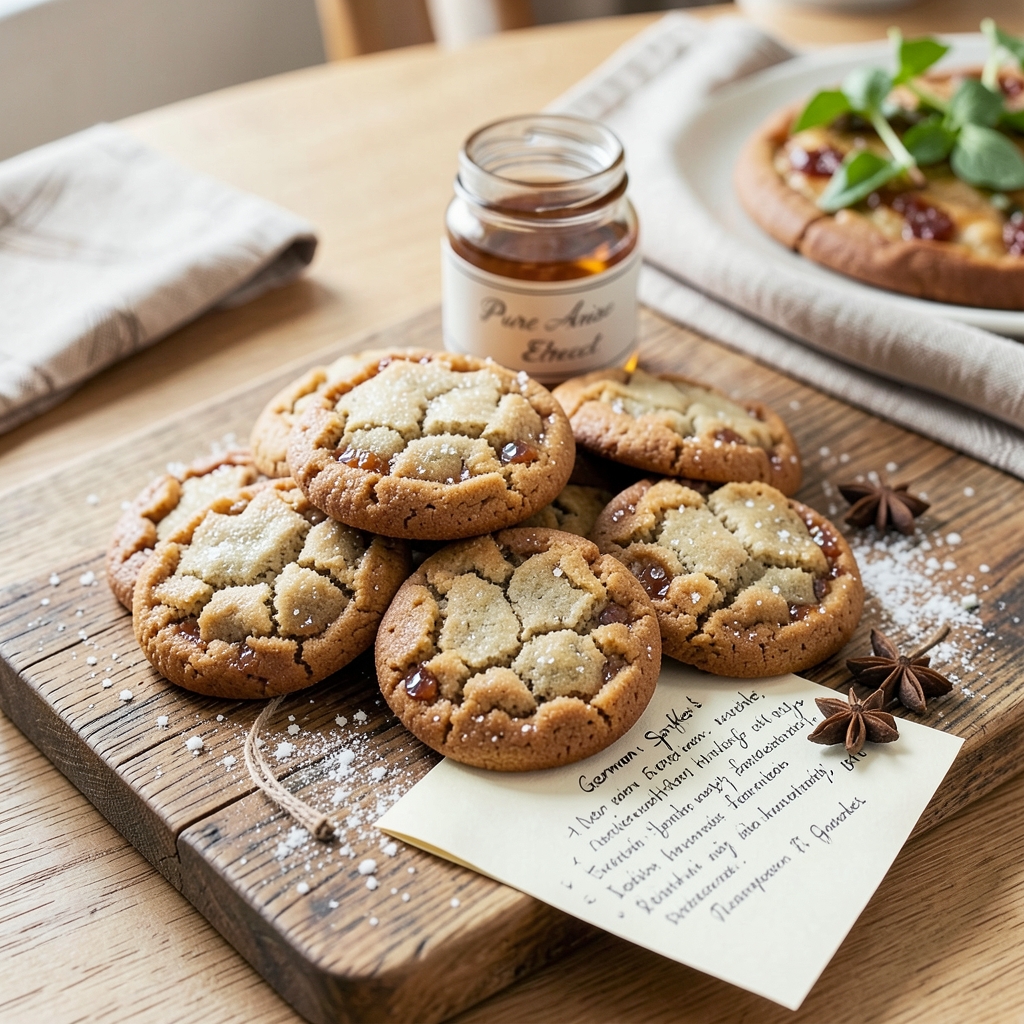
This German spritz cookie recipe delivers the signature buttery crunch and anise-kissed flavor that makes them irresistible. After years of perfecting the technique—from traditional cookie presses to modern mixer methods—I’ve created a version that’s both authentic and foolproof for home bakers.
The secret lies in the precise balance of butter, sugar, and anise extract, which transforms simple ingredients into delicate, lace-like cookies with a crisp edge and tender center.
The beauty of spritz cookies is their simplicity: just six ingredients, no chilling required, and a baking time of 10 minutes or less. Whether you’re using a cookie press for classic ridges or a fork to create rustic texture, the method adapts to your tools without sacrificing flavor.
The dough’s light, airy quality comes from proper mixing and baking at 350°F, ensuring every batch turns out perfectly golden and fragrant with that signature anise aroma.
What you’ll end up with is a tray of delicate, melt-in-your-mouth cookies that crumble just enough to create that signature crunch. These aren’t just cookies—they’re a nostalgic taste of European bakeries, perfect for pairing with tea or gifting in holiday tins.
The recipe scales easily, so you can make a single batch for a quick treat or double it for sharing.
For those new to spritz cookies, don’t worry about perfection—this method is designed to be forgiving. Even if your oven runs hot or your dough feels slightly sticky, the result will still be delicious.
Let’s get started on creating these buttery, anise-infused delights that taste like a trip to a German café.
Ingredients for german spritz cookie
Six simple ingredients, one magical anise-kissed flavor—these delicate cookies are pure comfort.
| Ingredient | Amount | Notes |
|---|---|---|
| Unsalted Butter 🧈 | 1 cup | Cold and cubed for texture |
| Granulated Sugar 🍚 | 1 cup | Superfine if available |
| Pure Anise Extract 🌿 | 1 tsp | Not anise seeds or flavoring |
| Vanilla Extract 🌸 | 1 tsp | Pure vanilla preferred |
| All-Purpose Flour 🌾 | 2 cups | Sifted for light texture |
| Fine Sea Salt 🧂 | ¼ tsp | Kosher or diamond crystal |
The butter is non-negotiable here. European-style unsalted butter (like Plugrá or Kerrygold) gives the best flavor, but any good brand works. Keep it cold when mixing—just soft enough to cream, not melted. The anise extract is what makes these taste authentically German. McCormick or Walmart’s Great Value brands are reliable, but avoid the cheap imitation flavoring—it won’t give that true licorice-like aroma. For the flour, King Arthur or Gold Medal are my go-tos, but honestly, whatever you’ve got in your pantry will work fine. Just make sure it’s all-purpose, not cake flour.
No anise extract? 1/2 tsp ground anise seeds works in a pinch (toast them first for extra flavor), but it won’t be quite the same. Running low on vanilla? Almond extract at half the amount gives a similar warmth. The sugar can be swapped for powdered sugar if you’re worried about graininess, but superfine sugar is ideal. For a lighter texture, add 1/4 tsp baking powder to the flour. And if you’re using a cookie press, make sure it’s clean—leftover residue can change the flavor. The dough should be just slightly sticky but hold together when pressed.
This dough keeps for 3 days in the fridge, covered tightly. For longer storage, wrap in plastic and freeze for up to 3 months. Once baked, the cookies stay fresh for 5 days in an airtight container. I like to bake half, then freeze the remaining dough balls on a tray before transferring to a bag. That way, I can bake a fresh batch whenever I want—no waiting for dough to come to room temperature. Store-bought anise extract? It lasts 6 months unopened, but once opened, use it within 3 months for best flavor.
Why You’ll Love This Recipe
- No-Fuss Dough: That one-bowl mix—just creamed butter, sugar, and flour—takes less time than scrolling through your phone. Honestly, I’ve made these while my coffee brewed.
- Anise Magic: That subtle licorice kick from the anise extract? It’s like a warm hug for your taste buds—sweet, spiced, and just a whisper of something unexpected. (Yes, even if you’ve never tried anise before.)
- Holiday or Snack: Pack them in jars for Christmas gifts or grab one straight from the oven when you need a pick-me-up. My kids think they’re fancy; my husband just eats them all.
- Lasts All Week: Crisp edges stay crisp for days, and the buttery center? Still melts like it’s fresh. I’ve had these three days later, and they’re still my secret weapon for lazy afternoons.
Step-by-step instructions for German spritz cookies
Let’s make these melt-in-your-mouth cookies with their signature anise flavor and crispy edges.
Cream the Butter and Sugar
In a stand mixer fitted with the paddle attachment, beat the 1 cup unsalted butter (cold and cubed) and 1 cup granulated sugar on medium speed for 3-4 minutes. You’ll see the mixture lighten in color and nearly double in volume. This step is crucial—it incorporates air that creates those beautiful crackly tops.
I like to use a hand mixer for this part if I’m in a hurry, but the stand mixer gives you more control. Stop when the mixture looks fluffy and pale, like whipped cream. If you’re using superfine sugar, you might need an extra 30 seconds to reach the same consistency.
Add the Extracts
Once the butter and sugar are fully combined, add the 1 teaspoon pure anise extract and 1 teaspoon vanilla extract. Mix on low speed for 30 seconds until fully incorporated. The anise extract has a strong aroma—don’t worry if your kitchen smells like a German bakery for a few minutes.
Here’s where the magic happens: the anise gives these cookies their signature licorice-like flavor. If you’re using imitation vanilla extract, you might want to add an extra ¼ teaspoon of pure anise extract to compensate for the flavor difference. The mixture should be smooth and well-combined at this point.
Combine the Dry Ingredients
In a separate bowl, whisk together the 2 cups all-purpose flour (sifted) and ¼ teaspoon fine sea salt. This keeps the flour light and prevents lumps in your dough. With the mixer running on low speed, gradually add the dry ingredients to the butter mixture.
Mix just until combined—you should still see some flour streaks. Overmixing develops gluten, which makes cookies tough. I usually stop when the dough comes together but still looks slightly shaggy. If the dough seems too dry, you can add 1-2 teaspoons of cold water to help it bind.
Chill the Dough
Shape the dough into a log about 2 inches in diameter and wrap it tightly in plastic wrap. Place it in the refrigerator for at least 1 hour (or up to 24 hours). This chilling step is essential—it firms up the butter so the cookies hold their shape when baked and develop that perfect crispy edge.
While the dough chills, preheat your oven to 350°F. Line two baking sheets with parchment paper or silicone baking mats. The dough will be easier to handle after chilling, and you’ll get more even cookies when you slice them. If you’re short on time, you can chill the dough for 30 minutes in the freezer instead.
Roll and Bake the Cookies
Once the dough is chilled, remove it from the refrigerator and let it sit at room temperature for 5-10 minutes to soften slightly. Using a sharp knife or bench scraper, cut the log into ¼-inch thick slices. Place them 2 inches apart on the prepared baking sheets.
Bake for 10-12 minutes until the edges are light golden brown and the centers still look slightly soft. They’ll firm up as they cool. For extra crispiness, you can bake them for 1-2 minutes longer. Let the cookies cool on the baking sheet for 5 minutes before transferring them to a wire rack to cool completely.
These cookies should be tender with crisp edges and that signature anise flavor. If you prefer them extra crispy, bake them for 13-14 minutes next time. Store them in an airtight container at room temperature for up to 5 days, or freeze for up to 3 months for freshness.
Pro Tips For Making German Spritz Cookie
- CHILL THE DOUGH: Mix the butter-sugar-anise-vanilla combo until it’s just combined—no need to overwork it. Pop the dough in the fridge for 30 minutes (yes, even if you’re impatient). I learned this the hard way: skipping the rest leads to flat, sad cookies that spread like a bad rumor.
- WEIGH THE FLOUR: Scoop-and-sweep flour is the enemy of consistent texture. Use a kitchen scale for the all-purpose flour—1 cup packed is not the same as 1 cup loosely scooped. After burning three batches with uneven crumb, I finally measured. The difference in chewiness? Night and day.
- DON’T OVERMIX: Once you add the flour, stop stirring the second everything clumps together. Overmixing develops gluten, and these cookies are meant to be tender, not cakey. Two turns of a spatula is all it takes—trust me, your future self will thank you for the melt-in-your-mouth result.
- USE COLD BUTTER: Take the unsalted butter straight from the fridge—no softening needed. Cut it into cubes and let it sit in the mixing bowl while you measure the sugar. Cold butter creates pockets of steam during baking, giving you that signature crackly top and crisp edges. (I was skeptical until I tried it.)
Pro cooking tips for this recipe
Butter Temperature Matters
The key to that signature crispy-yet-tender texture starts with your butter. Use cold, cubed butter (not softened) when creaming with sugar—this creates tiny air pockets that expand during baking. I learned this the hard way when I used room-temperature butter and ended up with dense, flat cookies.
For best results, pull your butter straight from the fridge and cut it into ½-inch cubes before mixing. If your kitchen runs warm, chill the butter for 10 minutes before starting. 🧈
Mix Just Until Combined
Overmixing the dough is the fastest way to ruin these delicate cookies. Once you add the flour, mix only until the dough comes together—you should still see some dry flour streaks. I usually stop when the mixture looks like wet sand.
Any more mixing and you’ll develop gluten, which makes the cookies tough. If your dough feels too dry, add just 1 teaspoon cold water at a time until it holds together when pressed. The dough should be slightly sticky but not wet.
Chill for Perfect Shape
Skipping the chilling step is a common mistake that leads to spread-out, misshapen cookies. Wrap your dough log tightly in plastic and refrigerate for at least 1 hour—this firms up the butter so the cookies hold their shape.
Pro tip: If you’re in a hurry, chill the dough for 30 minutes in the freezer instead. After chilling, let the dough sit at room temperature for 5-10 minutes before slicing—this prevents the knife from sticking and helps create clean cuts. The difference in texture is night and day! ❄️
Slice Uniformly for Even Baking
Use a sharp knife or bench scraper to cut the dough into ¼-inch thick slices—any thicker and they’ll bake unevenly. For perfectly round cookies, roll the dough log gently on your work surface before slicing.
If you don’t have a cookie press, a fork works too: press the tines into the dough to create ridges, then cut into rounds. Space cookies 2 inches apart on the baking sheet—they won’t spread much, but giving them room ensures even browning.
Bake Until Golden Edges
These cookies bake fast—10-12 minutes at 350°F is perfect for tender centers with crisp edges. Start checking at 10 minutes; they’re done when the edges are light golden brown. Overbaking dries them out, so pull them out when the centers still look slightly underdone.
Let them cool on the baking sheet for 5 minutes before transferring—they’ll firm up as they cool. For extra crunch, bake them 1-2 minutes longer next time. 🔥
Anise Extract Substitutes
No anise extract? ½ teaspoon ground anise seeds (toasted in a dry pan for 1 minute) works in a pinch, but the flavor won’t be as pure. For a milder licorice note, use ¼ teaspoon fennel seeds (toasted and ground).
If you’re avoiding anise entirely, add ½ teaspoon orange zest for a bright, citrusy alternative. Just remember: authentic spritz cookies rely on that anise aroma, so substitutions will change the flavor profile. Honestly, I’d still recommend tracking down the extract—it’s worth it for the real deal! 🌿
Nutrition facts
Frequently asked questions
What makes these German spritz cookies different from other butter cookies?
The signature anise extract gives them that distinct licorice-like aroma and flavor. Unlike vanilla-heavy cookies, these have a subtle herbal note that pairs perfectly with their delicate, crispy texture. The dough’s airy quality comes from proper butter creaming and minimal mixing—key for that signature crunch!
Can I make these without a cookie press?
Roll the chilled dough into a 2-inch log and slice it into ¼-inch thick rounds with a sharp knife. For extra texture, press a fork into the dough before cutting. The cookies will still turn out perfectly—just slightly rustic instead of perfectly ridged.
Why did my cookies spread too much during baking?
Most likely, your dough wasn’t chilled long enough. The butter needs to firm up to hold the shape. For next time, chill the dough for the full 1 hour (or 30 minutes in the freezer) and let it sit at room temperature for 5-10 minutes before slicing. Also, make sure your oven isn’t running hot—350°F is ideal for even baking.
How can I store these cookies to keep them fresh?
Store them in an airtight container at room temperature for up to 5 days. For longer storage, freeze the dough balls (before baking) on a tray, then transfer to a bag for up to 3 months. Bake straight from frozen, adding 1-2 extra minutes to the baking time. The flavor actually improves slightly after a day or two!
What’s the best way to serve these cookies?
They’re perfect with a cup of tea or coffee, but also pair beautifully with vanilla ice cream for a dessert twist. For a festive touch, dust with powdered sugar or drizzle with melted chocolate. The anise flavor makes them especially great with spiced drinks like chai or mulled wine during colder months.

- Betty Crocker Chocolate Devil Cake Recipe: Moist Layers With Fudgy Frosting - November 8, 2026
- Beetroot Fries Recipe: Earthy Sweetness With Crispy Edges - November 8, 2026
- Old Bay Seasoning Crab Cake Recipe: Crispy-Golden Bites with Zesty Maryland Flair - November 8, 2026