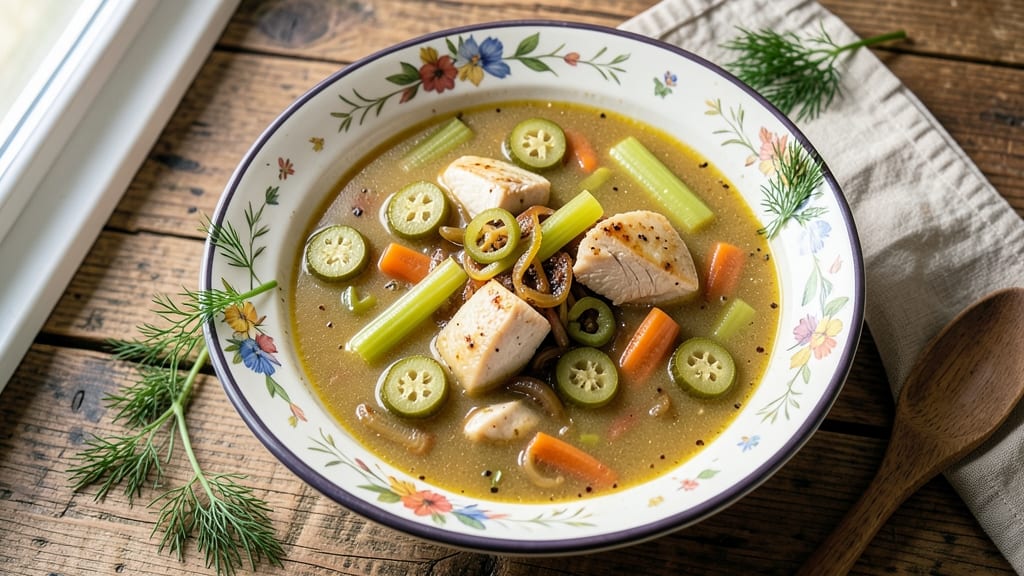
German dill pickle soup transforms simple pantry staples into a creamy, tangy-sour bowl of comfort that feels like a warm hug in a spoon. Growing up, I’d watch my grandmother stir this soup on cold winter days, knowing it would bring the whole family to the table.
The magic lies in balancing sweet pickles with rich broth and just enough cream to make it velvety—no heavy cream needed, just a splash of sour cream at the end for that signature tang.
What makes this recipe special is its foolproof technique: simmering pickles in broth until they soften and release their briny sweetness, then blending them into a smooth base. No fancy equipment required—just a pot, a blender, and patience.
The result is a soup that’s hearty enough for a main dish but light enough for lunch, with a depth of flavor that comes from slow cooking and proper seasoning.
By the time you serve it, you’ll have a creamy yet refreshing soup with just the right balance of tangy, sweet, and savory notes. The texture is smooth but not heavy, and the aroma alone will have everyone gathering around the table.
This is the kind of soup that tastes even better the next day, making it perfect for meal prep or feeding a crowd.
Traditional versions often include potatoes and sometimes meat, but this recipe keeps it simple with just pickles, broth, and a touch of cream. Serve it with crusty bread to soak up every last drop of that comforting broth. Let’s make this soup!
Ingredients for german dill pickle soup
Pickles, broth, and a touch of cream—just the basics for this cozy German classic.
| Ingredient | Amount | Notes |
|---|---|---|
| Dill Pickles 🥒 | 1 ½ lbs | Brine-packed, sliced into chunks |
| Chicken Broth 💧 | 6 cups | Low-sodium preferred, homemade or store-bought |
| Onion 🧅 | 1 whole | Yellow or white, chopped |
| Celery Stalks 🥬 | 3 whole | Chopped, about 1 cup |
| Carrots 🥕 | 2 whole | Medium, peeled and chopped |
| Garlic Cloves 🧄 | 4 cloves | Fresh, minced |
| Sour Cream 🥛 | ½ cup | Full-fat for creaminess |
| Butter 🧈 | 2 tbsp | Unsalted, for richness |
| All-Purpose Flour 🌾 | 1 tbsp | For thickening |
| Dried Dill 🌿 | 1 tsp | Or 1 tbsp fresh chopped |
| Black Pepper 🌶️ | ½ tsp | Freshly ground preferred |
| Salt 🧂 | 1 tsp | Adjust to taste |
| Crusty Bread 🍞 | 6 slices | For serving, optional |
The pickles are the star here. Brine-packed dill pickles from the grocery store work perfectly, but if you can find German-style pickles at specialty stores, they’ll add extra depth. I like to slice them into even chunks so they soften uniformly. For the broth, homemade chicken broth is ideal, but low-sodium store-bought saves time. The onion, celery, and carrots are your standard mirepoix—chop them small so they melt into the soup without chunks. Fresh garlic and dill are non-negotiable for that authentic flavor, but dried works in a pinch (just use half the amount).
No dill? Fresh parsley or even dried thyme can stand in, though it’ll taste different. Short on sour cream? Greek yogurt with a squeeze of lemon mimics the tang. The butter and flour combo is key for that velvety texture—don’t skip it, even if you’re watching calories. For a lighter version, you could use half-and-half instead of sour cream, but trust me, the full-fat version is worth it. If you’re making this ahead, add the sour cream just before serving so it doesn’t curdle.
This soup tastes even better the next day—reheats beautifully in the microwave or on the stove. Keeps for 4-5 days in the fridge, and freezes for up to 3 months (just thaw overnight in the fridge). I always make a double batch because it’s the kind of soup that disappears fast. Serve it with crusty bread on the side—it’s practically mandatory. Leftovers? Even tastier for lunch the next day.
Why You’ll Love This Recipe
- Pickle Pantry Magic: I swear, if you’ve got a jar of dill pickles and a pot, you’re halfway there. No fancy chopping—just rough dice onions, toss in the celery and carrots, and let the broth do the work. That tangy pickle brine transforms into a rich, savory base with almost no effort.
- Umami Bomb Combo: Between the briny pickles, the deep caramelized onions, and the celery’s earthy bite, this soup is ridiculously flavorful. Honestly, the first time I tasted it, I thought, “Wait, this is just soup? No way it’s this good.” The broth soaks up all the pickle juice, and suddenly, you’ve got a soup that’s both comforting and exciting.
- Lunchbox Legend: I make this on Sundays and portion it into jars—it’s my go-to for work lunches or picnic spreads. The flavors actually improve overnight, and it’s way more interesting than a sad sandwich. (Yes, even on a Tuesday night.)
- Budget Superstar: A single jar of pickles stretches into multiple servings, and chicken broth is cheap. Plus, the veggies are pantry staples, so you’re not breaking the bank. Between us, this is the kind of soup that makes me feel like I’m feeding a crowd without spending a fortune.
Step-by-step instructions for German dill pickle soup
Here’s how to make this tangy-sour cream masterpiece that’s all about cozy comfort.
Sauté the Vegetable Base
Melt the 2 tbsp butter in a large pot over medium heat. Add the chopped onion, celery stalks, and carrots, stirring occasionally for 5 minutes until they begin to soften. You’ll notice the vegetables release moisture and smell sweetly aromatic.
After 5 minutes, add the 4 minced garlic cloves and cook for another 30 seconds until fragrant. This step builds the flavor foundation – don’t rush it or the garlic will burn. The vegetables should be tender but not browned at this point.
Simmer the Broth and Pickles
Pour in the 6 cups chicken broth and bring to a gentle boil. Add the sliced 1.5 lbs dill pickles, 1 tsp dried dill, 1 tsp salt, and 0.5 tsp black pepper. Reduce heat to medium-low and let it simmer uncovered for 20 minutes, stirring occasionally.
You’ll see the pickles soften slightly and the broth develop a rich, tangy aroma. The soup should reduce slightly but maintain a generous liquid consistency. This simmering process extracts maximum flavor from all ingredients.
Thicken the Soup
In a small bowl, whisk together the 1 tbsp all-purpose flour and 1 tbsp cold water until smooth. Slowly pour this mixture into the simmering soup while stirring constantly. Let it cook for 5 minutes until thickened to your preferred consistency.
Real talk: This is where the soup transforms from simple to creamy. The flour acts as a natural thickener without altering the tangy pickle flavor. You want it to coat the back of a spoon but still be pourable.
Finish with Sour Cream
Remove the pot from heat and gently stir in the 0.5 cup sour cream. The heat will warm it slightly, creating a silky texture. Taste and adjust seasoning with additional salt or pepper if needed – this is your final flavor checkpoint.
Let the soup sit off heat for 5 minutes to allow the flavors to meld completely. The sour cream will create that signature creamy finish while maintaining the tangy pickle brightness. This is the moment that matters: balance is everything.
Serve Warm with Crusty Bread
Ladle the soup into bowls and serve immediately with the 6 slices crusty bread on the side. The contrast of warm soup with cool, crispy bread is what makes this dish so satisfying. The bread soaks up the creamy broth beautifully.
Each spoonful delivers that perfect marriage of tangy pickles, savory broth, and velvety creaminess. Don’t skip the bread – it’s essential for that complete comfort food experience. The soup tastes even better the next day as flavors deepen, but it’s best enjoyed fresh while warm.
Pro Tips For Making German Dill Pickle Soup
- Sweat the Veggies: Cut onions, celery, and carrots into even ¼-inch slices—not too small, or they’ll turn to mush. Cook them in a dry pot over medium heat for 8–10 minutes, stirring often, until the onions are translucent and the carrots just yield to pressure. This builds flavor without burning, and you won’t waste time waiting for them to soften later.
- Drain Pickles Properly: Don’t just dump pickles straight from the jar—they’ll make your soup watery and dilute the broth. First, pat them dry with paper towels, then slice them. If you’re using brine, reserve ¼ cup to add back later for tang, but strain out the solids. Trust me, your soup will taste richer.
- Simmer, Don’t Boil: Once you add the broth and pickles, keep the heat at a gentle simmer—not a rolling boil. Boiling scalds the broth and makes the pickles bitter. A low simmer (small bubbles, occasional swirls) lets the flavors meld without turning the soup into a sad, thin liquid. Patience here makes the difference.
- Finish with Fresh Dill: Skip the dried dill from the spice rack—it’s harsh and dusty. Instead, stir in 1–2 tablespoons of fresh dill leaves at the very end, right before serving. It brightens the soup instantly and cuts through the tang of the pickles. If you’re out, a pinch of dill weed (the fluffy stuff) works in a pinch, but fresh is non-negotiable.
Pro cooking tips for great german dill pickle soup
Broth Selection Matters
I’ve found that homemade chicken broth elevates this soup to restaurant-quality, but I know not everyone has time for that. If you’re using store-bought, low-sodium options like Swanson or Pacific Foods work perfectly—they won’t overpower the tangy pickle flavor.
For extra depth, I sometimes add 1 tsp apple cider vinegar to the broth while simmering, which mimics the acidity of homemade pickles. 💧
Pickle Prep is Key
Don’t just throw in whole pickles—slice them into even chunks (about ½-inch thick) so they soften uniformly. If you’re using German-style pickles (like Reinhart’s), they’ll add a deeper, slightly sweeter flavor.
For extra tang, I like to mash a few pickle pieces with a fork before adding them to the broth—this releases more brine and intensifies the flavor. 🥒
Thickening Like a Pro
The flour slurry (1 tbsp flour + 1 tbsp water) is non-negotiable for that signature creamy texture, but timing is everything. Whisk it smoothly to avoid lumps, then let it simmer for exactly 5 minutes—any longer and the soup can turn gluey.
I’ve learned the hard way: low and slow is the way to go. For a gluten-free version, swap the flour for 1 tbsp cornstarch mixed with water. 🌾
Sour Cream Timing
Adding sour cream off the heat is crucial—it prevents curdling and keeps the texture silky. Stir gently in a figure-eight motion to distribute it evenly. If your soup is too thin, add a splash of heavy cream (just 1-2 tbsp) for extra richness.
Pro tip: Full-fat sour cream (like Kroger’s brand) gives the best results, but Greek yogurt with a squeeze of lemon works in a pinch. 🥛
Simmering Secrets
Simmering the soup uncovered for 20 minutes lets the flavors meld, but don’t walk away—stir occasionally to prevent sticking. If the broth reduces too much, add ¼ cup water to balance the consistency.
I’ve even seen some recipes call for potatoes (peeled and diced), but I keep it simple unless I’m feeding a crowd. 💡
Leftovers Love
This soup tastes even better the next day—the flavors deepen, and the tangy-sweet balance becomes more pronounced. Store it in an airtight container in the fridge for up to 5 days or freeze for 3 months.
When reheating, add a splash of broth to restore creaminess. I always make a double batch because it disappears fast. ❄️
Nutrition facts
Frequently asked questions
Can I make this soup without sour cream?
Yes! For a dairy-free version, stir in ½ cup Greek yogurt with 1 tsp lemon juice instead of sour cream. The acidity mimics the tang, though the texture will be slightly lighter. If you prefer a richer alternative, try ½ cup crème fraîche or even a splash of heavy cream (just 2 tbsp) for creaminess without the same tang.
Why does my soup taste too vinegary?
Overly tangy flavor usually means the pickles weren’t simmered long enough to soften and mellow. Let the soup simmer uncovered for the full 20 minutes—this allows the pickles to release their sweetness. If it’s still too sharp, balance it with 1 tsp sugar or honey while stirring. The flour slurry also helps round out the acidity, so make sure to use it.
Can I add meat to this soup?
Traditional versions often include smoked sausage (like kielbasa) or shredded chicken. Brown ½ lb sausage or 2 cups cooked chicken with the onions, then proceed with the recipe. For extra richness, add 1 tbsp bacon grease when sautéing. Just reduce the broth by ½ cup if adding meat to maintain balance.
How do I fix a soup that’s too thin?
If your soup lacks body, whisk together 1 tbsp cornstarch with 1 tbsp cold water, then stir it into the simmering soup for 2-3 minutes until thickened. For a quicker fix, melt 1 tbsp butter and stir it in—it adds richness and slight thickening. Avoid adding more flour slurry, as it can make the soup gluey if overdone.
Is this soup kid-friendly?
Most kids love the creamy texture, but the tangy pickle flavor might be an acquired taste. Serve it with buttered noodles or toasted bread to soak up the broth. For milder versions, reduce the pickles to 1 lb and add ½ cup shredded carrots for natural sweetness. Always let them taste first—some kids adore the tang!

- Old Bay Seasoning Crab Cake Recipe: Crispy-Golden Bites with Zesty Maryland Flair - November 8, 2026
- Best Sandwhich Recipe: Triple-Layered Crunch and Juicy Fillings - November 8, 2026
- Goa Food Recipe: Vibrant Coconut and Spice Fusion - November 8, 2026