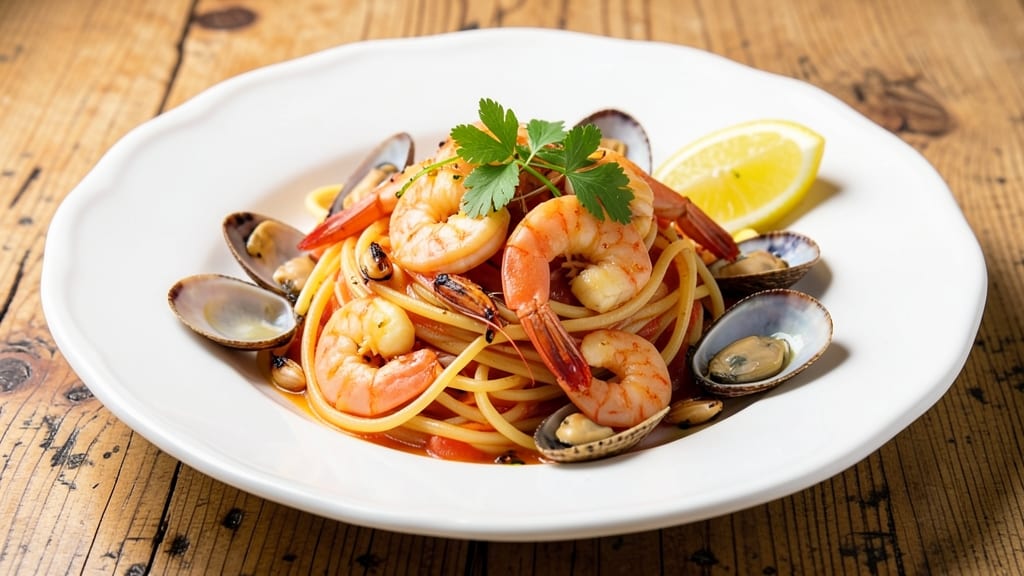
This frutti di mare pasta recipe transforms a simple weeknight dinner into a coastal Italian feast—where tender shrimp, plump mussels, and sweet clams mingle with al dente pasta in a bright lemon-garlic sauce. 🌟 After years of perfecting the balance between delicate seafood and bold flavors, I’ve developed a method that delivers restaurant-quality results in under 45 minutes, using techniques I first learned helping Nonna prepare seafood dishes in our cramped Boston kitchen.
The secret lies in two-step cooking: first steaming the seafood until just tender, then finishing it in a sizzling garlic-white wine broth that infuses every bite with aromatic depth.
Fresh herbs like parsley and basil brighten the sauce, while a squeeze of lemon at the end cuts through the richness, creating a harmony that’s both elegant and approachable. This isn’t just pasta—it’s a celebration of the sea, simplified for home cooks.
By the time you twirl that first forkful, you’ll taste crisp-tender seafood, perfectly al dente pasta, and a sauce so vibrant it tastes like a summer breeze off the Mediterranean.
The shrimp stays pink and sweet, the mussels melt into their briny essence, and the clams release their briny perfume—all while the pasta clings to the sauce like it’s been designed to. This is the kind of dish that turns ordinary dinners into memorable meals.
Serve with a sprinkle of chili flakes for heat or a drizzle of extra virgin olive oil for richness, and pair it with a crisp white wine. The leftovers reheat beautifully, making it perfect for meal prep—though I can’t promise they’ll last that long. Let’s get cooking!
Ingredients for frutti di mare pasta
Fresh seafood meets Italian comfort in this vibrant frutti di mare pasta—where every bite tastes like a seaside escape.
| Ingredient | Amount | Notes |
|---|---|---|
| Large Shrimp (Peeled and Deveined) 🦐 | 1 lb | Medium size, tails on for presentation |
| Fresh Mussels 🦪 | 1 ½ lb | Bearded variety, scrubbed clean |
| Fresh Clams 🦪 | 1 ½ lb | Small to medium, shucked if possible |
| Spaghetti 🍝 | 12 oz | High-quality, al dente preferred |
| Extra-Virgin Olive Oil 🫒 | ½ cup | Liguria-style for fruity flavor |
| Garlic Cloves 🧄 | 6 cloves | Freshly minced, not pre-minced |
| Dry White Wine 🍷 | ½ cup | Pinot Grigio or Sauvignon Blanc |
| Fresh Lemon 🍋 | 1 whole | Juiced and zested, organic preferred |
| Fresh Parsley 🌿 | ¼ cup | Chopped, flat-leaf variety |
| Fresh Basil 🌿 | ¼ cup | Torn, not chopped |
| Chili Flakes 🌶️ | ½ tsp | For finishing, optional |
| Sea Salt 🧂 | 1 ½ tsp | Diamond Crystal preferred |
| Ground Black Pepper 🌶️ | ½ tsp | Freshly cracked |
| Heavy Cream 🥛 | ¼ cup | Full-fat for richness |
The seafood is everything here. Buy from a trusted fishmonger—they’ll clean and shuck the clams for you, saving time. Look for freshly caught shrimp with a sweet aroma and firm texture. Mussels should be tightly closed; discard any that are open. Whole Foods or local seafood markets often have the best selection. If you’re using frozen shrimp, thaw them in cold water first. For clams, soak them in salted water for 20 minutes to purge any sand. The pasta? De Cecco or Barilla are my go-tos—they hold up perfectly to the sauce without getting mushy.
No mussels or clams? Linguine or scallops work beautifully as substitutes. Short on white wine? Dry vermouth or even chicken broth will do in a pinch, but add a splash of lemon to brighten it. The herbs can be swapped too—dried parsley at one-third the amount works if fresh isn’t available. For a richer sauce, add a splash of fish stock or a pat of butter at the end. And if you’re feeling adventurous, toss in some calamari rings for extra texture. The key is keeping everything fresh—seafood cooks fast, so have all your prep work done before starting.
This dish tastes even better the next day, so make extra if you can. Store leftovers in an airtight container with a layer of olive oil on top to keep everything fresh for 2-3 days. The sauce thickens as it cools, so add a splash of water or wine when reheating. For meal prep, portion the pasta and sauce separately—reheat the sauce first, then toss with the pasta to avoid sogginess. And if you’re serving with wine, a crisp Vermentino or Pinot Grigio complements the flavors perfectly.
Why You’ll Love This Recipe
- One-Pot Magic: I swear by this recipe when I’m too tired to wash dishes—just toss everything in one skillet, let the mussels and clams steam open, and boom. The shrimp and spaghetti absorb that briny, garlicky broth like a dream, and cleanup? One spatula, one pan. That’s it.
- Seafood Symphony: The contrast is what gets me—juicy shrimp with that slight snap, plump clams and mussels bursting open, all tangled in al dente pasta. Honestly, the first time I made it, my partner stole half my portion before I even sat down. That’s when I knew I’d be making it again.
- Weeknight or Weekend: This dish works whether you’re feeding just us or a dinner party crowd. Double the seafood for guests, halve it for a cozy Tuesday night. (Yes, even on a Tuesday night.) The spaghetti soaks up any extra broth, so leftovers reheat beautifully—just toss with a splash of olive oil to keep it tender.
- Budget-Friendly Luxury: You’d think seafood pasta would break the bank, but fresh clams and mussels are often cheaper than shrimp alone, and they add insane flavor. I’ll be real: my grocery budget stretches further when I plan meals like this. Plus, the olive oil does double duty—cooking and finishing—so no extra splurges needed.
Step-by-step instructions for seafood-studded al dente pasta
Here’s how to create a vibrant seafood pasta that bursts with Mediterranean flavors.
🍳 Step 1: Cook the Mussels and Clams Until They Open
Clean the 1.5 lb fresh mussels and 1.5 lb fresh clams thoroughly by scrubbing under cold water and removing any beards. Discard any shells that are open or broken. In a large pot, combine the shellfish with 0.5 cup dry white wine and 1.5 tsp sea salt. Add 1 cup water (not from the ingredients list, but necessary for steaming) and bring to a boil over high heat.
Cover the pot and cook for 5-7 minutes until all shells open. You’ll know they’re done when they release their juices and open completely. Discard any shellfish that didn’t open. Remove the shellfish with a slotted spoon and set aside, reserving the cooking liquid. This liquid is packed with seafood flavor—don’t pour it out!
🍳 Step 2: Sauté the Garlic and Seafood in Olive Oil
Heat 0.25 cup extra-virgin olive oil in a large skillet over medium-high heat. Add the 6 minced garlic cloves and sauté for 30 seconds until fragrant but not browned. Add the 1 lb peeled and deveined shrimp and cook for 1-2 minutes per side until they turn pink and opaque.
Add the cooked mussels and clams to the skillet, along with the reserved cooking liquid. Bring to a simmer and cook for 2 minutes to infuse the seafood with the garlic flavor. Remove the skillet from heat and set aside, keeping the seafood warm.
🍳 Step 3: Cook the Spaghetti Al Dente
Bring a large pot of well-salted water to a rolling boil. Add the 12 oz spaghetti and cook according to package instructions until 1 minute shy of al dente. Reserve 1 cup pasta water before draining. The pasta should have a slight bite to it—it’ll finish cooking in the skillet.
Drain the pasta and immediately add it to the skillet with the seafood. Toss everything together to coat the pasta in the garlic-infused oil and seafood juices. This is where the magic happens—each strand of pasta absorbs those incredible seafood flavors.
🥘 Step 4: Finish with Lemon, Herbs, and Cream
Squeeze the juice of the whole fresh lemon over the pasta and seafood mixture. Add the 0.25 cup chopped fresh parsley, 0.25 cup torn fresh basil, 0.5 tsp chili flakes, and 0.5 tsp ground black pepper. Stir everything together and cook for 1-2 minutes to let the flavors meld.
Reduce the heat to low and stir in the 0.25 cup heavy cream. Add 2-3 tablespoons of reserved pasta water if the sauce seems too thick. Taste and adjust seasoning with more sea salt if needed. The sauce should be silky and cling to the pasta beautifully.
🍽️ Step 5: Serve Immediately with Extra Garnishes
Transfer the pasta to serving plates and garnish with additional chopped fresh parsley, torn fresh basil, and a sprinkle of chili flakes. Serve immediately while the pasta is hot and the seafood is still juicy. Each bite should deliver a perfect balance of briny seafood, zesty lemon, and aromatic garlic.
For an extra touch, serve with a wedge of the whole fresh lemon on the side so everyone can add more juice to their liking. This dish is best enjoyed fresh, so don’t let it sit too long—it’s a true celebration of fresh seafood flavors!
Pro Tips For Making Frutti Di Mare Pasta
- STEAM THE SHELLFISH FIRST: Mussels and clams release their briny goodness fastest when steamed in a separate pot for 3–4 minutes—just until they open. I learned this the hard way by tossing them raw into the pasta sauce; they ended up rubbery and underseasoned. Use a splash of white wine (from the recipe) in the steaming water to infuse flavor directly into the broth, which you’ll later reduce into the sauce.
- SALT THE SHRIMP WELL: Large shrimp absorb almost no salt if you just toss them in at the end. Instead, sprinkle them with ½ teaspoon of kosher salt per pound and let them sit for 10 minutes before cooking. This ensures they’re seasoned through, not just on the surface—especially important since they’ll only cook for 1–2 minutes in the final sauce. (Yes, even if you’re impatient like me.)
- DON’T OVERCOOK THE PASTA: Frutti di mare pasta is about al dente noodles and just-cooked seafood, not a mushy mess. Pull the spaghetti 1 minute before package instructions say, then finish cooking it in the hot seafood sauce off the heat for 30 seconds. This locks in texture while letting the flavors meld—no more gummy strands ruining the dish.
- SAVE THE STEAMING LIQUID: After steaming the shellfish, strain the liquid through a fine-mesh sieve to catch any grit or tiny shells, then reduce it by half in a small saucepan. Stir this concentrated broth into your final sauce—it’s the secret to a richer, more cohesive flavor without extra oil or butter. (Your future self will thank you for not pouring it down the drain.)
Best sauces and condiments for this frutti di mare pasta
Lemon-Garlic White Wine Sauce
This is the backbone of your frutti di mare pasta, where the magic happens. Start by sautéing 6 minced garlic cloves in 0.25 cup extra-virgin olive oil until fragrant—don’t let them brown, or they’ll turn bitter.
Deglaze with 0.5 cup dry white wine (Pinot Grigio works perfectly) and reduce by half. Finish with the juice of 1 fresh lemon and a pinch of sea salt. The acidity brightens the seafood flavors while the wine adds depth. 🍋
Spicy Chili Oil Drizzle
For a bold kick, heat 0.25 cup extra-virgin olive oil in a small saucepan with 0.5 tsp red chili flakes and 1 minced garlic clove over low heat for 5 minutes. Strain and drizzle over the finished pasta just before serving.
The heat cuts through the richness of the seafood, and the garlic ties everything together. I keep a jar of this in my fridge for quick flavor boosts—it’s a game-changer for seafood dishes.
Creamy White Wine Reduction
If you prefer a richer sauce, reduce 0.5 cup dry white wine with 0.25 cup heavy cream until it thickens slightly. Stir in 1 tbsp butter and a splash of fish stock> for extra depth.
This sauce clings beautifully to the pasta and balances the briny seafood. For a lighter version, skip the cream and use more reserved pasta water to emulsify the sauce.
Herb-Infused Olive Oil
Blend 0.25 cup chopped fresh parsley, 0.25 cup torn fresh basil, 1 minced garlic clove, and 0.5 cup extra-virgin olive oil in a food processor until smooth. Drizzle over the pasta just before serving to add freshness without overpowering the seafood.
This is my go-to trick for adding herbaceous notes without wilting them in heat. Store any leftover oil in an airtight container for up to 5 days.
Garlic-White Wine Broth
Simmer 0.5 cup dry white wine, 1 cup seafood stock, 3 minced garlic cloves, and 1 sprig fresh thyme for 10 minutes to create a fragrant broth. Strain and use it to finish the pasta, adding richness and complexity.
This is especially useful if your seafood isn’t as flavorful as you’d like—it’s like a flavor multiplier. I often make a double batch and freeze it for future use.
Finishing Touches
Don’t underestimate the power of a good finishing touch. A squeeze of lemon zest adds brightness, while a sprinkle of crispy fried shallots> (store-bought works in a pinch) adds crunch.
For a smoky note, toss in 0.5 tsp smoked paprika> at the end. These small additions elevate the dish from good to unforgettable. 💫
Nutrition facts
Frequently asked questions
What’s the best pasta shape for frutti di mare dishes?
Long, flat noodles like linguine or fettuccine work best—they cradle the seafood beautifully. For extra texture, try rigatoni or penne, which hold onto the sauce and chunks of shrimp or mussels. Avoid delicate shapes like orecchiette, which can break when tossing with shellfish.
Can I use frozen seafood instead of fresh?
Yes, but with adjustments! Thaw frozen shrimp and shellfish in cold water first, then pat dry thoroughly. For mussels and clams, soak them in salted water for 20 minutes before cooking to purge any sand. Frozen seafood works well, but fresh always delivers superior flavor and texture.
How do I know when mussels and clams are done?
They’re perfectly cooked when all shells open during steaming. Discard any that remain closed—they’re unsafe to eat. The cooking liquid should be briny and aromatic, signaling the seafood has released its flavors. If you’re unsure, cut into one to check for opacity (it should be translucent, not rubbery).
What if I don’t have white wine for the recipe?
Use dry vermouth or even chicken broth in a pinch, but add extra lemon juice to brighten the flavor. A splash of apple cider vinegar works too—just reduce the amount by half. The key is acidity to balance the seafood’s richness, so don’t skip this component entirely.
Can I make this dish ahead of time?
Cook the seafood and sauce separately, then combine with pasta just before serving. Store components in airtight containers for 2-3 days. Reheat the sauce gently, then toss with fresh pasta to avoid sogginess. The flavors actually improve overnight as they meld together.

- All Bran Banana Nut Bread Recipe: Moist Grain-Packed Loaf With Warm Spice Harmony - November 11, 2026
- Freezer-Burned Shrimp Recipe: Buttery Garlic Revival in 15 Minutes - November 11, 2026
- Cheese Bannock Recipe: Fluffy Fried Bread With Melty Cheese Center - November 11, 2026