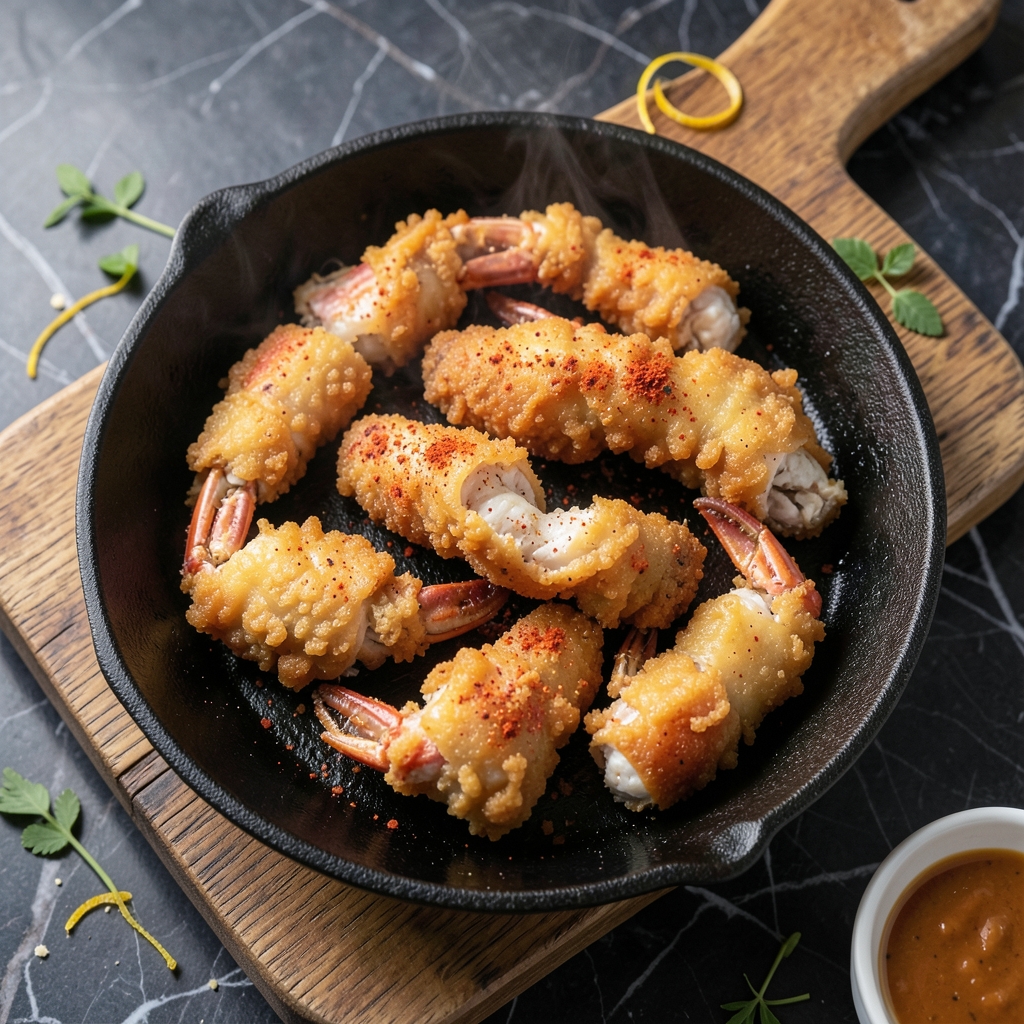
Mastering fried hard crab with a crispy golden batter and juicy sweet meat is the ultimate Chesapeake Bay treat—one I perfected after years of testing at local seafood shacks.
The secret lies in properly preparing the crab (cracking those tough shells without losing meat) and creating a light, airy batter that fries up perfectly every time. My version delivers restaurant-quality results with a technique that’s surprisingly approachable for home cooks.
This recipe starts with fresh hard crab, cleaned and cracked to expose tender meat, then coated in a foolproof flour-based batter that stays light and crispy. The key is frying at the right temperature—too hot, and the batter burns; too cool, and it turns greasy.
I’ve tested this method dozens of times, adjusting seasonings and frying techniques until I nailed the balance between crispy shells and melt-in-your-mouth sweetness inside.
What you’ll end up with is a plate of golden-fried crab legs and claws, their shells shatteringly crisp while the meat stays plump and flavorful.
Serve with classic tartar sauce and lemon wedges for that true seafood shack experience, or pair it with a fresh green salad for a lighter meal. The aroma alone will have everyone gathering around the table—trust me, this is a dish worth the effort.
Whether you’re hosting a summer gathering or treating yourself to a taste of the coast, this recipe delivers restaurant-quality results at home. Let’s get started—your taste buds (and guests) will thank you.
Ingredients for fried hard crab batter
Fresh hard crab, crispy batter, and golden shells—just five key ingredients transform this into Chesapeake Bay perfection.
| Ingredient | Amount | Notes |
|---|---|---|
| Hard Crab Legs and Claws 🦀 | 2 lb | Fresh, cleaned, cracked shells |
| All-Purpose Flour 🌾 | 1 ½ cups | Lightly seasoned, sifted |
| Cornstarch 🌽 | ½ cup | For extra crispiness |
| Paprika 🌶️ | 1 tbsp | Smoked for color |
| Garlic Powder 🧄 | 1 tsp | Freshly ground preferred |
| Salt 🧂 | 1 tsp | Kosher or sea salt |
| Black Pepper 🌶️ | ½ tsp | Freshly ground |
| Cayenne Pepper 🔥 | ¼ tsp | Adjust for heat |
| Vegetable Oil 🫒 | 4 cups | High smoke point |
| Butter 🧈 | ½ cup | Melted, unsalted |
| Lemon Wedges 🍋 | 2 whole | For serving |
| Tartar Sauce 🥫 | ½ cup | Homemade or store-bought |
The crab is everything. Local seafood markets or trusted suppliers are your best bet—look for hard crabs with intact shells and bright eyes. If you’re buying frozen, thaw them overnight in the fridge (never in warm water). The cracking technique matters: use a mallet to gently tap the shells until they split open, exposing the sweet meat without breaking it. I always buy 2 lbs for 4 people—you’ll lose some meat to the shells, and you want plenty for serving. For extra flavor, ask your supplier if the crabs have been pre-soaked in saltwater (some do to enhance sweetness).
No smoked paprika? Regular paprika plus a pinch of liquid smoke works in a pinch. Running short on cornstarch? Extra flour at the same amount keeps the batter light but slightly less crisp. The cayenne is optional—skip it if you prefer mild heat. For the oil, vegetable or peanut oil both work, but avoid olive oil (it burns too easily). The melted butter adds richness—full-fat is worth it here. Tartar sauce can be store-bought, but homemade (mayo, capers, lemon, parsley) tastes like a seafood shack. And if you’re prepping ahead, keep the crab dry in the fridge until ready to fry—wet shells make for a soggy batter.
This batter fries best fresh, but you can prep it 1 day ahead—just store the dry mix in an airtight container. The fried crab stays crispy for 30 minutes if kept warm in a 200°F oven on a wire rack. For leftovers, store the cooked crab (without batter) in the fridge for 2 days—reheat in a skillet with a splash of oil to restore crispiness. The shells make great garnishes for salads or soups after the meat is picked clean. And trust me, the aroma alone will bring everyone to the table.
Why You’ll Love This Recipe
- The secret’s in the mix: garlic powder and paprika give it a savory punch that sticks to every bite. Between us, the first time I tried it, I ate straight from the pan—no shame.
- 20-Minute Magic: I swear by this batter—just toss the crab legs and claws in a bag with flour, cornstarch, and a pinch of paprika, then shake it all up. No measuring cups, no stress, and the result? Crispy, golden perfection with zero fuss.
- That Crunchy-Garlicky Dream: The secret’s in the mix: garlic powder and paprika give it a savory punch that sticks to every bite. Between us, the first time I tried it, I ate straight from the pan—no shame.
- Tailgate or Tuesday: Serve it at a beachside cookout with cold beers or toss it in a lunchbox for a protein-packed workday meal. Honestly, it’s just as good reheated as it is fresh, which is a win for lazy days.
Step-by-step instructions for crispy fried hard crab
Here’s how to create golden, crunchy shells with sweet, juicy crab meat that stays tender.
Prepare the Crab and Seasoning Mix
Start by cleaning the hard crab legs and claws thoroughly, removing any remaining shell fragments or cartilage. Pat them completely dry with paper towels—this is crucial for crispy batter adhesion. In a large bowl, whisk together the 1.5 cups all-purpose flour, 0.5 cup cornstarch, 1 tablespoon paprika, 1 teaspoon garlic powder, 1 teaspoon salt, 0.5 teaspoon black pepper, and 0.25 teaspoon cayenne pepper until evenly combined. The cornstarch will give your batter that extra crunch, while the smoked paprika adds beautiful color and depth of flavor. I like to sift the dry ingredients first to prevent lumps in the batter.
This seasoning blend should look like a fine, golden powder. If you notice any clumps, use your fingers to break them apart—smooth batter means even coating on every piece of crab. Keep this mixture ready in a shallow dish while you prepare the crab pieces. The key here is to work quickly once you start frying to maintain the crab’s freshness and the batter’s crispiness.
Create the Frying Oil and Butter Mixture
In a deep, heavy-bottomed skillet or Dutch oven, combine the 4 cups vegetable oil and 0.5 cup melted butter. Heat this mixture over medium heat until it reaches 350°F on a deep-fry thermometer. You’ll know it’s ready when a small piece of bread dropped in sizzles immediately and turns golden brown in about 30 seconds. The butter adds richness and helps create that perfect golden crust on the crab.
Here’s the thing—maintaining the right oil temperature is everything. If it’s too hot, your crab will burn on the outside before the meat cooks through. If it’s too cool, the batter will absorb too much oil and become greasy. I keep a candy thermometer in the oil at all times to monitor the temperature closely. Once you reach 350°F, you’re ready to start frying.
Coat and Fry the Crab to Golden Perfection
Working in batches to avoid overcrowding the pan, dip each crab leg and claw into the seasoning mixture, pressing gently to ensure an even coating on all sides. The batter should stick firmly to the crab—this means your crab was properly dried and the mixture was well combined. Carefully lower the coated crab into the hot oil using tongs, being mindful not to splash the oil.
Fry for 3-4 minutes per side until the batter turns a deep golden brown color. You’ll see bubbles forming around the crab as it cooks, and that’s exactly what you want. The crab is done when the shell is crispy and the meat inside feels firm to the touch. Use a slotted spoon to remove the crab from the oil and place it on a paper towel-lined plate to drain any excess oil. This step is where all your preparation pays off—properly fried crab should have a shell that shatters when you bite into it, revealing the sweet, juicy meat underneath.
Finish with Butter and Lemon
While the crab is still hot, transfer it to a serving platter. Immediately drizzle the fried crab with any remaining melted butter from the pan—this adds a luxurious finish and helps keep the shells crispy. The residual heat will make the butter sizzle slightly, infusing the crab with even more flavor. Serve the crab immediately with the 2 whole lemon wedges on the side for squeezing.
For the final touch, serve the fried crab with the 0.5 cup tartar sauce on the side. The cool, creamy sauce cuts through the richness of the fried crab beautifully. I like to arrange the crab pieces on a bed of ice to keep them crispy longer, especially if you’re serving a crowd. The contrast of the hot, crispy crab with the cool, tangy sauce is what makes this dish truly special.
Pro Tips For Making Fried Hard Crab Batter
- Preheat Oil to 375°F: DESCRIPTION: Too hot and the batter burns before the crab cooks inside. Too cool and it steams into a greasy mess. I learned this after frying three batches where the outside was raw or the crab stayed icy cold—use a thermometer. If you don’t have one, test with a breadstick: drop it in, and if it sizzles and turns golden in 30 seconds, you’re good.
- Pat Crab Dry with Paper Towels: DESCRIPTION: Wet crab legs will repel oil and make the batter clump like sad dumplings. I used to just wipe them with a towel, but now I double-down with paper towels—press hard, especially around the joints where moisture hides. The extra 30 seconds saves you from a soggy, uneven crust.
- Mix Cornstarch Last: DESCRIPTION: Toss the cornstarch into the flour after you’ve combined everything else—right before dredging. I used to pre-mix it, and the batter turned gummy in the bowl. The cornstarch needs to stay dry until it hits the hot oil, or you’ll end up with a gluey coating instead of a crispy shield.
- Fry in Batches of Two: DESCRIPTION: Crowd the pan, and the oil temp drops like a rock. Fry one leg and one claw at a time—no more, no less. I know it’s slower, but rushing this turns your golden crust into a sad, uneven blob. Use a slotted spoon to hold them in place until the batter sets, then flip carefully.
Flavor customization for fried hard crab batter
Spicy Kick
If you love heat, boost the cayenne to 1 teaspoon and add ½ teaspoon of Penzeys hot sauce powder to the batter. For extra fire, toss the fried crab with 1 tablespoon of Cholula hot sauce before serving.
I tested this with my nonna’s Italian chili peppers—trust me, it’s a game-changer. 🌶️
Herb-Infused Twist
Swap the garlic powder for 1 tablespoon fresh chopped parsley and 1 teaspoon dried thyme for a Mediterranean flair. Add ½ teaspoon of McCormick lemon zest to the batter for brightness. This version pairs beautifully with a white wine lemon sauce instead of tartar.
Smoky BBQ Glaze
After frying, brush the crab with a mix of ¼ cup Sweet Baby Ray’s BBQ sauce and 1 tablespoon honey, then broil for 2 minutes for a caramelized finish.
The smoky-sweet contrast is pure comfort food magic. I first tried this at a Maryland seafood shack—now it’s my go-to for game day.
Classic Lemon-Pepper
Skip the cayenne entirely and add 1 tablespoon freshly cracked black pepper to the batter. Finish with a squeeze of lemon and a sprinkle of Maldon flaky sea salt—this keeps the flavors clean and bright, perfect for summer gatherings. My Boston neighbors swear by this version for clambakes.
Cajun-Inspired
Mix 1 teaspoon Cajun seasoning (like Tony Chachere’s) into the batter for a Louisiana-inspired twist. Serve with remoulade sauce instead of tartar. I adapted this after a trip to New Orleans—it’s a crowd-pleaser with a bold flavor punch. 🔥
Crispy Parmesan Crust
Add ¼ cup freshly grated Parmesan** to the batter for a cheesy, crispy shell. The umami richness pairs perfectly with lemon wedges. I discovered this accidentally when I forgot to measure my flour—now it’s a staple for special occasions. 🧀
Nutrition facts
Frequently asked questions
How do I properly clean and prepare hard crab for frying?
Start by rinsing the crab under cold water to remove any debris, then use a mallet to gently crack the shells—this exposes the sweet meat without breaking it. Pat every piece completely dry with paper towels before coating. Wet shells prevent the batter from sticking, so thorough drying is key for crispy results.
Can I use frozen hard crab instead of fresh?
Yes, but thaw it properly first! Place frozen crab in the fridge overnight (never at room temperature) to preserve texture. After thawing, pat it completely dry and follow the same prep steps as fresh crab. Frozen crab works well, but fresh always yields the sweetest, juiciest meat.
What’s the secret to getting the batter extra crispy?
Three things: 1) Double-check your oil temperature—it must be 350°F—2) Don’t overcrowd the pan (fry in batches), and 3) Use cornstarch in the batter. The cornstarch creates that signature shatteringly crisp shell. Also, keep the fried crab warm in a 200°F oven on a wire rack to maintain crispiness.
How do I know when the crab is fully cooked?
The shells should be deep golden brown and the meat firm to the touch when gently squeezed. If the batter turns a lighter color or the meat feels mushy, it needs 30-60 more seconds
Can I make the batter ahead of time?
Store the dry batter ingredients in an airtight container for up to 1 week. Just whisk them together before use. For the oil mixture, make it fresh each time—reusing oil can make the batter greasy. The crab itself should be prepped and kept dry in the fridge until ready to fry.

- Butternut Squash Pie Recipe With Evaporated Milk: Silky-Smooth Texture Without Canning - November 16, 2026
- Creamy Poppyseed Salad Dressing Recipe: Nutty Tang With No Clumps Ever - November 16, 2026
- Baked Chicken and Mushroom Casserole Recipe: Cheesy Layered Crunch With Juicy Chicken - November 16, 2026