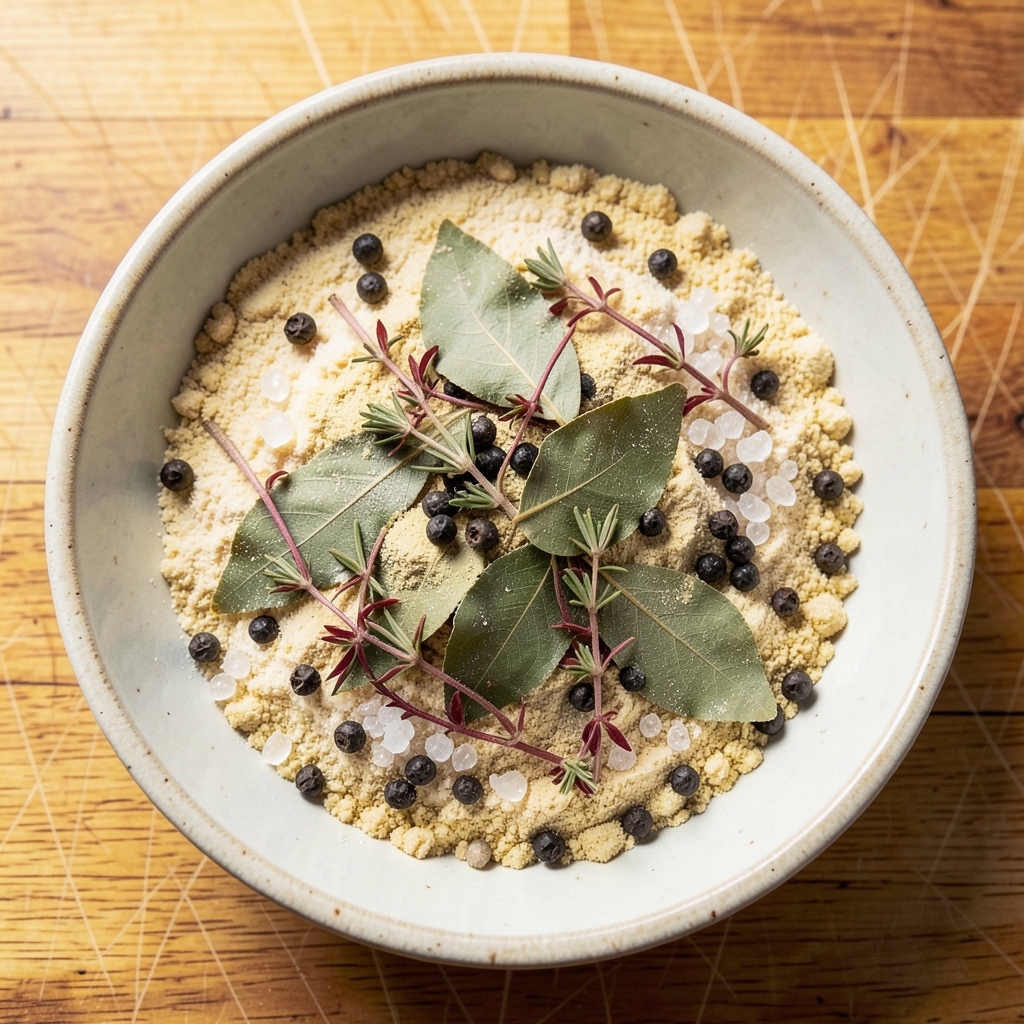
Creating the perfect French onion soup seasoning blend transforms an ordinary pot of soup into something deeply aromatic and complex. This dry spice mix captures the essence of caramelized onions, rich beef broth, and melted cheese—all in a single spoonful.
I developed this blend after years of testing, ensuring every ingredient enhances rather than competes with the signature flavors of the dish.
The foundation of this seasoning relies on classic French herbs and spices: thyme for earthy depth, garlic powder for savory warmth, and black pepper for a subtle kick. A touch of bay leaf adds complexity, while a pinch of sugar balances the richness.
Unlike store-bought versions, this blend is designed to be flexible—adjust the ratios to suit your taste or the depth of your caramelization.
With just 1 tablespoon of this seasoning per quart of broth, you’ll elevate any French onion soup to restaurant-quality in minutes. The spices dissolve effortlessly, infusing every sip with layers of flavor that build as the soup simmers.
Store it in an airtight container for up to 6 months, and you’ll always have the perfect starting point for a comforting bowl.
For those who love experimenting, try adding a pinch of smoked paprika for warmth or fresh thyme for brightness. The blend works equally well in beef stews, braised meats, or even as a dry rub for roasted vegetables. Let’s create depth in every spoonful.
Ingredients for french onion soup seasoning
Nine simple spices that make French onion soup taste like a Paris bistro.
| Ingredient | Amount | Notes |
|---|---|---|
| Dried Thyme 🌿 | 1 ½ tbsp | French thyme preferred |
| Garlic Powder 🧄 | 1 tbsp | Freshly ground preferred |
| Black Pepper 🌶️ | 1 tbsp | Freshly cracked for best flavor |
| Onion Powder 🧅 | 1 tbsp | Fine grind for even distribution |
| Bay Leaves 🍃 | 1 whole | Crushed lightly for stronger flavor |
| Granulated Sugar 🍯 | ½ tbsp | Balances richness |
| Dried Parsley 🌿 | ½ tbsp | For freshness brightness |
| Smoked Paprika 🌶️ | ½ tbsp | Optional for depth (omit for classic) |
| Sea Salt 🧂 | ½ tsp | Fine grain preferred |
Thyme and garlic powder are the backbone—French thyme from Penzeys or bulk bins at Whole Foods makes all the difference. The bay leaves? Crush them lightly before adding to release their oils. I always grab my spices from the bulk section (they stay fresher longer), but the pre-packaged stuff works fine if it’s labeled ‘100% natural’. For smoked paprika, Penzeys or La Boîte have the best quality—it’s worth the splurge if you love that campfire note. The sugar might seem odd, but it cuts through the richness and mimics the caramelization.
No thyme? Dried oregano at half the amount gets you close, but you’ll miss that classic French aroma. Running low on bay leaves? Dried marjoram at one-third the quantity works in a pinch. The sugar can be swapped for honey powder if you’re avoiding refined sugar. For a vegetarian version, skip the smoked paprika and add a pinch of nutmeg instead. Store-bought onion powder? Diamond Crystal is the gold standard—it’s finely ground and potent. If you’re using jarred spices, check the date—anything over 6 months old loses its punch.
This blend keeps like a dream—6-12 months in an airtight container in a cool, dark place. I portion mine into small jars so I always have it ready for quick soups. Freeze extras if you won’t use them within 3 months. The spices dissolve completely in broth, so you won’t find any gritty bits. Want to make a big batch? Double everything and store in a mason jar with a tight seal. It’s perfect for gifting too—just label it ‘French Onion Magic’.
Why You’ll Love This Recipe
- Pantry Magic: I’ll bet you’ve got all this already—just dried thyme, garlic powder, and a sprinkle of black pepper. No last-minute grocery runs, no fancy tools. Honestly, it’s the kind of thing you can pull together while scrolling through your phone.
- Umami Bomb: That onion powder? It’s the secret weapon. When you toast it with a little oil, it turns into this deep, caramelized flavor that makes every bite taste richer. Between us, the bay leaves add that subtle earthiness that takes it from “good” to “I need more.”
- Soup to Salad: Use it in French onion soup, obviously—but I’ve also tossed it into roasted potatoes, sprinkled it on grilled cheese, and even mixed it into mayo for sandwiches. My daughter’s school lunches suddenly got an upgrade, and she doesn’t even know why.
- Lasts Forever: Make a big batch, store it in a jar, and you’ll have it for months. I’ve got a stash from last winter that’s still going strong, and it’s saved me from buying overpriced pre-mixed spices. Plus, it’s cheaper than takeout—win-win.
Step-by-step instructions for French onion soup seasoning
This blend transforms simple ingredients into the soul of classic French onion soup.
Prepare the Bay Leaves
Start by crushing the whole bay leaves lightly between your fingers or with a rolling pin. You want to break them up just enough to release their aromatic oils without turning them into powder. This step is crucial because the whole leaves will infuse the soup with deep, earthy flavor while the crushed pieces ensure even distribution throughout the blend.
Place the crushed bay leaves in a small mixing bowl. I like to use a fine-mesh strainer to catch any tiny pieces that might fall through, but a clean bowl works perfectly too. The bay leaves will form the aromatic base of your seasoning, so don’t skip this preparation—it makes all the difference in the final flavor profile.
Combine the Dry Seasonings
Add all the remaining seasonings to the bowl with the crushed bay leaves. That means adding the 1.5 tablespoons dried thyme, 1 tablespoon garlic powder, 1 tablespoon black pepper, 1 tablespoon onion powder, 0.5 tablespoon granulated sugar, 0.5 tablespoon dried parsley, and 0.5 tablespoon smoked paprika. I always measure these ingredients using a small kitchen scale for precision, but a well-calibrated measuring spoon works just fine.
The smoked paprika is optional if you want a classic version, but I find it adds that extra depth that makes this blend truly special. The sugar might seem unusual, but it balances the richness of the caramelized onions perfectly—don’t skip it. Use a whisk or fork to gently stir everything together until you see no more distinct clumps of individual spices.
Add the Sea Salt and Final Mix
Sprinkle the 0.5 teaspoon sea salt over the mixture. The salt should be fine-grained to distribute evenly. Here’s the thing—this is where you’ll taste the magic coming together. Give everything a final stir, then take a moment to smell the blend. You should detect rich, earthy aromas from the thyme and bay leaves, with warm undertones from the garlic and onion powders.
For best results, transfer the seasoning to an airtight container. I like to use a small glass jar with a tight-sealing lid. Store it in a cool, dark place—like your pantry—for up to 6 months. The flavors will continue to meld and deepen over time, making this seasoning even more complex and delicious with each passing week.
Test Your Seasoning (Optional but Recommended)
Before using your seasoning in a full French onion soup, I recommend testing it on a small batch of caramelized onions. Cook 1 medium onion, thinly sliced, in 2 tablespoons butter over medium-low heat for 25-30 minutes, stirring occasionally. When the onions are golden brown and sweet, add 1 teaspoon of your seasoning blend and cook for another 2 minutes. The flavors should be rich, savory, and perfectly balanced—like a little taste of Paris in every spoonful.
This test ensures your seasoning is well-balanced before you commit to a full recipe. If it needs more salt, add a pinch at a time. If the flavors seem too strong, reduce the amount slightly next time. The goal is that perfect harmony of sweet, savory, and aromatic notes that makes French onion soup unforgettable.
Pro Tips For Making French Onion Soup Seasoning
- CRUSH THE BAY LEAVES: Tear them, don’t fold them—those whole leaves just float and taste like nothing. Pinch them between your fingers to release the oils into the mix, or crush them lightly with a rolling pin. (Yes, it looks like you’re making confetti, but your soup will thank you.)
- TOAST THE THYME FIRST: Heat the dried thyme in a dry pan for 30 seconds until fragrant—this wakes up its flavor before it even hits the soup. Skip this, and you’ll just be adding dried grass notes. (I used to overlook this, but now I double-check.)
- DON’T OVER-SALT THE POWDERS: Garlic and onion powders often come pre-seasoned—check the label. If they’re labeled “salt-free,” add your own black pepper and thyme freely. If not, cut back on the pepper to avoid a salty surprise. (I learned this after one very bitter batch.)
- STORE IT DRY, SEAL IT TIGHT: Keep the seasoning blend in an airtight container away from moisture—humidity turns onion powder into a clump of cement. A small jar with a screw-top works best. (I used a ziplock once and came back to a sad, glued-together mess.)
Troubleshooting your french onion soup seasoning
Overly Strong Flavor
If your seasoning tastes too intense, it’s likely because the spices weren’t fully blended or you used too much. Start by whisking the blend more thoroughly—sometimes the bay leaves or thyme clump together.
For future batches, reduce the thyme by ¼ teaspoon and taste test before scaling up. I’ve found that Penzeys French thyme is more potent than store brands, so adjust accordingly. 💡
Gritty Texture
Grit happens when whole spices aren’t crushed enough, especially the bay leaves. Before mixing, pulse them in a spice grinder for 3-5 seconds or crush them more aggressively with a mortar and pestle.
For the black pepper, use freshly cracked peppercorns—pre-ground pepper loses its texture and can feel gritty. If you’re using jarred spices, sift them through a fine-mesh strainer before blending. ✨
Weak or Bland Taste
Bland seasoning usually means old spices or insufficient caramelization in your onions. Check the expiration dates—spices lose potency after 6 months. For a quick fix, add ½ teaspoon extra garlic powder or a pinch of smoked paprika to boost depth.
If your onions aren’t caramelized enough, cook them longer (up to 45 minutes) on low heat with a splash of water to prevent burning. 🌶️
Uneven Distribution
Uneven flavors occur when spices aren’t mixed thoroughly or the broth isn’t heated enough to dissolve them. Whisk the seasoning blend vigorously before adding it to the broth, and stir constantly while simmering.
For stubborn clumps, sift the blend directly into the broth. If you’re using a slow cooker, add the seasoning in the last 30 minutes of cooking to ensure even distribution. 🔥
Clumping in Storage
Clumps form when moisture gets trapped in the container. Store your seasoning in an airtight glass jar with a silica gel packet or a small bag of uncooked rice to absorb moisture.
If clumps already exist, break them up with a fork and store the jar upside down for 10 minutes to redistribute the spices. For extra insurance, keep the jar in a cool, dark pantry away from the stove. 💫
Broth Too Salty
If your soup tastes overly salty, it’s likely because the broth was already seasoned or the sea salt wasn’t measured precisely. Use a measuring spoon for the ½ teaspoon salt in the blend, and avoid adding extra salt to the broth.
For a quick fix, stir in 1 tablespoon of heavy cream or a pinch of sugar to balance the saltiness. If the issue persists, reduce the salt in future batches by ¼ teaspoon**.
Nutrition facts
Frequently asked questions
Can I use this seasoning for dishes other than French onion soup?
This blend works beautifully in beef stews, braised short ribs, and even as a dry rub for roasted vegetables. The caramelized onion notes complement hearty dishes, while the thyme and garlic add depth to grilled meats. For a vegetarian twist, try it on roasted potatoes or mushroom risotto.
How much seasoning should I use for a 6-quart pot of soup?
For a 6-quart pot, use 1.5 tablespoons of the seasoning blend. Since this is a concentrated mix, start with 1 tablespoon and adjust to taste—you can always add more later. The spices dissolve completely, so you won’t find any gritty bits. If your broth is already heavily seasoned, reduce to 1 teaspoon and taste before serving.
Why does the recipe include sugar in the seasoning?
The ½ tablespoon granulated sugar balances the richness of caramelized onions and beef broth, mimicking the natural sweetness developed during slow cooking. It also helps round out the flavors, preventing the soup from tasting too heavy. Think of it as a subtle flavor enhancer—not a sweetener, but a way to create harmony. For a refined sugar alternative, use honey powder in the same amount.
Can I make this seasoning without smoked paprika?
Yes! The smoked paprika is optional and adds warmth, but you can omit it for a classic profile. If you want extra depth without it, add ¼ teaspoon extra black pepper or a pinch of dried marjoram. The core flavors (thyme, garlic, onion powder) will still shine. For a spicier kick, replace the smoked paprika with ½ teaspoon cayenne pepper instead.
How do I store leftover seasoning for maximum freshness?
Transfer the seasoning to an airtight glass container (like a mason jar) and store it in a cool, dark pantry for up to 6 months. To prevent clumping, add a silica gel packet or a small bag of uncooked rice to absorb moisture. For longer storage, freeze portions in ice cube trays—just break off a cube as needed. Freshly made seasoning tastes best within 3 months.

- Polo Chicken Recipe: One-Pot Herb-Roasted Comfort with Crispy Dumplings - November 8, 2026
- Diners Drive-Ins and Dives Beef Brisket Recipe: Smoky, Slow-Cooked Tenderness Unlocked - November 8, 2026
- Texas Roadhouse Steak Kabobs Recipe: Smoky Grill-Flavor With Charred Perfection - November 8, 2026