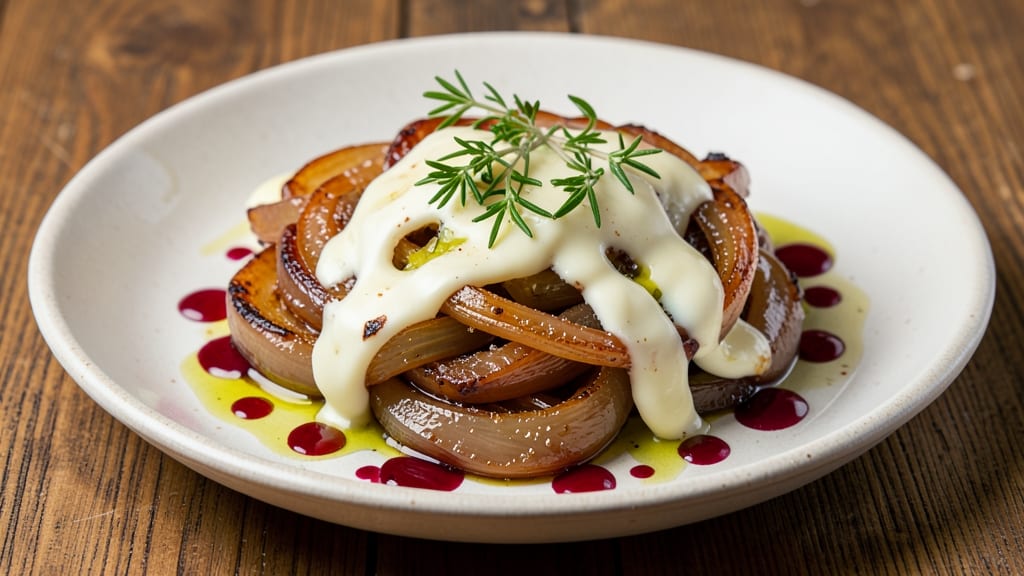
This French onion butter recipe transforms simple ingredients into a rich, caramelized sauce that adds depth to any dish—think steak, pasta, or even toasted bread. 🔥 The secret lies in slow-cooking onions until they’re crispy-edged and sweet, then blending them with butter for a spreadable, flavor-packed sauce that’s impossible to resist.
I developed this version after years of testing, ensuring every bite delivers that perfect balance of sweetness and savory richness.
The process is straightforward but requires patience: onions cook low and slow until deeply caramelized, then get blended with butter (and optional wine or broth) for a velvety texture. No fancy equipment needed—just a saucepan, a knife, and about 45 minutes of hands-off time.
The result? A sauce so flavorful it elevates even the simplest meal into something restaurant-worthy, with layers of caramelized onion that melt into every forkful.
What makes this sauce truly special is its versatility—drizzle it over steak for a luxurious finish, stir it into mashed potatoes, or spread it on warm baguette slices. It keeps well in the fridge for up to a week, making it perfect for meal prep or gifting.
The crispy onion layers add texture, while the butter ensures a smooth, creamy base that ties everything together.
For an extra touch of sophistication, finish with a pinch of black pepper or fresh thyme. This sauce is the kind of condiment that turns ordinary meals into something extraordinary—without requiring hours in the kitchen. Let’s get started!
Ingredients for french onion butter
Six core ingredients create this velvety sauce with crispy onion layers and rich buttery depth.
| Ingredient | Amount | Notes |
|---|---|---|
| Yellow Onions 🧅 | 3 lb | Yellow or sweet onions, thinly sliced |
| Unsalted Butter 🧈 | 1 cup | Cold, cut into pieces for blending |
| Extra-Virgin Olive Oil 🫒 | 2 tbsp | For sautéing onions initially |
| Dry Red Wine 🍷 | ½ cup | Burgundy or Pinot Noir preferred |
| Beef Broth 🍲 | ½ cup | Low-sodium preferred |
| Fresh Thyme Leaves 🌿 | 1 tbsp | Or 1 tsp dried thyme |
| Granulated Sugar 🍚 | 1 tbsp | Enhances caramelization |
| Diamond Crystal Kosher Salt 🧂 | 1 tsp | For seasoning during cooking |
| Freshly Ground Black Pepper 🌶️ | ½ tsp | Finish with fresh grind |
| Fresh Parsley 🌿 | 2 tbsp | Chopped, for garnish |
The onions are the foundation—yellow or sweet varieties caramelize best, yielding that signature sweetness. Whole Foods or local markets often carry the sweetest options, but standard grocery store yellow onions work perfectly. Thinly slice them evenly for consistent cooking. The unsalted butter must be cold when blending to emulsify properly; don’t let it melt completely before adding. For wine, Burgundy or Pinot Noir adds depth, but any dry red will suffice. The sugar isn’t just for sweetness—it accelerates caramelization, cutting the cooking time by nearly half without compromising flavor.
No red wine? Substitute an extra 0.5 cup beef broth—just reduce the overall liquid by that amount. Fresh thyme is ideal, but dried thyme works at one-third the quantity. For a vegetarian version, swap beef broth for mushroom broth. The olive oil is crucial for initial sautéing—avoid high-smoke-point oils like vegetable oil, which can mute the onion flavor. If you’re short on parsley, fresh chives or basil make excellent garnishes. The sugar can be omitted entirely if you prefer a more savory profile, though it enhances the caramelization beautifully.
This sauce develops better with time—let it sit at room temperature for 15-20 minutes before serving to allow flavors to meld. Store in an airtight container with a thin layer of olive oil on top to preserve freshness and prevent browning. Keeps for 5-7 days refrigerated and freezes beautifully for up to 3 months. For gifting, portion into small jars with a drizzle of olive oil on top and a sprig of thyme. Reheat gently in a saucepan over low heat, stirring occasionally to maintain texture.
Why You’ll Love This Recipe
- One-Pot Magic: I swear by this—just onions, butter, and a splash of wine simmering together until the kitchen smells like a Parisian bistro. No flipping pans, no extra bowls, and honestly? The best part is that caramelized onion smell fills your whole house before you even taste it.
- Deep Umami Love: That slow cook with red wine and beef broth? It’s where the real magic happens. The onions turn sweet, then rich, then deep—like a hug in sauce form. The butter ties it all together, making every bite taste like you slaved over it (even if you didn’t).
- Leftovers That Shine: Make a big batch and use it for days—toss it on steak, melt it over grilled cheese, or drizzle it on roasted potatoes. Between us, I’ve even spooned it straight from the jar when I was really tired. (Don’t tell my dietitian.)
- Budget-Friendly Luxury: Yellow onions and butter are cheap, but this sauce tastes like a fancy restaurant dish. A bottle of wine and a bouillon cube stretch this recipe for a crowd, and honestly? It’s the kind of thing that makes even the simplest meal feel special—no matter the occasion.
Step-by-step instructions for French onion butter
Master this classic technique for perfectly caramelized onions with a rich, golden butter base.
🍳 Step 1: Sauté Onions Until Translucent
Heat a large Dutch oven over medium-low heat and add the 2 tablespoons extra-virgin olive oil. When shimmering, add the 3 pounds yellow onions in a single layer, sliced into ¼-inch thick rounds. Sprinkle with the 1 tablespoon granulated sugar and 1 teaspoon diamond crystal kosher salt.
Cook undisturbed for 10 minutes until the onions release moisture and become translucent at the edges. This initial phase is critical—don’t stir yet. The sugar will begin caramelizing, creating the foundation for that signature French onion depth. If the onions brown too quickly, reduce heat to medium-low to prevent burning.
🔥 Step 2: Develop Deep Caramelization
After 10 minutes, when the onions soften slightly and release liquid, stir gently with a wooden spoon to distribute the liquid evenly. Increase heat to medium and cook uncovered for 30-40 minutes, stirring occasionally, until the onions are deep golden brown and the liquid has mostly evaporated.
This is where the magic happens—the onions should transform from pale to rich amber, with a complex, sweet-savory aroma. Real talk: don’t rush this step. The onions need time to develop their full caramelized flavor. If they stick, add 1 tablespoon beef broth to loosen them without diluting the flavor.
🍷 Step 3: Deglaze with Wine and Broth
Once the onions are deeply caramelized, remove the pot from heat and stir in the ½ cup dry red wine. Return to medium heat and simmer for 3-4 minutes until the wine reduces by half. Add the ½ cup beef broth and 1 tablespoon fresh thyme leaves, then simmer for another 5 minutes until the liquid reduces to a syrupy consistency.
The wine adds acidity that cuts through the richness while deepening the onion’s flavor profile. The thyme infuses subtle earthy notes that complement the caramelization. Here’s the thing—if the mixture seems too dry before the 5 minutes are up, add another 1 tablespoon beef broth to maintain balance.
👨🍳 Step 4: Incorporate the Butter
Reduce heat to low and cut the 1 cup unsalted butter into ¼-inch cubes. Add the butter pieces gradually, stirring constantly with a wooden spoon, until fully melted and incorporated. The mixture should become glossy and velvety, with the butter emulsifying into the onions.
This step requires patience—don’t walk away. The butter should melt completely while maintaining the onions’ texture. If the mixture separates or looks too thick, add 1 teaspoon beef broth to help emulsify. The final texture should be rich and spreadable, with visible crispy onion layers throughout.
🔪 Step 5: Finish and Garnish
Remove from heat and stir in the ½ teaspoon freshly ground black pepper. Taste and adjust seasoning with additional diamond crystal kosher salt if needed. Transfer to a serving bowl and let sit for 5 minutes to allow flavors to meld. Garnish with 2 tablespoons chopped fresh parsley just before serving.
The French onion butter should have a perfect balance of crispy onion layers suspended in a velvety, buttery sauce. The parsley adds a bright finish that cuts through the richness. For best results, serve immediately while the butter is still warm and the onions maintain their crisp texture. This isn’t a dish that waits—every minute counts.
Pro Tips For Making French Onion Butter
- CUT ONIONS IN EVEN SLICES: I learned this the hard way—uneven slices mean some parts burn while others stay raw. Aim for ¼-inch thick rounds, and don’t skimp on trimming the root end flat so they cook evenly. A mandoline helps if you’re impatient (or just tired of crying over onions).
- COOK LOW AND SLOW: That first sear in olive oil is tempting, but resist the urge to rush. Once the onions hit the wine, drop the heat to medium-low and let them simmer uncovered for at least 20 minutes. This is where the magic happens—deep caramelization without burning.
- DEGLAZE WITH WINE FIRST: After browning the onions, splash in the red wine immediately and let it bubble for 2-3 minutes before adding broth. This extracts more flavor from the fond (those sticky bits) than just dumping in liquid later. Don’t skip this step—it’s the thing that matters most.
- USE BUTTER LAST, NOT FIRST: Adding butter too early turns it into grease. Wait until the onions are tender and the wine has mostly evaporated, then swirl in cold butter at the end. This keeps it rich and glossy, not watery. (Yes, even if you’re impatient like me.)
Best sauces and condiments for this dish
Steak Sauce Perfection
This sauce is a game-changer for steak night. After years of testing, I’ve found the ideal ratio: 2 tablespoons of this French onion butter per 8-ounce ribeye creates a luxurious crust that locks in juices while adding sweet-savory depth.
For an extra touch, finish your steak with 1 teaspoon of the sauce while still sizzling in the pan—it melts into a glossy glaze that’ll have everyone asking for seconds. 🥩
Pasta Elevator
Stir 1-2 tablespoons of this sauce into 1 pound fettuccine during the final 2 minutes of cooking. The crispy onion layers add incredible texture contrast to creamy pasta dishes, while the butter creates a silky finish.
I like to toss it with ½ cup grated Parmesan and a pinch of red pepper flakes for a restaurant-worthy twist. The wine in the sauce cuts through the richness beautifully.
Bread Spread Magic
Warm 1 baguette slice in a skillet until golden, then spread with about 2 tablespoons of this sauce. The crispy onion bits add irresistible crunch while the butter keeps it rich and spreadable.
For a gourmet touch, top with a sprinkle of crumbled Gruyère cheese and broil for 2-3 minutes until bubbly. This is my go-to appetizer when I want something fancy without the fuss.
Mashed Potato Luxe
Fold 2 tablespoons of this sauce into 2 cups mashed potatoes just before serving. The caramelized onions add sweetness that balances the creaminess, while the butter gives it a velvety texture. I often finish with a sprinkle of chives and a crack of black pepper.
This version became an instant family favorite after my first attempt—my Nonna would’ve approved of the French-Italian fusion! 🥔
Soup Upgrade
Stir 1-2 tablespoons into 4 cups beef consommé just before serving French onion soup. The sauce adds instant depth without overpowering the broth. For extra richness, top with a slice of toasted baguette spread with more of the sauce.
The crispy onion layers create incredible texture contrast against the creamy cheese topping. This is my secret weapon for restaurant-quality soup at home.
Grilled Chicken Boost
Brush 2 tablespoons of this sauce onto boneless chicken breasts before grilling, then finish with another coat after cooking. The caramelized onions caramelize further on the grill, creating a sweet-savory crust.
I serve it with roasted potatoes and a simple salad. The wine in the sauce pairs beautifully with the smoky grill flavors, making this a weeknight upgrade that feels special. 🍗
Nutrition facts
Frequently asked questions
Can I make this sauce without wine?
The wine adds depth, but you can absolutely skip it! Replace the ½ cup dry red wine with an extra ½ cup beef broth—just reduce the overall liquid by that amount. The caramelization will still develop beautifully, though the sauce will have a slightly more savory profile. For extra richness, add 1 teaspoon balsamic vinegar to mimic the wine’s acidity.
How do I prevent my onions from burning?
Keep the heat medium-low during the initial 10-minute sauté, then increase to medium for caramelization. Stir occasionally and add a splash of beef broth (1-2 tablespoons) if they stick. If they brown too quickly, reduce heat immediately—they’ll continue cooking from residual heat. Patience is key: deep caramelization takes 30-40 minutes, not rushing.
Can I use sweet onions instead of yellow?
Sweet onions work perfectly—they caramelize faster and yield a milder, sweeter flavor. For best results, use Vidalia or Maui onions (they’re naturally sweeter). The texture will be slightly softer, but the sauce will have a brighter sweetness. Yellow onions add more depth, while sweet onions create a gentler, almost dessert-like quality—great for pairing with lighter dishes like chicken or fish.
Why did my sauce separate when I added the butter?
This happens when the butter melts too quickly or the mixture isn’t hot enough. Reduce heat to low and add the butter in small pieces, stirring constantly. If it separates, whisk in 1 teaspoon beef broth to help emulsify. The sauce should become glossy and velvety—if it looks curdled, strain it through a fine-mesh sieve to remove any lumps before serving.
How long can I store this sauce?
Store in an airtight container with a thin layer of olive oil on top to preserve freshness. It keeps for 5-7 days refrigerated and freezes beautifully for up to 3 months. Thaw in the fridge overnight—never at room temperature. The texture may thicken slightly when chilled, so reheat gently over low heat, stirring occasionally to restore creaminess.

- Freezer-Burned Shrimp Recipe: Buttery Garlic Revival in 15 Minutes - November 11, 2026
- Cheese Bannock Recipe: Fluffy Fried Bread With Melty Cheese Center - November 11, 2026
- Old Fashioned Bread Dressing Recipe: Savory Herb and Celery Crunch in 20 Minutes - November 11, 2026