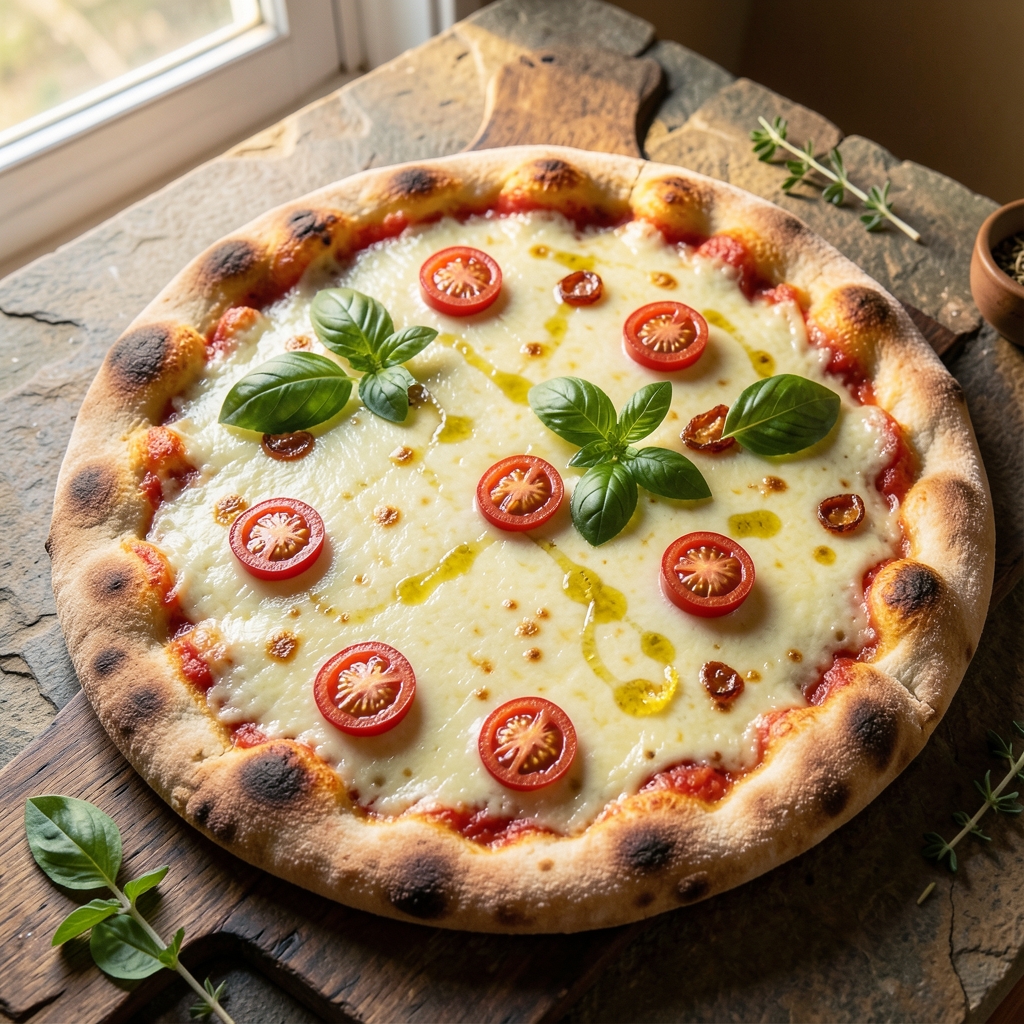
This formaggio pizza recipe delivers the perfect balance of crispy edges and that legendary stretchy cheese pull you crave—just like your favorite Neapolitan pizzeria. 🌟 The secret lies in a high-hydration dough that bakes up airy yet sturdy, topped with a generous layer of mozzarella (and a few cheesy surprises) that melts into golden, elastic perfection.
I developed this after years of testing—including that disastrous Boston apartment pot pie night—because great pizza should be achievable without a wood-fired oven.
The dough starts simple: just flour, water, yeast, and a touch of olive oil, but the magic happens in the fermentation. Letting it rise overnight in the fridge creates those signature air pockets while developing deep flavor.
For the cheese, we use a mix of fresh mozzarella (for stretch) and fontina (for richness), with a sprinkle of parmesan for umami depth. The sauce? Just garlic, olive oil, and a pinch of salt—because sometimes less is more.
By the time it emerges from the oven, you’ll have a pizza with a crispy yet chewy crust, bubbles of melted cheese that resist every pull, and edges that crisp up just enough to hold toppings without falling apart.
The aroma alone will have your kitchen smelling like a Roman trattoria, and each bite delivers that perfect harmony of textures and melty cheese. This is the kind of pizza that makes you forget about delivery menus forever.
Whether you stick to classic Margherita or add mushrooms and prosciutto, the technique remains the same. The dough works with gluten-free flour if needed, and the cheese blend can be adapted for dietary preferences—just keep that stretchy, gooey center intact. Let’s get baking!
Ingredients for formaggio pizza
Four servings of cheesy perfection—crispy edges, stretchy cheese pull, and that Roman trattoria aroma.
| Ingredient | Amount | Notes |
|---|---|---|
| All-Purpose Flour 🌾 | 3 ½ cups | High protein for chewy crust |
| Active Dry Yeast 🍞 | ¼ tsp | Instant yeast works too |
| Granulated Sugar 🍚 | ½ tsp | Feeds yeast for faster rise |
| Extra-Virgin Olive Oil 🫒 | ¾ cup | High quality for flavor |
| Warm Water 💧 | 1 ¼ cups | 110°F for yeast activation |
| Salt 🧂 | 1 ½ tsp | Kosher or sea salt |
| Fresh Mozzarella Cheese 🧀 | 16 oz | Low-moisture works too |
| Fontina Cheese 🧀 | 8 oz | Shredded for richness |
| Parmesan Cheese 🧀 | ½ cup | Freshly grated preferred |
| Garlic Cloves 🧄 | 4 cloves | Minced for garlic oil |
| Semolina Flour 🌾 | ½ cup | For crispy crust edges |
| Cornmeal 🌽 | ¼ cup | Prevents sticking |
| Olive Oil 🫒 | 2 tbsp | For brushing dough |
The flour is your foundation—King Arthur or Caputo make all the difference for that signature chewy crust. Bulk bins at Whole Foods have great options, but any high-protein all-purpose will work. Skip the pre-shredded cheese (it’s full of anti-caking agents)—grate your own mozzarella and fontina for that authentic melt. The yeast needs to be fresh; if it’s been sitting in your pantry for months, grab a new packet. For the garlic oil, use a food processor to mince the cloves—no knife skills required, just pulse until fine. The semolina? Don’t skip it—those crispy edges are everything.
No fresh mozzarella? Low-moisture shredded works in a pinch, but add a paper towel to soak up excess moisture. Fontina hard to find? Gruyère or Emmental are solid swaps—they melt beautifully. Running low on olive oil? Avocado oil has a similar neutral flavor. The dough can be made gluten-free with a 1:1 blend, but texture will be slightly different. For the garlic oil, if you’re short on time, store-bought garlic-infused oil works, but fresh is always better. Prefer less garlic? Halve the cloves and taste as you go.
This dough keeps in the fridge for 3 days or freezes for 3 months—perfect for meal prep. The cheese blend stays fresh for 2 days in the fridge, so prep it the night before. Store the garlic oil in a dark glass jar in the fridge for up to 1 week. For extra crispy edges, brush the dough with olive oil right before baking. Leftovers? Slice and reheat in a 400°F oven for 5-7 minutes—they taste even better the next day.
Why You’ll Love This Recipe
- No Yeast Fuss: I swear by this dough—just flour, yeast, sugar, oil, and water. No kneading, no waiting hours; the yeast does its magic in 30 minutes while I prep toppings or toss a salad. Honestly, my lazy Sundays thank me.
- Cheese Heaven: This isn’t just any pizza crust—it’s a blank canvas for real formaggio magic. The olive oil-infused dough soaks up melted mozzarella, provolone, and a sprinkle of parmesan like a dream. That crispy edge? Chef’s kiss. (Yes, even on a Tuesday night.)
- Weeknight Workhorse: Need dinner in under 45 minutes? Roll out the dough, slap on your favorite cheese, maybe some roasted veggies or charred garlic—done. It’s my go-to for date nights, last-minute guests, or when I’m too tired to think past “carbs.”
- Budget Stretch: Flour, yeast, oil—these are pantry staples that won’t break the bank. A single dough makes two pizzas, and leftovers reheat like a dream. Between us, this is how I feed my family for under $10. (And yes, the kids still ask for seconds.)
Step-by-step instructions for formaggio pizza with cheesy crispy edges
Here’s how to create that perfect cheesy pizza with crispy edges and stretchy, gooey cheese pull.
👨🍳 Step 1: Mix the Dough and Let It Rise
In a large bowl, combine the 3.5 cups all-purpose flour, 1.5 tsp salt, and 0.5 tsp granulated sugar. Make a well in the center and add the 0.25 tsp active dry yeast, then pour in the 0.75 cup extra-virgin olive oil and 1.25 cups warm water. Mix with a wooden spoon until a shaggy dough forms.
Turn the dough onto a lightly floured surface and knead for 8-10 minutes until smooth and elastic. The dough should feel slightly tacky but not sticky. Place it back in the bowl, cover with a damp towel, and let it rise in a warm place for 1-2 hours or until doubled in size. You’ll know it’s ready when you poke it gently and it springs back slowly.
🍳 Step 2: Prepare the Cheese Filling
While the dough rises, shred the 16 oz fresh mozzarella cheese and 8 oz fontina cheese using a box grater or food processor. Finely grate the 0.5 cup parmesan cheese separately. In a small bowl, mix all three cheeses together and set aside.
Heat 2 tbsp olive oil in a small skillet over medium heat. Add the 4 minced garlic cloves and cook for 1-2 minutes until fragrant but not browned. Remove from heat and let cool. This garlic oil will add incredible flavor to your cheese mixture.
🥘 Step 3: Shape and Top the Pizza
After the dough has risen, punch it down gently to release air, then divide it into 4 equal portions. Roll each portion into a 12-inch round on a lightly floured surface. For extra crispy edges, I like to sprinkle 0.25 cup cornmeal on the work surface before rolling.
Preheat your oven to 475°F with a pizza stone or baking sheet inside. Transfer each rolled-out dough to a piece of parchment paper and let it rest for 5 minutes while you prepare the toppings. Spread the cheese mixture evenly over each dough, leaving a ½-inch border for the crispy crust.
🔥 Step 4: Bake to Golden Perfection
Carefully transfer each pizza (with parchment) onto the preheated stone or baking sheet. Bake for 12-15 minutes until the edges are deep golden brown and the cheese is bubbling and beginning to pull in some areas. The crust should be crispy, but the cheese should still be stretchy and gooey in the center.
For that extra crispy edge, I like to sprinkle 0.5 cup semolina flour over the dough before adding cheese. The semolina adds texture and helps create that perfect crispy border. Keep an eye on your pizzas—they can go from perfect to burnt in seconds at this high heat.
⏰ Step 5: Rest and Serve with Style
Remove the pizzas from the oven and let them rest for 2-3 minutes before slicing. This resting period allows the cheese to set slightly and makes slicing much easier. The cheese should still be stretchy and pull when you cut into it—that’s the signature formaggio pizza experience!
Slice each pizza into 8 equal wedges and serve immediately. For extra flair, drizzle with a little more garlic oil and sprinkle with freshly cracked black pepper. This pizza is all about that perfect balance of crispy crust, chewy center, and that irresistible cheese pull with every bite.
Pro Tips For Making Formaggio Pizza
- Use Lukewarm Water: DESCRIPTION: Your yeast won’t wake up with water straight from the tap—aim for 105–110°F (40–43°C). I learned this the hard way when my dough took three hours to rise because the water was too cold. A quick fix: fill a bowl with warm water, let it sit for 5 minutes, then check with your finger—it should feel like bathwater, not a sauna.
- Knead Until Silky: DESCRIPTION: The dough should spring back when poked and feel smooth, not sticky or doughy. After burning my hands on overworked dough (yes, I was impatient), I now knead by hand for 8–10 minutes or use a stand mixer with a dough hook for 5–6 minutes. Stop when it’s elastic—over-kneading makes it tough.
- Skip the Sugar Shortcut: DESCRIPTION: That 1 teaspoon of sugar isn’t just for flavor—it’s yeast food. Omit it, and your dough will rise slower or unevenly. I was skeptical until I tried it; now I measure it precisely and dissolve it in the warm water first so the yeast gets an instant boost.
- Oil the Bowl Right: DESCRIPTION: Lightly coat your rising bowl with olive oil, then toss it with a pinch of flour—this keeps the dough from sticking and adds a subtle flavor. I used to just oil it, but the dough would tear when stretching. Now it slides out like butter. (Yes, even if you’re impatient like me.)
Make-ahead tips for this formaggio pizza
Dough Prep Ahead
I make the dough the night before and let it ferment in the fridge for 12-18 hours—this slow rise develops incredible flavor and makes shaping easier. Just mix the ingredients, cover with plastic wrap, and let it rest on the counter for 1 hour first.
Then transfer to an airtight container and refrigerate. The cold slows fermentation, so it won’t overproof. 🌙
Cheese Mix Prep
Shred all the cheese the day before and store it in a resealable bag in the fridge. The fontina and parmesan keep well for 2 days, while mozzarella stays fresh for 3 days if wrapped tightly in paper towels.
Mix the garlic oil separately and store it in a small jar in the fridge—it’ll keep for 1 week. This way, assembly day is just about shaping and baking. ⏰
Portioning for Perfection
Divide the dough into 4 equal balls (about 8 oz each) and wrap them individually in plastic wrap. Freeze them for 1 hour before rolling—this prevents sticking and makes handling easier.
If using frozen dough, thaw in the fridge overnight. I swear by this trick for restaurant-quality results without the stress. 🍕
Topping Assembly Shortcuts
Pre-measure all toppings into small bowls before baking day. For the classic formaggio version, just keep the cheese blend ready—no sauce needed. If adding toppings like mushrooms or prosciutto, pre-cook them and store in airtight containers.
I like to keep a small bowl of semolina and cornmeal handy for dusting the work surface and dough. 🧂
Baking on Demand
Preheat your oven and pizza stone 30 minutes before baking. Keep the dough balls at room temperature for 1 hour before shaping if they’re cold. For make-ahead pizzas, bake them 1 hour before serving, then reheat in a 350°F oven for 5-7 minutes to restore crispiness.
The cheese stays stretchy this way, and the crust stays perfect. 🔥
Storage Hacks
Leftovers? Store slices in a single layer on a wire rack to prevent sogginess, then cover with foil. Reheat in a 400°F oven for 5 minutes—they taste even better the next day. For longer storage, freeze whole pizzas (unbaked) on a tray, then transfer to a freezer bag.
Bake straight from frozen at 475°F for 15-18 minutes. The cheese pull is just as good! ❄️
Nutrition facts
Frequently asked questions
Can I make this formaggio pizza without a pizza stone?
A pizza stone isn’t essential! Use a baking sheet or even a cast-iron skillet for that crispy crust. Preheat it in the oven for 30 minutes at 475°F to mimic stone-like heat. For extra crispiness, brush the dough with olive oil before baking. A dark-colored metal pan works best to conduct heat evenly.
What’s the secret to getting that perfect cheesy pull?
The magic lies in the cheese blend and baking time. Use a mix of fresh mozzarella (for stretch) and fontina or parmesan (for richness). Bake until the cheese is bubbling but still slightly undercooked in the center—this creates that signature stringy texture. Remove it from the oven when the edges are golden brown but the cheese resists pulling completely.
Can I use this dough for other recipes besides pizza?
This high-hydration dough works perfectly for garlic knots, calzones, or even focaccia. For knots, shape the dough into ropes and bake until golden. For calzones, fold the dough over cheese and toppings, seal tightly, and bake until crispy. The dough’s flexibility makes it ideal for creative adaptations.
Why did my pizza crust turn out too thick or too thin?
Thick crust often means the dough didn’t rest enough after shaping, or you pressed it too hard. Thin crust usually happens when the dough is overworked or rolled too aggressively. For perfect thickness, roll the dough gently to about 1/4-inch thickness and let it rest 5 minutes before adding toppings. The dough should spring back slightly when touched.
How can I make this pizza gluten-free?
Replace the all-purpose flour with a 1:1 gluten-free flour blend (like Bob’s Red Mill or King Arthur). Add 1 tsp xanthan gum to help bind the dough. The texture will be slightly different—expect a denser crust—but the cheesy center will still shine. For best results, use a blend with higher protein content to mimic traditional dough structure.

- Shawarma Recipe: Smoky Spiced Chicken With Crispy Pita Layers - November 17, 2026
- Alna Store Banana Bread Recipe: Moist Crumb and Walnut-Studded Magic - November 17, 2026
- Steam Banana Cake Vietnamese Recipe: Light and Fluffy with Pandan Fragrance - November 17, 2026