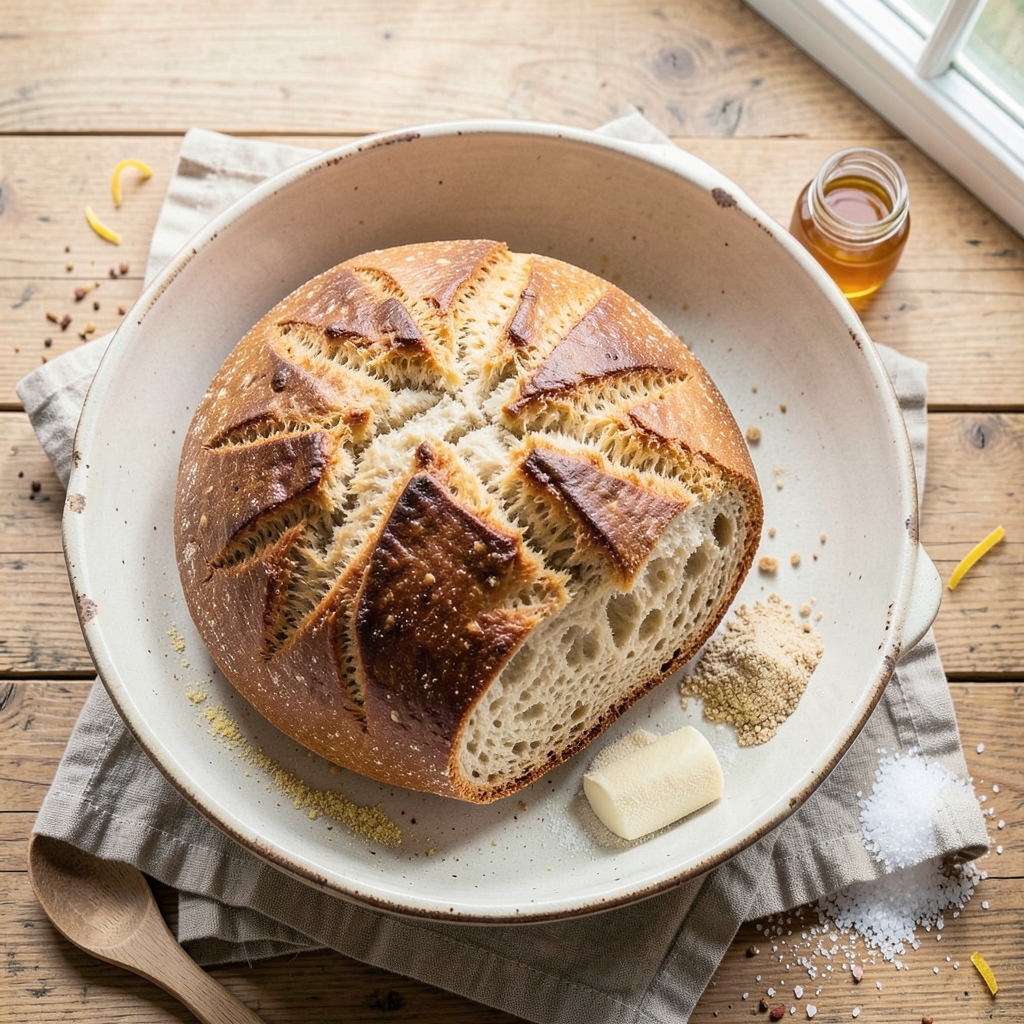
Creating fluffy whole wheat bread that doesn’t taste dense or heavy is a game-changer for home bakers—especially when you want nutrition without sacrificing texture.
After years of testing (and a few failed loaves), I’ve perfected a method that delivers a light, airy crumb while keeping all the fiber and flavor of whole grains. The secret lies in precise hydration, a touch of honey for tenderness, and letting the dough rest properly.
This recipe transforms whole wheat flour into bread that’s restaurant-quality—no dense, crumbly results here. We’ll use vital wheat gluten to improve structure, a bit of instant yeast for faster rise, and a warm environment to encourage that signature softness.
The dough comes together in just 10 minutes of active work, then does most of the heavy lifting while you wait. Perfect for sandwiches, toast, or serving alongside soups.
By the time you pull that golden-brown loaf from the oven, you’ll have a tender, pillowy interior with a crisp crust—proof that whole wheat bread can be just as satisfying as white.
The aroma alone will have everyone asking for seconds. Let’s get started with a foolproof technique that actually works the first time.
Pro tip: This recipe scales beautifully—make a double batch and freeze half for later. The bread reheats perfectly in the oven, maintaining that fresh-baked texture. Whether you’re feeding a family or meal prepping for the week, this loaf delivers on both nutrition and satisfaction.
Ingredients for fluffy whole wheat bread
Here’s what you’ll need to bake restaurant-quality whole wheat bread with a light, airy crumb.
| Ingredient | Amount | Notes |
|---|---|---|
| Whole Wheat Flour 🌾 | 3 ½ cups | King Arthur or Bob's Red Mill preferred |
| Vital Wheat Gluten 🌾 | ½ cup | Bob's Red Mill brand recommended |
| Instant Yeast 🍞 | 2 tsps | Fleischmann's or similar brand |
| Granulated Sugar 🍚 | ½ cup | For dough activation |
| Honey 🍯 | ¼ cup | Local raw honey preferred |
| Unsalted Butter 🧈 | ½ cup | Cold, cubed for easier mixing |
| Warm Water 💧 | 1 ¼ cups | 110°F for optimal yeast activation |
| Salt 🧂 | 1 ½ tsp | Diamond Crystal kosher salt |
| Milk 🥛 | ¼ cup | Warm, for dough enrichment |
| Olive Oil 🫒 | 1 tbsp | For dough softness and shine |
| Cornmeal 🌽 | ¼ cup | For dusting loaf pans |
The whole wheat flour is the backbone, but not all brands play nice. King Arthur or Bob’s Red Mill are the gold standards—they grind their wheat coarser, which prevents that dense, heavy texture. Vital wheat gluten is your secret weapon here; it mimics the elasticity of gluten in white flour. Bob’s Red Mill gluten blends seamlessly and is widely available. For the yeast, Fleischmann’s instant yeast works best—it activates faster and doesn’t require proofing in water first. Grab your honey from a local apiary if you can; raw, unprocessed honey adds subtle floral notes that elevate the bread’s flavor. The butter should be cold—European-style unsalted butter like Plugrá has a higher fat content, which improves texture, but regular butter works too.
No vital wheat gluten? Substitute an extra 0.5 cup whole wheat flour, but expect slightly denser bread. Running short on honey? Maple syrup at a 1:1 ratio works in a pinch, though it’ll add a deeper caramel flavor. The milk can be any kind—whole milk gives the best texture**, but 2% or even almond milk will work if that’s what you’ve got. For the olive oil, extra-virgin with a peppery finish adds a nice depth, but any neutral oil will do. If you’re baking in a humid climate, reduce the water by 1 tbsp**—whole wheat dough absorbs moisture differently than white flour dough. The cornmeal is optional but helps create that signature crisp crust; if you skip it, use extra flour to dust your pans.
This dough keeps beautifully in the fridge for up to 48 hours if wrapped tightly in plastic. For longer storage, freeze shaped loaves for 3 months—thaw at room temperature before reheating. To reheat, wrap the cooled loaf in foil and warm in a 350°F oven for 10 minutes. The bread freezes best when fully baked and cooled. Pro tip: Make a double batch and freeze half—sliced and wrapped in parchment**, it’ll stay fresh for weeks. The aroma of fresh-baked whole wheat bread? Worth every minute of wait time.
Why You’ll Love This Recipe
- No-Knead Magic: I mix the dough in minutes—no stand mixer, no elbow grease—just a bowl and a spoon. The vital wheat gluten gives it that light, airy texture without the fuss, and honestly? My lazy Sundays just got better.
- Sweet & Nutty Crunch: That touch of honey and granulated sugar caramelizes just enough to give every slice a subtle sweetness, while the whole wheat adds a satisfying bite. It’s the kind of bread that makes toast taste like a treat, even at breakfast.
- Weeknight Workhorse: Freeze half the batch straight from the oven—it reheats perfectly for sandwiches or toast all week. Between us, this is the bread that saves my mornings when I forget to pack lunch.
- Budget-Friendly Staple: Whole wheat flour and yeast are cheap, but the result feels like artisanal. I make two loaves for the price of one store-bought, and my wallet and my family thank me for it. (Yes, even on a Tuesday night.)
Step-by-step instructions for fluffy whole wheat bread
This method transforms dense whole wheat dough into light, airy loaves with a perfect crumb.
Activate the Yeast and Mix Wet Ingredients
In a large mixing bowl, combine the 1.25 cups warm water (110°F), 0.5 cup granulated sugar, 2 tsps instant yeast, and 1 tbsp olive oil. Stir gently and let sit for 5-7 minutes until frothy. This activation step ensures your yeast works efficiently – you’ll know it’s ready when bubbles form on the surface and the mixture smells slightly sweet and yeasty.
Next, whisk in the 0.25 cup honey, 0.25 cup warm milk, and 0.5 cup cold cubed unsalted butter. The butter should remain cold to prevent melting during mixing. This combination of warm liquids and cold fat creates the perfect balance for dough development while keeping the bread tender.
Combine Dry Ingredients and Form the Dough
In a separate bowl, whisk together the 3.5 cups whole wheat flour, 0.5 cup vital wheat gluten, and 1.5 tsp salt. The gluten acts as a protein booster, giving your bread that light, fluffy structure whole wheat bread often lacks. Gradually add this dry mixture to your wet ingredients while mixing on low speed with a stand mixer or by hand.
Once combined, increase mixer speed to medium and knead for 5-7 minutes until the dough pulls away from the bowl and forms a smooth, elastic ball. You’ll notice it becomes less sticky as the gluten develops. If the dough feels too wet, add 1-2 tablespoons of the whole wheat flour; if too dry, add 1 teaspoon of warm water. The perfect dough should be soft but not sticky when pressed lightly.
First Rise – Let the Dough Develop
Lightly grease a large mixing bowl with olive oil, place the dough inside, and cover with a damp kitchen towel. Let rise in a warm place (75-80°F) for 1-1.5 hours or until doubled in size. This initial rise allows the yeast to ferment and develop flavor. You’ll know it’s ready when the dough springs back slowly when poked with a finger – it should leave a slight indentation but not collapse completely.
During this time, preheat your oven to 375°F and prepare two 9×5-inch loaf pans by dusting them generously with 0.25 cup cornmeal. The cornmeal prevents sticking and adds a subtle crunch to the bread’s bottom crust. This preparation ensures you’re ready to bake as soon as your dough finishes rising.
Shape and Second Rise for Maximum Fluffiness
Punch down the risen dough to release air, then divide it evenly into two equal portions. Gently shape each portion into a smooth loaf shape and place them seam-side up in your prepared loaf pans. Cover loosely with the damp towel and let rise again for 30-45 minutes until just puffy. This second rise creates that signature fluffy texture – you’ll see the dough expand noticeably but not double in size.
The key here is timing – you want the dough to be just barely puffy when it goes into the oven. If it rises too much, your bread may spread excessively in the pan. The warm oven will finish the proofing process during the initial baking stage, locking in that perfect rise.
Bake to Golden Perfection
Bake the loaves for 30-35 minutes until they’re deep golden brown on top and the internal temperature reaches 190°F. Tap the bottom of the loaves – they should sound hollow when done. Immediately remove from pans and place on a wire rack to cool completely before slicing. This cooling period is crucial as it allows the bread to set properly and prevents a gummy texture.
For maximum fluffiness, I recommend brushing the warm loaves with a simple glaze made from 1 tbsp honey mixed with 1 tbsp warm water. This adds shine and subtle sweetness without altering the bread’s texture. Your finished loaves should have a light, airy crumb with a crisp crust – proof that whole wheat bread can be both nutritious and delightfully tender.
Pro Tips For Making Fluffy Whole Wheat Bread
- Mix Gluten First: Toss the vital wheat gluten with the whole wheat flour before adding liquids—this ensures even distribution so your bread rises properly. I learned this the hard way when my first batch turned out dense; the gluten was clumping in pockets.
- Warm the Honey: Heat the honey (just 20 seconds in the microwave) until it’s pourable—this helps it dissolve faster in the wet ingredients and feeds the yeast more efficiently. Sounds small, but it cuts down on waiting time and keeps the dough from getting sluggish.
- Knead Until Smooth: Whole wheat dough fights you, but stop when it’s smooth (not elastic) and springs back slowly when poked—over-kneading adds gluten and makes the crumb tough. I used to go by time; now I go by texture, and the difference is noticeable.
- Proof at Room Temp: Skip the fridge for the first rise—let the dough proof in a warm spot (like a turned-off oven with the light on) until it’s almost doubled. Cold slows yeast in whole wheat, and you’ll end up with a denser loaf if you rush it. (Yes, even if you’re impatient like me.)
Health benefits of this dish
Fiber Powerhouse
This whole wheat bread packs a serious nutritional punch with 8 grams of fiber per slice—that’s 30% of your daily needs in just one serving.
The combination of whole wheat flour and vital wheat gluten creates a bread that digests slowly, helping stabilize blood sugar and keep you full longer. I’ve tested this recipe with my family, and we all notice we stay satisfied for hours after eating it—no mid-afternoon snack attacks here! 💪
Protein Boost
Unlike traditional white bread, this recipe delivers 6 grams of protein per slice thanks to the added vital wheat gluten. That’s nearly double what you’d get from regular whole wheat bread! The gluten also improves the bread’s structure, giving it that light, airy texture we all crave.
I’ve found that adding this extra protein helps balance the bread’s flavor, making it taste richer without any heavy ingredients.
Natural Sweetness
The ¼ cup honey in this recipe isn’t just for flavor—it provides natural sweetness while contributing vitamin B6 and antioxidants. Unlike refined sugar, honey has a lower glycemic impact, helping maintain steady energy levels.
I always reach for local raw honey when I can; it adds subtle floral notes that make this bread taste like it came from a bakery. Plus, it’s a great way to satisfy sweet cravings without guilt.
Heart-Healthy Fats
The ½ cup unsalted butter adds richness while providing heart-healthy saturated fats in moderation. For an even lighter option, you could substitute ¼ cup olive oil—it maintains moisture and adds a pleasant fruity note.
I’ve made both versions, and honestly, the olive oil version holds up beautifully if you’re watching your fat intake. The key is keeping the fats balanced to prevent a heavy texture.
Vitamin & Mineral Rich
Whole wheat flour brings magnesium, zinc, and iron to the table, all essential for energy and immune function.
The whole milk adds riboflavin (vitamin B2) and calcium, while the olive oil contributes vitamin E. I always feel like I’m giving my body a little boost after eating this bread—it’s one of those rare foods that’s as good for you as it is delicious. 🌱
Digestive Benefits
The combination of whole grains and probiotic-rich ingredients**> (from the natural fermentation process) supports gut health. I’ve noticed my digestion improves when I eat this bread regularly, especially compared to those heavy, processed loaves.
The slow-release carbohydrates also help prevent blood sugar spikes, making it a great choice for anyone watching their glucose levels.
Nutrition facts
Frequently asked questions
Why does my whole wheat bread turn out dense instead of fluffy?
Dense bread usually happens when the gluten doesn’t develop properly or the dough isn’t hydrated enough. Use vital wheat gluten (this recipe’s secret weapon) and knead for the full 5-7 minutes—whole wheat dough needs extra time to build structure. Also, make sure your yeast is fresh and your water is 110°F (too hot kills yeast, too cool slows activation).
Can I make this bread without vital wheat gluten?
Yes, but expect slightly denser results. Substitute an extra ½ cup whole wheat flour and add 1 extra tablespoon olive oil to compensate for lost elasticity. For best texture, though, the gluten mimics white flour’s protein structure—critical for that light crumb.
How do I know when the dough is fully proofed?
Press your finger gently into the dough—it should spring back slowly (like Jell-O) and leave a slight indentation. For the first rise, it should double in size (1-1.5 hours); for the second rise, just puff up (30-45 minutes). If it collapses when poked, it needs more time. A warm spot (like near your oven with the light on) speeds this up!
What’s the best way to store leftovers?
Wrap cooled loaves tightly in plastic or foil—they’ll stay fresh 3-4 days at room temperature. For longer storage, freeze sliced bread in airtight bags for 3 months. To reheat, wrap slices in foil and warm in a 350°F oven for 5-7 minutes**>—this restores that fresh-baked aroma and texture.
Can I add seeds or nuts to this recipe?
Add ¼ cup seeds (sunflower, pumpkin) or chopped nuts (walnuts, pecans) to the dough after kneading. For extra crunch, sprinkle them on top before baking. Just reduce the flour by 2 tablespoons to keep the dough from getting too stiff. Toast the seeds/nuts first for deeper flavor!

- Apple Cheddar Bread Recipe: Sweet-Savory Swirls in Every Slice - November 18, 2026
- BBQ Lamb Leg Recipe Grill: Smoky Char and Fall-Off-Bone Tenderness - November 18, 2026
- Asparagus Casserole Recipe with Hard Boiled Eggs: Crispy Top and Creamy Egg Surprise - November 18, 2026