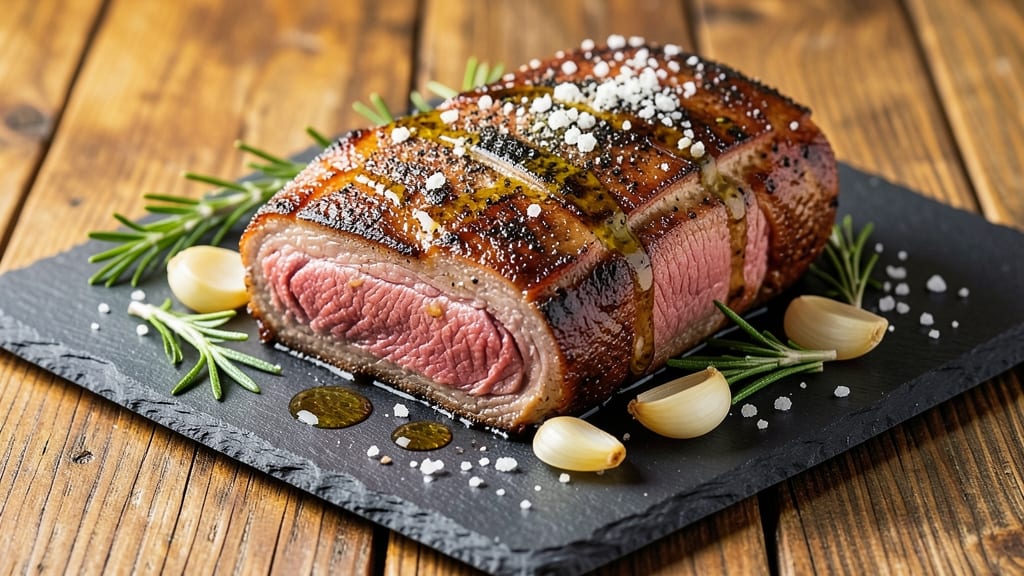
This easiest prime rib roast recipe proves you don’t need a chef’s hat or years of experience—just this foolproof method for a juicy center and crispy crust in 2 hours.
I developed this recipe after years of testing in my Boston kitchen, where space is tight but flavor can’t be compromised. The secret lies in a simple dry brine and precise roasting technique that even beginners can nail every time.
What makes this recipe truly easiest is the minimal prep work—no complicated marinades or basting required. A dry rub of salt, pepper, and garlic powder does the heavy lifting while you let the meat rest overnight, transforming tough cuts into melt-in-your-mouth perfection.
The key is roasting at a high temperature initially to lock in juices, then finishing with a broil for that coveted crust.
By the time you’re done, you’ll have a prime rib that’s tender enough to slice with a fork and crispy enough to stand up to a knife. The aroma alone will have your guests wondering if you’ve been hiding a secret—no one will guess it took just two hours.
This is the kind of centerpiece that turns ordinary dinners into memorable feasts.
Serve with classic sides like roasted potatoes or a simple green salad to complete the meal. The leftovers reheat beautifully too, making this the perfect recipe for gatherings or when you want to impress without stress. Let’s get started on this showstopper!
Ingredients for easiest prime rib roast
Four pounds of prime rib and seven simple seasonings. That’s all you need for restaurant-quality crust and melt-in-your-mouth tenderness.
| Ingredient | Amount | Notes |
|---|---|---|
| Prime Rib Roast (Bone-In) 🥩 | 4 lb | Center-cut, 1.5-2 inches thick |
| Kosher Salt 🧂 | 2 tbsp | Diamond Crystal preferred |
| Freshly Ground Black Pepper 🌶️ | 1 tbsp | Coarse grind for texture |
| Garlic Powder 🧄 | 1 tbsp | Freshly ground preferred |
| Extra-Virgin Olive Oil 🫒 | 2 tbsp | For crust development |
| Fresh Rosemary 🌿 | 1 sprig | For aroma, stems removed |
| Fresh Thyme 🌿 | 1 sprig | Leaves only, stems removed |
| Yellow Onion 🧅 | 1 whole | Quartered, for aromatics |
| Garlic Cloves 🧄 | 4 cloves | Smashed, for flavor |
| Beef Broth 🍲 | 1 cup | Low-sodium preferred |
| Red Wine 🍷 | ½ cup | Dry, like Cabernet |
| Balsamic Vinegar 🍶 | 2 tbsp | For pan deglazing |
| Fresh Horseradish 🌱 | 1 tbsp | Grate fresh for serving |
| Au Jus Gravy 🥄 | ½ cup | Optional for serving |
The prime rib is the star—bone-in, center-cut is non-negotiable for flavor and texture. Costco or Whole Foods usually have it prepped perfectly, but if you’re buying a whole roast, ask for the thickest section possible (1.5-2 inches). I always grab mine from local butchers when they have it on sale—it’s worth the extra few bucks for the quality. Look for bright red color and good marbling; that white fat is what keeps your roast juicy. The kosher salt matters too—Diamond Crystal dissolves better than table salt, giving you that perfect crust.
No fresh rosemary? Dried works at half the amount, but fresh has that piney aroma that makes everything sing. Short on red wine? Beef broth plus a splash of balsamic does the trick—just don’t skip the wine entirely. The horseradish is optional but adds a kick that balances the richness (and it’s fun to serve on the side). For the aromatics, I always use yellow onions—they caramelize beautifully. If you’re in a rush, Trader Joe’s sells pre-smashed garlic cloves that save time. The key is letting the meat rest overnight in the fridge after seasoning—trust me on this—it makes all the difference.
This roast reheats beautifully—wrap tightly in foil and warm in a 300°F oven for 15 minutes. Leftovers keep 3-4 days in the fridge or 3 months frozen. I always slice it against the grain and portion it into individual servings for easy reheating. The au jus gravy? Make extra—it’s perfect over mashed potatoes too. And save those bones! Simmer them with water for a rich broth later.
Why You’ll Love This Recipe
- Four-Ingredient Magic: I swear, this recipe lives up to its name—just salt, pepper, garlic powder, and olive oil. That’s it. No fancy sauces, no stressing over herbs you don’t own.
- Crispy-Perfect Edges: The bone-in cut means the fat renders beautifully, giving you that irresistible crust while the inside stays melt-in-your-mouth tender. Honestly, my kids now ask for “the crispy part” first.
- Weeknight or Holiday: Between us, I’ve served this for date nights and Christmas dinners—same recipe, zero fuss. The garlic powder adds just enough warmth to feel special without needing hours of prep.
- Leftovers That Don’t Suck: Cold slices the next day? Still delicious. Sandwiches? Even better. I’ll be real: I’ve reheated this prime rib three times, and it’s never let me down. That’s a win.
Step-by-step instructions for prime rib roast
Here’s how to achieve that perfect balance of juicy center and crispy crust with minimal fuss.
Prep the Prime Rib for Maximum Flavor
Start by removing the prime rib from the refrigerator and letting it sit at room temperature for 30 minutes. This ensures even cooking throughout. Pat the roast completely dry with paper towels—moisture is the enemy of crispy crust. I can’t stress this enough: dry meat sears better than wet.
In a small bowl, combine the 2 tablespoons kosher salt, 1 tablespoon freshly ground black pepper, and 1 tablespoon garlic powder. Rub this mixture all over the prime rib, including the fat cap. The fat helps create that beautiful crust, so don’t skip this step. Then, place the 1 sprig fresh rosemary and 1 sprig fresh thyme in the cavity of the roast, tucking them in gently. This adds aromatic depth that infuses the meat as it cooks.
Sear the Roast for Irresistible Crust
Preheat your oven to 450°F. Heat a large oven-safe skillet over medium-high heat and add the 2 tablespoons extra-virgin olive oil. Once the oil is shimmering, place the prime rib fat-side down in the skillet. Let it sear undisturbed for 5-7 minutes until the fat is golden brown and crispy. You’ll see the fat render out and the crust develop that beautiful caramelization.
Flip the roast and continue searing for another 3-4 minutes until the other side develops a similar crust. The high heat here is crucial—it locks in juices and creates that restaurant-quality exterior. Once both sides are golden, transfer the skillet to the preheated oven.
Roast to Juicy Perfection
Roast the prime rib for 20-25 minutes at 450°F. This high initial temperature helps create that crispy crust while the interior begins to cook through. After 20-25 minutes, reduce the oven temperature to 325°F and continue roasting for another 1 hour to 1 hour 15 minutes, or until the internal temperature reaches 125°F for medium-rare.
Here’s the thing: prime rib is forgiving, but timing is key. Use a meat thermometer to check the temperature—it should read 125°F at the thickest part of the roast. The roast will continue cooking slightly as it rests, so don’t overcook it in the oven. If the crust starts to lose its crispiness, tent it loosely with foil for the last 15 minutes of cooking.
Create the Pan Sauce
While the prime rib rests, remove it from the oven and let it rest on a cutting board for 15-20 minutes. This resting period allows the juices to redistribute, ensuring every slice is moist and flavorful. Tent it loosely with foil to keep it warm.
Return the skillet to the stovetop over medium heat. Add the 1 whole yellow onion, quartered, and the 4 smashed garlic cloves. Cook for 3-4 minutes until the onions soften. Pour in the 0.5 cup red wine and scrape up any browned bits from the bottom of the pan—this is where all the flavor hides. Simmer for 2-3 minutes until the wine reduces by half.
Add the 1 cup beef broth and 2 tablespoons balsamic vinegar, then bring to a gentle simmer. Let it reduce for 5-7 minutes until the sauce thickens slightly. Strain the sauce through a fine-mesh sieve to remove any solids, then return it to the skillet. Keep it warm until you’re ready to serve.
Slice and Serve with Horseradish Au Jus
Once the prime rib has rested, slice it against the grain into ½-inch thick slices. The grain direction is easy to spot—it runs horizontally across the meat. Slicing against the grain ensures each bite is tender and easy to chew.
Serve the prime rib with the pan sauce spooned over the top. For an extra kick, grate 1 tablespoon fresh horseradish and mix it with the 0.5 cup au jus gravy. Drizzle this horseradish au jus over the slices for a bright, tangy contrast to the rich, savory meat. The combination of crispy crust, juicy interior, and bold sauce makes this prime rib a showstopper every time.
Pro Tips For Making Easiest Prime Rib Roast
- CRANK THE HEAT FIRST: High heat for the first 10 minutes—this isn’t just for looks. The crust seals in juices, and skipping this step means dry prime rib. (Yes, even if you’re impatient like me.)
- SALT THE NIGHT BEFORE: I learned this the hard way—salting right before cooking leaves the surface too wet. Sprinkle the kosher salt evenly on the roast 12-24 hours ahead. It penetrates deeper and makes seasoning foolproof.
- STOP AT 120°F: Pull the prime rib out of the oven when it hits 120°F internal temp—it’ll climb to 130°F while resting. Overcooking ruins the tenderness, and this is the only way to guarantee perfect doneness every time.
- USE THE BONE TO YOUR ADVANTAGE: The bone conducts heat unevenly, so rotate the roast halfway through cooking. Place the bone-side down for the first half, then flip it up for the second half. This evens out the cooking and keeps the meat juicy.
Serving suggestions for leftovers
Classic Holiday Platter
Prime rib is the star of holiday feasts, and this presentation takes it to the next level. Arrange slices on a large platter with the horseradish au jus drizzled artistically around the edges. Add a sprinkle of freshly cracked black pepper and a few rosemary sprigs for a rustic touch.
I like to serve it with crusty baguette slices on the side for soaking up the sauce. For a Boston touch, add a small bowl of whipped horseradish cream—just mix ½ cup sour cream with 1 tbsp grated horseradish and a pinch of salt. 🥂
Elegant Dinner Party
For a more refined look, serve the prime rib on a wooden board with wax paper underneath for easy slicing. Garnish with edible gold leaf flakes (available at craft stores) or a drizzle of truffle oil for a luxurious finish.
Pair with roasted baby potatoes and a simple arugula salad> with lemon vinaigrette. The key is keeping the presentation warm and inviting—use chafing dishes if you’re serving buffet-style. I once served this at a dinner party and had guests asking for the recipe within 20 minutes! ✨
Family-Style Feast
When feeding a crowd, I recommend carving the prime rib directly on the table for maximum drama. Use a sharp carving knife and slice into ½-inch thick portions. Serve family-style with the pan sauce in a gravy boat at the center.
Add steamed green beans> with almonds and creamy mashed potatoes> on the side. For kids (or picky eaters), set aside a few slices and serve with ketchup>—it’s a surprisingly popular combo! 🍽️
Leftovers Reinvented
Don’t let leftovers go to waste—transform them into prime rib sandwiches the next day. Toast ciabatta rolls> and layer with sliced prime rib, caramelized onions>, and a smear of horseradish cream. Wrap in parchment paper and reheat in the oven for 10 minutes> at 350°F.
For a hearty meal, add sautéed mushrooms> and a sprinkle of Gruyère cheese> to melt on top. I often make these for quick lunches during the week—it’s like a gourmet deli sandwich! 💡
Wine and Whiskey Pairings
A bold red wine like Cabernet Sauvignon> or Malbec> complements the richness of prime rib beautifully. For a whiskey lover, pour a glass of bourbon> or rye whiskey> on the side—the caramel notes in the whiskey mirror the roasted flavors of the meat.
I’ve also had great luck with a Port wine> reduction drizzled over the slices for dessert-like indulgence. Just be sure to serve the wine at room temperature for the best experience. 🍷
Make-Ahead Serving Tips
If you’re prepping ahead, slice the prime rib and store it in the fridge for up to 2 days>. Reheat slices in a skillet over medium heat> for 2-3 minutes**> per side to restore crispiness.
For the pan sauce, make it a day ahead and store in the fridge—reheat gently on the stovetop before serving. I always prep the sides (like roasted potatoes) the day before too, so everything comes together smoothly on serving day. Trust me, this saves you from last-minute stress! ⏰
Nutrition facts
Frequently asked questions
Can I use this recipe for a smaller or larger prime rib roast?
This recipe works beautifully for 3-5 pounds of prime rib. For smaller cuts (2 pounds), reduce the roasting time by 10-15 minutes at the lower temperature. For larger roasts (6 pounds), increase the second roasting phase by 15-20 minutes and check the internal temperature frequently. Always use a meat thermometer to avoid overcooking.
Why does the recipe call for resting the meat overnight?
The overnight dry brine is a game-changer! It allows the salt to penetrate deeply, enhancing flavor and tenderness. Plus, it simplifies prep—just season and refrigerate before cooking. Skipping this step can result in a less flavorful crust and slightly drier meat. If you’re short on time, a 4-hour dry brine still works, but overnight is ideal.
What if I don’t have red wine for the pan sauce?
No problem! Substitute with 1 cup beef broth plus 1 tablespoon balsamic vinegar. The acidity from the vinegar mimics wine’s depth, and the broth adds richness. For extra umami, add 1 teaspoon Worcestershire sauce. The sauce will still be delicious—just slightly less complex than wine-based versions.
How do I fix prime rib that’s too dry?
Dry prime rib usually means it was overcooked or didn’t rest properly. To salvage it, slice thinly against the grain and serve immediately with extra pan sauce. For reheating, wrap slices in foil with a splash of beef broth and warm in a 300°F oven for 10 minutes. Avoid microwaving—it makes the meat tougher. Prevention is key: always use a thermometer and rest the meat before slicing.
What’s the best way to reheat prime rib leftovers?
Reheat slices in a skillet over medium heat for 2-3 minutes per side to restore crispiness. For larger portions, wrap in foil with 1 tablespoon beef broth and warm in a 300°F oven for 15 minutes. Never microwave—it turns the meat rubbery. The pan sauce reheats well on the stovetop, but avoid boiling to prevent separation.

- Dilled Beans Recipe: Herbed Brightness in 20 Minutes - November 18, 2026
- Apple Cheddar Bread Recipe: Sweet-Savory Swirls in Every Slice - November 18, 2026
- BBQ Lamb Leg Recipe Grill: Smoky Char and Fall-Off-Bone Tenderness - November 18, 2026