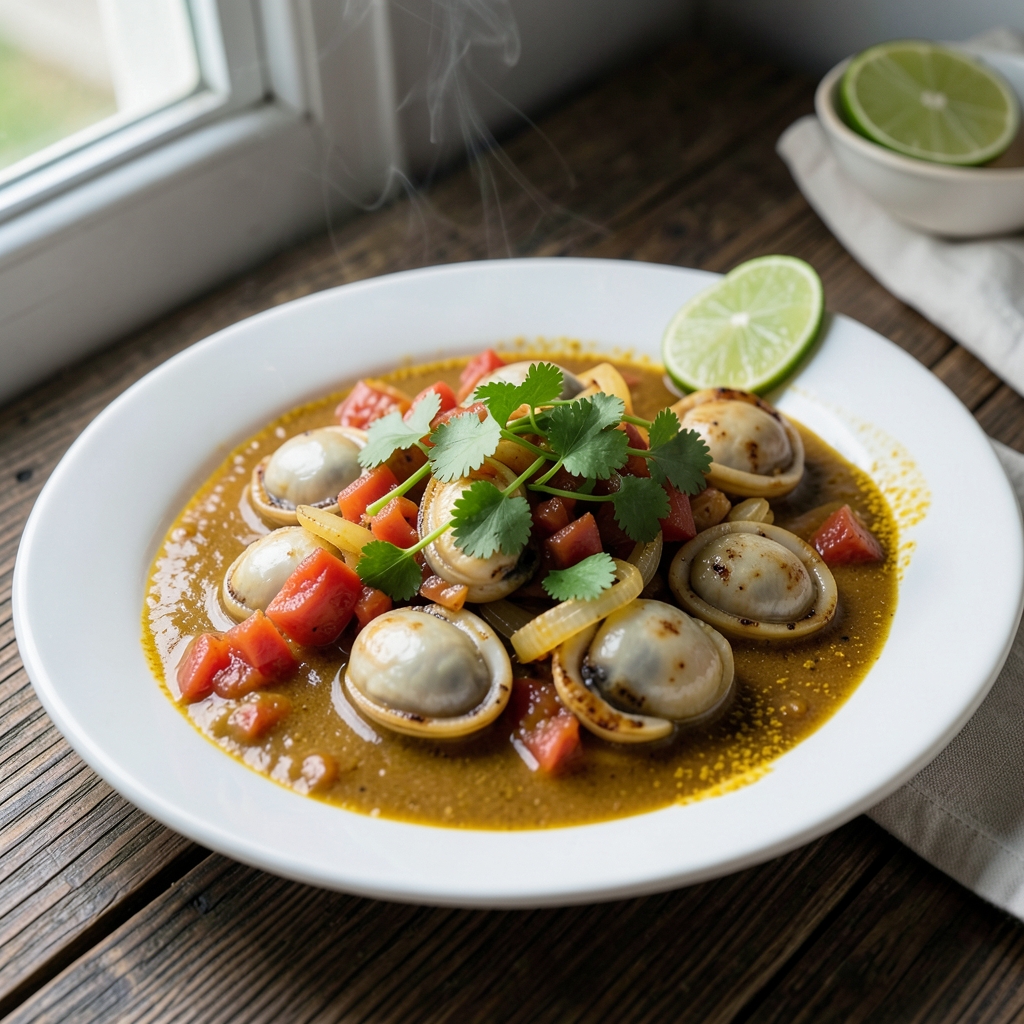
This curried cockles recipe brings coastal comfort to your table with a fragrant tomato-coconut simmer that transforms humble seafood into a restaurant-worthy dish. 🌟 After years of testing seafood recipes in my Boston kitchen, I’ve perfected this method that balances traditional curry spices with creamy coconut for a flavor profile that’s equal parts familiar and exciting.
The secret lies in proper preparation—cockles must be thoroughly cleaned and parboiled to remove grit, then simmered gently in a rich, spiced tomato-coconut broth.
This isn’t just another seafood curry; it’s a dish that builds layers of flavor through careful spice blooming and slow reduction, resulting in tender cockles swimming in a velvety sauce that’s both aromatic and deeply comforting.
What you’ll achieve is a dish that’s rich enough for dinner parties but simple enough for weeknight meals—golden-brown cockles with perfectly balanced spices, their natural brininess mellowed by the coconut and tomato.
The aroma alone will have everyone gathering at the table, while the tender texture makes every bite satisfyingly hearty.
This recipe serves four as a main course, but the leftovers reheat beautifully for lunch the next day. The technique works equally well with mussels or clams if you prefer variety, though cockles deliver that distinctive coastal character. Let’s create this comforting seafood masterpiece together.
Ingredients for curried cockles
Coastal flavors meet aromatic spices in this velvety curried cocktail creation.
| Ingredient | Amount | Notes |
|---|---|---|
| Fresh Cockles 🦪 | 1 ½ lb | Thoroughly cleaned and scrubbed |
| Coconut Milk 🥥 | 1 can (13.5 oz) | Full-fat for creaminess |
| Crushed Tomatoes 🍅 | 1 can (14.5 oz) | San Marzano preferred |
| Yellow Curry Powder 🌶️ | 2 tbsp | High-quality, aromatic blend |
| Fresh Cilantro 🌿 | ¼ cup | Chopped, for garnish |
| Yellow Onion 🧅 | 1 medium | Diced, about 1 cup |
| Fresh Ginger 🌿 | 2 tbsp | Grated, about 1 oz |
| Garlic Cloves 🧄 | 4 cloves | Minced, about 1 tbsp |
| Extra-Virgin Olive Oil 🫒 | 2 tbsp | For sautéing |
| Lemon Juice 🍋 | 2 tbsp | Freshly squeezed |
| Sea Salt 🧂 | 1 ½ tsp | Adjust to taste |
| Ground Black Pepper 🌶️ | ½ tsp | Freshly ground |
| Fresh Thyme 🌿 | 1 tbsp | Leaves only, chopped |
| Heavy Cream 🥛 | ¼ cup | Optional, for richness |
The cockles are the star, so source them fresh from a reputable seafood market—New England Fish Company or your local fishmonger are ideal. Look for cockles that are tightly closed and free of grit; if they’re open, tap them gently and discard any that don’t snap shut. The curry powder must be high-quality; Madras or Berkeley brand work beautifully, but avoid pre-mixed seafood curry blends—they often contain salt and preservatives that can overpower the dish. For the coconut milk, Thai Kitchen brand is a reliable choice, but always shake the can before opening to redistribute the cream. The ginger and garlic should be freshly grated and minced respectively, as pre-minced garlic can turn bitter over time.
No fresh cilantro? Fresh parsley or basil work as garnishes, though the flavor will differ slightly. Running short on yellow curry powder? Turmeric, coriander, and cumin in equal parts can mimic the warmth, though you’ll lose the depth of traditional curry spices. Substituting coconut milk with Greek yogurt or cashew cream works in a pinch, but the texture will be thicker. For the onions, if you only have red or white, use them—just know the flavor will be slightly different. The heavy cream is optional but adds luxurious richness; if omitting, stir in an extra tablespoon of coconut milk at the end for balance.
This dish tastes even better the next day as flavors meld, so double the batch if you’re feeding a crowd. Store leftovers in an airtight container in the fridge for up to 3 days or freeze for 2 months. To reheat, gently warm on the stove with a splash of water or coconut milk to restore creaminess. The sauce thickens as it cools, so thin with a bit of broth or water when reheating. Always serve with crusty bread or steamed rice to soak up the aromatic sauce.
Why You’ll Love This Recipe
- One-Pot Magic: I swear by this—just toss everything into one pot, stir, and let it simmer. No chopping, no fussing, just 20 minutes of hands-off magic while the curry powder and coconut milk work their wonders on those briny cockles.
- Creamy & Spicy Hug: That first bite? Warm, tangy, and just spicy enough to wake up your taste buds. The crushed tomatoes add a bright pop, while the coconut milk makes it rich—like a hug in a bowl, but way more exciting.
- Leftovers That Beg for More: Between us, this dish tastes better the next day. The flavors meld into this deep, velvety goodness, and reheating it is a breeze—perfect for lazy lunches or when you’re too tired to cook again.
- Budget Beach Day: Honestly, this is my go-to when I want something special without breaking the bank. Fresh cockles are cheap, coconut milk adds luxury, and a handful of cilantro ties it all together—no fancy ingredients, just pure satisfaction.
Step-by-step instructions for curried cockles
Here’s how to create a rich, spiced tomato-coconut simmer that delivers coastal comfort in every bite.
🍳 Step 1: Sauté Aromatics Until Fragrant
Heat the 2 tablespoons extra-virgin olive oil in a large, deep skillet over medium heat. Add the diced yellow onion and cook for 5-6 minutes until softened and translucent. You’ll notice the onions release their sweet aroma and begin to caramelize slightly at the edges.
Add the 2 tablespoons grated fresh ginger and 4 minced garlic cloves, stirring constantly for 1 minute until the raw garlic smell disappears. This creates the aromatic foundation for your curry. Keep the heat at medium—too high will burn the garlic before it releases its flavor. The mixture should sizzle gently but not smoke.
👨🍳 Step 2: Build the Spiced Base
Reduce heat to medium-low and stir in the 2 tablespoons yellow curry powder and 1 tablespoon chopped fresh thyme. Cook for 1 minute to toast the spices gently, allowing their essential oils to bloom. You’ll see the mixture darken slightly and smell the warm, earthy aroma of the curry developing.
Pour in the 1 can (14.5 oz) crushed tomatoes and stir well to combine with the spiced aromatics. Let the mixture simmer for 3-4 minutes until slightly thickened. This step develops the tomato base that will carry the flavors throughout the dish. If the mixture looks too thick, add 2 tablespoons water to loosen it slightly.
🍳 Step 3: Simmer with Coconut Milk
Increase heat to medium-high and pour in the 1 can (13.5 oz) coconut milk. Stir well to distribute the coconut cream evenly through the tomato mixture. Bring to a gentle simmer, then reduce heat to low and let it cook uncovered for 5-6 minutes until the coconut milk begins to thicken slightly.
Add the 1.5 teaspoons sea salt and 0.5 teaspoon ground black pepper, stirring to combine. Taste the sauce and adjust seasoning if needed—this is your flavor baseline before adding the cockles. The mixture should be fragrant with warm spices, sweet tomatoes, and creamy coconut. If it’s too acidic, add a pinch more salt; if too bland, a squeeze of lemon juice can brighten it up.
🥘 Step 4: Add Cockles and Simmer Gently
Add the 1.5 lb fresh cockles to the simmering sauce. Stir gently to distribute them evenly, but be careful not to break any shells. Increase heat to medium and let the mixture come to a gentle boil. Once boiling, reduce heat immediately to low-medium and cover the skillet.
Simmer for 8-10 minutes until the cockles open completely. You’ll know they’re done when most shells are ajar and the remaining cockles refuse to open despite gentle prodding. The liquid should reduce slightly, coating the cockles in a rich, spiced sauce. If the sauce becomes too thin, uncover and simmer for another 2-3 minutes to thicken.
⏰ Step 5: Finish and Garnish
Remove the skillet from heat and stir in the 0.25 cup heavy cream (if using) and 2 tablespoons lemon juice. Let the mixture sit for 2 minutes to allow the cream to meld with the sauce. Taste and adjust seasoning one final time—this is where you can really refine the balance of flavors.
Discard any unopened cockles (they won’t cook further). Ladle the curried cockles into serving bowls, garnishing each with 0.25 cup chopped fresh cilantro. Serve immediately with steamed rice or crusty bread to soak up the delicious sauce. The dish should be aromatic, creamy, and packed with the briny sweetness of the cockles balanced by the warm spices.
Pro Tips For Making Curried Cockles
- Scald Cockles First: Toss raw cockles in boiling water for 30 seconds before adding to the curry—this blasts off any grit and ensures they’re clean. I learned this the hard way after biting into a sandy morsel mid-bite.
- Bloom Curry Powder: Toast the yellow curry powder in a dry pan for 30 seconds until fragrant before adding oil. This wakes up the spices and stops them from tasting raw—my grandmother swore by this, and she was right.
- Simmer Gently: Keep the heat low after adding coconut milk—cockles release water, and too much heat turns the sauce into glue. A slow simmer (5-7 minutes) keeps the texture creamy without breaking the curry.
- Finish with Cilantro: Stir in fresh cilantro at the very end—it wilts instantly in heat and loses its brightness. Add it last, and you’ll get that fresh, herbaceous punch that makes the dish sing. (Yes, even if you’re impatient like me.)
Troubleshooting this dish
Undercooked Cockles
If your cockles remain closed or taste rubbery after cooking, they likely need more time. Cockles should open completely when properly cooked—discard any that stay shut. Increase simmer time by 2-3 minutes and check again.
I once had this happen when I rushed the process; now I always set a timer and test one shell with a fork to confirm tenderness. 🌡️
Overly Watery Sauce
A thin, watery sauce usually means the coconut milk wasn’t reduced enough. After adding the cockles, uncover the pan and simmer uncovered for 3-5 extra minutes to thicken. For immediate fixes, stir in 1 teaspoon cornstarch mixed with 1 tablespoon water and simmer for 1 minute.
I keep cornstarch on hand specifically for this—it’s my secret weapon for sauces that won’t cooperate.
Burnt Spices
If your curry powder or aromatics taste bitter, you cooked them too hot. Always toast spices over medium-low heat for just 1 minute—no longer. For burnt garlic, remove the pan from heat immediately and stir in 1 tablespoon fresh lemon juice to cut the harshness.
I learned this the hard way when my first attempt turned my beautiful curry into a bitter disappointment. 🍋
Gritty Cockles
Cockles often contain sand or grit that needs thorough cleaning. Before cooking, rinse them under cold water and scrub with a stiff brush or paper towel. For stubborn grit, soak in cold water for 10 minutes before cooking.
I always do this prep step in my sink—it’s tedious but worth it to avoid gritty bites. Discard any cockles that still feel gritty after cleaning.
Sauce Too Acidic
If the tomato base tastes overly sour, balance it with ½ teaspoon sugar or 1 teaspoon coconut cream from the top of your coconut milk can. For a more complex fix, add 1 teaspoon honey or 1 pinch of cinnamon.
I keep a small jar of honey in my pantry specifically for balancing flavors like this—it’s my go-to sweetener for seafood dishes.
Uneven Cooking
If some cockles cook faster than others, your heat is likely inconsistent. Use a medium-low heat setting and stir gently every 2 minutes to distribute heat evenly. For large batches, consider cooking in two pans.
I once had this happen when I used a small burner—now I always use my largest skillet and the back burner for even heat distribution.
Nutrition facts
Frequently asked questions
What’s the best way to clean cockles before cooking?
Rinse them thoroughly under cold water, then scrub with a stiff brush or paper towel to remove grit. Soak in cold water for 10 minutes if they feel gritty—this helps dislodge stubborn particles. Always discard any that stay open when tapped or feel gritty after cleaning.
Can I substitute cockles with another type of shellfish?
Yes! Mussels or clams work well—they absorb flavors similarly. Use the same weight (about 1.5 lbs) and adjust cooking time to 6-8 minutes instead of 8-10. The sauce will be slightly less briny but still delicious. For a richer texture, add 1 tablespoon butter at the end.
How do I know when the cockles are fully cooked?
They’re done when most shells open naturally and the remaining ones stay shut when tapped. Test one with a fork—it should be tender, not rubbery. Never eat cockles that won’t open, as they may contain bacteria. Cooking time varies by batch, so always check at 8 minutes and adjust.
Can I make this recipe ahead of time?
The flavors improve overnight. Store in an airtight container in the fridge for up to 3 days or freeze for 2 months. Reheat gently on the stove with a splash of water or coconut milk to restore creaminess. The sauce thickens when cold, so thin with broth if needed.
What’s the secret to balancing the spices?
Toast the curry powder over medium-low heat for just 1 minute to bloom the flavors. Taste the sauce before adding cockles—adjust with ½ teaspoon sugar for sweetness or 1 tablespoon lemon juice for brightness. I always taste as I go to avoid overpowering the dish.

- Canned French Cut Green Beans Recipe: Blanched Crisp-Tender in 10 Minutes - November 9, 2026
- Lamb Chops and Mashed Potato Recipe: Herb-Crusted Richness Paired Perfectly - November 9, 2026
- Cool Ranch Pickle Doritos Salad Recipe: Crunchy Chip Base With Creamy Ranch Magic - November 9, 2026