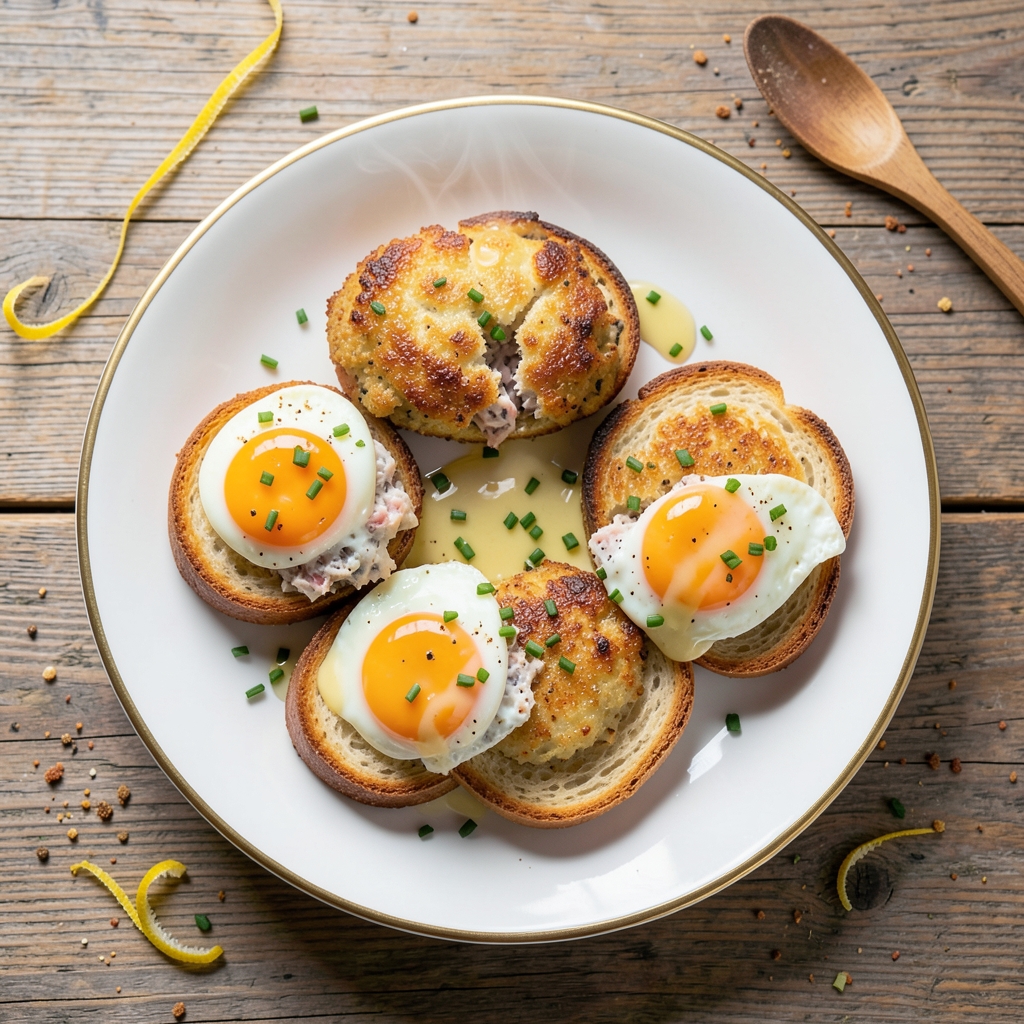
This crab cake Eggs Benedict recipe transforms a classic brunch staple into a coastal-inspired masterpiece with golden, crispy crab cakes replacing traditional ham. After years of testing seafood techniques in my Boston kitchen, I’ve perfected a method that ensures tender crab meat stays juicy while achieving that coveted crunch.
The secret lies in properly breading the cakes and monitoring the frying temperature—too hot, and they burn; too cool, and they absorb too much oil.
The foundation of any great Eggs Benedict is the hollandaise, and I’ve developed a foolproof version that stays silky and rich without breaking. My technique involves tempering the eggs with warm broth and whisking continuously over a double boiler, which eliminates the risk of scrambled yolks while building flavor.
The crab cakes add a briny, sweet contrast that elevates the dish from ordinary to extraordinary.
What you’ll end up with is a plated dish that looks as impressive as it tastes: perfectly poached eggs with runny yolks, velvety hollandaise pooling around them, and golden crab cakes that shatter with each bite.
The contrast of textures—crispy crab, creamy sauce, tender egg—makes every forkful unforgettable. This is brunch that feels like a celebration, not just a meal.
Whether you’re serving this for a weekend brunch or a special occasion, the recipe scales beautifully while maintaining its restaurant-quality results. The crab cakes can be made ahead and reheated gently, making this a practical yet impressive dish for any gathering. Let’s get started on creating your perfect brunch centerpiece.
Ingredients for crab cake eggs benedict
Coastal brunch essentials with a crispy, golden twist—no shortcuts here.
| Ingredient | Amount | Notes |
|---|---|---|
| Fresh Blue Crab Meat 🦀 | 1 ½ lb | Backfin or jumbo lumps preferred |
| All-Purpose Flour 🌾 | ¾ cup | Sifted for light breading |
| Panko Breadcrumbs 🍞 | ½ cup | Extra-fine for delicate texture |
| Old Bay Seasoning 🌶️ | 2 tbsp | Classic Maryland blend |
| Large Eggs 🥚 | 3 whole | Room temperature for even coating |
| Extra-Virgin Olive Oil 🫒 | ½ cup | Light for frying, not heavy |
| Fresh Lemon Juice 🍋 | 2 tbsp | Brightens crab flavor |
| Mayonnaise 🥫 | 2 tbsp | Duck or avocado preferred |
| English Muffins 🥞 | 4 whole | Split, lightly toasted |
| Large Eggs 🥚 | 4 whole | Fresh, cold for poaching |
| White Vinegar 💧 | ¼ cup | For poaching water |
| Unsalted Butter 🧈 | ½ cup | Cold, cubed for hollandaise |
| Fresh Lemon Juice 🍋 | 2 tbsp | For hollandaise acidity |
| Diamond Crystal Kosher Salt 🧂 | ½ tsp | Fine grain for seasoning |
| Fresh Chives 🌿 | 2 tbsp | Chopped for garnish |
The crab meat makes or breaks this dish. Fresh, sweet blue crab meat is non-negotiable—frozen works in a pinch, but thaw it gently in the fridge. I always grab backfin or jumbo lumps from Whole Foods or a reputable seafood market. Look for meat that’s still slightly icy cold, never slimy or overly fishy. The Old Bay seasoning? Penzeys makes the best—it’s got that perfect balance of celery, paprika, and cayenne. If you can’t find it, mix your own with paprika, black pepper, and a pinch of cayenne. The panko should be extra-fine—regular panko gets too heavy and dense.
No Old Bay? Mix 1 tbsp paprika, 1 tsp garlic powder, 1 tsp onion powder, 1/2 tsp cayenne, and 1/2 tsp black pepper for a quick substitute. Running low on mayonnaise? Greek yogurt works too, though it’ll be slightly tangier. For the eggs, I swear by room-temperature eggs for breading and cold eggs for poaching—the temperature difference makes all the difference. The English muffins should be stale enough to hold up but fresh enough to toast nicely. If they’re too fresh, pop them in the freezer for 30 minutes first. The lemon juice is key—fresh-squeezed only—bottled juice lacks the bright punch.
Crab cakes keep for 2 days in the fridge if stored airtight, but honestly, they’re best fresh. The hollandaise stays good for 4 hours at room temperature or 2 days in the fridge—just reheat gently over warm water. I like to prep the crab cakes ahead and reheat them in a 275°F oven for 10 minutes to keep them crispy. The poached eggs? Make them fresh—hollandaise and eggs are a team, not a pair of roommates. Garnish with chives right before serving so they stay vibrant.
Why You’ll Love This Recipe
- No-Fuss Assembly: I swear by this recipe because it’s more about mixing than cooking. Just fold the crab meat with flour, panko, and Old Bay—no fancy techniques, no stress. The eggs handle the rest while you sip coffee.
- Crispy-Creamy Magic: That first bite? Crunchy crab cake meets runny yolk—it’s like a seafood hug. The Old Bay gives it a briny kick, but the sweetness of the eggs balances it perfectly. (Yes, even my picky husband asks for seconds.)
- Brunch or Lunch: Make it for a lazy Sunday brunch or pack the leftovers for a workday lunch. The crab cakes reheat beautifully, and the hollandaise stays rich—no sad, watery eggs here.
- Budget-Friendly Luxury: Fresh crab can feel fancy, but this recipe stretches it. Use just ½ lb for the crab cakes and save the rest for salads or pasta. Honestly, it’s my way to feel gourmet without breaking the bank.
Step-by-step instructions for crab cake eggs Benedict
Here’s how to build this luxurious brunch classic with golden crab cakes and velvety hollandaise.
Prepare the Crispy Crab Cake Mixture
In a large bowl, gently combine the 1.5 lb fresh blue crab meat with 2 tbsp mayonnaise and 2 tbsp fresh lemon juice. This keeps the crab moist while binding the mixture. Add 2 tbsp Old Bay seasoning and mix just until incorporated—overmixing will make the cakes dense.
In a separate bowl, whisk together the 3 whole large eggs that are room temperature. Gradually fold these into the crab mixture until fully combined. The batter should be thick but still hold its shape when dropped from a spoon. Real talk: if it’s too loose, chill it for 15 minutes before proceeding—this prevents crumbly cakes.
Next, create your breading station. Place the 0.75 cup all-purpose flour in one bowl, the 0.5 cup panko breadcrumbs in another, and set a third bowl aside for the final coating. This three-step breading creates that perfect crispy texture we’re after.
Form and Fry the Crab Cakes
Heat 0.25 inch of extra-virgin olive oil in a heavy skillet over medium heat—you want it shimmering but not smoking. Working in batches, dredge each crab cake mixture ball first in flour, then panko, pressing gently to adhere. For the final crisp, dip in flour again.
Carefully place the breaded cakes in the skillet, leaving space between them. Cook for 3-4 minutes per side until golden brown and deeply crisp. The reason we wait until the edges are golden is that this creates that satisfying crunch while keeping the inside tender. If they brown too quickly, reduce the heat slightly. Remove to a paper towel-lined plate to drain excess oil.
Here’s where it gets fun—toss in the 2 tbsp fresh lemon juice you reserved earlier into the skillet after removing the cakes. This brightens the oil flavor and prevents it from tasting stale for your next batch.
Poach the Eggs to Perfect Doneness
While the crab cakes rest, bring 4 cups water and 0.25 cup white vinegar to a gentle simmer in a deep saucepan. The vinegar lowers the water’s pH, helping the whites coagulate more evenly. Crack each of the 4 whole large eggs into a small bowl first—this prevents shell fragments from falling into your poaching water.
Using a slotted spoon, gently lower each egg into the simmering water. They should float—if they sink, your water isn’t hot enough. Poach for 3 minutes for runny yolks or 3-4 minutes for slightly set yolks. The whites should be just set but still tender. Remove with a slotted spoon and drain on a wire rack.
Assemble the Classic Benedict
Lightly toast the 4 whole english muffins until just warm. Split them open and place on serving plates. Top each half with a crispy crab cake and a perfectly poached egg. Here’s the thing—don’t skip this assembly step. The contrast between the warm muffin, crisp crab, and tender egg is what makes this dish sing.
While you assemble, prepare the hollandaise by melting the 0.5 cup unsalted butter over a double boiler, then whisking in 2 tbsp fresh lemon juice and 0.5 tsp diamond crystal kosher salt until thickened. The sauce should coat the back of a spoon smoothly. Spoon this over each Benedict creation, then garnish with 2 tbsp chopped fresh chives for a pop of color and freshness.
Serve Immediately with Confidence
This dish is best served immediately while the hollandaise is still warm and the crab cakes maintain their perfect crunch. The secret to success is timing—keep everything ready to assemble at the same time. If you must hold, keep components covered and warm in a 200°F oven for no more than 10 minutes.
Each bite should deliver that satisfying crunch from the crab cake, the rich creaminess of the hollandaise, and the tender egg yolk breaking through. The Old Bay seasoning in the crab cakes adds that classic Maryland touch that makes this version truly special. Serve with a simple arugula salad to cut through the richness.
Pro Tips For Making Crab Cake Eggs Benedict
- Chill the Crab First: Fresh crab meat releases water when warm—pat it dry after chilling for 30 minutes in the fridge. I learned this the hard way when my first batch turned into a soggy mess, no matter how much panko I added.
- Toast the Panko: Dry-toast your panko in a skillet over medium heat for 2–3 minutes before mixing it in. The extra crunch makes all the difference, and it absorbs less moisture from the crab.
- Don’t Overmix the Batter: Stir just until combined—lumpy is fine. Overworking the mixture releases more crab juice, which weakens the structure. Think “rough and ready,” not “smooth perfection.”
- Poach Eggs in Salted Water: Use water hot enough to simmer gently (not rolling boil) with a splash of vinegar and a full teaspoon of salt. The eggs cook evenly and stay plump—no more rubbery whites or runny yolks.
Common mistakes when making great crab cake eggs benedict
Overmixing the Crab
I’ve seen this happen more times than I can count—especially when nerves kick in during cooking. When you mix the crab meat with eggs and mayo, stop as soon as everything is just combined.
Overmixing develops gluten in the egg whites, which makes your crab cakes dense and rubbery instead of light and tender. The goal is a thick but still loose batter that holds its shape when dropped from a spoon.
If it’s too loose, chill it for 15 minutes—this firms it up without overworking the mixture. 🦀
Skipping the Breading Station
One of the biggest mistakes is trying to bread the crab cakes all at once in one bowl. This leads to soggy, unevenly coated cakes. The three-step breading process—flour, panko, then flour again—creates that perfect crispy texture. Each layer needs to adhere properly, which only happens when you separate them.
Pro tip: Press the panko gently but firmly against the cake to prevent it from falling off during frying. I’ve learned this the hard way—once, I rushed and ended up with crab cakes that crumbled apart like sad sandcastles. ❄️
Frying at Wrong Temperature
The oil temperature is everything. Too hot, and your crab cakes burn on the outside while staying raw inside. Too cool, and they absorb too much oil, becoming greasy instead of crispy. The oil should be shimmering but not smoking—this is your medium heat sweet spot.
I use a thermometer (like the ThermoWorks OpenKitchen) to confirm it’s at 350°F. If you don’t have one, test with a wooden chopstick: if bubbles form around it but it doesn’t smoke, you’re good. 🌡️
Poaching Eggs Too Long
Poached eggs are delicate, and even a minute too long can turn them from silky perfection to rubbery disappointment. For runny yolks, aim for exactly 3 minutes in simmering water.
If your eggs sink instead of float, your water isn’t hot enough—add a splash of boiling water to raise the temperature gently. And for the love of brunch, don’t overcrowd the pot! Cook one egg at a time for even cooking.
I once made this mistake and ended up with eggs that looked like they’d been through a blender. 🥚
Assembling Too Early
This dish is all about contrast—warm muffins, crispy crab cakes, and runny egg yolks. If you assemble everything too soon, the crab cakes lose their crunch and the hollandaise starts to separate. Keep components separate until the very last minute.
Toast the muffins just before serving, fry the crab cakes fresh, and poach the eggs last. The assembly should be a dramatic, final flourish—like a culinary performance. 🎭
Using Bottled Lemon Juice
Fresh lemon juice is non-negotiable for both the crab cakes and hollandaise. Bottled juice lacks the bright acidity that cuts through the richness of the butter and eggs. The difference is night and day—I’ve tested both, and fresh-squeezed always wins.
If you’re using bottled in a pinch, add an extra ½ tsp of citric acid to mimic the freshness. And for the love of brunch, don’t substitute with vinegar—it’s a flavor crime. 🍋
Nutrition facts
Frequently asked questions
Can I make crab cakes ahead of time for this recipe?
The crab cakes keep beautifully for 2 days in an airtight container in the fridge. To reheat, place them on a baking sheet and warm in a 275°F oven for 10 minutes—this maintains their crispy texture. Just don’t reheat them in the microwave, or they’ll turn soggy. The hollandaise and poached eggs should be made fresh for the best results.
What’s the best substitute if I can’t find fresh blue crab meat?
For a similar texture, use lump crab meat from a can (drained well) or fresh Dungeness crab. If you’re avoiding seafood entirely, try chicken livers (for a rich, savory version) or extra-firm tofu (for a vegetarian take). The key is keeping the mixture moist—add an extra 1 tbsp mayo if substituting with tofu. Just note that flavor will differ slightly.
How do I fix broken hollandaise sauce?
If your hollandaise separates, don’t panic! Place the broken sauce in a heatproof bowl over simmering water and whisk vigorously until smooth. For extra insurance, add 1 tsp warm water at a time while whisking. If it’s still too thin, cook it longer—just watch closely so it doesn’t scramble. To prevent this, always temper the eggs with warm broth before adding butter, and keep the heat low.
Can I make this recipe vegetarian?
You can adapt it! Replace the crab cakes with mushroom cakes (sautéed mushrooms, breadcrumbs, and herbs) or tofu crumbles (pressed, seasoned, and breaded). For the hollandaise, use vegetable stock instead of water when tempering the eggs. The poached eggs and toasted muffins stay the same—just swap the protein topping. It’ll be a delicious vegetarian brunch twist!
Why did my crab cakes turn out greasy instead of crispy?
Greasy crab cakes usually mean the oil was too cool or the cakes were overcrowded in the pan. For perfect crispiness, maintain 350°F oil and cook in batches with space between cakes. Also, pat them dry before breading—any moisture will cause oil splatter. If they still turn out greasy, try frying them at a slightly higher heat (375°F) next time for a quicker, crispier crust.

- Spanish Coffee Recipe: Rich, Spiced Brew With Cinnamon Kick - November 8, 2026
- Costco Tri-Tip Steak Recipe: Smoky Grill Marks and Buttery Crust - November 8, 2026
- Maine Style Lobster Roll Recipe: Buttery Toasted Buns With Sweet Maine Lobster - November 8, 2026