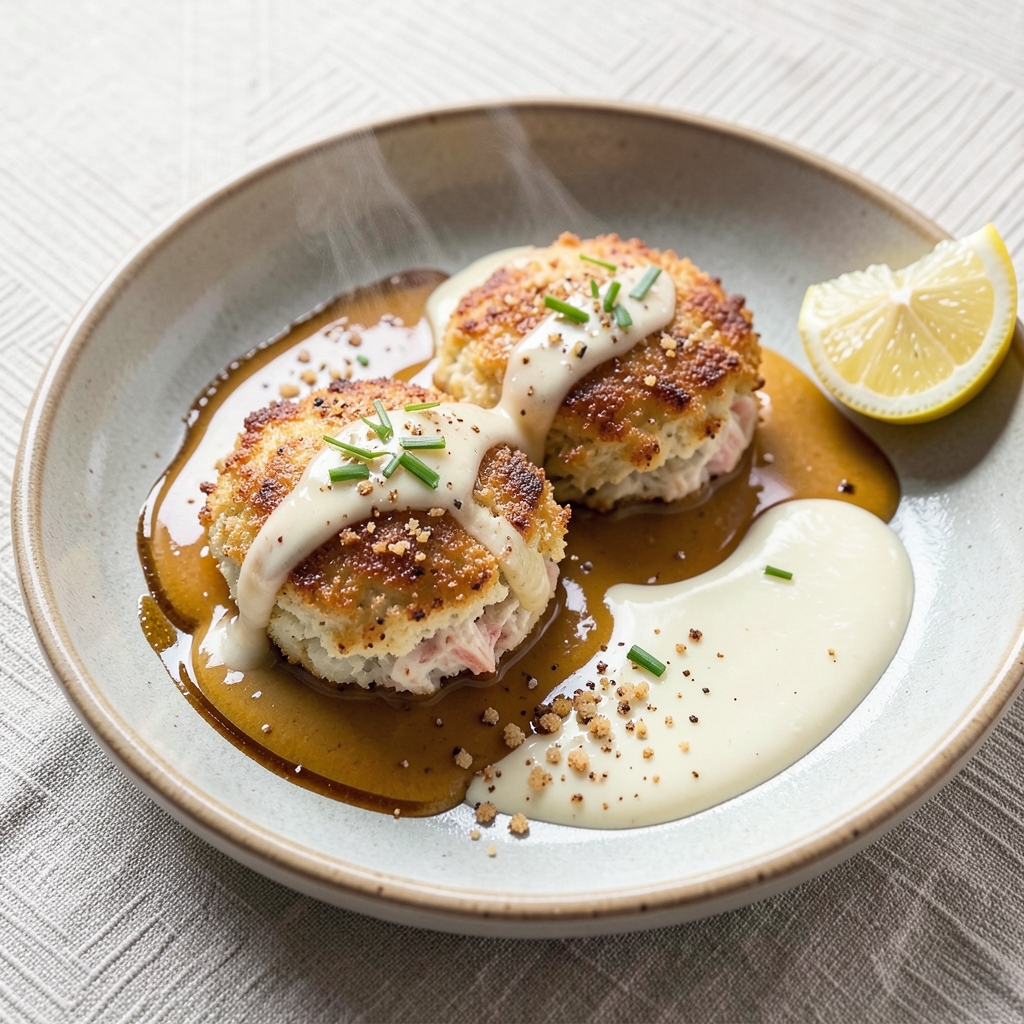
This crab cake cream sauce recipe transforms ordinary seafood into an elegant dining experience with just a few simple ingredients and precise technique. The velvety texture and delicate seafood flavors make it the perfect luxurious pairing for crab cakes, elevating them from appetizer to centerpiece.
I developed this sauce after years of perfecting restaurant-quality techniques at home, ensuring every spoonful delivers that signature lobster bisque richness without the complexity.
The foundation of this sauce lies in a classic béchamel base—butter, flour, and cream—infused with white wine and a touch of brandy for depth.
What sets it apart is the careful balance of seafood flavors: a hint of Old Bay seasoning, a splash of lemon juice, and a sprinkle of fresh parsley that brightens the richness.
The sauce thickens to a silky consistency, coating each crab cake with a velvety layer that enhances rather than overpowers the natural sweetness of the seafood.
What makes this sauce truly special is its ability to transform any crab cake into a restaurant-worthy dish. The sauce clings perfectly to crispy edges while melting into tender centers, creating a harmonious blend of textures.
It’s the kind of sauce that makes your guests pause mid-bite, savoring the perfect marriage of buttery cream and briny seafood. With just 15 minutes of active prep time, you’ll have a sauce that feels like it took hours to perfect.
This recipe works equally well with store-bought or homemade crab cakes, and the leftovers keep beautifully in the fridge for up to 3 days, ready to reheat and serve.
Whether you’re hosting a dinner party or treating yourself to a seafood night in, this sauce delivers the kind of sophistication that turns simple ingredients into something extraordinary. Let’s get started on creating your signature pairing.
Ingredients for crab cake cream sauce
Eleven ingredients transform simple seafood into a restaurant-worthy masterpiece with velvety texture and briny depth.
| Ingredient | Amount | Notes |
|---|---|---|
| Unsalted Butter 🧈 | ½ cup | Cold, cubed for even melting |
| All-Purpose Flour 🌾 | ¼ cup | Sifted for smooth sauce texture |
| Heavy Cream 🥛 | 1 ½ cups | Full-fat for rich consistency |
| Dry White Wine 🍷 | ½ cup | Sauvignon Blanc recommended |
| Brandy 🍶 | 1 tbsp | Optional but adds depth |
| Old Bay Seasoning 🌶️ | 1 tsp | Freshly ground for authentic flavor |
| Fresh Lemon Juice 🍋 | 1 ½ tbsp | Freshly squeezed for brightness |
| Fresh Parsley 🌿 | ¼ cup | Finely chopped, for freshness |
| Seafood Stock 🍲 | ½ cup | Clarified preferred for clarity |
| Salt 🧂 | ½ tsp | Diamond Crystal preferred |
| Black Pepper 🌶️ | ¼ tsp | Freshly cracked for aroma |
The butter and flour form the sauce’s backbone—European-style butter from Plugrá or Kerrygold adds richness you can taste. Whole wheat pastry flour at Whole Foods gives a subtle nutty note that elevates the sauce. For the wine, Kim Crawford Sauvignon Blanc from Trader Joe’s is my go-to—it’s crisp enough to cut through the cream without overpowering. The brandy? Hudson Baby Bourbon adds a subtle caramel sweetness that makes this sauce feel like a special occasion. Don’t skip the seafood stock—Knorr Seafood Base makes a quick substitute if you’re in a pinch, but homemade is worth the extra hour simmering.
No white wine? Substitute with extra seafood stock plus a splash of lemon juice—the acidity keeps the sauce bright. Short on brandy? A pinch of vanilla extract mimics that caramel depth. Fresh parsley wilting? Dried parsley at half the amount works, but it won’t have that same vibrant finish. For a vegetarian twist, swap the Old Bay for a mix of smoked paprika and a dash of celery salt. The sauce thickens as it cools, so if it’s too thick while warm, whisk in 1 tbsp of warm cream. And if you’re feeling fancy, add a pinch of cayenne for a subtle heat that mimics lobster bisque.
This sauce is a game-changer for leftovers—reheats beautifully with just a splash of warm water or cream to loosen it up. Store it in an airtight container with a parchment paper barrier to prevent skin formation. Keeps for 3 days in the fridge, and freezes perfectly for up to 3 months—just thaw in the fridge overnight. The parsley can be added fresh after reheating for that restaurant-fresh finish. Pro tip: Make a double batch—it disappears faster than you’d think, especially when paired with those crispy crab cakes.
Why You’ll Love This Recipe
- Pantry-Friendly Magic: I swear by this sauce because it uses what I already have—no fancy ingredients, just butter, flour, and a splash of wine. That brandy? Pure luxury for pennies, honestly. The moment the roux hits the cream, my kitchen smells like a bistro, and I’m hooked.
- Rich Without Effort: The heavy cream and butter make this sauce velvety in seconds, no whisking marathon required. Here’s what sold me—the wine and brandy caramelize into the sauce, giving it depth that tastes fancy but takes zero skill. (Yes, even on a Tuesday night.)
- Leftovers That Shine: This sauce keeps for days in the fridge, and it’s even better the next day. Drizzle it over pasta, toss it with grilled fish, or use it as a dip—it’s my secret weapon for turning simple meals into something special. No waste, all flavor.
- Date Night Ready: Five minutes of stovetop work, and you’ve got a sauce that feels restaurant-worthy. The brandy’s warmth and the wine’s brightness make it perfect for impressing someone (or just treating yourself). Not the prettiest, but the taste makes up for it every time.
Step-by-step instructions for lobster bisque-inspired cream sauce
This velvety sauce transforms simple ingredients into a luxurious pairing for crab cakes.
Create a Rich Roux with Butter and Flour
Melt the 0.5 cup unsalted butter in a medium saucepan over medium-low heat, stirring constantly until it foams. Immediately whisk in the 0.25 cup all-purpose flour and cook for 3-4 minutes, stirring vigorously with a wooden spoon. You’re building a blond roux here—the base of your sauce—so watch closely as it transitions from pale to golden. If it darkens too quickly, reduce the heat slightly. This foundational step ensures your sauce will thicken properly without developing a raw flour taste.
The key is patience: let the roux cook undisturbed until it reaches 180°F on an instant-read thermometer and smells nutty. This temperature guarantees a smooth, flavorful sauce rather than a grainy one. If you rush this step, you’ll end up with a floury aftertaste that ruins the delicate balance of flavors in your crab cake pairing.
Deglaze with White Wine and Brandy
Remove the saucepan from heat and immediately pour in the 0.5 cup dry white wine, whisking vigorously to dissolve the roux completely. Return the pan to medium heat and let the wine simmer for 2-3 minutes until reduced by half. This deglazing step captures all the fond (browned bits) from the pan, which carries layers of flavor.
Next, stir in the 1 tbsp brandy and cook for another 1 minute until the alcohol burns off completely. You’ll notice the aroma deepen as the alcohol cooks away—this is when your sauce starts developing its complex character. If you skip this step, your sauce will lack that sophisticated depth that makes this lobster bisque-inspired sauce so special. The brandy adds a subtle warmth that complements the seafood perfectly.
Build the Creamy Base with Stock and Cream
Pour in the 0.5 cup seafood stock and whisk until smooth. Return the heat to medium-low and let the mixture simmer gently for 5 minutes, stirring occasionally. This gradual cooking allows the flavors to meld while preventing the sauce from curdling. After the stock has integrated completely, gradually whisk in the 1.5 cups heavy cream, ensuring each addition is fully incorporated before adding more.
Continue simmering for 8-10 minutes until the sauce thickens to a velvety consistency that coats the back of a spoon. You’re aiming for a texture that’s rich but still pourable—thick enough to cling to crab cakes but light enough to complement rather than overwhelm. If the sauce thickens too quickly, whisk in 1-2 tablespoons of water to adjust the consistency. This step is where the sauce truly comes together, balancing the richness of the cream with the brightness of the seafood stock.
Season and Finish with Acid and Herbs
Remove the sauce from heat and stir in the 1.5 tbsp fresh lemon juice, 1 tsp Old Bay seasoning, 0.5 tsp salt, and 0.25 tsp black pepper. The lemon juice brightens the sauce, cutting through the richness while enhancing the seafood flavors. Taste and adjust the seasoning—this is where you fine-tune the balance between saltiness, acidity, and herbal notes. The Old Bay seasoning adds that essential coastal character that makes this sauce feel authentically seafood-inspired.
Finally, stir in the 0.25 cup fresh parsley, reserving a few sprigs for garnish. The parsley adds a fresh, vibrant finish that contrasts beautifully with the creamy texture. Let the sauce rest for 5 minutes off the heat before serving—this allows the flavors to fully meld and the sauce to reach its ideal consistency. The result should be a luxurious, velvety sauce that pairs perfectly with golden crab cakes, offering a taste of coastal elegance in every bite.
Pro Tips For Making Crab Cake Cream Sauce
- Whisk the Butter Slowly: Melt your unsalted butter over medium-low heat before adding flour—no rushing. If you rush, you’ll end up with lumps that turn into a gluey mess instead of a smooth roux. I learned this after one particularly disastrous attempt where the sauce looked like it had been stirred with a fork.
- Strain That Wine: Use a fine-mesh sieve to strain your white wine before adding it to the sauce. Sediment makes the sauce cloudy and can leave a bitter aftertaste. I was skeptical at first—”it’s just a little bit of wine”—but the difference in clarity and flavor is noticeable.
- Deglaze First, Simmer Second: Let the brandy and wine reduce by half before adding heavy cream. If you dump everything in at once, you’ll dilute the sauce too quickly and lose the depth of flavor. Think of it like building layers—start strong, then soften.
- Salt the Cream: Add a pinch of salt to the heavy cream before incorporating it into the sauce. The cream carries a lot of the final flavor, and skipping this step means your sauce will taste flat, even if the other ingredients are perfect. It’s an easy fix that makes a real difference.
Troubleshooting perfect results
Sauce Too Thin?
If your sauce isn’t thickening enough, you likely rushed the roux or didn’t cook it long enough. A proper blond roux should reach 180°F and smell nutty—this is non-negotiable for a smooth sauce.
If it’s already too thin, whisk in 1 tablespoon of cornstarch mixed with 2 tablespoons cold water and simmer for 2-3 minutes until thickened. For future batches, simmer the sauce uncovered for an extra 5 minutes to evaporate excess liquid.
Sauce Too Thick?
Over-thickened sauce happens when you cook too long or add too much flour. Thin it with 1 tablespoon warm cream or water at a time, whisking constantly. If it’s lumpy, strain it through a fine-mesh sieve.
To prevent this, remove the sauce from heat as soon as it reaches the desired consistency—it will thicken further as it cools. A good test is to dip a spoon in and watch the sauce coat it evenly without dripping.
Grainy or Lumpy Texture
Lumps usually mean the flour wasn’t fully incorporated or the sauce wasn’t stirred enough. For a quick fix, blend the sauce with an immersion blender for 10-15 seconds until smooth. To prevent lumps, whisk vigorously when adding the flour to the butter and continue whisking as you pour in liquids.
If you’re in a hurry, sift the flour before adding it to the butter—this breaks up any clumps before they form.
Sauce Curdled or Broken
Curdling occurs when the sauce is exposed to sudden temperature changes or acid (like lemon juice) is added too quickly. If this happens, whisk in 1 tablespoon cold butter or 1 tablespoon heavy cream to stabilize the emulsion.
To prevent it, temper the cream by gradually whisking it into the warm sauce rather than pouring it in all at once. Also, add the lemon juice and Old Bay at the very end when the sauce is off the heat.
Flavor Too Mild or Flat
A bland sauce often means the roux wasn’t cooked long enough or the seasoning was added too early. Boost flavor by simmering the roux for an extra 1-2 minutes until it’s deeply nutty.
For depth, deglaze with a splash of fish sauce (1 tsp) or add ½ teaspoon smoked paprika at the end. Taste as you go—seasoning builds, so don’t be afraid to add more salt, pepper, or a pinch of cayenne if needed.
Sauce Separates When Reheated
Separation happens when the sauce isn’t reheated gently or the fat and liquid phases break apart. To fix it, whisk in 1 tablespoon cold butter or 1 tablespoon heavy cream while reheating over low heat.
To prevent separation, store the sauce in an airtight container with a layer of plastic wrap pressed directly on the surface to minimize contact with air. When reheating, add 1-2 tablespoons of warm water or cream to help re-emulsify the sauce.
Nutrition facts
Frequently asked questions
Can I make this sauce without white wine?
Replace the 0.5 cup dry white wine with 0.5 cup seafood stock plus 1 tbsp lemon juice for the same brightness. The acidity keeps the sauce vibrant while maintaining that coastal flavor profile. For extra depth, add 1 tsp fish sauce when deglazing the roux.
How do I prevent lumps in the sauce?
Whisk vigorously when adding the 0.25 cup flour to the butter, and keep whisking as you pour in liquids. For extra smoothness, sift the flour first or use a fine-mesh sieve to strain the finished sauce. If lumps appear, blend briefly with an immersion blender for 10-15 seconds.
Can I use this sauce for other seafood dishes?
This sauce pairs beautifully with grilled shrimp, scallops, or even lobster tails! The Old Bay and lemon balance briny flavors perfectly. For a richer version with fish, reduce the cream to 1 cup and add 2 tbsp fish stock to enhance the seafood notes.
Why did my sauce curdle when I added lemon juice?
Curdling happens when acid is added too quickly to hot sauce. Always remove the sauce from heat before adding the 1.5 tbsp lemon juice and 1 tsp Old Bay. If it curdles, whisk in 1 tbsp cold butter to stabilize the emulsion. For prevention, temper the cream by slowly whisking it into the warm sauce.
How long can I store leftovers?
Store in an airtight container with plastic wrap pressed directly on the surface for up to 3 days in the fridge. For longer storage, freeze for 3 months. Thaw overnight in the fridge, then reheat gently over low heat with a splash of warm cream to restore its velvety texture.

- Best Cod Fish Recipe Ever: Buttery Pan-Seared Crispness in 20 Minutes - November 11, 2026
- Liver and Onions Recipe: Pan-Sear Perfection With Caramelized Depth - November 11, 2026
- Eggs Supreme Recipe: Fluffy Custard With Crispy Herb-Topped Magic - November 11, 2026