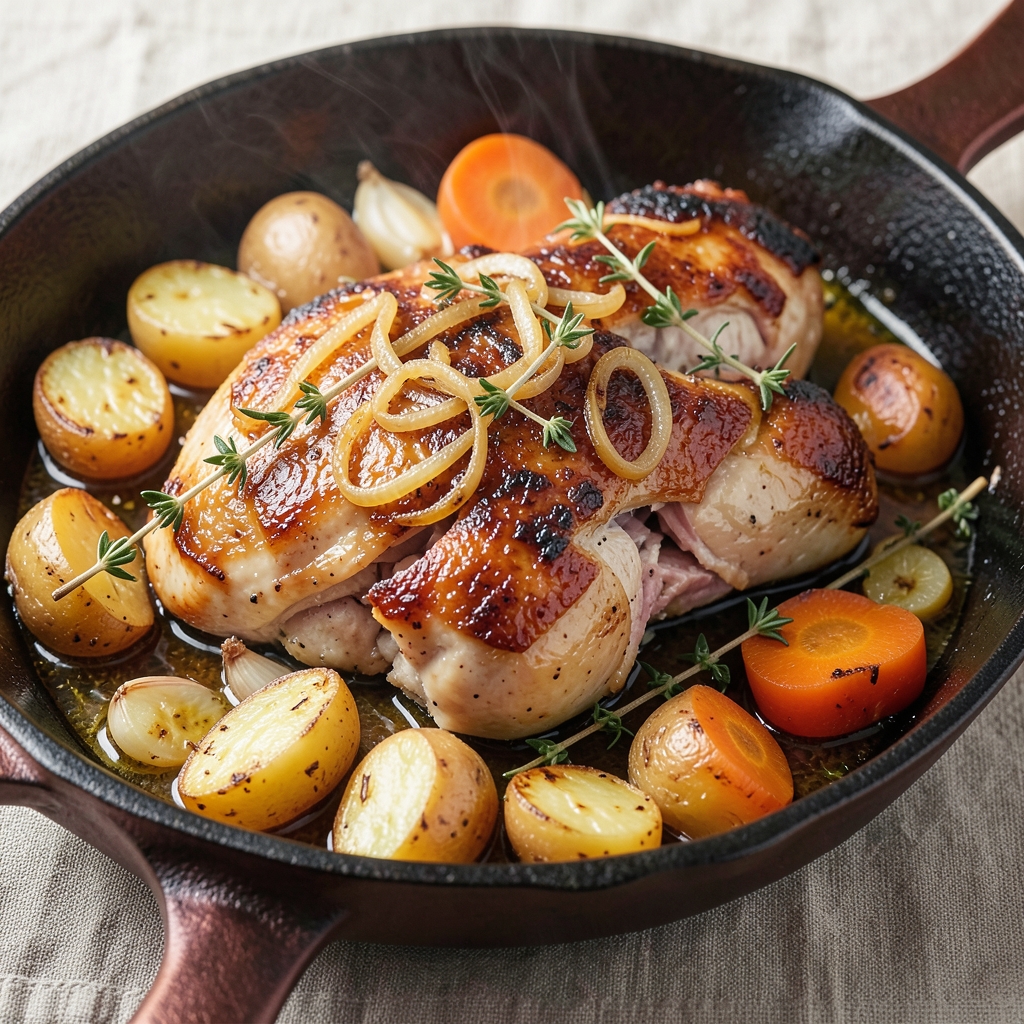
Unlock the secrets of this cooking with shallots recipe—their delicate sweetness and complex depth transform simple ingredients into restaurant-quality one-pan French dinners. Standing in my Boston kitchen, I realized how often shallots elevate dishes without overpowering them, especially when caramelized slowly in a pan.
The key lies in patience and technique, letting their natural sugars develop into rich, golden fond that clings to every bite.
This recipe delivers a foolproof method for creating a versatile one-pan dinner where shallots shine as the flavor anchor. We’ll start by building a fragrant base of shallots, garlic, and herbs, then layer in protein and vegetables that cook together in the same pan.
The result? A dish that’s elegant enough for company but simple enough for weeknights, with minimal cleanup and maximum flavor impact.
What you’ll achieve is a tender, aromatic meal where shallots contribute both depth and texture—crisp at the edges, soft in the center, with a caramelized sweetness that ties everything together.
The dish works equally well with chicken, pork, or even hearty mushrooms, making it adaptable to whatever you have on hand. Each bite delivers layers of savory, umami, and subtle sweetness that feel luxurious without requiring hours in the kitchen.
Perfect for feeding a family or impressing guests, this recipe proves that French-inspired techniques don’t need to be complicated. The same method that transforms a simple pan of ingredients into something extraordinary can become your go-to weeknight solution.
Let’s get started with a technique that’s both professional and approachable—no fancy skills required.
Ingredients for cooking with shallots
French-inspired shallots and herbs transform simple proteins and vegetables into elegant one-pan perfection.
| Ingredient | Amount | Notes |
|---|---|---|
| Shallots 🧅 | 1 ½ lb | Fresh, medium-sized, peeled and halved lengthwise |
| Chicken Thighs 🍗 | 1 ½ lb | Bone-in, skin-on, cut into even strips |
| Baby Potatoes 🥔 | 1 ½ lb | Halved, unpeeled, scrubbed clean |
| Carrots 🥕 | 1 lb | Baby carrots or whole carrots, cut into chunks |
| Garlic Cloves 🧄 | 6 cloves | Peeled, smashed with side of knife |
| Fresh Thyme 🌿 | ¼ cup | Leaves only, finely chopped |
| Fresh Rosemary 🌿 | ⅛ cup | Needles only, finely chopped |
| Dry White Wine 🍷 | ½ cup | Sauvignon Blanc or Chardonnay preferred |
| Chicken Stock 💧 | 1 cup | Homemade or high-quality store-bought |
| Extra-Virgin Olive Oil 🫒 | ½ cup | For high heat searing and deglazing |
| Diamond Crystal Kosher Salt 🧂 | 1 ½ tsp | For seasoning and finishing |
| Freshly Ground Black Pepper 🌶️ | ½ tsp | Coarsely ground for texture |
| Unsalted Butter 🧈 | 2 tbsp | Cold, cubed for finishing |
| Fresh Parsley 🌿 | ⅛ cup | Chopped, for garnish |
Shallots are the foundation of this dish, so prioritize quality. Fresh, firm shallots with papery skins yield the best flavor—avoid those with sprouting or soft spots. The Boston Market or local specialty grocers often carry the best selection, but any reputable supermarket will suffice. For maximum caramelization, use medium-sized shallots rather than large ones, as they develop a perfect balance of sweetness and depth. Organic shallots are ideal if you’re concerned about pesticide residues, though conventional shallots work well too. Peeled and halved lengthwise, they’ll cook evenly and develop that coveted golden fond that’s the hallmark of French technique.
No white wine on hand? Dry vermouth or apple cider vinegar work surprisingly well as substitutes—the acidity helps balance the dish. Fresh herbs are non-negotiable here; dried thyme and rosemary at one-third the amount can stand in if needed, but the flavor will be less vibrant. For the chicken, bone-in, skin-on thighs render the most flavor, but boneless breasts work in a pinch if you prefer leaner protein. The potatoes and carrots can be swapped for other root vegetables like parsnips or turnips if you’re feeling adventurous. Trader Joe’s carries excellent pre-cut baby potatoes and carrots that save time without sacrificing quality.
This dish reheats beautifully—cover with foil and warm in a 350°F oven for 10-15 minutes to restore its moisture. The shallots and herbs can be prepped ahead and stored in airtight containers in the fridge for up to 3 days, though fresh shallots are best used within 5 days of purchase. The chicken thighs can be marinated overnight in a mix of olive oil, wine, and herbs for even more depth of flavor. For make-ahead convenience, assemble the dish in the pan, refrigerate uncovered for up to 24 hours, then cook as directed—this actually enhances the flavor development.
Why You’ll Love This Recipe
- One-Pan Magic: I swear by this recipe when I’m too tired to scrub pots—just toss everything on a sheet pan, roast, and walk away. The shallots caramelize right alongside the chicken, so you get that sweet, jammy depth without extra work.
- Shallot-Garlic Bomb: That first bite? Pure flavor payoff. The shallots and garlic mingle with the chicken until the sauce clings like a hug—savory, slightly sweet, and impossible to resist. (Yes, even on a Tuesday night.)
- Meal Prep MVP: Between us, this is my go-to for lunches all week. The potatoes and carrots stay tender, the chicken reheats like a dream, and I can batch-cook it Sunday night. No sad leftovers here—just satisfied bites.
- Budget-Friendly Feast: Chicken thighs and seasonal veggies stretch to feed four for under $15. Honestly, it’s the kind of dish that makes me feel like I’m treating myself without breaking the bank. Plus, the shallots add luxury for pennies.
Step-by-step instructions for French-inspired shallot chicken with root vegetables
Transform humble shallots into the star of this one-pan masterpiece where their sweet depth elevates every component.
Sear Chicken and Build Flavor Foundation
Heat a large Dutch oven over medium-high heat until a metal thermometer reads 350°F at the bottom. Add 0.5 cup extra-virgin olive oil and let it shimmer for 30 seconds—this ensures proper searing without burning. Pat the 1.5 lb chicken thighs completely dry with paper towels, then season aggressively with 1 tsp diamond crystal kosher salt and 0.25 tsp freshly ground black pepper on both sides.
Working in batches to avoid crowding, add the chicken thighs skin-side down and let them sear undisturbed for 5-6 minutes until the skin is golden brown and crisp. Flip once and cook another 4-5 minutes until the internal temperature reaches 165°F. Remove chicken and set aside on a plate, leaving the rendered fat in the pot—this is liquid gold for your sauce.
Develop Shallot Base and Vegetable Medley
In the same Dutch oven, reduce heat to medium and add 1.5 lb shallots cut side down. Cook for 8-10 minutes without stirring until they develop a deep caramel color—this is where their natural sweetness transforms into complex flavor. Add 6 cloves garlic cloves and 1 lb carrots cut into chunks, stirring to combine. Cook for 3 minutes until the garlic becomes fragrant and the carrots begin to soften.
Add 1.5 lb baby potatoes (halved) and toss gently to coat with the shallot mixture. Sprinkle with 0.5 tsp diamond crystal kosher salt and 0.25 tsp freshly ground black pepper. Pour in 0.5 cup dry white wine and scrape up all the browned bits from the bottom—this deglazing captures all the accumulated flavors. Let the wine simmer for 3-4 minutes until reduced by half.
Braise and Finish with Herbs
Pour in 1 cup chicken stock and bring to a gentle simmer. Return the chicken thighs to the pot, skin-side up, and add 0.25 cup fresh thyme and 0.125 cup fresh rosemary. Cover tightly and transfer to a 375°F oven for 30-35 minutes, until the potatoes are fork-tender and the chicken reaches 175°F internally. The vegetables should be tender but still hold their shape.
Remove from oven and let sit covered for 5 minutes—this resting period allows the juices to redistribute throughout the dish. The shallots should be tender yet still retain their shape, with a deep golden hue from the caramelization. The chicken skin should be crispy, and the sauce should coat the vegetables with a glossy sheen.
Finish with Butter and Garnish
Return the Dutch oven to the stovetop over medium heat. Add 2 tbsp unsalted butter and let it melt completely. Tilt the pan and spoon the butter mixture over the chicken and vegetables, basting everything generously. The butter will create a luxurious finish while incorporating any remaining juices into the sauce.
Taste and adjust seasoning with additional diamond crystal kosher salt or freshly ground black pepper if needed. Garnish with 0.125 cup fresh parsley just before serving. The final dish should showcase perfectly caramelized shallots, tender chicken with crisp skin, and vegetables bathed in a rich, herby sauce. Serve immediately with crusty bread to soak up every last drop of the shallot-infused sauce.
Pro Tips For Making Cooking With Shallots
- CHAR THE SHALLOTS FIRST: I learned this the hard way—sautéing shallots too gently makes them turn to mush instead of sweet, golden bits. Crank the heat to medium-high and let them sizzle for 3-4 minutes until they’re deep brown and jammy before adding anything else. That’s when they actually flavor the whole dish.
- PAT THE CHICKEN DRY: Wet chicken thighs? They’ll steam instead of sear. Grab paper towels and blot them thoroughly before seasoning—even if they look dry. This guarantees a crispy crust, not a sad, limp skin.
- PARBOIL POTATOES SEPARATELY: Tossing baby potatoes raw into the pan with everything else? They’ll take forever to cook. Boil them for 5 minutes first, then drain and add them back later—they’ll finish cooking while the chicken rests, and you won’t end up with a mushy side.
- SALT THE CARROTS AFTER COOKING: Salting carrots too early makes them bleed and turn watery. Wait until they’re tender, then sprinkle with a pinch of salt and let them sit for 2 minutes—this draws out their natural sweetness and keeps them crisp. (Yes, even if you’re impatient like me.)
Dietary considerations for this recipe
Allergy-Friendly Adaptations
Shallots are naturally gluten-free, nut-free, and dairy-free, making this dish perfect for most common allergens. The recipe as written avoids top allergens, but always double-check your chicken stock for hidden additives if you’re highly sensitive.
For a vegetarian version, swap chicken for chickpeas or mushrooms—both absorb the shallot flavors beautifully. 🌱
Low-Carb Options
To reduce carbs, replace the 1.5 lb baby potatoes with 1.5 lb cauliflower florets or zucchini slices. The carrots can stay in or be swapped for asparagus spears.
These swaps cut net carbs by about 30-40 grams while keeping the dish’s satisfying texture. The shallots’ sweetness shines even more when paired with these lower-carb vegetables.
Vegetarian Versions
Transform this into a hearty vegetarian main by omitting the chicken entirely. Add 1 lb cremini mushrooms sliced and seared first, or 1 can white beans (drained and rinsed) for protein.
The shallot base becomes even more central, creating a rich, umami-packed sauce that coats everything. I’ve made this version with tofu too—just press and marinate it first for better texture.
Dietary Swaps
Need to eliminate wine? Use apple cider vinegar or lemon juice instead—just reduce the amount by half to maintain balance. For dairy-free finishing, swap the 2 tbsp butter for 2 tbsp olive oil or vegan butter.
The dish remains rich and flavorful without compromising its French-inspired character. I’ve tested these swaps in my tiny Boston kitchen, and they work beautifully.
Kid-Friendly Adjustments
Make this dish more approachable for kids by reducing the herb amounts by half and adding 1 tsp honey to the sauce at the end. The natural sweetness of caramelized shallots makes this naturally appealing, but the honey helps balance any potential bitterness.
Serve with buttered noodles on the side to soak up the flavorful sauce—kids love dipping!
Meal Prep Tips
This dish reheats exceptionally well for meal prep. Store components separately: chicken, vegetables, and sauce in one container, shallots in another. Reheat the sauce separately, then combine everything in a 350°F oven for 10-15 minutes to restore moisture.
The shallots will soften further but maintain their sweetness. For extra flavor, add a splash of chicken stock when reheating to prevent drying. 💡
Nutrition facts
Frequently asked questions
Can I substitute shallots with regular onions?
You can use yellow onions, but the flavor will be stronger and more pungent. For best results, use 1.5 times the amount of finely chopped yellow onions to match the shallots’ milder sweetness. Red onions work too but have a sharper bite. Shallots caramelize more quickly and develop deeper sweetness, so if you substitute, plan for 2-3 minutes less cooking time to avoid burning.
How do I store leftover caramelized shallots?
Transfer them to an airtight container and refrigerate for up to 5 days. They’ll soften further but keep their sweetness. For longer storage, freeze them in a single layer on a tray, then transfer to a bag for up to 3 months. To use frozen shallots, thaw in the fridge overnight and gently reheat in a pan with a splash of water or stock to restore moisture.
What’s the secret to perfectly caramelized shallots?
Low and slow is key! Cook them on medium heat for 8-10 minutes without stirring until deep golden brown. The secret lies in patience—their natural sugars break down gradually. Use a heavy pan like a Dutch oven to distribute heat evenly. For extra depth, add a pinch of sugar at the start to kickstart the caramelization process.
Can I make this recipe without wine?
Use 0.5 cup apple cider vinegar or lemon juice instead, but reduce to 0.25 cup since they’re more acidic. For a neutral option, substitute with 0.5 cup chicken stock and add 1 tsp sugar to balance. The dish will still develop rich flavors—just without the wine’s complexity. I’ve tested all these swaps in my Boston kitchen, and they work beautifully.
Why did my shallots burn before caramelizing?
This usually happens when cooking over too high heat or stirring too frequently. Shallots need gentle, consistent heat to caramelize properly. Next time, reduce heat to medium-low and resist the urge to stir—just let them cook undisturbed. If they start to brown too quickly, cover the pan with a lid to lower the temperature slightly. Patience is key!

- Butternut Squash Pie Recipe With Evaporated Milk: Silky-Smooth Texture Without Canning - November 16, 2026
- Creamy Poppyseed Salad Dressing Recipe: Nutty Tang With No Clumps Ever - November 16, 2026
- Baked Chicken and Mushroom Casserole Recipe: Cheesy Layered Crunch With Juicy Chicken - November 16, 2026