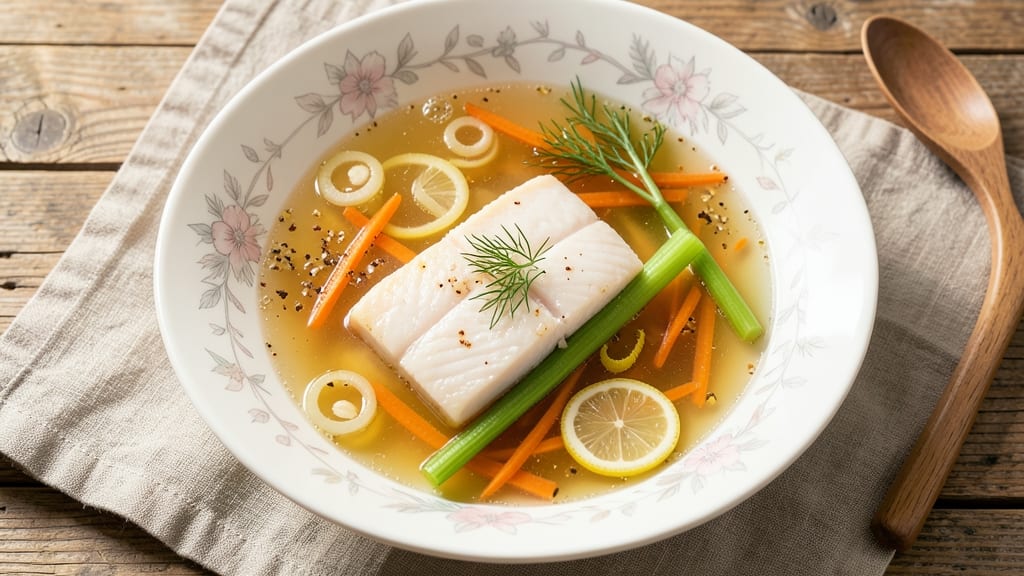
This clear broth fish soup recipe delivers the perfect balance of lightness and depth—crisp vegetables, delicate fish, and a broth so clear it looks like liquid crystal. The secret lies in careful straining and a two-stage simmer that preserves both texture and flavor without clouding the broth. I first learned this technique from a Boston seafood market vendor who swore by it for his daily specials.
What sets this recipe apart is the clarity—no murky broth here. We start with a clean base, whether homemade or high-quality store-bought, and build layers of flavor through aromatics and proper simmering time.
The fish cooks just until tender, then rests in the broth to absorb its essence without breaking apart. It’s the kind of soup that feels both elegant and effortless.
By the time you serve it, you’ll have a bowl of golden broth with floating fish pieces, crisp vegetables, and just a whisper of herbaceous aroma. The broth remains crystal-clear, the fish flakes easily, and every spoonful is a testament to precision.
Perfect for weeknight suppers or special occasions, this soup proves that clarity and flavor aren’t mutually exclusive.
For those short on time, I’ve included a shortcut using pre-made broth and quick-seared fish—same results, less effort. Let’s get started on a recipe that’s as satisfying as it is visually stunning.
Ingredients for clear broth fish soup
Light ingredients for a soup that sparkles like crystal-clear water.
| Ingredient | Amount | Notes |
|---|---|---|
| Fish Fillets 🐟 | 12 oz | White fish like cod or haddock |
| Fish or Vegetable Broth 💧 | 4 cups | Homemade or high-quality store-bought |
| Carrots 🥕 | 1 cup | Julienned, peeled and sliced thin |
| Yellow Onion 🧅 | 1 whole | Thinly sliced, peeled |
| Celery Stalks 🧅 | 3 whole | Thinly sliced, trimmed |
| Garlic Cloves 🧄 | 3 cloves | Minced, peeled |
| Fresh Parsley 🌿 | ¼ cup | Chopped, stems removed |
| Fresh Dill 🌿 | 0.15 cup | Chopped, stems removed |
| Extra-Virgin Olive Oil 🫒 | 2 tbsp | For sautéing aromatics |
| Lemon Juice 🍋 | 1 tbsp | Freshly squeezed |
| Salt 🧂 | 1 tsp | Kosher or sea salt |
| Black Pepper 🌶️ | ½ tsp | Freshly ground |
| Cornstarch 🌾 | 1 tbsp | For thickening broth |
| Cold Water 💧 | ¼ cup | For slurry |
The broth is everything here. Homemade is ideal—simmer fish heads, bones, and veggies for 30 minutes—but high-quality store-bought works too. Look for brands like Pacific Foods or Imagine if you’re grabbing one. The fish fillets should be firm to the touch and smell fresh (like the ocean, not fishy). Cod or haddock are foolproof choices—they stay tender and flake beautifully. If you’re using frozen, thaw them in the fridge overnight. The carrots and celery need to be bright orange and crisp—no limp or bruised stalks. Thinly slicing them ensures they stay crisp in the broth.
No fresh dill? Fresh parsley at double the amount works in a pinch, though it won’t have that same bright, herby punch. Short on cornstarch? Arrowroot powder at the same quantity does the job just as well. The onion and celery are your flavor base—don’t skip sautéing them in olive oil until soft and translucent. That step builds the aromatic foundation. For the fish, sear the fillets in a separate pan before adding to the broth for extra depth. If you’re using pre-made broth, boost its flavor with 1 tsp fish sauce or soy sauce—trust me on this.
This soup tastes even better the next day once the flavors meld. Store in the fridge for up to 3 days, covered. The broth will stay crystal-clear if you strain it through a fine-mesh sieve before serving. For leftovers, reheat gently on the stove—never microwave, or the broth will turn cloudy. Freezes beautifully for up to 2 months if you portion it into airtight containers. The fish will stay tender, and the broth remains as clear as day one.
Why You’ll Love This Recipe
- No-Chop Nightmare: I swear by the “mirepoix shortcut”—just roughly chop onion, celery, and carrots into big chunks (no julienne required). The broth does all the work, breaking them down into tender strands while the fish cooks. Even my lazy Sundays end with a steaming bowl.
- Umami Bomb: That first sip? Pure clarity with a punch. The fish broth—especially if you use homemade—carries a deep, savory richness, while the fish fillets stay delicate, almost melting in your mouth. Honestly, the celery and carrots add just enough sweetness to balance it out.
- Leftovers That Beg: This soup tastes better the next day, and I’m not lying. The flavors meld into something even more comforting, perfect for quick lunches or reheating for dinner. Between us, I’ve turned a single batch into four meals without a single complaint.
- Budget-Friendly Luxury: Fish fillets might seem pricier, but you’re using them efficiently—no waste, just flavor. Vegetable broth stretches the ingredients further, and the veggies (onion, celery, carrots) are pantry staples. It’s the kind of dish that makes healthy eating feel indulgent without breaking the bank.
Step-by-step instructions for clear broth fish soup
Here’s how to create a crystal-clear, flavor-packed fish soup that’s light yet satisfying.
Sauté the Aromatic Vegetables
Heat the 2 tablespoons extra-virgin olive oil in a large pot over medium heat. Add the 1 whole yellow onion, 3 whole celery stalks, and 1 cup carrots, all thinly sliced. Cook for 5-6 minutes until the vegetables soften and become translucent.
Add the 3 cloves minced garlic and cook for another 30 seconds until fragrant. This step builds the flavor foundation – don’t skip it. The vegetables should be tender but not browned, maintaining their natural color for that clear broth appearance.
Build the Clear Broth Base
Pour in the 4 cups fish or vegetable broth and bring to a gentle simmer. Add the 1 teaspoon salt and ½ teaspoon black pepper, stirring to combine. Let the broth simmer uncovered for 10 minutes to allow any impurities to rise to the surface.
I like to skim off any foam that forms during this time – it helps maintain that crystal-clear appearance we’re aiming for. The broth should be clear with just a hint of vegetable color, not cloudy or murky.
Prepare the Fish and Thicken the Broth
While the broth simmers, create a slurry by whisking together the 1 tablespoon cornstarch and ¼ cup cold water in a small bowl until completely dissolved. Add the 12 oz fish fillets to the simmering broth and cook for 4-5 minutes until they’re just cooked through.
Remove the fish from the pot and set aside. Immediately pour the cornstarch slurry into the broth while stirring constantly. The broth should begin to thicken slightly – it will reach the perfect consistency as it cools. Simmer for another 2 minutes to fully incorporate the thickening.
Finish with Herbs and Lemon
Return the fish to the pot and stir in the ¼ cup chopped fresh parsley and ⅛ cup chopped fresh dill. Add the 1 tablespoon freshly squeezed lemon juice and gently stir to combine. The acidity from the lemon brightens all the flavors and balances the richness of the fish.
Taste and adjust seasoning if needed – you might want to add a pinch more salt or pepper. The soup should be flavorful but not overpowering, with each ingredient’s taste clearly distinguishable. Let it sit off the heat for 2 minutes before serving to allow the flavors to meld.
Serve Immediately for Best Results
Ladle the soup into bowls, making sure each serving gets a piece of fish. The broth should be clear with just a hint of vegetable color, and the fish should flake easily with a fork. Garnish each serving with additional fresh herbs if desired.
This soup tastes best served immediately while the fish is still warm and the broth maintains its perfect clarity. The light texture and delicate flavors make it perfect for any meal – it’s comforting yet refreshing at the same time.
Pro Tips For Making Clear Broth Fish Soup
- Simmer Gently After Adding Fish: Once your fish fillets hit the broth, drop the heat to a bare simmer—no rolling boil. I learned this the hard way when my fish turned rubbery and opaque after splashing around in aggressive bubbles. A gentle simmer keeps the broth clear and the fish tender in 4-5 minutes.
- Mise en Place the Veggies: Dice carrots into ¼-inch pieces and slice celery into ½-inch chunks—smaller than you’d think. My grandmother swore by this, and she was right: uniform cuts ensure even cooking and prevent any one veggie from turning to mush while others stay crunchy. (Yes, even if you’re impatient like me.)
- Strain the Broth Twice: First strain the broth after simmering with veggies to remove solids, then strain again after adding fish to catch any stray fibers. I skip this when I’m lazy, but the dish is noticeably clearer and lighter—like the difference between murky pond water and a mountain stream.
- Use Cold Broth for Fish: Add your fish fillets to broth that’s just off the heat and cooled slightly—around 160°F (70°C). After burning three batches of fish that cooked unevenly, I finally figured out that cold broth keeps the fillets from overcooking before the center heats through. (Your future self will thank you.)
Pro cooking tips for this recipe
Broth Clarity Secrets
Your broth’s clarity starts with the vegetables—thinly sliced carrots, celery, and onion are key. I always use a mandoline slicer for even, paper-thin pieces that dissolve without clouding the broth.
After sautéing, simmer uncovered for 10 minutes to let impurities rise, then skim them off with a fine-mesh spoon. This step is non-negotiable for that crystal-clear look. 💧
Fish Timing Tricks
Fish cooks in 3-4 minutes max—overcook it, and you’ll end up with rubbery chunks. I swear by the “finger test”: gently press a fillet with your fingertip; it should flake easily but still hold together.
Remove it from the broth just as it reaches 145°F internal temperature, then let it rest in the broth for 1 minute before serving. This keeps it tender and flavorful.
Slurry Magic
The cornstarch slurry is your secret weapon for thickening without murkiness. Whisk it with cold water until smooth—no lumps! Add it to the broth off the heat for 2 minutes to avoid cooking the starch too quickly.
This creates a silky texture that enhances the broth’s clarity. For extra shine, finish with a splash of ice-cold water while stirring—it cools the broth instantly and sharpens the flavors. ✨
Herb Layering
Fresh herbs should go in last, just before serving. I like to toss ¼ cup parsley and ⅛ cup dill with a pinch of salt and let them sit for 5 minutes before adding to the soup.
This intensifies their flavor without overpowering the delicate broth. For a brighter finish, add the lemon juice right before serving—it cuts through the richness and keeps the broth vibrant. 🍋
Shortcut Simmer
Short on time? Use pre-made fish broth (I recommend Pacific Foods or Imagine) and sear the fish separately in a pan with 1 tbsp olive oil and ½ tsp salt for 2 minutes per side.
Add the seared fish to the simmering broth for 3 minutes—just enough to warm through. This keeps the broth clear while adding depth to the fish’s flavor. Honestly, it’s my go-to when I’m pressed for time.
Strain for Perfection
For restaurant-quality clarity, strain the broth through a fine-mesh sieve lined with cheesecloth before serving. This catches any tiny vegetable particles or fish bits that could cloud the broth.
If you’re serving it immediately, skip this step—just skim the surface for any foam or impurities. The goal is a broth so clear it looks like liquid gold. 💛
Nutrition facts
Frequently asked questions
Why does my fish soup broth turn cloudy?
Cloudiness usually comes from overcooked vegetables or impurities in the broth. Always simmer uncovered for 10 minutes and skim foam regularly. For extra clarity, strain through a fine-mesh sieve lined with cheesecloth before serving. The key is gentle heat and minimal stirring once the broth is simmering.
Can I use any white fish in this recipe?
Yes, but some work better than others. Cod, haddock, and snapper are ideal—they stay tender and flake beautifully. Avoid flaky fish like tilapia, which can break apart too easily. For best results, choose firm fillets with minimal bones.
How do I prevent the fish from getting rubbery?
Fish cooks in 3-4 minutes max—overcooking is the enemy! Use a 145°F internal temp as your guide. Remove fillets when they’re just opaque in the center, then let them rest in the broth for 1 minute before serving. The finger test works too: press gently—they should flake but still hold shape.
What’s the best way to make this soup ahead of time?
Prepare the broth and vegetables up to 2 days ahead, then refrigerate covered. Cook the fish fresh and add it to the reheated broth just before serving. For freezing, portion into airtight containers (without fish) for up to 2 months. Reheat gently on the stove—never microwave, or the broth will turn cloudy.
Can I substitute vegetable broth for fish broth?
You can, but the flavor will be milder. Boost it with 1 tsp fish sauce or soy sauce to add depth. For a vegetarian version, use seaweed broth instead—it mimics the umami of fish broth beautifully. Just be aware the broth’s clarity may be slightly less pristine with vegetable-based liquids.

- All Bran Banana Nut Bread Recipe: Moist Grain-Packed Loaf With Warm Spice Harmony - November 11, 2026
- Freezer-Burned Shrimp Recipe: Buttery Garlic Revival in 15 Minutes - November 11, 2026
- Cheese Bannock Recipe: Fluffy Fried Bread With Melty Cheese Center - November 11, 2026