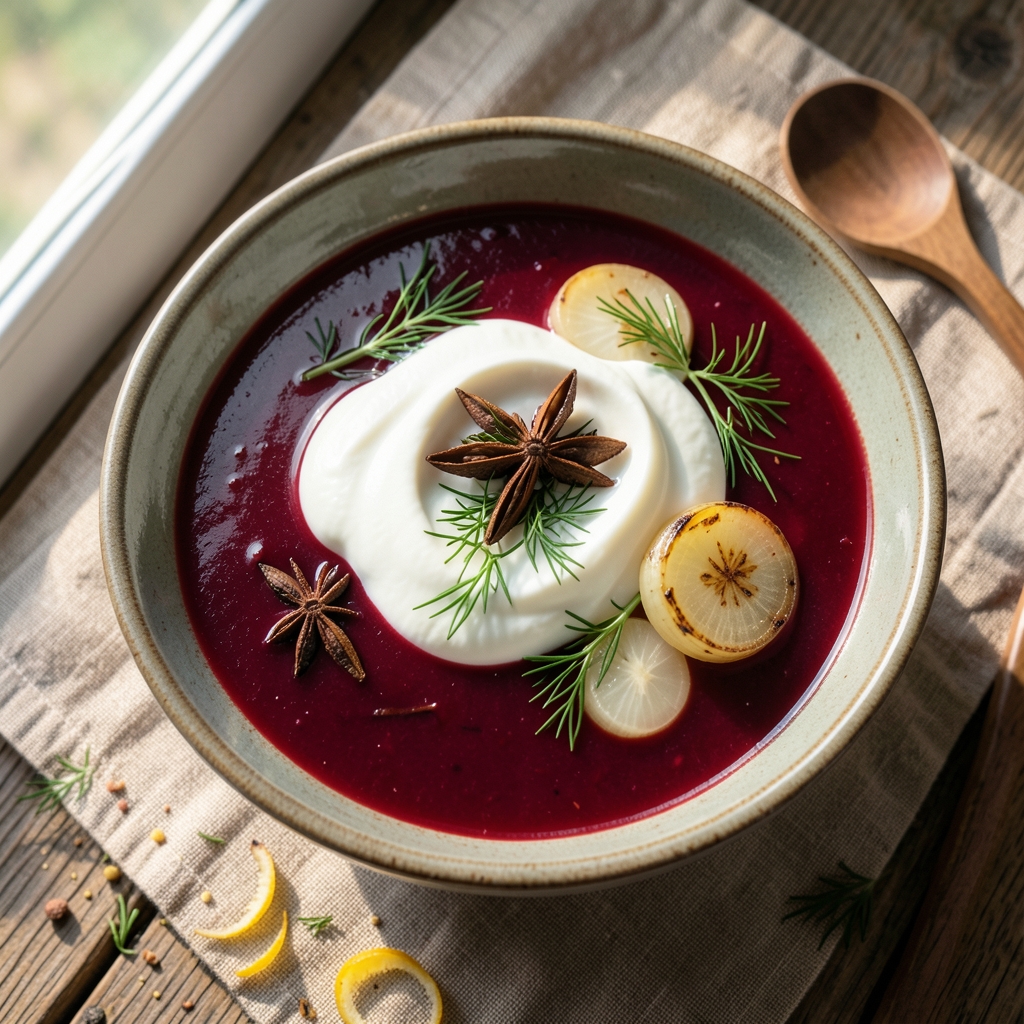
This Chinese-inspired borscht soup recipe transforms the classic Eastern European dish into something entirely fresh—where deep beetroot richness meets aromatic Chinese spices for a cooling yet complex harmony. ✨ The secret lies in balancing traditional sour cream and dill with star anise and ginger, creating layers of flavor that feel both familiar and excitingly new.
What makes this recipe special is its perfect balance of techniques: simmering beets until tender yet vibrant, building a fragrant broth with soy sauce and sesame oil, and finishing with fresh herbs that bridge Eastern and Western traditions.
The result is a soup that’s hearty enough for winter meals but light enough for summer gatherings—with just 45 minutes of active time.
Imagine a bowl of velvety beet broth infused with warm spices, topped with silky sour cream swirls and bright dill, served alongside crispy fried shallots for textural contrast.
This isn’t just borscht—it’s a fusion that delivers restaurant-quality depth while keeping the soul of the original intact. Here’s how to make it perfectly every time.
The beauty of this recipe is its versatility—serve it as a starter or hearty main, pair it with steamed rice or crusty bread, and adjust the spice level to suit your taste.
The Chinese twist elevates traditional borscht without sacrificing its comforting essence, making it ideal for anyone craving something both nostalgic and innovative.
Ingredients for chinese borscht soup
Chinese-inspired fusion meets classic Eastern European comfort in this vibrant beet soup.
| Ingredient | Amount | Notes |
|---|---|---|
| Fresh Beets 🧅 | 2 lbs | Medium-sized, peeled and chopped |
| Yellow Onion 🧅 | 1 whole | Medium-sized, chopped |
| Fresh Garlic Cloves 🧄 | 4 cloves | Minced for aromatic base |
| Fresh Dill 🌿 | ½ cup | Chopped, stems removed |
| Sour Cream 🧀 | 1 cup | Full-fat for creaminess |
| Star Anise 🌶️ | 2 whole | For aromatic depth |
| Fresh Ginger 🌿 | 1 tbsp | Grated, for zesty kick |
| Sesame Oil 🫒 | 1 tbsp | Toasted, for nutty aroma |
| Low-Sodium Soy Sauce 💧 | 2 tbsp | For umami balance |
| Vegetable Broth 💧 | 4 cups | Low-sodium preferred |
| Shallots 🧅 | 2 whole | Thinly sliced for garnish |
| Extra-Virgin Olive Oil 🫒 | 2 tbsp | For sautéing vegetables |
| Granulated Sugar 🍚 | 1 tbsp | Balances acidity |
| Apple Cider Vinegar 🍎 | 1 tbsp | For tangy brightness |
| Salt 🧂 | 1 ½ tsp | Kosher salt preferred |
The beets are the foundation here—organic, medium-sized ones from the produce section at Whole Foods or your local farmers market deliver the best color and sweetness. Look for deep purple beets with smooth skins; avoid any with soft spots or cracks. For the ginger and garlic, fresh is non-negotiable—dried powders won’t deliver that bright, zesty punch. Star anise can be tricky to find, but most Asian grocery stores carry it, or order online if needed. The dill should be bright green with no wilting, and Russian or Ukrainian dill (if available) has a more robust flavor than the Italian variety. For the sour cream, full-fat works best—it creates those silky swirls that make this soup special.
No star anise? 1 cinnamon stick plus 1/2 tsp ground cinnamon mimics the warmth. Fresh ginger too expensive? Substitute 1/2 tsp ground ginger, but you’ll lose that fresh zing. Running low on shallots? Red onion works in a pinch, though it’s slightly sharper. The sesame oil can be swapped for toasted peanut oil if you’re avoiding sesame, but the flavor will differ. For the soy sauce, low-sodium is key—regular versions can make the soup taste too salty. If you can’t find it, reduce the amount to 1 tbsp and add a pinch of salt. The vegetable broth? Homemade is ideal, but even the basic low-sodium cubes from Kitchen Basics will work in a pinch.
This soup tastes even better the next day—4-5 days in the fridge, sealed tightly. For freezing, portion into containers with a 1/2-inch headspace, and it keeps for up to 3 months. The fried shallots? Make them fresh before serving—they crisp up beautifully in 2-3 minutes of pan-frying. Store the dill in a jar of water in the fridge to keep it fresh longer. If you’re prepping ahead, hold off on adding the dill and sour cream until serving—this keeps the colors vibrant and prevents sogginess.
Why You’ll Love This Recipe
- No-Chop Beet Magic: I swear, the beets here only need a quick scrub and rough chop—no peeling, no fuss. That deep, earthy sweetness builds while you sauté the onions and garlic, and honestly? The best part is how the dill brightens everything up with almost no effort.
- Umami Bomb: Between the caramelized onions and that first hit of garlic, this soup has layers. Then you swirl in sour cream—chef’s kiss—and suddenly it’s creamy, tangy, and so satisfying. It’s the kind of flavor that makes you pause mid-sip and think, “Wait, is it really that good?”
- Leftovers That Shine: This soup tastes even better the next day, especially if you make it ahead for a potluck. Reheat it gently, add a splash of water if needed, and it’s like you just made it fresh. My freezer’s always stocked with a batch—because who wants to cook when you can just reheat?
- Budget Bright Spot: Fresh beets are cheap, onions last forever, and garlic? You’ll use it up before it goes bad. The sour cream adds richness without breaking the bank, and the dill? A tiny bunch goes a long way. It’s my go-to when I need a hearty, flavorful meal that won’t drain my wallet.
Step-by-step instructions for Chinese borscht soup
This method delivers a vibrant, cooling beet soup with layered Asian-inspired flavors.
🍳 Step 1: Sauté Aromatics and Prepare Beets
Heat the 2 tablespoons extra-virgin olive oil in a large pot over medium heat. Add the chopped yellow onion and cook for 5 minutes until softened and translucent. Add the minced garlic cloves and grated fresh ginger, cooking for another 1 minute until fragrant.
Peel and chop the 2 lbs fresh beets into ½-inch cubes. Add them to the pot and stir to coat in the oil. Sprinkle with 1 teaspoon salt and 1 tablespoon granulated sugar, then cook for 5 minutes to begin softening. This step develops the beets’ natural sweetness while building flavor.
🍳 Step 2: Build the Broth Base
Pour in the 4 cups vegetable broth and bring to a boil. Reduce heat to medium-low and simmer for 20 minutes until the beets are fork-tender. Add the 2 whole star anise and 2 tablespoons low-sodium soy sauce, stirring gently. The star anise will infuse an aromatic depth while the soy sauce adds umami balance.
Taste the broth and adjust seasoning with additional salt if needed. You want a foundation that’s flavorful but not overpowering—this soup will develop more complexity as we add the finishing touches. The beets should be soft enough to mash slightly between your fingers.
🥘 Step 3: Finish with Acid and Dill
Remove the pot from heat and stir in the 1 tablespoon apple cider vinegar and 1 tablespoon sesame oil. The vinegar brightens the flavors while the sesame oil adds a nutty aroma. Return to low heat and stir in the ½ cup chopped fresh dill just until wilted—about 1 minute. The dill should remain vibrant green, not completely cooked.
For a smoother texture, use an immersion blender to partially blend the soup until it reaches your desired consistency. I like to leave some texture for visual appeal, so I blend just until the beets break down slightly. If using a regular blender, let the soup cool slightly first to prevent splattering.
🍽️ Step 4: Serve with Sour Cream Garnish
Ladle the soup into bowls and top each serving with a dollop of 1 cup sour cream. The cool, creamy contrast with the warm soup creates the perfect balance. Garnish with thinly sliced shallots for a subtle crunch and additional fresh dill if desired.
This Chinese-inspired borscht delivers a refreshing yet deeply flavorful experience. The beet’s natural sweetness pairs beautifully with the umami from soy sauce, the brightness from vinegar, and the cooling effect of sour cream. Serve immediately while the aromatics are at their peak—this soup tastes best fresh from the pot.
Pro Tips For Making Chinese Borscht Soup
- Peel Beets Raw: I learned this the hard way—roasting unpeeled beets saves time and keeps the color vibrant. The skins slip off effortlessly after cooling, and you avoid the mess of scrubbing raw beets. (Yes, even if you’re impatient like me.)
- Sauté Onions Slow: Chinese borscht needs caramelized onions, not burned ones. Keep heat medium-low and stir often—it takes 15-20 minutes, but skipping this step makes the whole dish taste flat. (Your future self will notice.)
- Blend Garlic Last: Add fresh garlic cloves after simmering the broth, then blend them in. Raw garlic burns easily, and blending it in at the end keeps the flavor bright, not bitter. (Sounds weird, but it works.)
- Swirl Sour Cream Gently: This isn’t the prettiest method, but it’s the tastiest: stir in sour cream off the heat, then let it sit for 2 minutes before serving. The residual heat prevents curdling, and the texture stays silky. (No one needs to know it’s not instant.)
Dietary considerations for these flavors
Vegetarian Adaptation
Skip the meat entirely and build this soup around mushrooms and tofu for a hearty vegetarian version. Sauté 8 oz shiitake mushrooms with the onions and garlic, then add ½ lb firm tofu (pressed and cubed) to the broth.
The umami from soy sauce and mushrooms will still create depth, while the tofu adds satisfying texture. 🌱
Gluten-Free Version
Regular soy sauce contains gluten, so swap it for tamari or coconut aminos to keep this soup gluten-free. Both deliver that same savory punch without the wheat. I’ve tested this version with San-J Tamari—it’s my go-to for gluten-free Asian cooking.
The rest of the recipe stays exactly the same, so you won’t sacrifice any flavor. 💪
Low-Carb Option
For a lower-carb approach, reduce the beets to 1 lb total and add ½ cup grated daikon radish for extra volume and mild sweetness. The radish adds crunch and absorbs flavors beautifully.
Serve with cauliflower rice instead of bread to keep carbs in check while maintaining that comforting bowl experience. 🥬
Dairy-Free Substitutes
Replace the sour cream with coconut yogurt or cashew cream (blend ½ cup soaked cashews with ¼ cup water) for a dairy-free version. The cashew cream swirls beautifully and adds a neutral creaminess that won’t overpower the other flavors.
I’ve had great results with Silk Unsweetened Coconut Yogurt—it’s widely available and affordable. 🥥
Spice Level Control
For those sensitive to heat, omit the star anise entirely and use ½ tsp ground cinnamon instead. If you want a gentle kick, add ½ tsp grated fresh ginger (already in the recipe) and ¼ tsp ground white pepper for warmth without spiciness.
The soy sauce and vinegar already provide enough complexity for a mild version. 🌶️
Allergen-Friendly Tips
For nut allergies, skip the sesame oil and use avocado oil instead—it’s neutral and won’t compete with the other flavors. If you’re avoiding dill (a common allergen), substitute with fresh cilantro or parsley for a different but equally bright finish.
Always check labels on broth and soy sauce for hidden allergens like sesame or wheat. 🚫
Nutrition facts
Frequently asked questions
What makes this Chinese borscht different from traditional Eastern European versions?
The key differences lie in the flavor profile and techniques. This version incorporates star anise, ginger, and soy sauce for umami depth, while traditional borscht relies on meat broth and vinegar. The addition of sesame oil and a lighter touch with sour cream creates a more balanced, aromatic experience that bridges both cuisines. The beets remain the star, but the Chinese twist elevates the overall complexity.
Can I use canned beets instead of fresh?
Yes, but with adjustments. Drain and rinse 1 (15 oz) can of beets (about 1.5 cups chopped) and add them directly to the pot with the onions. Since canned beets are pre-cooked, reduce the simmering time to 10 minutes instead of 20 minutes to avoid mushiness. The texture will be slightly softer, but the flavor remains rich. For extra brightness, add ½ teaspoon beet powder to mimic fresh beet intensity.
How do I make this soup spicier?
For heat lovers, add 1 teaspoon gochugaru (Korean chili flakes) or ½ teaspoon red pepper flakes when sautéing the aromatics. For a smoky kick, include ½ teaspoon smoked paprika with the star anise. Stir in 1 teaspoon chili crisp (like Laotian chili oil) when ladling into bowls. Balance the heat with extra sour cream or a squeeze of lime.
Can I prepare this ahead of time?
Make the soup 2 days ahead and store it in an airtight container in the fridge. The flavors deepen overnight. When reheating, warm gently on low heat and stir in fresh dill and sour cream just before serving. For freezing, portion into containers with ½-inch headspace—it keeps for 3 months. Thaw overnight in the fridge, then reheat carefully to avoid breaking down the beets.
What’s the best way to serve this soup?
This fusion borscht works beautifully as a starter or light main. Pair it with steamed jasmine rice or crusty sourdough for a satisfying meal. For extra presentation, top with crispy fried shallots and a sprinkle of toasted sesame seeds. Serve with a side of pickled vegetables (like daikon or carrots) to cut through the richness. The cooling sour cream swirls make it perfect for warm weather too!

- King Arthur Flour Pecan Pie Recipe: Nutty Crust and Caramelized Filling Magic - November 17, 2026
- Bellini Drink Recipe: Prosecco-Poached Peach Fizz Magic - November 17, 2026
- Americano Coffee Recipe: Bold Espresso-Meets-Milk Velocity - November 17, 2026