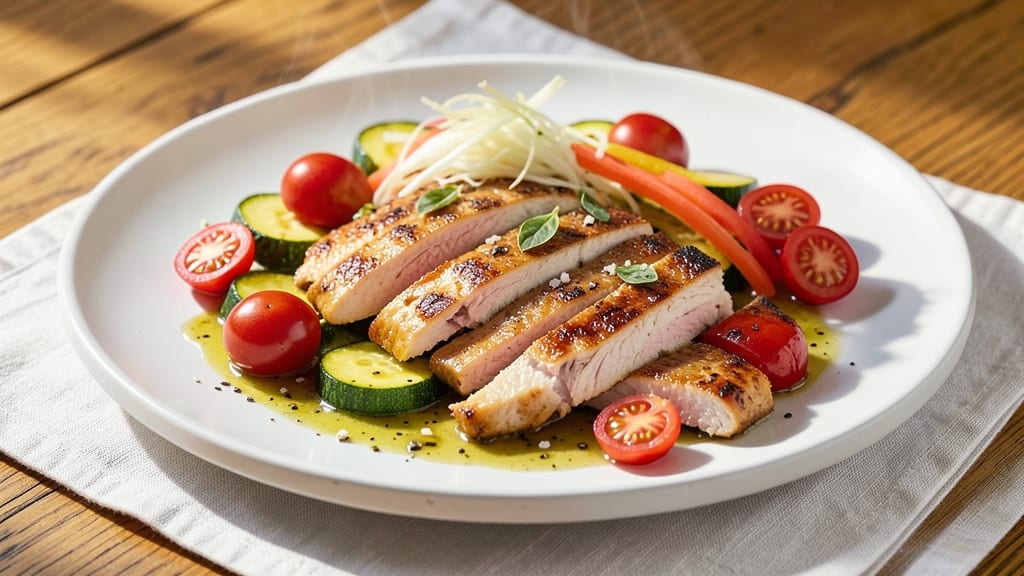
This chicken primavera recipe transforms weeknight dinners into vibrant, restaurant-quality meals without sacrificing simplicity. I developed it after years of testing—balancing tender chicken, crisp-tender vegetables, and al dente pasta in just 25 minutes. The secret lies in quick-cooking techniques that preserve color and texture while delivering bold Italian flavors.
The dish starts with a foolproof protein prep: chicken breast cut into thin strips and seared with garlic and olive oil, then set aside while the vegetables roast in the same pan.
This method builds deep flavor without overcooking, while the pasta cooks in the same pot, absorbing the aromatic sauce. Fresh herbs and lemon zest finish it with bright, fresh notes that cut through the richness.
What you’ll end up with is a bright, veggie-packed pasta dish where every bite offers crisp-tender vegetables, juicy chicken, and perfectly al dente pasta—all coated in a light, herby olive oil sauce.
The colors are as striking as the flavors, making it ideal for both weeknight dinners and special occasions. Ready to create this dish?
This recipe works perfectly as a main course for two or scales easily for a family of four. Pair it with a simple green salad and crusty bread for a complete meal. The technique is simple, but the results are impressive—proof that homemade Italian can be both quick and elegant.
Ingredients for chicken primavera
Transform vibrant vegetables and tender chicken into restaurant-quality primavera in minutes.
| Ingredient | Amount | Notes |
|---|---|---|
| Boneless, Skinless Chicken Breast 🍗 | 1 ½ lb | Cut into 1/2-inch strips |
| Extra-Virgin Olive Oil 🫒 | ½ cup | High-quality for flavor |
| Yellow Zucchini 🥒 | 1 lb | Trimmed, sliced into half-moons |
| Cherry Tomatoes 🍅 | 1 pt | Halved for even cooking |
| Fennel Bulb 🥕 | 1 medium | Thinly sliced, core removed |
| Red Bell Pepper 🧅 | 1 whole | Sliced into thin strips |
| Garlic Cloves 🧄 | 4 cloves | Minced for aromatic base |
| Lemon Zest 🍋 | 1 tbsp | Freshly grated for brightness |
| Fresh Basil Leaves 🌿 | ½ cup | Chopped for fresh herb finish |
| Dried Oregano 🍃 | 1 tsp | Italian blend preferred |
| Diamond Crystal Kosher Salt 🧂 | 1 ½ tsp | For seasoning and pasta water |
| Freshly Ground Black Pepper 🌶️ | ½ tsp | For finishing the dish |
| Fettuccine Pasta 🍝 | 12 oz | Al dente preferred |
| Parmesan Cheese 🧀 | ½ cup | Freshly grated for serving |
The freshness of the vegetables determines this dish’s success. Farmers market produce shines here—look for zucchini with firm skin and cherry tomatoes that feel heavy for their size. Fennel should be crisp with no browning at the core. For the chicken, organic or free-range breast stays juicier when sliced thin. Whole Foods or Trader Joe’s carry pre-trimmed vegetables, saving prep time. If using pre-cut chicken, pat it dry thoroughly before cooking to ensure a good sear. The Parmesan should be Parmigiano-Reggiano—pre-grated versions lack the depth of flavor.
No fennel? Substitute with extra sliced bell pepper for a milder taste. Cherry tomatoes unavailable? Grape tomatoes work in a pinch, though they’ll release more liquid. Fresh basil is ideal, but dried oregano at half the amount suffices if needed. For a nutty finish, swap half the Parmesan for Pecorino Romano. The olive oil should be extra-virgin—anything less will taste flat. If your kosher salt isn’t Diamond Crystal, Morton works equally well, though you may need to adjust slightly. Pre-cut vegetables save time, but fresh always tastes superior—especially when cooked quickly over high heat.
This dish reheats beautifully—double the sauce if making ahead to prevent dryness. Store components separately: chicken and vegetables in one container, pasta in another, sauce last. Keeps 3-4 days in the fridge or 3 months frozen. For freezing, portion into single servings with a bit of sauce to preserve texture. Fresh herbs like basil should be added post-reheating. The pasta is best served immediately after cooking, but the sauce and vegetables hold up well for 24 hours in the fridge before combining.
Why You’ll Love This Recipe
- One-Pan Magic: I swear by this for lazy nights—just toss everything on a sheet pan, drizzle with olive oil, and let the oven do the work. No chopping boards, no mess, and honestly? The fennel’s anise notes caramelize right into the chicken while you’re scrolling through your phone.
- Bright & Bold: That zucchini’s crisp bite and cherry tomatoes’ sweetness cut through the chicken’s richness—like a summer salad in every forkful. Between us, the fennel’s licorice kick is the secret weapon no one talks about enough.
- Meal Prep MVP: Double the batch, and you’ve got lunch for three days. The flavors only get better as the veggies soften slightly—pack it in containers, and it’s your go-to for work lunches or post-gym protein. (Yes, even on a Tuesday night.)
- Budget Bright Spot: Chicken breast and seasonal veggies stretch further than you’d think, especially when you bulk it up with fennel’s cheap bulk. Plus, olive oil’s the only fancy ingredient you’ll need—no hidden costs, just pure satisfaction.
Step-by-step instructions for chicken primavera
Here’s how to create a vibrant, vegetable-forward pasta dish with perfectly balanced flavors.
Prepare the Chicken and Vegetables
Begin by cutting the 1.5 lb boneless, skinless chicken breast into ½-inch strips—this size ensures even cooking without drying out. Pat each piece dry with paper towels and season immediately with ½ tsp diamond crystal kosher salt and ¼ tsp freshly ground black pepper. Set aside on a plate.
Next, slice the 1 lb yellow zucchini into ½-inch half-moons, halve the 1 pt cherry tomatoes, thinly slice the 1 medium fennel bulb (removing the core first), and cut the 1 whole red bell pepper into ¼-inch strips. Mince the 4 cloves garlic cloves finely—they’ll form the aromatic base of the dish. Chop the ½ cup fresh basil leaves and set aside for finishing. This prep ensures all ingredients are ready to cook simultaneously.
Cook the Pasta Al Dente
Bring a large pot of water to a rolling boil and add 1.5 tsp diamond crystal kosher salt—it should taste like the sea. Add the 12 oz fettuccine pasta and cook until 1 minute shy of al dente (check package instructions). Reserve 1 cup pasta water before draining, as it contains starch essential for emulsifying the sauce later.
While the pasta cooks, heat 2 tablespoons of the ½ cup extra-virgin olive oil in a large skillet over medium-high heat. Add the seasoned chicken strips and cook for 4-5 minutes, stirring occasionally, until they turn opaque and develop a light golden crust. Remove the chicken from the skillet and set aside on a plate.
Sauté the Vegetables and Build the Sauce
In the same skillet, add the remaining ¼ cup extra-virgin olive oil and increase heat to medium-high. Add the sliced zucchini, cherry tomatoes, fennel, and red bell pepper. Sauté for 4-5 minutes, stirring frequently, until the vegetables soften slightly but still retain their bright color and crisp texture. Add the minced garlic cloves and cook for 30 seconds until fragrant—this prevents burning, which can make the dish bitter.
Reduce heat to medium-low and stir in the 1 tbsp lemon zest and 1 tsp dried oregano. Cook for 1 minute to allow the flavors to meld. Return the chicken to the skillet and toss everything together. Pour in the reserved 1 cup pasta water and toss again to combine. The sauce should coat the vegetables lightly but remain vibrant.
Combine and Finish
Add the drained fettuccine pasta to the skillet and toss vigorously for 2-3 minutes until the pasta absorbs the sauce and everything is evenly coated. The dish should look colorful and inviting, with the vegetables still holding their shape. Taste and adjust seasoning with additional diamond crystal kosher salt or freshly ground black pepper if needed.
Transfer the primavera to serving plates, garnish with the ½ cup chopped fresh basil leaves, and top each portion with 2 tablespoons freshly grated parmesan cheese. Serve immediately while the pasta is hot and the vegetables retain their crisp texture. The bright flavors of lemon zest and fresh basil will elevate every bite.
Pro Tips For Making Chicken Primavera
- SEAR CHICKEN IN BATCHES: Chicken primavera turns into a soggy mess when you crowd the pan. I learned this the hard way—high heat and wet veggies mean steam instead of sear. Cut breasts into even strips, then cook in two batches if needed. A hot, dry pan with just a drizzle of olive oil (about 1 tablespoon) gives you that golden crust without boiling the chicken in its own juices.
- SLICE FENNEL THINLY: Thick fennel slices stay crunchy and undercooked. Grab a sharp knife and slice the bulb paper-thin—about 1/8-inch or less—so it softens just enough to marry with the chicken but still holds texture. (Yes, it takes patience, but trust me, your dish will thank you.)
- SALT THE CHICKEN FIRST: Chicken that’s only seasoned in the pan ends up bland because the salt never penetrates. Season the strips generously with salt and pepper before searing—let them sit for 10 minutes while you prep the veggies. This guarantees flavor all the way through, not just on the outside.
- ROAST TOMATOES SEPARATELY: Cherry tomatoes need a different approach than the rest. Toss them with olive oil, salt, and a pinch of sugar, then roast at 400°F (200°C) for 10-12 minutes until blistered and caramelized. Add them to the pan just before serving—this keeps them vibrant and sweet, not mushy from simmering too long. (Lazy? Skip this, but the dish tastes noticeably better when you don’t.)
Pro cooking tips for this dish
Chicken Prep Secrets
Cutting chicken into ½-inch strips is key—thinner pieces cook faster and stay juicier. I use a sharp chef’s knife and slice against the grain for uniform texture. Pat the strips thoroughly dry with paper towels before seasoning; moisture prevents proper browning.
For extra tenderness, pound thicker pieces gently with a meat mallet before slicing. 🔪
Vegetable Timing
Cook vegetables in one batch over medium-high heat to preserve color and texture. Start with harder veggies like fennel and bell peppers, then add softer ones like zucchini and tomatoes in the last 2 minutes.
Overcrowding the pan steams instead of sears—keep it half-full for even cooking. A 12-inch cast iron skillet works best for even heat distribution.
Pasta Water Magic
Never drain pasta completely—reserve 1 cup of starchy pasta water to emulsify the sauce. The starch acts like a glue, binding ingredients together. If the sauce seems too thick, add 2-3 tablespoons of water while tossing.
For extra flavor, add a splash of pasta water to the skillet before combining everything. This trick ensures a silky, cohesive finish. 💫
Garlic Control
Garlic burns quickly—add it 30 seconds before vegetables finish cooking and stir constantly. For extra depth, use garlic-infused olive oil: heat 2 tbsp oil with 2 minced cloves for 1 minute, then strain.
This technique adds garlic flavor without bitterness. I also like adding ½ tsp red pepper flakes with the garlic for subtle heat. 🧄
Fresh Herb Finish
Add fresh basil at the very end—its delicate flavor wilts in heat. Tear leaves instead of chopping to release more aroma. For a citrusy twist, zest 1 lemon and add it with the garlic.
A sprinkle of freshly cracked black pepper right before serving brightens the dish. Store-bought dried herbs lack the freshness—always use fresh when possible. 🌿
Make-Ahead Sauce
Prepare the sauce 1 day ahead—it tastes even better as flavors meld. Store it in an airtight container in the fridge. Reheat gently on the stove with 1 tbsp water to prevent drying.
Cook pasta fresh when serving, or use pre-cooked pasta (like Barilla) for convenience. The sauce reheats beautifully, while fresh pasta is best served immediately. ⏰
Nutrition facts
Frequently asked questions
Can I use chicken thighs instead of breasts for this recipe?
Chicken thighs work beautifully—they stay juicier and add richer flavor. Use 1.5 lbs bone-in, skin-on thighs and cut them into ½-inch pieces. Cook them for 5-6 minutes until golden and crispy, then proceed with the recipe. The skin adds extra texture, but remove it before serving if preferred.
What’s the best pasta shape for primavera?
Fettuccine is ideal because its flat surface clings to the sauce and vegetables beautifully. For extra fun, try penne or farfalle—both hold up well. Avoid long, thin noodles like spaghetti, as they can break easily when tossing with the veggies.
How do I keep the vegetables crisp-tender?
High heat and quick cooking are key! Sauté vegetables over medium-high heat for no more than 5 minutes total. Add softer veggies (like zucchini) last and cook just until tender-crisp. Overcrowding steams instead of sears—keep the pan half-full for even browning.
Can I make this dish ahead of time?
Yes! Prepare the sauce and chicken 1 day ahead and store in an airtight container in the fridge. Reheat gently with 1 tbsp water to prevent drying. Cook pasta fresh when serving, or use pre-cooked pasta (like Barilla) for convenience. Fresh herbs should be added right before serving.
What if my sauce is too thick?
Add 2-3 tablespoons of reserved pasta water while tossing to loosen the sauce. The starch in the water acts like a glue, binding everything together. If needed, add a splash more—just don’t overdo it, or the dish will become watery.

- Lamb Sauce Recipe: Red Wine and Rosemary Reduction for Rich Depth - November 11, 2026
- Petite Sirloin Roast Recipe: Herb-Crusted, Juicy Center Every Time - November 11, 2026
- Basic Vanilla Cookies Recipe: Soft-Centered Chew With Vanilla Bean Depth - November 11, 2026