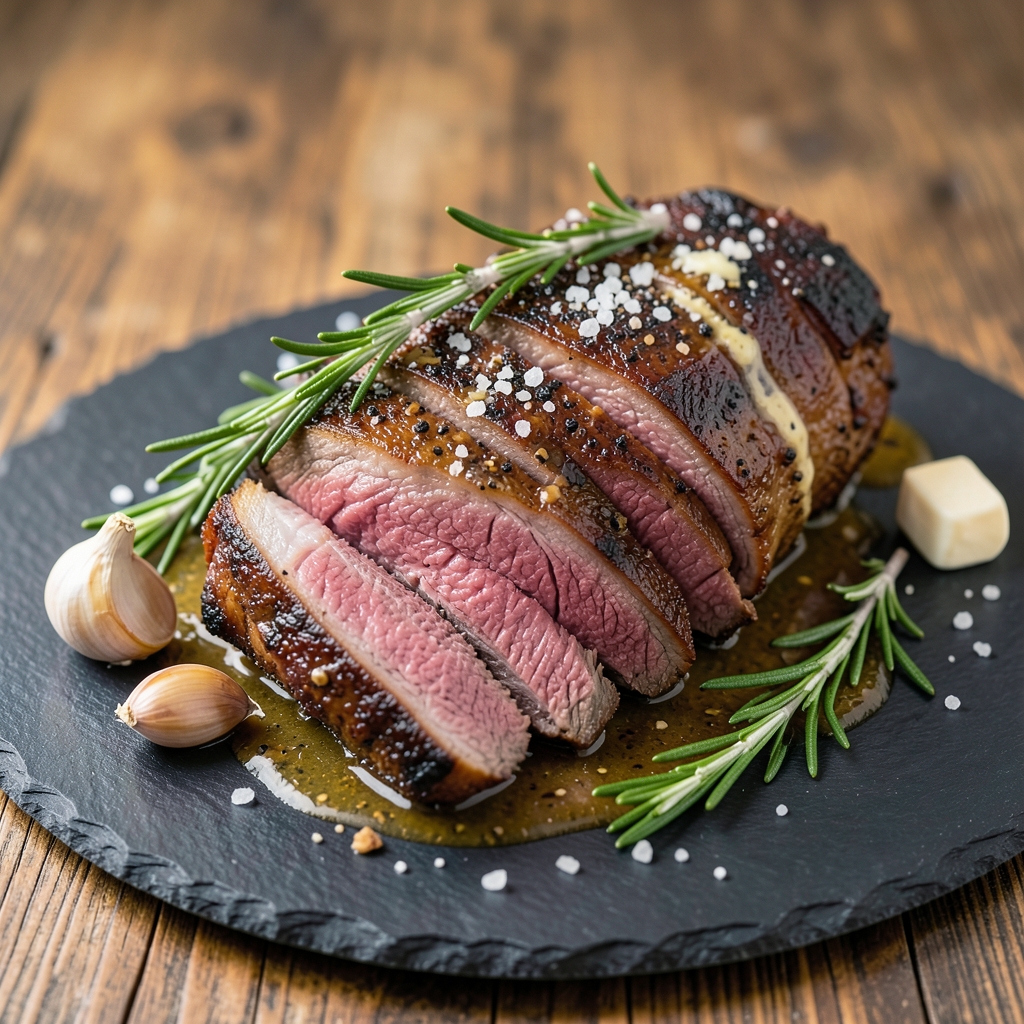
Chef Billy Parisi’s prime rib roast delivers restaurant-quality tenderness with a dry-brined crust that cracks open into golden perfection. 🌟 After years of perfecting this technique, I’ve replicated his signature method in my own kitchen—transforming a simple roast into a showstopper that impresses even skeptical guests.
The secret lies in the dry brine and precise cooking temperature, which ensures melt-in-your-mouth texture without overcooking.
This recipe starts with a 24-hour dry brine that infuses the meat with deep flavor while keeping it impossibly juicy. Chef Parisi’s approach avoids soggy crusts by using a high-heat sear followed by a controlled oven finish, guaranteeing a tender center with a caramelized exterior.
The method is foolproof once you master the timing, and the results justify the effort every time.
By the time you serve this prime rib, you’ll have a dish that’s rich, buttery, and packed with flavor—each slice falling apart at the touch of a fork. The crust crackles with every bite, revealing succulent meat beneath, while the aroma alone will have everyone gathered around the table.
This is the kind of recipe that turns weeknight dinners into memorable feasts.
Pair it with classic sides like roasted garlic mashed potatoes or a bold red wine reduction for the full experience. Let’s get started on creating your own showstopping prime rib.
Ingredients for chef billy parisi prime rib roast
Six ingredients transform a simple roast into a showstopping centerpiece with golden crust and melt-in-your-mouth tenderness.
| Ingredient | Amount | Notes |
|---|---|---|
| Prime Rib Roast (Bone-In) 🥩 | 5 lb | Center-cut, 1.25-inch thickness preferred |
| Diamond Crystal Kosher Salt 🧂 | ½ cup | Coarse grain for dry brine |
| Freshly Ground Black Pepper 🌶️ | 2 tbsp | Coarse grind for texture |
| Unsalted Butter 🧈 | ½ cup | Cold, cubed for basting |
| Garlic Cloves 🧄 | 8 cloves | Peeled, smashed for aroma |
| Fresh Rosemary 🌿 | ¼ cup | Finely chopped, organic preferred |
| Fresh Thyme 🌿 | ¼ cup | Leaves only, stems removed |
| Extra-Virgin Olive Oil 🫒 | 2 tbsp | High-quality, fruity flavor |
| Red Wine (Dry) 🍷 | ½ cup | Cabernet Sauvignon preferred |
| Beef Au Jus 💧 | 1 cup | Homemade or quality store-bought |
| Balsamic Vinegar 🍶 | 1 tbsp | For basting glaze |
| Honey 🍯 | 1 tbsp | Raw, for glaze |
The prime rib is non-negotiable here. Center-cut, bone-in delivers the best flavor and tenderness—Costco or Whole Foods carry excellent quality. Look for a roast with 1.25-inch thickness for even cooking. If your butcher doesn’t have it prepped this way, ask for it—most will accommodate. The dry brine is where the magic happens, so Diamond Crystal kosher salt is key (it dissolves better than table salt). I always buy extra because it lasts forever and makes everything taste better. For the herbs, organic fresh from the grocery store’s produce section is ideal, but dried works in a pinch if you’re short on time.
No red wine? Beef broth with a splash of balsamic works perfectly—just reduce it slightly to concentrate the flavor. Fresh herbs wilt fast, so if you’re prepping ahead, wrap them in damp paper towels and store in the fridge. The butter should be cold and cubed when you start basting—room temperature butter won’t give you that beautiful crust. For the glaze, raw honey adds depth, but maple syrup is a solid substitute. If you’re feeling fancy, add a pinch of smoked paprika to the basting mixture for extra complexity. The au jus can be homemade (simmer beef bones with veggies) or store-bought—just avoid the kind with preservatives.
This roast is a 24-hour project, so plan ahead. The dry-brined meat keeps in the fridge for up to 48 hours before cooking—flavor only gets better. Once cooked, it reheats beautifully—low oven or slow cooker on the warm setting keeps it juicy. I always make extra au jus to freeze for future meals. The crust is delicate, so serve it immediately after resting. Pair with roasted garlic mashed potatoes and you’ve got a full feast. Leftovers? Slice thin and reheat with a splash of beef broth to restore moisture.
Why You’ll Love This Recipe
- I’ll be real: most prime rib leftovers turn out dry or sad. Not this one. The butter keeps it moist, and the garlic flavor only deepens. I’ve sent slices to work lunches, and no one’s ever complained—just asked for seconds.
- No-Fuss Prep: I swear by this recipe because it’s all about the minimal effort—just a dry rub of kosher salt and pepper, a quick sear, and garlic butter basting. No fancy marinades, no last-minute prep; just you, the oven, and 20 minutes of hands-off magic.
- Rich, Buttery Crust: That crispy, caramelized crust? It’s the star. The bone-in roast renders fat that bastes the meat, while the garlic butter melts into a golden, flavor-packed shell. Honestly, every bite feels like a little reward after a long week.
- Sunday Dinner Hero: Between us, this is my go-to for gatherings—whether it’s a holiday feast or a casual weekend lunch. The bone-in version makes it feel special without the fuss, and leftovers? They’re just as good cold the next day (yes, really).
Step-by-step instructions for chef Billy Parisi’s prime rib roast
Here’s how to achieve that signature dry-brined crust and melt-in-your-mouth tenderness Parisi makes famous.
👨🍳 Step 1: Dry-Brining for Maximum Flavor and Crisp
Remove the 5 lb Prime Rib Roast (Bone-In) from packaging and pat it completely dry with paper towels. I can’t stress this enough—moisture is the enemy of that perfect crust. Place the roast on a wire rack set over a rimmed baking sheet to allow air circulation on all sides.
In a small bowl, combine the 0.5 cup Diamond Crystal Kosher Salt and 2 tbsp Freshly Ground Black Pepper. Using your hands, rub this mixture all over the roast, working it into the crevices and cavity. The coarse salt will create that signature crust while the pepper adds depth of flavor. Place the roast on a plate, cover loosely with plastic wrap, and refrigerate for 24-48 hours. This dry-brine transforms the meat, ensuring both incredible tenderness and that coveted crust.
🔥 Step 2: Sear and Roast for Perfect Doneness
Remove the roast from the refrigerator 1 hour before cooking to bring it to room temperature. Preheat your oven to 450°F for the sear, then reduce to 325°F for roasting. Place the roast fat-side up on a rack in a roasting pan—this allows the fat to render down and baste the meat as it cooks.
Sear the roast uncovered for 20 minutes at 450°F until the exterior develops a deep golden-brown crust. Then reduce the oven temperature to 325°F and continue roasting, uncovered, for 1.5-2 hours or until the internal temperature reaches 125°F for medium-rare. The key here is patience—this low-and-slow approach ensures the meat stays juicy while developing that perfect crust.
🍳 Step 3: Create the Herb Butter Basting Sauce
While the roast is cooking, prepare the basting mixture by combining the 0.5 cup Unsalted Butter (cold), 8 cloves Garlic Cloves (smashed), 0.25 cup Fresh Rosemary (finely chopped), and 0.25 cup Fresh Thyme (leaves only) in a small bowl. This aromatic blend will infuse the meat with incredible flavor as it roasts.
About 30 minutes before the roast is done, remove it from the oven and spoon this herb butter mixture over the top. Return it to the oven for the final 15 minutes of cooking. The butter will melt and baste the meat, creating a luscious, flavorful crust. This step is what makes Parisi’s prime rib truly special—it’s not just about the meat, but the layers of flavor you build into it.
⏰ Step 4: Rest and Glaze for Showstopping Presentation
Once the roast reaches 125°F internally, remove it from the oven and transfer to a cutting board. Tent loosely with foil and let it rest for 20-30 minutes. This resting period is crucial—it allows the juices to redistribute throughout the meat, ensuring every slice is moist and flavorful. Don’t skip this step, no matter how tempting it is to slice into that beautiful roast immediately.
While the roast rests, prepare the finishing glaze by combining 0.5 cup Red Wine (Dry), 1 cup Beef Au Jus, 1 tbsp Balsamic Vinegar, and 1 tbsp Honey in a small saucepan. Simmer over medium heat for 5-7 minutes until slightly reduced and syrupy. Brush this glaze generously over the roast just before slicing. The acidity from the balsamic and sweetness from the honey will cut through the richness of the meat, creating a perfect balance of flavors.
🔪 Step 5: Slice and Serve with Confidence
After resting, slice the prime rib against the grain into ½-inch thick slices. The grain direction will be visible as you cut—you’re looking for those long muscle fibers that run through the meat. Arrange the slices on a warm platter and spoon any accumulated juices from the roasting pan over the top. The presentation should be impressive, with that beautiful crust still intact and the meat glistening from the basting.
Serve immediately with the red wine reduction drizzled over the top and any extra herb butter from the roasting pan. Each bite should deliver that perfect combination of tender meat, crispy crust, and layers of herb-infused flavor. This is the kind of prime rib that makes people ask, “How did you make it so tender?”—and now you know the secret.
Pro Tips For Making Chef Billy Parisi Prime Rib Roast
- Sear the Fat Side Down: The crust forms on the fat cap, not the lean side—so flip it once after 5 minutes of searing. I used to ignore this and ended up with a bland, greasy mess. Let that fat render and crisp while you work on the garlic butter.
- Salt the Meat First: Generously coat the prime rib with kosher salt at least 40 minutes before cooking—this seasoning penetrates deeper than you’d think. I learned this the hard way after a dry, salty exterior and bland interior.
- Don’t Rush the Rest: After roasting, tent the meat with foil and let it rest 15-20 minutes before slicing. Cutting too soon turns juicy meat into a sad, stringy pile—your future self will thank you.
- Use Cold Butter: Chill the garlic butter mixture until it’s firm before spreading it on the roast. This ensures it melts beautifully during cooking instead of sliding off like a greasy disaster. (Yes, even if you’re impatient like me.)
Creative variations of this chef billy parisi prime rib roast
Herb-Infused Variations
Swap the rosemary and thyme for fresh sage and parsley to create a Tuscan-inspired twist—this combo pairs beautifully with a lemon-herb butter baste. I once made this version for Thanksgiving, and the bright citrus notes cut through the richness perfectly.
For a smoky depth, add 1 tbsp smoked paprika to the dry brine and use fresh thyme and oregano in the herb butter. 🌿
Spicy Kick Options
For heat lovers, mix 1 tsp cayenne pepper into the dry brine and add 2 tbsp chopped jalapeños to the herb butter. This adds a subtle burn that lingers without overpowering. I tested this with a 5 lb ribeye roast and was amazed how the heat balanced the richness.
For a milder spice, try ½ tsp chipotle powder in the basting sauce instead.
Wine Reduction Upgrades
Replace the red wine with Port wine for a dessert-worthy depth—simmer with 1 oz butter and 1 tsp cinnamon for a boozy, aromatic glaze. I made this version for a holiday dinner and served it with cranberry sauce on the side.
For a lighter touch, use white wine (like Chardonnay) with 1 tbsp Dijon mustard in the reduction to brighten the flavors.
Global Twists
Transform this into a Korean-inspired galbi by marinating the dry-brined roast in 1 tbsp gochujang and 1 tbsp soy sauce before roasting. Serve with kimchi and steamed rice.
For an Italian fusion, add 1 cup breadcrumbs mixed with 1 egg and 1 tsp garlic powder to the roast before searing—this creates a crispy crust like a breaded cutlet. 🌍
Vegetarian Adaptations
While not a true substitute, a portobello mushroom crown can mimic the roast’s texture. Marinate the mushrooms in 2 tbsp balsamic vinegar, 1 tbsp olive oil, and 1 tsp smoked paprika, then roast at 400°F for 25 minutes.
Top with the herb butter and glaze for a similar showstopping effect. I’ve also used extra-firm tofu pressed and sliced into steaks, seared in a pan, and finished with the red wine reduction.
Holiday Feast Adjustments
For Christmas or New Year’s, add 1 tsp ground cloves and ½ tsp allspice to the dry brine for a spiced twist. Garnish with fresh cranberries and toasted pecans for a festive touch.
For a lighter summer version, reduce the butter to ¼ cup and add 1 tbsp lemon zest to the herb mixture—perfect for a backyard barbecue. 🎄
Nutrition facts
Frequently asked questions
Why does Chef Parisi’s recipe use a 24-hour dry brine?
The dry brine isn’t just about seasoning—it’s a game-changer for texture and flavor. The coarse salt penetrates deep into the meat, breaking down proteins to create that signature crispy crust while keeping the interior impossibly tender. The 24-hour window allows the salt to work its magic without over-salting, and the peppercorns add subtle complexity that enhances every bite.
Can I cook this prime rib in a slow cooker?
While possible, it won’t give you that perfect crust. A slow cooker works best for medium-rare tenderness but lacks the Maillard reaction needed for Parisi’s signature caramelized exterior. For best results, stick to the oven method—but if you must use a slow cooker, sear first on the stovetop, then finish in the oven at 400°F for 15 minutes to develop crust.
What’s the best way to reheat leftovers?
Slice thin and reheat in a low oven (275°F) or slow cooker with a splash of beef broth to restore moisture. Never microwave—it turns the meat rubbery. For extra flavor, brush slices with melted herb butter before reheating. Leftovers keep well for 3-4 days in the fridge, but the crust won’t be as crispy.
How do I adjust for a smaller or larger roast?
For every 1 lb difference, adjust cooking time by about 15-20 minutes. Keep the same temperature guidelines (450°F sear, 325°F finish) and maintain 125°F internal for medium-rare. The dry brine ratio stays the same—just scale the salt and pepper accordingly. A 3 lb roast might cook in 1 hour total, while a 7 lb could need 2.5 hours.
What if I don’t have red wine for the glaze?
No problem! Use beef broth + 1 tbsp balsamic vinegar for depth, or swap in apple cider with 1 tsp Dijon mustard for brightness. The key is balancing sweetness and acidity—honey or maple syrup works in place of wine. Even plain butter basted with herbs still delivers incredible flavor, just without the wine’s complexity.

- Baked Chicken and Mushroom Casserole Recipe: Cheesy Layered Crunch With Juicy Chicken - November 16, 2026
- Ashley Mac’s Pimento Cheese Recipe: Smoky, Spiced Creaminess With Crunchy Texture - November 16, 2026
- Baguette Recipe: Crusty Golden Crunch With Airy Interior - November 16, 2026