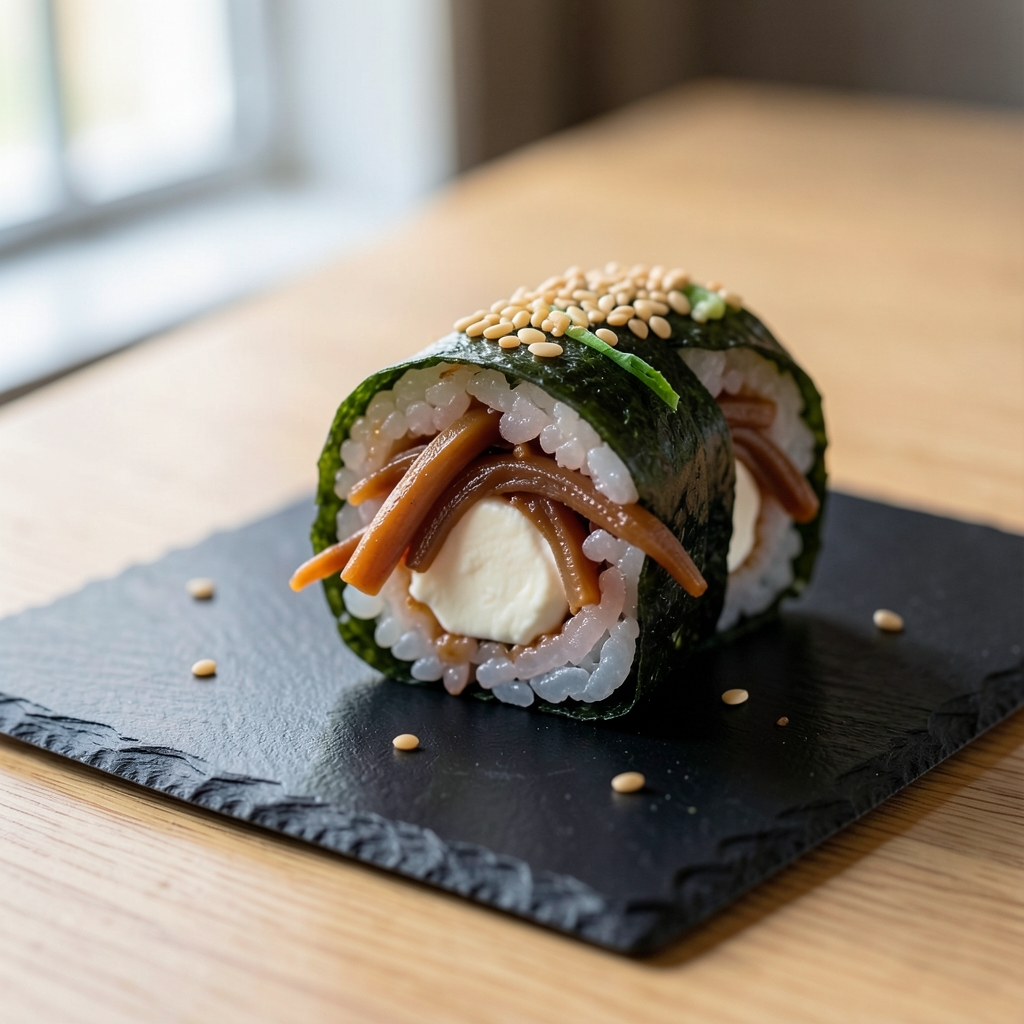
Mastering the caterpillar roll sushi recipe transforms simple ingredients into a showstopping dish that looks as impressive as it tastes. The secret lies in precise rolling technique and a creamy cream cheese heart that gives this roll its signature name.
I’ve perfected this recipe through countless practice sessions, ensuring even beginners can achieve professional results with just a few key tips.
This elegant roll combines perfectly seasoned sushi rice with flaky crab sticks and creamy filling, all wrapped in delicate nori sheets. The rolling process creates that iconic caterpillar shape, while the cream cheese heart adds a luxurious texture that keeps everyone coming back for more.
With just 15 minutes of active prep time, you’ll have restaurant-quality sushi ready to serve.
What makes this recipe truly special is how it balances simplicity with sophistication. The sushi rice comes together in minutes, and the rolling technique becomes intuitive with practice. Each bite delivers tender crab, creamy filling, and perfectly seasoned rice wrapped in that delicate nori shell.
It’s the kind of dish that elevates any meal from ordinary to extraordinary.
Whether you’re serving this as a centerpiece for a dinner party or simply treating yourself to a special sushi night at home, this recipe delivers consistent, professional results. The caterpillar roll’s distinctive shape makes it instantly recognizable, while its creamy center provides that perfect balance of textures and flavors.
Let’s get started on creating your own masterpiece.
Ingredients for caterpillar roll sushi
Fourteen ingredients transform into elegant sushi rolls with professional flair and creamy texture.
| Ingredient | Amount | Notes |
|---|---|---|
| Sushi Rice 🍚 | 2 cups | Cooked and seasoned with rice vinegar |
| Nori Sheets 🍣 | 4 whole | High-quality, slightly sticky |
| Crab Sticks 🦀 | 6 oz | Flaky, imitation or real preferred |
| Cream Cheese 🧀 | ½ cup | Full-fat for best texture |
| Rice Vinegar 💧 | ¼ cup | Seasoned with sugar and salt |
| Sesame Seeds 🌾 | 1 tbsp | White or black preferred |
| Mayonnaise 🥫 | ¼ cup | For crab stick binding |
| Soy Sauce 🍶 | 2 tbsp | For dipping sauce |
| Wasabi 🌶️ | 1 tsp | Fresh or paste |
| Pickled Ginger 🍈 | ¼ cup | Thinly sliced for serving |
| Sesame Oil 🫒 | 1 tsp | For rice seasoning |
| Sugar 🍬 | 2 tbsp | For rice seasoning |
| Salt 🧂 | ½ tsp | Kosher or sea salt |
| Avocado 🥑 | ½ whole | Optional, sliced for garnish |
The nori sheets are non-negotiable for that authentic texture—look for brands like Koyo or Nori House, available at Asian markets or well-stocked grocery stores. Crab sticks should be flaky and well-packaged; Trader Joe’s or Costco carry reliable options. For the rice, sushi-grade short-grain rice is essential—Koshihikari or Calrose varieties work best. Seasoning the rice properly is key: combine rice vinegar, sugar, and salt in a small bowl to create the perfect marinade. The cream cheese should be full-fat for that luxurious texture—Philadelphia brand is a reliable choice, but any high-quality cream cheese will do.
No crab sticks? Lobster or shrimp works beautifully, though texture will differ slightly. Avocado can be swapped for cucumber if you prefer a crunchier bite. For the rice seasoning, mirin can replace sugar if you have it on hand—just use 1 tbsp mirin plus 1 tsp sugar for the same effect. Wasabi can be adjusted to taste; some prefer a milder version, while others love the heat. If you’re short on time, pre-cooked sushi rice from the store works in a pinch, though freshly cooked rice yields the best results. The pickled ginger adds a refreshing contrast—ensure it’s thinly sliced for easy eating.
Store nori sheets in a cool, dry place for up to 6 months—they’ll crisp up if exposed to humidity. Cream cheese should be kept refrigerated and used within 2 weeks of opening. The sushi rice keeps well in the fridge for 3-4 days if stored in an airtight container. For the crab sticks, follow package instructions for storage, but they’re best used within a week of opening. To reheat, gently warm the rolls in a steamer for 20-30 seconds—this preserves the delicate textures without drying them out. Garnish with sesame seeds just before serving for that final touch of elegance.
Why You’ll Love This Recipe
- No-Chop Necessary: I swear by this trick—just spread the rice, layer the crab sticks, and roll. No knife skills required, no tiny pieces flying everywhere. The cream cheese holds it all together like magic.
- Creamy-Crunch Magic: That first bite? Crispy nori, fluffy rice, and the perfect contrast of creamy cheese with the snap of crab sticks. Honestly, it’s the kind of combo that makes sushi feel indulgent without the fuss.
- Party in a Roll: Between us, these disappear at gatherings. Serve them whole for fancy vibes or slice into bite-sized pieces for a crowd—no one judges either way. My book club always asks for the recipe now.
- Budget-Friendly Luxury: You’re getting restaurant-quality texture for a fraction of the cost. Crab sticks and cream cheese stretch the rice further, and nori sheets mean no wasted ingredients. Leftovers? Roll ‘em up again—same great taste, zero waste.
Step-by-step instructions for caterpillar roll sushi
Master this elegant roll with precise layering and perfect rice seasoning for restaurant-quality results.
Prepare the Sushi Rice
Rinse the 2 cups sushi rice under cold water until the water runs clear, then drain well in a fine-mesh strainer for 10 minutes. Transfer to a pot with 2¼ cups water, bring to a boil over high heat, then reduce to low and simmer for 15 minutes covered. Remove from heat and let sit covered for 10 minutes.
In a small bowl, whisk together the 0.25 cup rice vinegar, 2 tablespoons sugar, 0.5 teaspoon salt, and 1 teaspoon sesame oil. Gently fold this mixture into the cooked rice using a cutting motion with a rice paddle. The rice should be glossy and slightly sticky but not wet. Spread the rice evenly on a bamboo mat covered with plastic wrap, creating a 6-inch square layer.
Assemble the Roll Components
Cut the 6 oz crab sticks into ½-inch pieces and mix with the 0.25 cup mayonnaise and 1 teaspoon wasabi in a small bowl. Spread the 0.5 cup cream cheese evenly over the rice layer, leaving a ½-inch border at the top. Arrange the crab stick mixture in a line parallel to the top edge, about 1 inch from it.
Slice the 0.5 whole avocado in half, remove the pit, and scoop out the flesh. Mash it lightly with a fork and spread it along the top edge of the rice, creating a thin strip. This will form the “head” of your caterpillar roll. Keep the remaining avocado for garnish.
Shape and Slice the Rolls
Carefully lift the bamboo mat and roll the rice tightly into a log, applying gentle pressure to maintain shape. Use the mat to compress the roll evenly. Unroll the mat, place a nori sheet shiny-side down, and position the rice log horizontally on it. Cover with another nori sheet, shiny-side up, and roll again to fully encase the rice.
Chill the completed roll in the refrigerator for 20 minutes to firm up. Using a sharp, wet knife, slice the roll into 8 pieces. For the caterpillar effect, use a toothpick to create small holes in each piece, then pipe a thin line of cream cheese along the top to resemble a caterpillar’s body. Garnish with sliced avocado and sprinkle with 1 tablespoon sesame seeds.
Prepare the Dipping Sauce
In a small bowl, mix the 2 tablespoons soy sauce with 0.25 cup pickled ginger, cutting the ginger into thin strips. Add 1 teaspoon sesame oil and stir gently to combine. This tangy sauce complements the creamy roll perfectly.
Arrange the caterpillar rolls on a platter with the dipping sauce in a small bowl at the center. Serve immediately with additional pickled ginger on the side. The rolls should hold their shape well and have a balance of creamy, flaky, and slightly tangy flavors in every bite.
Pro Tips For Making Caterpillar Roll Sushi
- Chill the Crab Sticks: Pop those crab sticks in the fridge for 10-15 minutes before slicing—it makes them firmer and easier to cut into neat, even strips. I used to skip this and ended up with a messy pile of crumbly crab, which turns your pretty caterpillar roll into a sad, lumpy log.
- Spread Cream Cheese Thin: Use a thin, even layer of cream cheese—about ¼ cup per sheet—so it doesn’t bulge or tear the nori when you roll. Too much cheese is the fastest way to turn your caterpillar into a greasy, unraveling disaster.
- Wet Your Hands: Dip your hands in cold water before shaping the roll—it keeps the rice from sticking to your fingers and makes rolling smoother. Dry hands mean rice clumps, and clumps mean a roll that looks like it was made by a toddler.
- Seal the Edges Fast: Press the nori edges firmly against the rice before adding fillings—this locks the roll together and prevents the crab and cream cheese from spilling out when you slice. I learned this after my first batch fell apart like a wet paper towel.
Essential equipment for great caterpillar roll sushi
Bamboo Mat Essentials
You absolutely need a bamboo sushi mat (also called a makisu) to create those perfect, tight rolls. I recommend the Norpro 14-inch mat—it’s durable, easy to clean, and has that perfect grip.
The plastic wrap covering prevents sticking and makes rolling a breeze. If you’re tight on space, the foldable silicone mats work too, though they lack the same precision for beginners. 🌿
Nori Sheet Quality
Invest in high-quality nori sheets—brands like Koyo or Nori House make all the difference. I buy mine at H Mart or Trader Joe’s in the Asian foods section. Avoid pre-toasted sheets; they crisp up too quickly and lose that delicate flexibility.
Store them in a cool, dry place (not the fridge) to maintain freshness. The sheets should be slightly sticky to the touch but not brittle.
Sharp Knife for Slicing
A sharp, wet knife is non-negotiable for clean cuts. I use a Gyuto-style Japanese knife (like the Shun Premier) for professional results. Dip the blade in water every few slices to prevent sticking—this also helps create that signature slick finish.
If you don’t have a dedicated sushi knife, a sharp chef’s knife works in a pinch, but it requires more practice. 🔪
Cream Cheese Piping
For that iconic caterpillar effect, you’ll need a small piping bag or a zip-top bag with a corner snipped off. Philadelphia cream cheese pipes best—it’s smooth and holds its shape. If you’re feeling fancy, use a star tip for decorative lines.
I’ve even used a spoon in a pinch, but piping gives you that restaurant-quality precision. Keep extra cream cheese chilled until ready to use.
Rice Paddle & Bowl
A wide, flat rice paddle (like the KitchenCraft bamboo paddle) helps spread rice evenly and prevents sticking. Pair it with a shallow, wide bowl (I use a 12-inch ceramic bowl) to mix the vinegar seasoning without splashing.
For extra gloss, lightly spray the rice with sesame oil before shaping—it adds that professional sheen. 🍚
Chilling Rack & Platter
After rolling, let your caterpillar rolls firm up on a wire cooling rack placed over a baking sheet. This prevents sogginess from condensation. For serving, I love a wooden platter (like the West Elm-style) to elevate the presentation.
If you’re short on time, a large ceramic plate works too—just avoid metal, which can make the rolls sweat. Keep extra nori sheets handy for quick repairs if any tear during slicing.
Nutrition facts
Frequently asked questions
What makes the caterpillar roll different from other sushi rolls?
The caterpillar roll gets its name from the distinctive cream cheese “body” piped along the top after slicing, resembling a caterpillar’s segmented shape. Unlike traditional rolls that are sliced into uniform pieces, this roll features a decorative cream cheese design that makes it instantly recognizable. The avocado “head” adds an extra visual element that sets it apart from classic maki rolls.
Can I make caterpillar rolls without crab sticks?
You can substitute crab sticks with flaked cooked salmon, shrimp, or even tofu for a vegetarian version. The key is to keep the filling moist and flavorful. If using tofu, press it first to remove excess water, then marinate in soy sauce and sesame oil. The texture should remain tender but hold its shape when rolled.
Why does my sushi rice turn out dry or sticky?
Dry rice usually means it was undercooked or over-rinsed, while sticky rice often results from overmixing the seasoning. For perfect rice: rinse until water runs clear (about 3-4 rinses), use the correct water ratio (1:1 rice to water), and let it steam covered for 10 minutes after cooking. When seasoning, fold gently with a rice paddle—don’t stir vigorously to avoid breaking the grains.
How do I fix a roll that’s falling apart when slicing?
If your roll unravels, it’s likely not chilled enough or the nori wasn’t wrapped tightly. First, ensure you roll with firm, even pressure using the bamboo mat. After rolling, refrigerate for 20-30 minutes to firm up. For extra stability, place a second nori sheet inside before rolling, or use a bit of cooking spray on the mat to prevent sticking. A sharp, wet knife also helps create clean cuts.
Can I prepare caterpillar rolls ahead of time?
You can assemble the rolls up to 24 hours ahead, but slice them just before serving to maintain freshness. Store wrapped tightly in plastic wrap in the fridge. For the cream cheese piping, add it fresh before serving—it softens slightly when chilled. Reheat gently in a steamer for 10-15 seconds if needed, but avoid microwaving as it can make the rice gummy.

- Butterscotch Milk Recipe: Warm Caramelized Cream With Vanilla Twist - November 8, 2026
- Whiskey Smash Recipe: Minty Bourbon Fizz With Fresh Citrus Twist - November 8, 2026
- American Heart Association Banana Bread Recipe: Moist Whole-Grain Version With Hidden Veggies - November 8, 2026