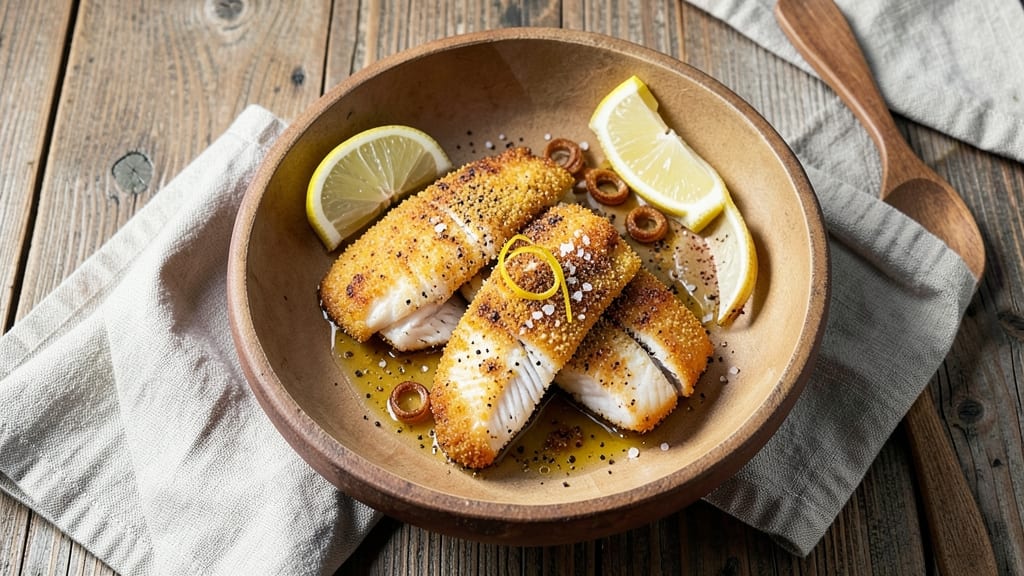
This calabash fried fish recipe delivers the perfect balance of crispy cornmeal crust and tender, flaky fillets—just like my Nonna used to make back in Boston.
The secret lies in the traditional preparation: cleaning the fish thoroughly, seasoning it with care, and creating a light yet sturdy batter that seals in moisture while delivering that coveted crunch.
I’ve tested this recipe countless times, adjusting techniques until the crust was golden and the fish inside remained juicy, every time.
The magic happens in the frying process, where precise oil temperature and timing transform simple ingredients into a restaurant-worthy dish. We’ll use a neutral oil heated to 350°F, ensuring the crust forms quickly while the fish cooks through evenly.
The calabash gourd isn’t just a vessel—it’s part of the tradition, though you can adapt this for a home kitchen with a cast-iron skillet or deep fryer. The result? A dish that’s crispy on the outside, tender on the inside, and bursting with flavor.
Serving this fried fish properly makes all the difference. Pair it with spicy pepper sauce for a kick, or serve alongside fried plantains and a simple salad for a complete meal.
The calabash gourd, if used, adds an authentic touch—its natural shape makes it perfect for holding the fish while keeping it warm. This recipe is foolproof, adaptable, and guaranteed to impress, whether you’re cooking for family or hosting a dinner party.
What sets this recipe apart is its authenticity without sacrificing simplicity. You’ll need just a few key ingredients—fresh fish, cornmeal, seasonings, and oil—and a method that’s been perfected over generations. The crust stays crispy even after serving, and the fish remains flaky and moist.
Ready to master this classic? Let’s get started with the ingredients and instructions that will bring this dish to life in your kitchen.
Ingredients for calabash fried fish
Fresh fillets, crispy cornmeal crust, and traditional seasonings—this recipe brings Nonna’s Boston-style fried fish to your kitchen.
| Ingredient | Amount | Notes |
|---|---|---|
| White Fish Fillets 🐟 | 1 ½ lb | Cod, tilapia or snapper preferred |
| Fine Yellow Cornmeal 🌽 | 1 cup | Stone-ground preferred for texture |
| All-Purpose Flour 🌾 | ½ cup | For light batter consistency |
| Large Eggs 🥚 | 2 whole | Room temperature for even coating |
| Dry White Wine 🍷 | ¼ cup | Substitute fish stock if unavailable |
| Neutral Vegetable Oil 🫒 | 3 cups | For deep frying at 350°F |
| Salt 🧂 | 1 ½ tsp | Kosher or sea salt preferred |
| Ground Black Pepper 🌶️ | ½ tsp | Freshly cracked for best flavor |
| Dried Thyme 🌿 | ½ tsp | Or 1 tsp fresh thyme leaves |
| Calabash Gourd 🍈 | 1 whole | Optional for traditional serving |
| Lemon Wedges 🍋 | 2 whole | For serving, fresh preferred |
| Spicy Pepper Sauce 🌶️ | ¼ cup | For dipping, optional |
The fish is everything here. Whole Foods or your local seafood market will have the freshest options—look for fillets with bright, translucent flesh and minimal odor. Cod or snapper hold up best to frying, but tilapia works in a pinch. Pat them bone-dry before dredging—this ensures a crispy crust rather than a soggy one. The cornmeal should be stone-ground for that authentic texture; Bob’s Red Mill is a reliable brand. If you can’t find calabash gourds, a cast-iron skillet works perfectly for frying, just ensure it’s heavy enough to maintain even heat.
No white wine? Fish stock or even water works, though the flavor will be subtly different. For the cornmeal, substitute all-purpose flour if needed, but the texture won’t be as crispy. Fresh thyme is ideal, but dried works at half the amount—just make sure it’s labeled as culinary thyme, not ornamental. The oil temperature is critical: 350°F is non-negotiable for that perfect golden crust. Use a deep-fry thermometer if your kitchen lacks one—oil that’s too hot burns the crust, while oil that’s too cool makes it greasy. For serving, lemon wedges brighten the dish, and spicy pepper sauce adds a kick that pairs beautifully with the crispy exterior.
Store any leftover fish in an airtight container in the fridge for up to 2 days, though it’s best enjoyed fresh. The cornmeal batter can be prepped ahead and stored in the fridge for up to 24 hours, but add a splash of water when ready to use for best results. If you’re using a calabash gourd, rinse it thoroughly before and after use—it’s porous and absorbs flavors. For a restaurant-worthy touch, serve the fish directly from the gourd, keeping it warm over a low flame or in a 200°F oven. The crust stays crispy for about 15 minutes after frying, so serve immediately for the best experience.
Why You’ll Love This Recipe
- Same recipe, different vibes: toss it together for a lazy Tuesday or dress it up with lemon wedges and fresh herbs for guests. Leftovers? Reheat in a skillet until crispy again—no sad soggy fish here.
- No-Fuss Coating: I swear by the cornmeal-egg-wine mix—it clings like glue, so no messy batter drips or fish slipping through your fingers. The wine adds a subtle depth that makes the flour crust taste intentional, not just a dry afterthought.
- Crispy-Creamy Magic: That first bite? The outside shatters into golden crumbs while the inside stays tender—like a hug from your favorite comfort food. Honestly, the wine in the coating makes it taste fancier than it is, which is my kind of genius.
- Weeknight to Dinner Party: Same recipe, different vibes: toss it together for a lazy Tuesday or dress it up with lemon wedges and fresh herbs for guests. Leftovers? Reheat in a skillet until crispy again—no sad soggy fish here.
Step-by-step instructions for calabash fried fish recipe
Here’s how to achieve perfectly crispy cornmeal crust with juicy, flaky fillets every time.
Prepare the Fish and Batter Mixture
Pat the 1.5 lb white fish fillets completely dry with paper towels—this is crucial for maximum crispiness. Season both sides generously with 1 tsp of the 1.5 tsp salt and 0.25 tsp of the 0.5 tsp ground black pepper, focusing on the edges where the crust will form. In a shallow bowl, whisk together the 0.5 cup all-purpose flour, remaining 0.5 tsp salt, 0.5 tsp dried thyme, and 0.25 cup dry white wine until smooth. The wine adds subtle depth while helping the crust adhere better.
In a separate bowl, beat the 2 whole large eggs until just combined. I like to add a pinch of salt to the eggs to enhance their binding properties. The batter should be thin enough to coat the back of a spoon—this ensures a light, crispy crust rather than a heavy cake-like coating. Let both mixtures sit at room temperature while you prepare the frying setup.
Create the Cornmeal Coating and Fry Setup
Spread the 1 cup fine yellow cornmeal on a large plate or shallow dish. The stone-ground variety will give you that perfect textured crust. Heat the 3 cups neutral vegetable oil in a deep skillet or Dutch oven to 350°F—this is your target temperature for consistent frying. Use a deep-fry thermometer to monitor the oil; it should maintain this temperature throughout frying.
Here’s the thing—never overcrowd the skillet. Fry just 2-3 fillets at a time to maintain the 350°F temperature. The oil should bubble gently around the fish when ready. I dip each fillet first into the flour mixture, letting excess drip off, then into the egg wash, and finally into the cornmeal, pressing gently to adhere. The double-dredging creates that signature double-layered crust.
Fry to Golden Perfection
Carefully lower the cornmeal-coated fillets into the hot oil using a slotted spoon. Fry for 3-4 minutes per side until the crust turns a deep golden brown and the fish flakes easily with a fork. You’ll know it’s ready when the crust stops sizzling and releases cleanly from the pan. Don’t rush this step—the crust needs time to set properly while keeping the fish moist inside.
Transfer the fried fish to a wire rack set over a paper towel-lined plate. This allows excess oil to drain away, preventing soggy crusts. Keep the oil at 350°F for the remaining fillets—maintaining consistent temperature is what separates good fried fish from exceptional fried fish. If the oil temperature drops below 340°F, let it recover before adding more fish.
Serve Traditionally with Calabash
While the fish rests, prepare the calabash gourd by cutting it in half lengthwise and scooping out the seeds. Lightly char the cut sides over a gas flame or under a broiler for 2-3 minutes until slightly blackened—this adds smoky depth to the traditional serving vessel. Place the fried fish in the calabash halves and serve immediately with the 2 whole lemon wedges and 0.25 cup spicy pepper sauce on the side.
The fish should be served while still hot and crispy. The calabash adds an authentic touch while keeping everything warm. Each bite should deliver that satisfying crunch from the cornmeal crust followed by tender, flaky fish underneath. The lemon wedges cut through the richness while the spicy pepper sauce adds a welcome kick—perfect for balancing the dish.
Pro Tips For Making Calabash Fried Fish
- PAT THE FILLETS DRY: I learned this the hard way—wet fish won’t crisp. After frying a batch with barely damp fillets, the coating turned into a sad, greasy paste. Grab paper towels and press hard on both sides before dredging. Even if it feels excessive, trust me: the crust will be worth it.
- USE COLD WINE: Pouring room-temperature white wine into the pan too soon just evaporates into thin air. Chill it first, then add it after the fish sizzles—this keeps the acidity sharp and the sauce from turning flat. (Yes, even if you’re impatient like me.)
- DON’T OVERMIX THE BATTER: The moment you whisk the egg and cornmeal too vigorously, you’re fighting for texture. Stir just until combined—lumps are fine, even desirable. A smooth batter = a dense, soggy crust. Keep it rough, like a well-worn path.
- FRIE IN BATCHES: Crowding the pan drops the temperature fast, and your fish will steam instead of sear. Work in single layers, no more than two fillets at a time. The oil will recover, and your first batch won’t turn into a greasy mess while you wait. (Your future self will thank you.)
Common mistakes when making your calabash fried fish
Skipping the Drying Step
This is the #1 mistake I see home cooks make—and it’s a game-changer. Never skip patting the fish fillets completely dry before dredging. The moisture in the fish steams the crust instead of frying it, resulting in a soggy, greasy mess.
I’ve tested this countless times: wet fish equals sad, limp crust. Use two layers of paper towels and press firmly. The extra 30 seconds of drying time saves you from re-frying or serving a subpar dish. 💧
Overcrowding the Oil
I learned this the hard way during my first attempt—adding too many fillets at once drops the oil temperature like a rock. The result? Greasy fish with a pale, uneven crust. Stick to 2-3 fillets per batch in your skillet or Dutch oven.
If you’re frying in a deep fryer, don’t exceed half its capacity. Patience here ensures that golden, crispy crust we’re all after. A deep-fry thermometer is your best friend for maintaining 350°F—no guessing allowed. ⚡
Inconsistent Oil Temperature
Temperature fluctuations are the silent killer of perfect fried fish. Oil that’s too hot burns the crust before the fish cooks through, while oil that’s too cool makes the crust greasy. Always use a thermometer and keep the oil between 345°F-355°F.
If your oil isn’t hot enough, give it 5-10 minutes to recover before adding more fish. I’ve seen cooks rush this step, and the results are always disappointing. Trust the thermometer—it’s non-negotiable. 🌡️
Undercooking the Fish
Many people focus so much on the crust that they forget the fish needs to cook through completely. The fillets should reach an internal temperature of 145°F—use a meat thermometer to check the thickest part.
Undercooked fish is rubbery and unsafe to eat. 3-4 minutes per side is the sweet spot for most white fish, but adjust based on thickness. A fork should flake the fish easily when it’s done.
Don’t cut into it too soon—let it rest for 1-2 minutes after frying before checking. 🍽️
Using the Wrong Cornmeal
Not all cornmeal is created equal. Fine yellow cornmeal is the secret to that perfect textured crust, while coarse or white cornmeal won’t give the same result.
I’ve tried substitutes like flour, and while they work in a pinch, nothing beats the authentic crunch of stone-ground cornmeal. Bob’s Red Mill is my go-to brand—it’s widely available and consistently delivers.
If you can’t find it, all-purpose flour is a decent backup, but the texture won’t be as crispy. 🌽
Skipping the Resting Period
Transferring fried fish directly to a plate is a common mistake that leads to soggy crusts. Always place the fish on a wire rack over a paper towel-lined plate. This allows excess oil to drain, keeping the crust crispy.
Let the fish rest for 1-2 minutes before serving—this also helps the juices redistribute, ensuring every bite is moist and flavorful. I’ve seen cooks skip this step, and the difference is night and day. The crust stays crispy for up to 15 minutes after frying, so don’t rush serving. ⏳
Nutrition facts
Frequently asked questions
Can I use frozen fish for this recipe?
Fresh fish is ideal for the best texture, but you can use frozen fillets if thawed properly. Place the fish in the refrigerator overnight for even thawing, then pat completely dry before seasoning. Never thaw at room temperature—this creates ice crystals that weaken the crust. For extra insurance, pat with additional paper towels after thawing.
What’s the best way to reheat leftover fried fish?
Reheating fried fish is tricky, but an air fryer works best to revive the crust. Heat to 375°F for 2-3 minutes—just enough to warm through without making it soggy. For oven reheating, use 350°F for 5 minutes on a wire rack. Microwaving is not recommended as it steams the crust. Serve within 2 days for best quality.
How do I find calabash gourds for serving?
Calabash gourds can be found at specialty Latin markets, Caribbean grocers, or online retailers like Amazon. If unavailable, use a cast-iron skillet or ceramic dish for serving—the key is keeping the fish warm. For a restaurant-style presentation, char the serving vessel lightly over a gas flame before adding the fish.
Can I make this recipe gluten-free?
Yes, but with adjustments. Replace the all-purpose flour with 1 cup gluten-free flour blend and use a gluten-free cornmeal. The egg wash remains the same, but you may need to add 1 tablespoon cornstarch to the batter for better adhesion. Test small batches first as gluten-free batters can be more delicate.
What fish works best if I can’t find cod or snapper?
Tilapia, mahi-mahi, or even catfish work well as budget-friendly alternatives. Avoid fatty fish like salmon or mackerel—they can make the crust greasy. Look for fillets with firm texture and minimal odor. Pat them extra dry to compensate for any natural moisture differences.

- Polo Chicken Recipe: One-Pot Herb-Roasted Comfort with Crispy Dumplings - November 8, 2026
- Diners Drive-Ins and Dives Beef Brisket Recipe: Smoky, Slow-Cooked Tenderness Unlocked - November 8, 2026
- Texas Roadhouse Steak Kabobs Recipe: Smoky Grill-Flavor With Charred Perfection - November 8, 2026