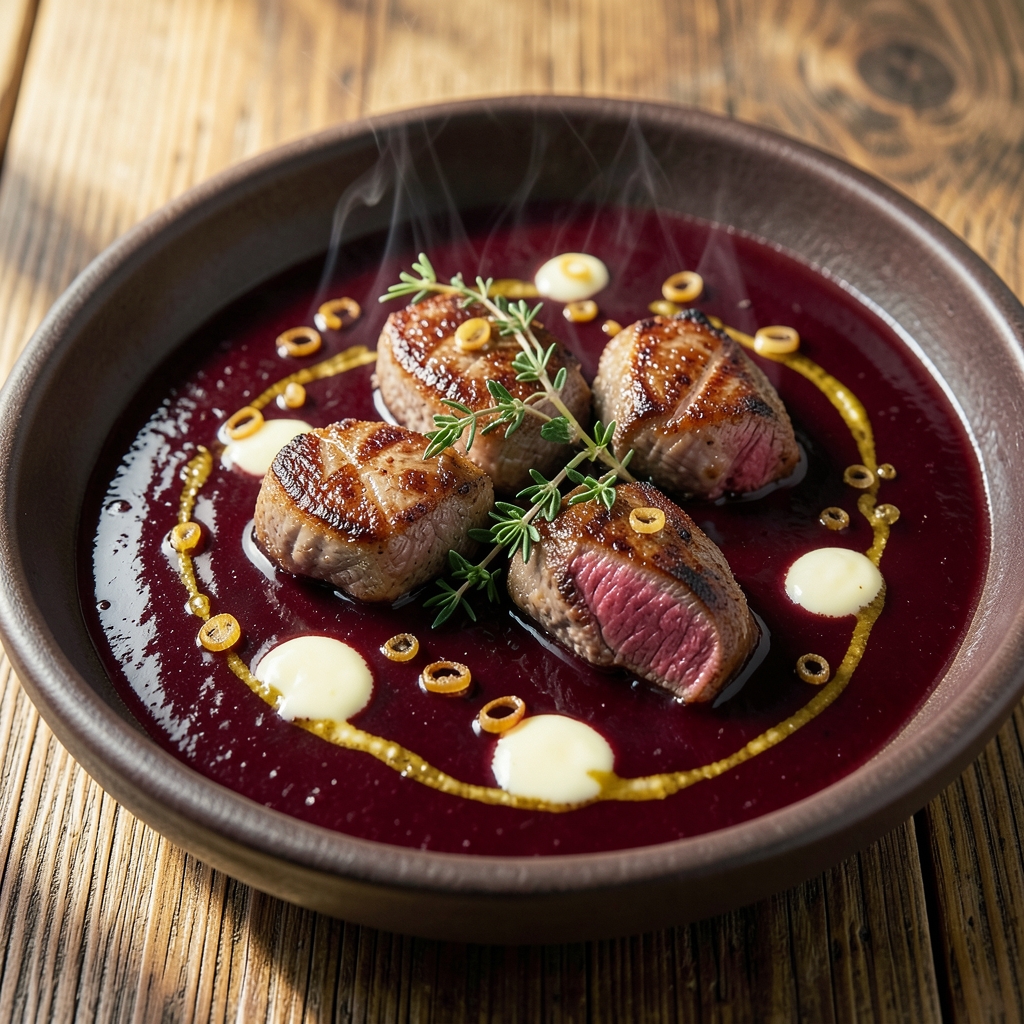
This cabernet sauce recipe transforms bold red wine into a luxurious, umami-rich reduction that elevates any protein dish to restaurant-quality status. The secret lies in slow reduction and precise seasoning—where deep caramelized notes from shallots and butter marry perfectly with the wine’s natural acidity.
I developed this sauce after years of perfecting wine reductions, ensuring every batch delivers that perfect balance of richness and brightness.
What makes this sauce truly special is its versatility—it works equally well as a glaze for steak, a drizzle over roasted lamb, or even a bold addition to grilled vegetables. The process is straightforward: simmer the wine until reduced by half, then build layers of flavor with aromatics and butter.
No fancy techniques required, just patience and attention to detail. This is the kind of sauce that turns a simple weeknight dinner into something memorable.
The result is a velvety, glossy sauce with concentrated wine flavor and just the right amount of acidity to cut through richness. It clings beautifully to meats and vegetables, adding depth without overpowering.
Whether you’re cooking for a special occasion or just want to impress with minimal effort, this cabernet sauce delivers professional-level results every time.
Pair it with your favorite steak, lamb chops, or even mushrooms for a vegetarian option. Once you try this sauce, you’ll never settle for store-bought again—it’s that good. Let’s get started on creating your own luxurious reduction.
Ingredients for cabernet sauce
Nine ingredients. One luxurious sauce. Your pantry already has most—just add patience.
| Ingredient | Amount | Notes |
|---|---|---|
| Dry Cabernet Sauvignon 🍷 | 2 cups | Bold, dry red wine (14% alcohol) |
| Shallots 🧅 | ½ cup | Finely minced, vibrant purple |
| Unsalted Butter 🧈 | ½ cup | Cold, cubed for finishing |
| Beef Stock 🥩 | 1 cup | High-quality, low-sodium |
| Dijon Mustard 🍯 | 1 tbsp | For depth and tang |
| Fresh Thyme Leaves 🌿 | ¼ cup | Or 1 tsp dried thyme |
| Garlic Cloves 🧄 | 3 cloves | Peeled, smashed slightly |
| Red Wine Vinegar 🍋 | 1 tsp | Brightens acidity |
| Diamond Crystal Kosher Salt 🧂 | ½ tsp | Adjust to taste |
| Fresh Black Peppercorns 🌶️ | ¼ tsp | Cracked, not ground |
The wine is non-negotiable—Cabernet Sauvignon with at least 14% alcohol works best (that bold, dry kind). Trader Joe’s and Total Wine carry great options under $15. Shallots? Freshly minced makes all the difference—pre-minced loses flavor fast. For butter, Plugrá or Land O’Lakes unsalted melt beautifully. The beef stock should be rich but not salty—Kitchen Basics or homemade works perfectly. Grab a small bunch of thyme from the grocery store’s produce section (it’s cheaper than individual sprigs).
No Cabernet? Merlot or Pinot Noir in a pinch, but add an extra splash of vinegar to compensate. Dijon mustard stuck in the back of your spice rack? Moutarde de Dijon from Whole Foods is worth the splurge. Fresh thyme wilted? Dried at one-third the amount gets you close. Garlic too strong? Roast it first—sweetens the flavor dramatically. The vinegar can be swapped for lemon juice if you’re out, but red wine vinegar’s depth is ideal here. Salt is last—taste as you go; the sauce reduces further.
This sauce peaks after 2 days in the fridge—flavors meld beautifully. Store in a glass jar with a tight seal; the wine aroma intensifies over time. Freezes for 3 months if you want to make a big batch. I always double the recipe—half for immediate use, half for later. The butter should be added off-heat at the end; if it separates, just whisk vigorously. That glossy finish? Worth the extra minute.
Why You’ll Love This Recipe
- Pantry Magic: I swear by this sauce because it uses what I already have—no special trips, no last-minute shopping. That bottle of Cabernet gathering dust? Now it’s working for you.
- Rich in Minutes: The shallots caramelize while you pour the wine, and by the time the butter melts into the stock, you’re done. Twenty minutes max, and it feels like hours of simmering.
- Date Night Ready: Drizzle it over steak, toss it with pasta, or use it as a glaze for roasted veggies. The deep, velvety flavor makes everything feel special—even Tuesday.
- Leftovers That Shine: This sauce actually improves the next day. Thicker, more concentrated, and perfect for quick meals. I keep a jar in the fridge for lazy days—no regrets.
Step-by-step instructions for Cabernet sauce recipe
This rich red wine reduction delivers deep umami flavor with perfect balance—every step matters.
Sauté Shallots and Garlic Until Translucent
In a heavy-bottomed saucepan, melt 0.5 cup unsalted butter over medium-low heat. Add the 0.5 cup finely minced shallots and cook for 5-6 minutes until completely soft and translucent. The shallots should lose their raw bite and begin to caramelize slightly at the edges.
Add the 3 smashed garlic cloves and cook for another 30 seconds until fragrant but not browned. Garlic burns quickly, so keep a close eye on the pan. This aromatic foundation builds the sauce’s depth before we introduce the wine.
Deglaze with Cabernet Sauvignon
Pour in the 2 cups dry Cabernet Sauvignon and increase heat to medium-high. Stir constantly as the wine simmers vigorously, scraping up any browned bits from the bottom of the pan. These fond bits are packed with flavor that will dissolve into your sauce.
Simmer for 8-10 minutes until the liquid reduces by about half and the alcohol smell dissipates. You’re looking for a syrupy consistency that coats the back of a spoon. The sauce should smell intensely of wine with hints of caramelized shallots.
Build Flavor with Mustard and Vinegar
Reduce heat to medium-low and stir in the 1 tbsp Dijon mustard and 1 tsp red wine vinegar. The mustard adds tangy depth while the vinegar brightens the sauce. Whisk continuously for 2 minutes until fully incorporated and smooth.
Add the 0.25 cup fresh thyme leaves and 1 cup beef stock. Bring to a gentle simmer and cook for 10-12 minutes until reduced by another third. The sauce should now coat a spoon thickly but still flow freely. Taste and adjust seasoning with 0.5 tsp Diamond Crystal kosher salt and 0.25 tsp cracked black peppercorns.
Finish with Butter for Silkiness
Remove the sauce from heat and stir in the remaining 0.5 cup cold cubed unsalted butter one piece at a time. The butter will melt into a luxurious emulsion, creating a velvety texture that balances the acidity. Let the sauce sit for 2-3 minutes to fully incorporate.
Strain through a fine-mesh sieve if you prefer a silky texture without thyme stems. Serve immediately over grilled steaks, roasted vegetables, or creamy mashed potatoes. The sauce should glisten with rich red wine color and coat the back of a spoon with perfect thickness.
Rest and Reheat for Best Results
If making ahead, let the sauce cool completely, then refrigerate for up to 3 days or freeze for 3 months. To reheat, warm gently over low heat or in a double boiler, adding 1-2 tablespoons water if it thickens too much.
This sauce develops even better flavors overnight as the wine continues to mellow. The key is to reheat slowly to preserve its silky texture. When properly made, each spoonful delivers layers of red wine complexity with umami richness that pairs perfectly with hearty proteins.
Pro Tips For Making Cabernet Sauce
- Sweat Shallots Slow: I used to rush this step and end up with bitter, raw-tasting shallots in my sauce. Instead, cook them over medium-low heat for 8-10 minutes until they’re translucent and just starting to turn golden—no need to brown them. This builds flavor without burning, and you’ll taste the difference when the wine hits.
- Deglaze Immediately: As soon as you add the shallots to the pan, let them sit for 2 minutes before stirring. This gives them time to release their juices and caramelize slightly—critical for depth. Then deglaze with the wine right away while the pan is still hot, scraping every last bit of fond from the bottom.
- Reduce Wine First: Pour the Cabernet into a separate saucepan and reduce it by half over medium heat before adding it to the butter and shallots. This concentrates the wine’s flavor and alcohol, so you’re not left with a thin, boozy sauce. (Yes, it’s an extra step—but it’s worth it.)
- Whisk in Mustard Last: Add the Dijon Mustard right at the end, just before removing the sauce from heat. Stirring it in too early can make the sauce curdle or taste sharp. A quick whisk for 10 seconds is all it takes—this balances the richness without overpowering the wine’s depth.
Flavor customization for this cabernet sauce
Sweet-Tangy Twist
Add 1 tbsp honey or agave nectar with the Dijon mustard to balance the wine’s acidity. This works beautifully with grilled pork chops or duck confit, where the sweetness complements the richness. I like Manuka honey for its floral depth, but any high-quality honey will do. 🍯
Herb Variations
Swap thyme for rosemary (1 sprig) when pairing with lamb—its piney notes enhance the wine’s earthiness. For a Mediterranean touch, add 1 tsp dried oregano and a pinch of crushed fennel seeds to the aromatics. Fresh herbs should be added at the end to preserve their brightness.
Umami Boost
Stir in 1 tbsp soy sauce or 1 tsp fish sauce during the final reduction for an extra layer of savory depth. This works exceptionally well with beef dishes, like a classic steak au poivre. For vegetarians, add 1 tsp miso paste instead—it adds umami without animal products. 🌱
Spicy Kick
Add ½ tsp smoked paprika or ¼ tsp cayenne pepper when deglazing the pan to introduce subtle heat. For a smoky-sweet contrast, finish with ½ tsp chipotle powder dissolved in 1 tsp warm water. This variation pairs perfectly with grilled chicken or black beans.
Creamy Finish
For a richer texture, whisk in 2 tbsp crème fraîche or sour cream off the heat before adding the butter. This creates a luxurious, almost mousseline-like sauce that’s ideal for serving over roasted vegetables or as a dipping sauce for crusty bread.
The tanginess cuts through the wine’s richness beautifully. 🧀
Vegetarian Adaptation
Replace the beef stock with vegetable stock and add 1 tsp nutritional yeast during the final reduction for a cheesy, umami depth. This version works wonderfully with portobello mushrooms or lentils.
For extra richness, stir in 2 tbsp coconut cream at the end—it adds a subtle sweetness that balances the wine’s acidity.
Nutrition facts
Frequently asked questions
Can I substitute Cabernet Sauvignon with another red wine?
Yes, but choose carefully! Merlot or Pinot Noir work in a pinch, but add an extra ½ teaspoon red wine vinegar to compensate for their lower acidity. Avoid sweet wines like Zinfandel—they’ll make your sauce cloying. The key is a dry, medium-bodied red with at least 14% alcohol for proper reduction.
How do I fix a sauce that’s too thin or too thick?
For thin sauce, simmer uncovered for another 5-10 minutes to reduce further. If it’s too thick, whisk in 1-2 tablespoons warm water or stock while reheating. For a silky finish, always add butter off-heat at the end—it emulsifies beautifully. Never add cold butter to hot sauce or it’ll separate.
What’s the best way to store and reheat this sauce?
Store in an airtight glass jar in the fridge for up to 3 days or freeze for 3 months. To reheat, warm gently over low heat or in a double boiler, stirring constantly. If it thickens too much, add 1 tablespoon water at a time. The sauce actually improves overnight as flavors meld!
Can I make this sauce without butter?
Yes, but the texture will be thinner. Replace the butter with 2 tablespoons olive oil or 1 tablespoon cream cheese for richness. For a dairy-free option, use coconut cream (2 tablespoons) and add it at the very end while the sauce is still warm. The flavor will be lighter but still delicious.
What are the best protein pairings for this sauce?
This sauce shines with grilled steak, roasted lamb, or pan-seared duck. For vegetarian options, try it with portobello mushrooms, eggplant, or lentils. The wine’s acidity cuts through fatty meats beautifully, while the umami depth complements earthy vegetables. Serve warm for maximum flavor impact!

- Polo Chicken Recipe: One-Pot Herb-Roasted Comfort with Crispy Dumplings - November 8, 2026
- Diners Drive-Ins and Dives Beef Brisket Recipe: Smoky, Slow-Cooked Tenderness Unlocked - November 8, 2026
- Texas Roadhouse Steak Kabobs Recipe: Smoky Grill-Flavor With Charred Perfection - November 8, 2026