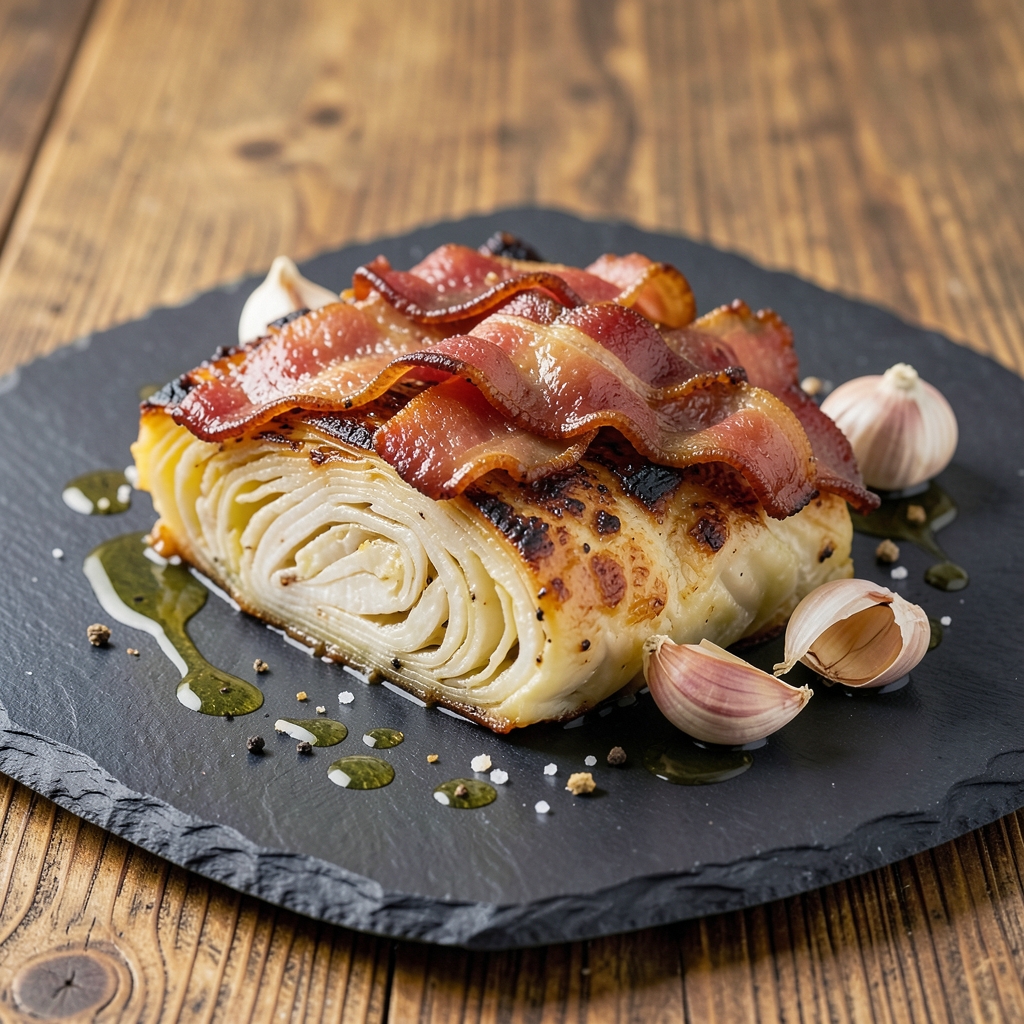
This cabbage steaks with bacon recipe transforms simple ingredients into a hearty, satisfying dish that rivals any meaty main course. 🌟 The secret lies in slicing cabbage leaves thickly—like steaks—and cooking them until the edges crisp while the bacon renders into smoky-sweet perfection.
I first discovered this technique while testing ways to stretch meals during a particularly frugal winter, and it became an instant family favorite.
The process is straightforward but requires patience: core and slice cabbage leaves thickly, then pan-fry with bacon until golden and tender. The bacon adds richness and caramelization that elevates the dish from side to main course status.
With just a few simple ingredients and about 25 minutes of hands-on time, you’ll have a restaurant-worthy meal that’s both budget-friendly and impressive.
What you’ll end up with is cabbage steaks with crispy, caramelized edges that hold their shape while staying tender inside, all topped with crispy bacon that’s perfectly rendered but not burnt. The aroma alone—smoky, savory, with a hint of sweetness—will have everyone at the table asking for seconds.
This dish pairs beautifully with mashed potatoes or crusty bread to soak up every last bit of flavor.
One of the best things about this recipe is its versatility. It works equally well as a standalone main for vegetarians or as a side that steals the show.
The technique is foolproof, and the ingredients are likely already in your pantry. Let’s get cooking—your taste buds (and leftovers) will thank you.
Ingredients for cabbage steaks with bacon
Nine simple ingredients transform humble cabbage into crispy, bacon-topped steaks with restaurant-quality flavor.
| Ingredient | Amount | Notes |
|---|---|---|
| Green Cabbage 🥬 | 1 whole | Green cabbage preferred for tenderness |
| Thick-Cut Bacon 🥓 | 8 oz | Applewood-smoked preferred for flavor |
| Extra-Virgin Olive Oil 🫒 | 2 tbsp | For crisping cabbage edges |
| Kosher Salt 🧂 | 1 tsp | Fine grain for even seasoning |
| Freshly Ground Black Pepper 🌶️ | ½ tsp | For subtle heat balance |
| Garlic Cloves 🧄 | 2 cloves | Minced for aromatic depth |
| Fresh Thyme Leaves 🌿 | ¼ cup | Chopped for herbal brightness |
| Butter 🧈 | 2 tbsp | Unsalted for flavor control |
| Red Wine Vinegar 🍷 | 1 tbsp | For finishing acidity |
The cabbage is your canvas here—green cabbage holds up best to slicing and frying, while red cabbage can bleed color. Look for heads that feel heavy for their size, with crisp outer leaves. Costco or Trader Joe’s often carry pre-sliced cabbage steaks, but slicing your own ensures thicker, more even pieces. The bacon should be thick-cut (not thin slices) for maximum crispiness—Applewood-smoked adds depth, but hickory works too. Store cabbage unwrapped in the fridge for up to 2 weeks, and keep bacon in the freezer until ready to use.
No thick-cut bacon? Regular bacon cut into 1-inch pieces works in a pinch, but it won’t crisp as well. Fresh thyme is ideal, but dried thyme at half the amount gets you close. The red wine vinegar can be swapped for lemon juice if you prefer brightness over tang. For extra richness, add 1 tbsp of cream cheese to the pan with the butter—it melts into a luscious sauce. If you’re vegetarian, skip the bacon and use vegetarian bacon bits or extra olive oil for crisping.
Prep the cabbage first—it needs time to soften slightly before cooking. The bacon renders quickly, so keep it close to the pan. These reheat beautifully—just crisp the bacon again in a hot pan and warm the cabbage with a splash of water. Store leftovers in an airtight container for up to 4 days, though they’re best eaten within 2 days for optimal crispiness. Freeze cooked cabbage steaks for up to 3 months by wrapping tightly in foil.
Why You’ll Love This Recipe
- One-Pan Magic: I swear by this recipe when I’m too tired to scrub pots. Just slice the cabbage into thick rounds, wrap each with bacon, and toss them in a hot pan—no flipping, no fuss. The bacon renders its own crispy blanket while the cabbage softens into something almost buttery.
- Smoky Crispy Obsession: That first bite? Crispy bacon edges hugging tender cabbage—it’s like a hug from a smoky campfire. The olive oil keeps it from drying out, and the salt and pepper? They make every layer sing, even if I burn the edges (which, okay, happens).
- Weeknight Hero: Between us, this is my go-to when I need something hearty but still light enough for a Tuesday. Double the batch, and you’ve got dinner for tomorrow—just reheat with a splash of water to revive that crisp. My kids grab seconds before I even finish chewing.
- Budget Bargain: A whole head of cabbage and a pack of bacon stretch farther than you’d think. Honestly, I’ve fed four people for under $10 with this, and the leftovers? They’re the star of my lunchbox the next day. No sad, wilted greens here—just pure satisfaction.
Step-by-step instructions for crispy cabbage steaks with bacon
Here’s how to achieve perfectly crispy cabbage edges with smoky-sweet caramelization every time.
🔥 Step 1: Prep the Cabbage for Crispy Perfection
Cut the 1 whole green cabbage in half lengthwise, then slice each half into ¼-inch thick steaks—you should get about 8-10 steaks. Remove the tough outer leaves and discard the core. Lay the steaks flat and pat them completely dry with paper towels. This step is critical for crispy edges—any moisture left on the cabbage will steam instead of crisp.
Season both sides generously with 1 tsp kosher salt and 0.5 tsp freshly ground black pepper. I like to press the seasoning in gently with my fingers so it adheres well. Let the seasoned cabbage sit at room temperature for 15 minutes while you prep the bacon. This resting time ensures even cooking and maximum crispiness.
🍳 Step 2: Cook the Bacon Until Crispy
Cut the 8 oz thick-cut bacon into ½-inch strips—this size gives you maximum crispiness while keeping the bacon tender. Heat a large oven-safe skillet over medium heat and add the bacon in a single layer. Cook undisturbed for 5-6 minutes until the edges start to crisp and the fat begins to render.
Here’s the thing—don’t walk away. Bacon burns quickly once it releases from the pan. Once the bacon is 80% cooked (edges crispy but still slightly soft in the middle), remove it from the skillet and set it on a paper towel-lined plate. Pour the rendered bacon fat into a measuring cup—you should have about ¼ cup. Save this fat for later; it’s packed with flavor.
🔥 Step 3: Sear the Cabbage in Bacon Fat
Return the skillet to medium-high heat and add 2 tbsp extra-virgin olive oil to the bacon fat. The combination of oils will give you that perfect balance of crispiness and richness. Working in batches if needed, add the cabbage steaks to the skillet in a single layer—don’t overcrowd or they’ll steam instead of sear.
Cook for 3-4 minutes per side until the edges are deep golden brown and slightly crispy. You’ll see the cabbage start to caramelize at the edges—that’s when you know it’s ready. If the pan gets too crowded, transfer some cabbage to a plate and continue cooking in batches. The goal is crispy edges with tender centers—don’t overcook or the cabbage will turn tough.
🥘 Step 4: Finish with Garlic, Thyme, and Butter
Reduce heat to medium and add the 2 cloves minced garlic and 0.25 cup chopped fresh thyme leaves to the skillet. Cook for 30 seconds until fragrant—this adds incredible depth of flavor. Then add the 2 tbsp butter and the cooked bacon back to the skillet. Toss everything together for 1-2 minutes until the butter melts and coats the cabbage.
Finally, drizzle in 1 tbsp red wine vinegar and toss again. The acidity brightens the flavors and cuts through the richness of the bacon and butter. Taste and adjust seasoning if needed—you might want to add a pinch more salt to balance the acidity. The cabbage should have crispy edges, tender centers, and a smoky-sweet caramelization from the bacon and garlic.
🍽️ Step 5: Serve Immediately for Maximum Crispiness
Transfer the cabbage steaks to a serving platter and serve immediately while they’re still crispy. The edges will soften slightly as they cool, so serving right away is key. These steaks pair beautifully with a simple arugula salad or crusty bread to soak up any extra bacon fat and vinegar.
For extra flavor, sprinkle with additional fresh thyme leaves or a drizzle of the reserved bacon fat. The combination of crispy cabbage, smoky bacon, and herby thyme creates a dish that’s equal parts comforting and elegant. Enjoy while warm!
Pro Tips For Making Cabbage Steaks With Bacon
- COOK THE BACON FIRST: I learned this the hard way—crispy bacon on top of soggy cabbage is a crime. Render the bacon until it’s deep golden and the fat pools in the pan, then remove it (save 2 tablespoons of fat) before adding the cabbage. That fat’s the flavor bridge between the two.
- CUT THICK, NOT THIN: Cabbage steaks need heft—aim for ½-inch slices, not paper-thin rounds. Thicker slices hold up better to searing and stay tender longer. If your knife skills are rusty, use a mandoline set to ½ inch (and keep your fingers clear).
- SALT THE CABBAGE BEFORE SEARING: Toss the cabbage slices with salt and pepper before hitting the pan. It draws out moisture, so when you sear, the edges crisp instead of steaming. Let them sit 10 minutes while you cook the bacon—it’s not wasted time.
- FINISH UNDER FOIL, NOT HIGH HEAT: After searing the cabbage, transfer the pan to the oven (or cover with foil) and cook at 375°F until the edges soften—about 10 minutes. High heat after searing turns cabbage to mush. Low and slow keeps it tender without sacrificing texture.
Common mistakes when making perfect results
Overcrowding the Pan
This is the #1 mistake I see—packing too many cabbage steaks into the pan at once. When you overcrowd, the cabbage steams instead of searing, resulting in soggy centers and dull edges.
The key is working in batches: cook 2-3 steaks at a time in a 12-inch cast-iron skillet for even browning. I learned this the hard way when my first attempt turned out mushy. 🥬
Skipping the Resting Time
Letting seasoned cabbage sit for 15 minutes before cooking ensures even moisture distribution and better crispiness. I once rushed this step and ended up with unevenly cooked steaks—some crispy, others still raw inside. Trust me, this small pause makes a huge difference in texture. The cabbage will thank you later.
Using Thin Cabbage Slices
Thin slices (⅛-inch or less) cook too quickly and burn before the centers become tender. Aim for ¼-inch thick steaks—this thickness gives you that perfect balance of crispy edges and tender middle.
I measure my slices with a bench scraper for consistency. If your slices vary in thickness, cook the thinner ones first.
Burning the Bacon
Bacon releases quickly once it hits 375°F, and it can go from perfect to burnt in seconds. Watch it like a hawk—once the edges are 80% crispy, remove it immediately.
I keep a spatula ready to lift bacon out fast. The rendered fat is flavor gold, but burnt bacon ruins everything. Save that for BLTs, not cabbage steaks. 🥓
Underseasoning the Cabbage
Cabbage is naturally mild, so seasoning generously is key. Don’t skimp on the 1 tsp kosher salt—press it into both sides so it adheres. I also add a pinch of smoked paprika for depth.
Taste as you go, especially after adding the vinegar, because the flavors evolve quickly. The cabbage should be well-seasoned but not salty—balance is everything.
Letting the Steaks Cool Too Long
Cabbage steaks lose crispiness as they cool. Serve them immediately after cooking while the edges are still golden and crunchy. If you must hold them, keep them in a 200°F oven for up to 10 minutes—any longer and the texture suffers.
I’ve learned this the hard way when a delayed dinner turned my crispy masterpiece into sad, limp cabbage. 🍽️
Nutrition facts
Frequently asked questions about cabbage steaks with bacon
Can I use red cabbage instead of green?
Green cabbage works best for this recipe because it stays more tender when sliced thickly. Red cabbage tends to get mushy faster and may bleed color into the bacon fat. If you must use red, slice it slightly thinner (⅛-inch) and cook it for 2-3 minutes per side to prevent overcooking. The flavor will be slightly sweeter but less crisp.
How do I make these vegetarian?
Skip the bacon entirely and use 2 tbsp olive oil instead for crisping. Add 1 tbsp nutritional yeast or smoked paprika for depth, and toss with 1 tbsp maple syrup at the end for caramelization. The texture will be slightly less rich, but still hearty and satisfying. Serve with a tangy lemon-herb sauce to brighten the flavors.
Can I bake these instead of pan-frying?
Yes, but the texture will be different—more tender than crispy. Preheat oven to 400°F, toss cabbage steaks with 2 tbsp olive oil, 1 tsp salt, and ½ tsp pepper, then bake on a parchment-lined tray for 15-18 minutes until edges soften. Add bacon separately and crisp it in a skillet. The dish will be comforting but lacks the restaurant-style crispiness of pan-frying.
What’s the best way to reheat leftovers?
Reheat in a 350°F oven for 8-10 minutes to restore crispiness. For stovetop reheating, use a dry skillet over medium heat for 2-3 minutes per side—add a splash of water to prevent drying. Avoid microwaving, as it turns cabbage steaks soggy. Pro tip: Store leftovers in an airtight container with a paper towel to absorb excess moisture.
Why did my cabbage steaks turn out mushy?
Overcooking or underseasoning are the most likely culprits. Cabbage steaks should cook just until edges crisp (3-4 minutes per side), not until fully tender. Double-check your slice thickness—¼-inch is ideal. Also, ensure you’re working in batches to avoid steaming. If they’re still mushy, try adding 1 tbsp butter at the end to help crisp the edges during reheating.

- Guy’s Potato Chip Tuna Casserole Recipe: Crunchy Topping, Creamy Cheese Magic - November 8, 2026
- McCormick Apple Crisp Recipe: Spiced Topping Crunch Over Warm Cinnamon Apples - November 8, 2026
- Old Fashioned Royal Icing Recipe: Stiff-Pipe Consistency for Decorating Dreams - November 8, 2026