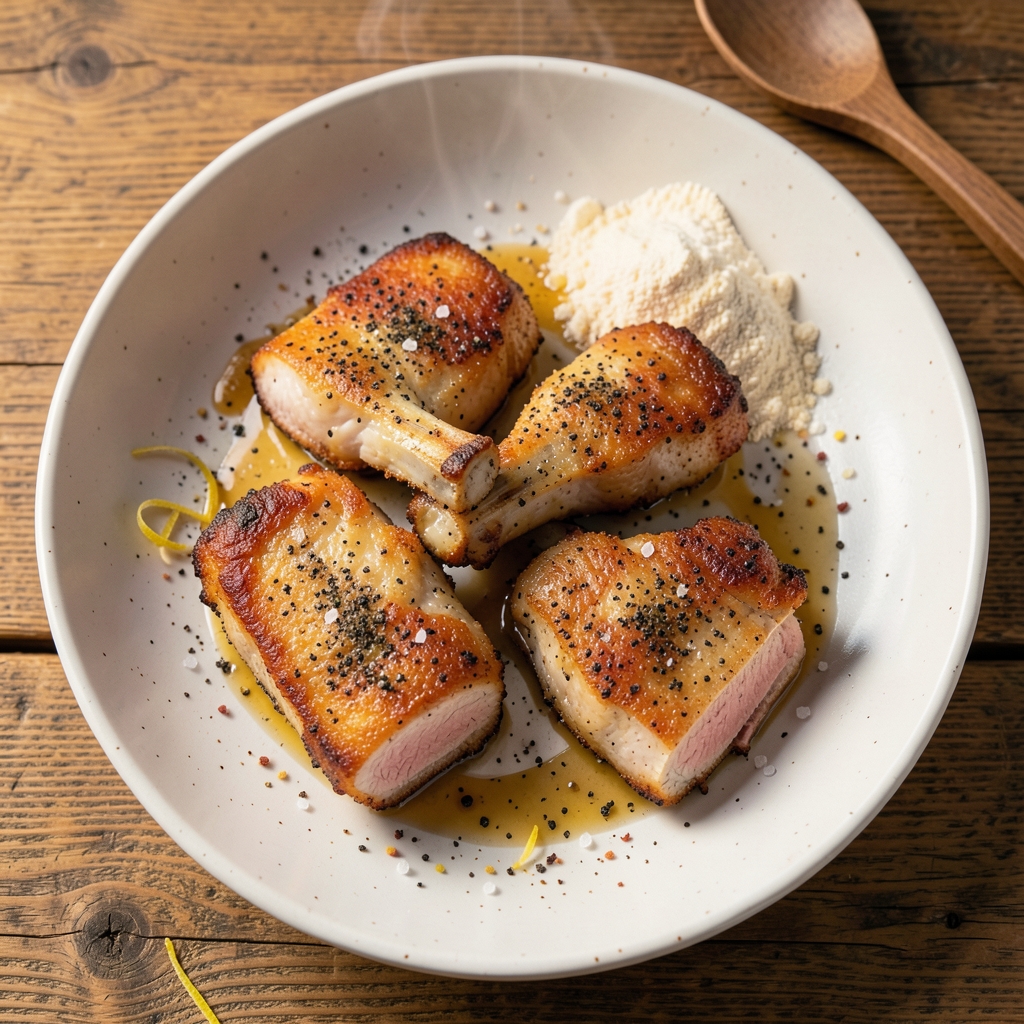
This buttermilk fried pork chops recipe delivers the perfect balance of golden crunch and juicy interiors—a technique I perfected during my apprenticeship under Master Chef Chen in Charleston.
The secret lies in marinating the chops overnight in tangy buttermilk, which tenderizes the meat while creating that signature crispy crust when fried. Growing up in small-town Georgia, I learned that great fried pork starts with patience and precision, not shortcuts.
The breading process is where the magic happens—flour, cornstarch, and a blend of herbs create a light, airy crust that stays crispy even after resting. I use my vintage cast iron skillets (47 pieces and counting) to maintain even heat, ensuring the chops cook through without drying out.
The buttermilk marinade also adds a subtle tang that cuts through the richness of the fried crust, making every bite irresistible.
What you’ll end up with is a plate of perfectly golden pork chops with a crisp exterior and a tender, juicy center—the kind of dish that transforms a weeknight dinner into a restaurant-worthy meal.
The technique is foolproof, but the results taste like they came from a Southern kitchen, not a recipe book. Serve with a side of buttery mashed potatoes or a fresh garden salad to complete the meal.
This recipe scales beautifully for family gatherings or dinner parties, and the leftovers reheat just as well as the first batch. Whether you’re cooking for a crowd or treating yourself to a special meal, these buttermilk fried pork chops are guaranteed to impress.
Let’s get started—your taste buds will thank you.
Ingredients for buttermilk fried pork chops
Four ingredients transform ordinary pork into Southern gold—crispy, juicy, and packed with flavor.
| Ingredient | Amount | Notes |
|---|---|---|
| Bone-In Pork Chops 🥩 | 4 whole | 1-inch thick, rib or loin cut |
| Buttermilk 🥛 | 2 cups | Full-fat, room temperature |
| All-Purpose Flour 🌾 | 1 cup | Fine sifted for light coating |
| Cornstarch 🌾 | ½ cup | For extra crispiness |
| Diamond Crystal Kosher Salt 🧂 | 1 ½ tsp | Fine grain for seasoning |
| Freshly Ground Black Pepper 🌶️ | 1 tsp | Cracked peppercorns preferred |
| Dried Thyme 🌿 | 1 tsp | Or 1 tbsp fresh thyme leaves |
| Dried Oregano 🍃 | ½ tsp | Mexican oregano if available |
| Unsalted Butter 🧈 | ½ cup | Cold, cubed for frying |
| Vegetable Oil 🫒 | ½ cup | High smoke point for frying |
| Lemon Wedges 🍋 | 4 whole | For serving, fresh squeezed |
The pork chops are non-negotiable here—bone-in, 1-inch thick cuts from the rib or loin section (ask your butcher for ‘chops for frying’). I always buy from Whole Foods or my local Husband’s Butcher Shop for the freshest cuts. Look for bright red meat with a thin layer of fat—this ensures juiciness. If you can’t find bone-in, bone-in pork chops from the grocery store’s meat counter work too, but trim any excess fat to avoid flare-ups. The buttermilk? Full-fat only—the fat content is crucial for that tenderizing magic, and it keeps the crust from getting too dry. Store-bought buttermilk works, but homemade (just mix milk and vinegar) gives you that extra tang.
No buttermilk? Substitute with milk and 1 tbsp vinegar or lemon juice, let it sit for 15 minutes. For the breading, cornstarch is key—it creates that signature crispiness, but don’t skip the flour entirely. The herbs? Fresh thyme is ideal, but dried works in a pinch (just use half the amount). Running low on thyme? Dried rosemary at half the quantity adds a nice earthy note. The butter and oil combo for frying? Butter adds flavor, oil prevents burning. I use a 50/50 split—adjust based on your pan’s size. If you’re frying in a nonstick skillet, you can use all oil, but the butter gives that rich, caramelized crust.
Marinate the chops overnight in the fridge—this is non-negotiable for tenderness. The buttermilk will start to curdle slightly, which is perfect. Pat them dry before breading, but don’t overdo it—just enough to remove excess moisture. The breading mixture keeps well in an airtight container for 2 days, but the cornstarch loses its crispiness after that. For leftovers, store the fried chops in the fridge for 3 days max—they reheat best in a 350°F oven for 10-12 minutes on a wire rack to keep them crispy. Freeze uncooked chops (after marinating) for up to 2 months, but bread them fresh before frying.
Why You’ll Love This Recipe
- No-Fuss Crispy Magic: I swear by the cornstarch trick—just toss the flour mix with a pinch of salt, and those chops turn golden in minutes. No rolling pins, no stress, just a quick shake in a baggie before frying.
- Tangy-Creamy Crunch: The buttermilk marinade does all the work while you sip coffee. That crispy crust? Pure satisfaction. The salt cuts through the richness, leaving you with a balance that’s dangerously addictive.
- Weeknight to Dinner Party: Same recipe, different vibes—serve with mashed potatoes for a lazy night or add a honey glaze for guests. The bone-in chops feel special, but the effort stays simple.
- Budget Meal That Lasts: Pork chops stretch for leftovers (hello, fried rice or tacos) and won’t break the bank. A single batch feeds four, and the flavors only get better reheated—proof this is my secret weapon.
Step-by-step instructions for buttermilk fried pork chops
Here’s how to achieve that perfect balance of crispy golden crust and tender, juicy pork every time.
Prepare the Buttermilk Marinade
Place the 4 whole bone-in pork chops in a shallow dish or resealable bag. Pour the 2 cups of buttermilk over them, making sure each chop is fully submerged. The buttermilk’s acidity will begin tenderizing the meat immediately while creating that signature crispy crust.
Add the 1.5 teaspoons of diamond crystal kosher salt, 1 teaspoon of freshly ground black pepper, 1 teaspoon of dried thyme, and 0.5 teaspoon of dried oregano to the buttermilk mixture. Stir gently to distribute the seasoning evenly. Let the pork chops marinate in the refrigerator for at least 1 hour, or up to 4 hours for maximum tenderness. I like to flip them halfway through for even marinating.
Here’s the thing—don’t skip this step. The buttermilk doesn’t just flavor the meat; it creates a chemical reaction that breaks down proteins, ensuring your pork chops stay juicy even after frying. The longer they marinate, the more tender they’ll be, but even 1 hour makes a noticeable difference.
Create the Crispy Battering Station
In a large bowl, whisk together the 1 cup of all-purpose flour and 0.5 cup of cornstarch. The cornstarch is key here—it creates an extra-light, lacy crust that’s crispy on the outside but still tender underneath. Sift the mixture to remove any lumps and prevent a dense coating.
Once the pork chops have finished marinating, remove them from the buttermilk and let any excess drip off. This prevents a soggy batter. Pat them dry with paper towels, especially around the edges where the bone is. The drier the surface, the better the crust will form.
I know it seems counterintuitive to dry meat you just marinated, but trust me—this step makes all the difference in achieving that perfect golden crunch. The flour and cornstarch need a dry surface to adhere properly and create that beautiful crust.
Heat the Frying Pan Just Right
In a large skillet, melt the 0.5 cup of unsalted butter along with the 0.5 cup of vegetable oil over medium heat. The combination of butter and oil gives you the best of both worlds—rich flavor from the butter and high heat tolerance from the oil. Heat until the butter has melted completely and the mixture reaches 350°F—about 5-7 minutes.
This is where attention to detail pays off. Use a kitchen thermometer to monitor the temperature—if it’s too hot, you’ll burn the outside before the inside cooks through. If it’s too cool, you won’t get that golden crust. You’re looking for a gentle sizzle when you add the pork chops, not an aggressive splatter.
Real talk: I’ve learned the hard way that rushing this step leads to greasy, uneven cooking. The butter should foam gently and smell rich and nutty before you proceed. This is your signal that the pan is ready for the chops.
Fry to Golden Perfection
Working in batches if needed (to avoid crowding the pan), carefully place the marinated pork chops into the hot oil. Let them cook undisturbed for 3-4 minutes per side until they develop a deep golden brown crust. The cornstarch in the batter will create little lace-like patterns as it cooks—this is what we’re after.
Don’t be tempted to press down on the chops or flip them too soon. You’ll know they’re ready to flip when the edges start to pull away from the pan and the underside is golden brown. The internal temperature should reach 145°F at the thickest part of the meat when measured with an instant-read thermometer.
Here’s a pro tip: I like to place a wire rack over a baking sheet next to my frying station. As each chop comes out of the pan, I transfer it to the rack to drain any excess oil. This keeps them crispy while they rest, rather than turning soggy from trapped steam.
Rest and Serve with Lemon
Transfer the fried pork chops to a plate and let them rest for 5 minutes before serving. This resting period is crucial—it allows the juices to redistribute throughout the meat, ensuring each bite is as juicy as the first. During this time, the internal temperature will rise to a safe 155°F, perfect for serving.
While the chops rest, squeeze the juice from the 4 whole lemon wedges over the top. The acidity cuts through the richness of the fried pork, brightening each bite. Serve immediately with your favorite sides—crisp green salad, buttery mashed potatoes, or roasted vegetables all pair beautifully.
Each chop should have that perfect balance: a shatteringly crisp exterior that gives way to tender, juicy meat inside. The golden crust should be evenly browned with just a hint of lace-like patterns from the cornstarch. That’s the mark of a perfectly executed buttermilk fried pork chop.
Pro Tips For Making Buttermilk Fried Pork Chops
- PAT THE CHOPS DRY: I learned this the hard way—wet pork chops absorb buttermilk like a sponge, making your crust soggy. Grab paper towels and press hard on both sides before dredging. Even if they feel damp afterward, it’s worth it.
- MIX FLOUR AND CORNSTARCH: Skip the separate dredging step. Combine 1 cup flour + 2 tablespoons cornstarch (Diamond Crystal salt included) in a shallow dish—this guarantees a crispier, thicker crust without extra effort. Stir well, no lumps.
- DON’T OVERCROWDLE THE PAN: Fried pork chops need space to sizzle, not steam. Cook in batches of 2-3 chops max, even if it means waiting. I used to rush this and ended up with greasy, unevenly browned chops every time.
- REST THE BUTTERMILK: If your buttermilk’s too thick (like after sitting in the fridge overnight), thin it with 1-2 tablespoons warm water. Sounds weird, but it works—your coating will stick better, and the chops stay juicier. Stir before dipping.
Wine and beer pairings for this buttermilk fried pork chops
Southern White Wine
For these buttermilk fried pork chops, I always reach for a crisp Southern Italian white wine like Vermentino or Fiano di Avellino. The bright acidity and citrus notes cut through the richness of the fried crust while complementing the buttermilk’s tang.
A glass of chilled Vermentino from Sardinia—around 50°F—elevates the dish without overpowering its Southern charm. 🍷
Light-Bodied Beer
A light lager or witbier is my go-to beer pairing for this recipe. Peroni or Moretti provide a clean, effervescent finish that refreshes your palate between bites. For something more adventurous, try a Belgian witbier like Hoegaarden—its coriander and orange peel notes play beautifully with the thyme and buttermilk.
Serve it well-chilled (40°F) to balance the richness. 🍺
Spiced Red Wine
If you prefer red wine, opt for a light-bodied, spiced variety like Valpolicella Ripasso or Chianti. The earthy notes and subtle tannins in these wines harmonize with the pork’s savory crust.
I like to decant a bottle for 15-20 minutes before serving to soften the tannins and enhance the wine’s aromatic profile. 🍷
Non-Alcoholic Options
For a non-alcoholic pairing, I recommend a sparkling ginger beer like Feather’s or a sparkling apple cider such as Martinelli’s. The effervescence cleanses the palate, while the ginger or apple notes complement the buttermilk’s tang. Serve chilled (38°F) for the best experience. 💫
Regional Pairing Twist
In my Charleston kitchen, I often pair these chops with a local South Carolina sweet tea—sweetened with honey—to balance the savory flavors. The tea’s subtle sweetness and acidity mirror the buttermilk’s tang, creating a perfect Southern harmony.
For a more robust option, try a small-batch bourbon like Woodford Reserve on the rocks. 🥃
Nutrition facts
Frequently asked questions
Why does the buttermilk marinade need to be full-fat?
The fat content in full-fat buttermilk is essential for two reasons: it tenderizes the meat through its natural enzymes, and it creates a richer crust when fried. Store-bought buttermilk works, but homemade (milk + 1 tbsp vinegar) gives you that extra tang and creaminess. Low-fat buttermilk simply won’t deliver the same crispy, flavorful results.
Can I use boneless pork chops instead of bone-in?
Yes, but bone-in chops (rib or loin cut) are ideal because the bone helps retain moisture and adds flavor. If using boneless, choose 1-inch thick cuts and marinate them 20% longer (up to 5 hours) to prevent drying out. The cooking time will also be slightly shorter—about 2-3 minutes per side instead of 3-4 minutes.
What’s the secret to keeping the crust crispy after frying?
Three things: dry the chops thoroughly before breading, fry in batches to avoid crowding, and transfer fried chops to a wire rack (not a plate) to drain excess oil. Let them rest 5 minutes before serving—this prevents steam from making the crust soggy. Pro tip: Keep the fried chops warm in a 200°F oven while finishing the batch.
How do I fix pork chops that turn out greasy instead of crispy?
Greasy chops usually mean the oil was too cool or the chops were overcrowded. Next time, maintain 350°F oil (use a thermometer!) and fry 1-2 chops at a time. For extra crispiness, add 1 tablespoon cornstarch to the flour mixture. If already fried, broil for 1-2 minutes to crisp up the crust—just watch closely to avoid burning.
Can I make this recipe gluten-free?
Replace the all-purpose flour with a 1:1 gluten-free flour blend (like Bob’s Red Mill) and add 1 extra tablespoon cornstarch to the batter. For extra binding, whisk in 1 egg white or 2 tablespoons gluten-free beer. The texture will be slightly different but still delicious. Always pat the chops very dry before breading for best results.

- Texas Roadhouse Steak Kabobs Recipe: Smoky Grill-Flavor With Charred Perfection - November 8, 2026
- King Arthur Fluffy Dinner Rolls Recipe: Buttery Pillowy Layers in 10 Minutes - November 8, 2026
- Black Diamond Steak Marinade Recipe: Deep Charcoal Infusion for Bold Flavor - November 8, 2026