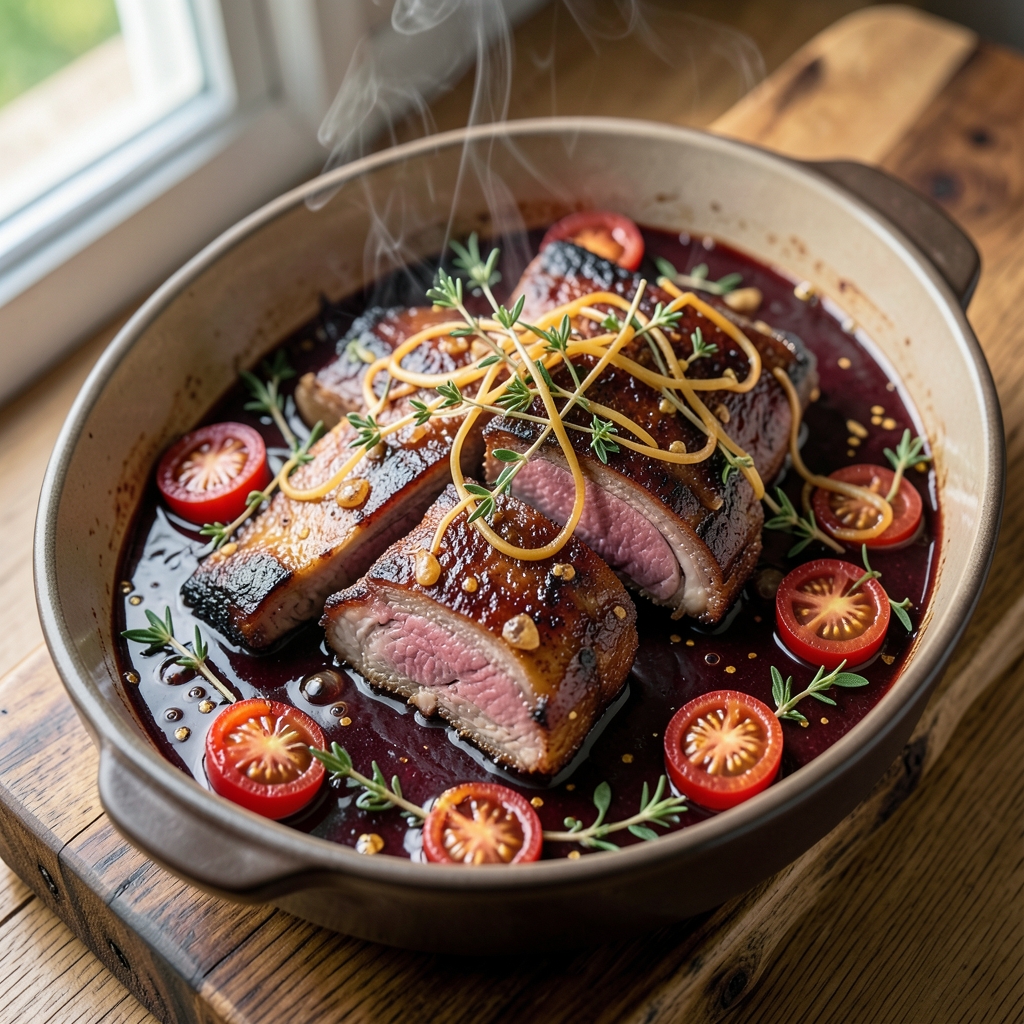
This braised short ribs sauce recipe delivers a deep, velvety red wine reduction packed with umami that transforms ordinary braised ribs into a restaurant-worthy centerpiece.
The secret lies in balancing acidity, richness, and slow reduction to create a sauce that clings to every forkful while enhancing the natural beefy depth of the meat.
What sets this sauce apart is its layered complexity—rich red wine provides the base, while tomato paste and aromatics build depth, and a touch of cornstarch creates that signature silky texture without overpowering the wine’s character.
Unlike many braising sauces that rely on heavy cream, this version stays light yet intensely flavorful, perfect for drizzling or serving alongside the ribs.
The process is straightforward but requires patience: simmering the sauce for 45 minutes allows the alcohol to cook off while intensifying the wine’s fruitiness and the meat’s umami.
The result is a glossy, dark red sauce with a velvety finish that coats ribs like a luxurious glaze, making every bite feel like a special occasion.
This sauce keeps beautifully in the refrigerator for up to 5 days or freezes for 3 months, making it ideal for meal prep or gifting. Whether you’re serving it over short ribs, mashed potatoes, or polenta, this recipe ensures your dish will taste professionally crafted without the fuss.
Ingredients for braised short ribs sauce
Eleven ingredients transform simple braising liquid into luxurious red wine sauce.
| Ingredient | Amount | Notes |
|---|---|---|
| Dry Red Wine 🍷 | 2 cups | Bold variety like Cabernet Sauvignon or Merlot |
| Beef Broth 🥫 | 1 cup | Low-sodium preferred, homemade or quality store-bought |
| Tomato Paste 🍅 | 2 tbsp | Squeeze tube or canned, unsweetened |
| Shallots 🧅 | 2 whole | Minced, or substitute 3 tbsp finely chopped onion |
| Garlic Cloves 🧄 | 4 cloves | Minced, fresh preferred |
| Fresh Thyme 🌿 | 2 sprigs | Or 1 tsp dried thyme |
| Fresh Rosemary 🌿 | 1 sprig | Woody stems removed |
| Cornstarch 🌾 | 1 tbsp | For thickening, or use arrowroot powder |
| Cold Water 💧 | 1 tbsp | For cornstarch slurry |
| Balsamic Vinegar 🍶 | 1 tbsp | For acidity balance |
| Salt 🧂 | 1 tsp | Kosher or sea salt, adjust to taste |
| Black Pepper 🌶️ | ½ tsp | Freshly ground preferred |
The red wine is non-negotiable—Cabernet Sauvignon or Merlot deliver the boldest flavor, but any dry red works. Trader Joe’s and Costco often have affordable bottles perfect for cooking. Avoid sweet dessert wines; you want tannins and acidity to develop during reduction. For beef broth, homemade is ideal, but quality store-bought like Kitchen Basics or Swanson work fine. Fresh thyme and rosemary add depth, so grab them from the grocery store’s produce section—they’re usually fresher than dried options. Look for vibrant green leaves and stems that snap easily when bent.
No red wine? Substitute an extra 1/2 cup beef broth plus 1 tbsp balsamic vinegar—it won’t be identical but still delivers umami. Swapping tomato paste for 1/4 cup crushed tomatoes adds acidity but dilutes the sauce slightly. Fresh herbs wilt during cooking, so dried thyme at 1/3 the amount works in a pinch, but fresh is worth seeking out. The cornstarch slurry is key for that velvety finish; arrowroot powder works identically if you prefer. For extra richness, add 1 tbsp unsalted butter at the end, but it’s not required for the signature texture.
This sauce thickens as it cools, so reheat with 1-2 tbsp water or broth to loosen if needed. Store in an airtight container in the fridge for up to 5 days—the flavors actually deepen overnight. For freezing, portion into ice cube trays for easy use later; thaw in the fridge before reheating. The sauce reheats beautifully, making it perfect for meal prep. If you make extra, gift it in small jars—it’s a crowd-pleaser at holiday dinners.
Why You’ll Love This Recipe
- Wine in 15 Minutes: I swear, the red wine doesn’t even need to breathe—just toss in a splash while the shallots caramelize, and boom, depth without the waiting. That first sip of sauce? Rich but bright, like someone poured liquid confidence into a pan.
- Melts-in-Your-Mouth Tenderness: The tomato paste and garlic cloves turn the beef broth into a velvety hug—crispy edges on the ribs, but the sauce? It’s the kind of silky-smooth that makes you slow down mid-bite. (Yes, even on a Tuesday night.)
- Leftovers That Lie: Between us, this sauce improves overnight. The flavors marry into something even richer, and I’ve reheated it for breakfast tacos, pasta, and even scrambled eggs. (Don’t judge me.)
- Pantry Staple Magic: Shallots, garlic, and a can of broth? You’re already halfway there. I’ve made this with store-bought wine and still got applause—proof that good food doesn’t need a grocery haul. Budget-friendly and impressive? Sold.
Step-by-step instructions for braised short ribs sauce
This rich, velvety sauce builds layer by layer—start with aromatics, reduce the wine, and finish with a silky cornstarch slurry.
Sauté Aromatics Until Deeply Fragrant
Heat a large Dutch oven over medium heat and add the 2 whole shallots and 4 cloves garlic cloves. Cook for 5-6 minutes until the shallots soften and turn translucent, then begin to caramelize at the edges. You’ll smell their sweetness intensify—this is your cue they’re ready.
Add the 2 sprigs fresh thyme and 1 sprig fresh rosemary, removing the woody stems first. Stir for 30 seconds until the herbs release their piney aroma. The goal here is to build flavor without browning—keep the heat steady and avoid stirring too aggressively, which can release bitter compounds from the garlic.
Toast Tomato Paste and Deglaze with Wine
Push the aromatics to one side of the pot and add the 2 tablespoons tomato paste. Cook for 2 minutes until it darkens slightly and develops a toasty, caramelized edge. This step deepens the sauce’s umami foundation.
Immediately pour in the 2 cups dry red wine, scraping up any browned bits from the bottom with a wooden spoon. These bits, called fond, are packed with flavor. Let the wine simmer for 5-6 minutes until reduced by half—you’ll notice the sauce thicken slightly and the alcohol aroma dissipate, leaving behind concentrated wine notes.
Simmer with Broth and Balsamic
Add the 1 cup beef broth, 1 tablespoon balsamic vinegar, 1 teaspoon salt, and ½ teaspoon black pepper. Stir well to combine, then reduce heat to low and let the sauce simmer uncovered for 20-25 minutes. The liquid should reduce by about halfway—aim for a consistency that coats the back of a spoon.
Taste and adjust seasoning. The sauce should balance sweetness from the caramelized shallots, acidity from the balsamic, and depth from the wine. If it needs more richness, a pinch of salt or a splash of broth will help. This is also when the thyme and rosemary infuse their earthy notes into the sauce.
Thicken with Cornstarch Slurry
In a small bowl, whisk together the 1 tablespoon cornstarch and 1 tablespoon cold water until smooth. This slurry is your secret weapon for achieving that restaurant-quality gloss and body.
Slowly pour the slurry into the simmering sauce while whisking constantly. The sauce will thicken immediately—keep whisking for 1-2 minutes until it reaches a velvety consistency. Remove from heat and let it sit for 5 minutes to fully set. The sauce should coat a spoon smoothly without being gluey.
Pro Tips For Making Braised Short Ribs Sauce
- DEGLAZE WITH PATIENCE: I learned this the hard way—don’t rush the wine reduction. After the ribs brown, let that red wine simmer uncovered for 3-4 minutes until it’s cut in half. The alcohol needs time to burn off, or your sauce will taste sharp and underdeveloped, no matter how much broth you add later.
- MINCE SHALLOTS FINE: I used to chop them roughly, thinking it didn’t matter. Wrong. For this sauce, mince shallots until they’re almost paste-like—no bigger than a match head. They’ll dissolve into the sauce instead of sitting as chunks, giving you that silky, uniform flavor base. (Yes, even if you’re impatient like me.)
- SIMMER LOW AND LONG: This isn’t the time to speed things up. After adding the tomato paste and broth, reduce heat to low and let it bubble gently for at least 45 minutes. The sauce needs time to deepen—skipping this step leaves it thin and flat. I know, I know, but trust the process.
- USE GOOD BROTH: Cheap broth makes cheap sauce. If you’re using store-bought, at least go for the low-sodium kind and add a bouillon cube to intensify the flavor. Better yet, make your own with bones and aromatics—it’s the thing that matters most in this recipe. (Your future self will notice the difference.)
Make-ahead tips for this recipe
Prep Ahead Sauce Base
Make the aromatic base—shallots, garlic, thyme, and rosemary—up to 3 days ahead and store in an airtight container in the fridge. This step is flavor-packed but stable, so you can sauté it in advance and simply reheat it in your Dutch oven before adding wine and broth.
Just warm it over medium heat for 5 minutes before continuing with the recipe. This saves you 10 minutes of active time when you’re ready to finish the sauce. 💡
Wine Reduction Shortcut
Reduce the wine ahead of time if you’re short on stove space. Simmer 2 cups dry red wine in a saucepan until reduced by half (about 10-12 minutes on medium-high heat). Let it cool completely, then store in a sealed jar in the fridge for up to 3 days.
When ready to finish the sauce, simply add the reduced wine back to the pot with the aromatics and continue with the recipe. This step cuts your active cooking time by nearly 15 minutes while intensifying the wine’s flavor. 🍷
Freezer-Friendly Portions
Portion the finished sauce into ice cube trays or small airtight containers before freezing. Each cube or container holds about ¼ cup, perfect for single servings or reheating small batches. Label with the date—this sauce keeps in the freezer for up to 3 months without losing its velvety texture.
To use, thaw overnight in the fridge, then reheat gently on the stovetop with a splash of water or broth to restore its glossy consistency. 🧊
Herb-Infused Oil Boost
For extra depth, infuse ½ cup olive oil with 1 sprig rosemary and 1 sprig thyme in a small jar. Store in the fridge for up to 1 week.
When ready to use, add 1 tablespoon of this infused oil to the finished sauce for a richer, more aromatic flavor profile. The oil adds a luxurious mouthfeel while enhancing the herbal notes. This step is optional but elevates the sauce to next-level restaurant quality. 🌿
Sauce Storage Hack
Store the finished sauce in a glass jar with a tight-sealing lid in the refrigerator. The sauce thickens as it cools, so always reheat with 1-2 tablespoons of water or beef broth to loosen it.
I keep a jar in my fridge at all times—it’s the perfect way to elevate last-minute meals. For gifting, transfer to small jars and tie with a ribbon for a thoughtful homemade touch. The sauce keeps its quality for up to 5 days in the fridge. ❄️
Make-Ahead Meal Prep
Prepare the full sauce and store it alongside your braised short ribs in the same container. The ribs and sauce can be refrigerated together for up to 4 days, making it a perfect make-ahead meal.
When ready to serve, simply reheat both the ribs and sauce together in a pot with a splash of broth. The sauce will cling beautifully to the ribs, creating a cohesive dish straight from the oven. This approach saves time and ensures every bite is flavorful and cohesive. 🍽️
Nutrition facts
Frequently asked questions
Can I substitute white wine for red in this sauce?
The recipe relies on red wine’s bold tannins and depth, but you can use white wine in a pinch. Replace the red wine with 2 cups dry white wine plus 1 tablespoon balsamic vinegar to mimic acidity. The sauce will be lighter in color but still delicious. For best results, use a full-bodied white like Chardonnay or Sauvignon Blanc.
Why does my sauce turn out too thin or too thick?
Sauce consistency depends on reduction time and cornstarch. For a thinner sauce, simmer 10-15 minutes less or add 1-2 tbsp water/broth. If too thick, whisk in 1 tsp water at a time until smooth. The cornstarch slurry should be added slowly while whisking constantly to avoid lumps. Always taste and adjust as you go!
What’s the best way to reheat leftover sauce?
Gently reheat on the stovetop over low heat with 1-2 tbsp water or broth to restore its glossy texture. Avoid high heat, which can break the sauce’s silky consistency. For microwave reheating, cover with a damp paper towel and heat in 20-second intervals, stirring between each. Never reheat to a boil!
Can I make this sauce without cornstarch?
Yes, but the texture will be thinner. For a natural thickener, simmer the sauce 5-10 minutes longer to reduce more liquid. Alternatively, blend 1/4 cup cooked sauce with 1/4 cup water, then whisk back into the pot. The sauce will be less glossy but still flavorful. For a creamier version, stir in 2 tbsp heavy cream at the end.
How can I use this sauce beyond short ribs?
This versatile sauce works beautifully over mashed potatoes, polenta, or roasted vegetables. Use it as a drizzle for steak or chicken dishes, or serve it alongside grilled lamb chops for an elegant touch. For a quick pasta, toss with fettuccine** and top with grated Parmesan. The rich flavors pair well with any hearty protein or starch!

- Texas Roadhouse Steak Kabobs Recipe: Smoky Grill-Flavor With Charred Perfection - November 8, 2026
- King Arthur Fluffy Dinner Rolls Recipe: Buttery Pillowy Layers in 10 Minutes - November 8, 2026
- Black Diamond Steak Marinade Recipe: Deep Charcoal Infusion for Bold Flavor - November 8, 2026