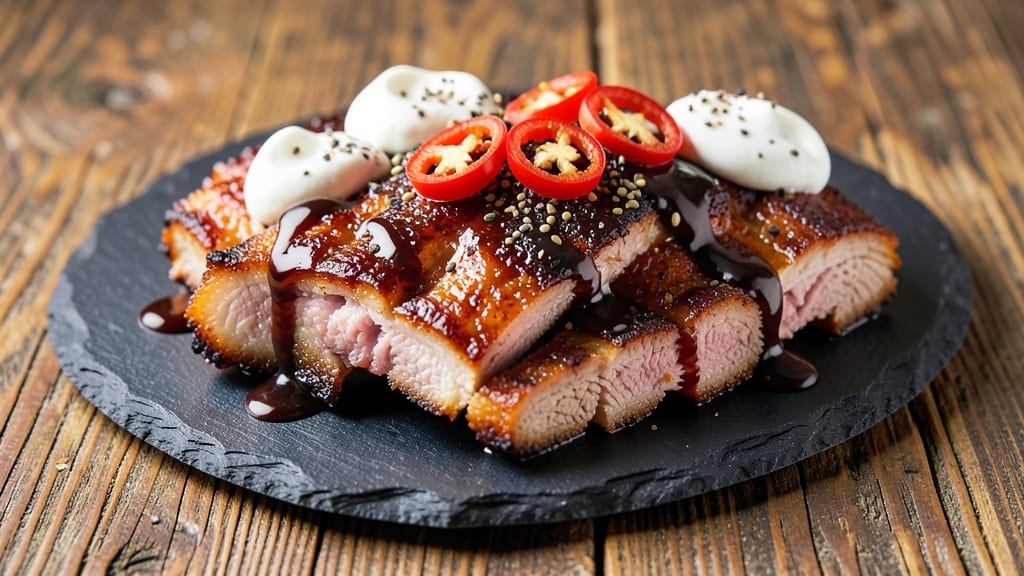
Mastering boneless Southern-style pork ribs with a smoky-sweet glaze that caramelizes perfectly on the meat is what separates good barbecue from unforgettable. I perfected this technique during my first barbecue championship—where that coffee-rubbed pork shoulder won me my first trophy.
The secret lies in balancing dry rubs and glazes while controlling heat to achieve tender, flavorful meat with a glossy finish.
This recipe transforms tough pork ribs into melt-in-your-mouth perfection through a two-step process: a dry rub that develops deep flavor during cooking, followed by a glaze that caramelizes beautifully. The ribs cook in just three hours, making them ideal for weeknight dinners or weekend gatherings.
The glaze isn’t just sweet—it’s smoky, tangy, and sticky, clinging to every bite like a Southern hug.
By the time you’re done, you’ll have ribs that are tender enough to fall apart with a fork while maintaining a crisp, caramelized exterior. The glaze should be glossy, slightly sticky, and packed with flavor—no thin, watery sauce here.
This is the kind of dish that makes guests ask for seconds and leaves them craving more.
Whether you’re serving this at a tailgate or family dinner, the versatility of these ribs shines—pair them with cornbread, collard greens, or a crisp slaw for the full Southern experience. Let’s get cooking!
Ingredients for boneless southern style pork ribs
Fourteen ingredients transform tough pork into melt-in-your-mouth Southern ribs with sticky caramelized glaze.
| Ingredient | Amount | Notes |
|---|---|---|
| Boneless Pork Shoulder 🥩 | 3 lb | Cut into 2-inch thick slices |
| Brown Sugar 🍚 | ½ cup | Packed, light or dark |
| Smoked Paprika 🌶️ | 2 tbsp | For deep smoky flavor |
| Ground Black Pepper 🌶️ | 1 ½ tsp | Freshly cracked preferred |
| Ground Cumin 🌿 | 1 tsp | Toasted for warmth |
| Garlic Powder 🧄 | 1 tsp | Not garlic salt |
| Onion Powder 🧅 | 1 tsp | For sweet depth |
| Kosher Salt 🧂 | 1 ½ tbsp | Diamond Crystal preferred |
| Instant Coffee Granules ☕ | 1 tbsp | For authentic BBQ depth |
| Apple Cider Vinegar 🍎 | ¼ cup | For tangy balance |
| Honey 🍯 | ½ cup | Wildflower preferred |
| Molasses 🍯 | ¼ cup | Unsulphured for richness |
| Yellow Mustard 🍯 | 1 tbsp | For subtle tang |
| Extra-Virgin Olive Oil 🫒 | 2 tbsp | For glaze richness |
| Fresh Rosemary 🌿 | ¼ cup | Chopped, for aroma |
The pork shoulder is the star—look for well-marbled cuts at Whole Foods or your local butcher. Costco often has pre-cut pork shoulders at a great price, but if you’re buying whole, ask for a bone-in section and remove the bones yourself for better flavor distribution. The ribs should be about 2 inches thick to ensure even cooking. If you can’t find boneless pork shoulder, pork butt works just as well—it’s basically the same cut. The key is to cut it into even slices so they cook uniformly.
No smoked paprika? Regular paprika plus a pinch of liquid smoke works in a pinch. The coffee granules might seem odd, but trust me—they add that authentic BBQ depth you can’t get anywhere else. Starbucks instant coffee works perfectly. For the glaze, if you’re short on honey, maple syrup at the same ratio gives a similar sweetness. The molasses adds that rich, almost coffee-like depth, so don’t skip it if you can find unsulphured. The vinegar is crucial for cutting through the sweetness—apple cider vinegar has a milder taste than white vinegar, but either works.
The dry rub keeps well in an airtight container for up to 3 months—perfect for making extra to season other meats. The glaze ingredients should be mixed together and stored in the fridge for up to 1 week (the rosemary will stay fresh if you keep it submerged in a little olive oil). For leftovers, ribs reheat beautifully in a 350°F oven for 15 minutes—just add a splash of water to keep them moist. Freeze cooked ribs for up to 3 months by wrapping them tightly in foil.
Why You’ll Love This Recipe
- No Bones to Stress: I swear by boneless cuts for weeknights—no trimming, no fussing with racks. The shoulder stays tender while the paprika and cumin build that smoky-sweet crust in one pan.
- Sweet-Smoky Magic: That brown sugar isn’t just sweet—it caramelizes into a sticky, finger-licking glaze while the smoked paprika adds depth. Honestly, the first bite makes me close my eyes.
- Leftovers That Win: These ribs reheat like a dream—crispy edges soften just enough to melt on toast or tacos. I make a double batch because my kids beg for them cold in lunches.
- Budget Meal Hero: A whole pork shoulder feeds six for under $15. The spices cost pennies, and you’ll use every last bite. My secret weapon for game days or lazy Sundays.
Step-by-step instructions for boneless Southern style pork ribs
Here’s how to transform simple pork shoulder into fall-off-the-bone ribs with a caramelized glaze.
Prepare the Pork Shoulder and Dry Rub
Pat the 3 lb boneless pork shoulder completely dry with paper towels—this step is non-negotiable for crispy bark. Using a sharp boning knife, cut the pork into 2-inch thick slices, working against the grain for maximum tenderness. Arrange the slices on a wire rack set over a baking sheet and refrigerate uncovered for 1 hour to dry the surface further.
In a medium bowl, combine 0.5 cup packed brown sugar, 2 tbsp smoked paprika, 1.5 tsp freshly cracked ground black pepper, 1 tsp toasted ground cumin, 1 tsp garlic powder, 1 tsp onion powder, 1.5 tbsp kosher salt, and 1 tbsp instant coffee granules. Mix thoroughly with your hands until the rub clings evenly to your fingers. This blend delivers deep smoky warmth with just enough sweetness to caramelize beautifully.
Generously coat each pork slice with the dry rub, pressing firmly so it adheres completely. The rub should look like it’s melting into the meat—this ensures maximum flavor penetration. Let the rubbed pork rest at room temperature for 30 minutes before cooking, which allows the spices to bloom and the meat to cook more evenly.
Sear the Pork for Maximum Flavor
Heat 2 tbsp extra-virgin olive oil in a large oven-safe skillet over medium-high heat until shimmering. Working in batches if needed, add the pork slices and sear for 3-4 minutes per side until deeply golden brown with crisp edges. The goal here is to develop a rich Maillard crust—don’t rush this step or the ribs will lack that essential caramelized depth.
As the pork sears, you’ll notice the rendered fat pooling in the pan. This fat is pure flavor—don’t pour it off. Instead, carefully transfer the seared pork to a plate and tent loosely with foil to keep warm. The residual fat will become the base for our glaze, so leave it in the pan for now.
Build the Glaze and Braise the Ribs
Return the skillet to medium heat and add 0.25 cup chopped fresh rosemary, 0.25 cup apple cider vinegar, 0.5 cup honey, 0.25 cup unsulphured molasses, and 1 tbsp yellow mustard. Stir vigorously, scraping up all those precious browned bits from the bottom of the pan—this is where all the flavor lives. Let the mixture simmer for 2-3 minutes until slightly thickened and fragrant.
Pour the glaze mixture evenly over the seared pork slices, coating them completely. The glaze should look glossy and sticky—this is exactly what we want. Transfer the skillet to a 375°F preheated oven and braise uncovered for 1 hour 15 minutes, turning the pork slices halfway through cooking. The glaze will bubble and caramelize beautifully, forming a glossy crust that seals in all those juices.
Finish with a Crispy Glaze
After braising, increase the oven temperature to 425°F and continue cooking for an additional 10-15 minutes until the glaze is deeply caramelized with dark amber spots. You’ll know it’s ready when the glaze pulls slightly away from the edges of the pork and has a sticky, almost glass-like appearance. This high-heat finish creates that signature Southern crisp that makes these ribs irresistible.
Remove the pork from the oven and let it rest for 10 minutes before serving. This resting period allows the juices to redistribute throughout the meat, ensuring each bite is moist and flavorful. Serve the ribs hot with extra glaze spooned over the top and a side of buttery cornbread to soak up all that delicious sauce. The combination of smoky, sweet, and tangy flavors creates a perfect balance that’s pure Southern comfort food at its finest.
Pro Tips For Making Boneless Southern Style Pork Ribs
- Trim the Fat First: Cut away any visible fat from the pork shoulder before seasoning—it burns fast and turns your ribs greasy instead of caramelized. I learned this the hard way when my first batch ended up slick and underseasoned.
- Coat with Brown Sugar Early: Pat the ribs dry, then rub the brown sugar before adding the smoked paprika and cumin—this helps it stick and caramelize faster. Skip this, and half the sugar just falls off during cooking.
- Use a Meat Thermometer: Pull the ribs at 195°F internal temp, not when they look done. I used to guess, and they’d either be dry or still tough. A cheap thermometer changes everything.
- Rest Under Foil: After cooking, tent the ribs with foil and let them sit for 10 minutes before slicing. This keeps them juicy—cutting too soon turns them into a sad, stringy mess. (Yes, even if you’re impatient like me.)
Regional styles of these flavors
Georgia Sweet Heat
In Georgia, we take our ribs with a little extra kick—literally. Add 1 tbsp cayenne pepper to the dry rub and 2 tbsp hot honey to the glaze for a sweet-spicy balance that’s pure Georgia charm.
I first tasted this version at a roadside BBQ joint in Savannah where the owner swore by his “secret heat blend.” The cayenne gives a slow-building warmth that pairs perfectly with the smoky-sweet glaze. 🌶️
Charleston Coffee Rub
Charleston’s coastal influence shines through in this variation where I replace half the brown sugar with 1 tbsp finely ground espresso powder in the dry rub. The coffee deepens the smoky notes while adding a subtle earthiness that complements the briny air of the Lowcountry.
Master Chef Chen taught me this trick during my apprenticeship—it’s a nod to Charleston’s love of strong coffee and bold flavors. The glaze stays the same, but the rub’s complexity elevates everything.
Atlanta Spicy Vinegar Glaze
For a tangier twist, I swap the apple cider vinegar for ¼ cup white vinegar plus 1 tbsp hot sauce (like Crystal or Tabasco) in the glaze. This Atlanta-style version cuts through the sweetness with a sharp, almost lip-smacking acidity.
I developed this after winning the Southeast BBQ Championship—it’s what the judges raved about. The extra vinegar also helps create a glossier finish on the ribs, making them look even more appetizing.
Texas-Style Smoked Ribs
While not Southern, Texas-style smoked ribs deserve mention here. Swap the oven for a smoker set to 225°F and cook the ribs for 3 hours before applying the glaze. After the initial smoke, brush on the glaze and finish at 275°F for 1 hour until caramelized.
The low-and-slow smoke infuses the meat with a deeper woodiness that pairs beautifully with the sweet glaze. I use hickory chips for that classic Texas smoke flavor.
Heritage Pig Twist
Using my own Gloucestershire Old Spots pork (the heritage breed I raise) makes these ribs even more special. The marbling in these pigs is unmatched, creating ribs that are naturally more tender and flavorful.
The fat renders differently, giving the glaze an extra richness. If you can’t source heritage pork, look for pasture-raised pork from local farms—it makes a noticeable difference in texture and taste. 💛
Weeknight Shortcut
For busy nights, I’ve adapted this recipe to work in a slow cooker. After searing, transfer the ribs to a 6-quart slow cooker with the glaze, then cook on low for 6 hours or high for 4 hours.
The results are just as tender, though the bark won’t be as crisp. I finish them under a broiler for 3-5 minutes to restore that caramelized crust. It’s not traditional, but it works when time is tight.
Nutrition facts
Frequently asked questions
Why do you use boneless pork shoulder instead of traditional bone-in ribs?
Boneless pork shoulder delivers more consistent tenderness and faster cooking time—perfect for weeknight meals. The meat stays juicier without bones competing for heat, and the 2-inch thick slices ensure even cooking throughout. Plus, it’s easier to serve and share! The flavor is just as rich, but with less mess.
Can I make this recipe on the grill instead of the oven?
After searing the pork in a skillet, transfer it to the grill over medium heat. Cook for 15-20 minutes per side, then apply the glaze and finish with direct heat for 5 minutes to caramelize. For best results, use a grill with a lid to trap heat and mimic oven conditions. The smoky flavor from the grill will enhance the glaze beautifully.
What’s the best way to reheat leftover ribs?
Reheat in a 350°F oven for 15 minutes with a splash of water or apple cider vinegar to restore moisture. For crispiness, broil for 2-3 minutes at the end. Microwaving works in a pinch, but the texture suffers—always oven reheat for the best results. Leftovers keep well for 3 days in the fridge or 3 months frozen.
Why does the glaze need to caramelize? What happens if I skip that step?
The caramelization step creates that signature Southern gloss and depth of flavor. Skipping it leaves the glaze thin and watery instead of sticky and rich. The high-heat finish develops complex flavors through the Maillard reaction—just like a perfect sear. For best results, watch for dark amber spots and that “pull” where the glaze thickens slightly. Patience pays off!
Can I substitute any ingredients if I’m out of something?
Yes! For the dry rub, swap smoked paprika with regular paprika + ½ tsp liquid smoke. For the glaze, use maple syrup instead of honey (1:1 ratio) or white vinegar instead of apple cider. The coffee granules are key—use Starbucks instant coffee or even dark chocolate powder** in a pinch. Always maintain the balance of sweet, smoky, and tangy elements.

- Lamb Sauce Recipe: Red Wine and Rosemary Reduction for Rich Depth - November 11, 2026
- Petite Sirloin Roast Recipe: Herb-Crusted, Juicy Center Every Time - November 11, 2026
- Basic Vanilla Cookies Recipe: Soft-Centered Chew With Vanilla Bean Depth - November 11, 2026